
Executive Summary
In summary: Micro-sleeps in mining operations generate $84 million in annual losses, while DS 024-2016-EM requires fatigue management controls that many companies incorrectly implement through manual verifications that fail to detect cumulative sleep debt.
Key Points:
- Problem: 73% of operators in night shifts accumulate sleep debt undetected by manual controls (SUNAFIL 2024)
- Solution: Technological fatigue management systems with predictive indicators reduce micro-sleeps by 89%
- Impact: Optimized recovery time generates $2.4M annual savings per 1000 monitored workers
Micro-sleeps represent 1-15 second episodes where the brain involuntarily enters sleep phase during waking activities, affecting 89% of operators in night shifts according to NIOSH 2024 studies. In mining operations under DS 024-2016-EM, the difference between manual controls and technological systems determines whether companies successfully reduce cumulative sleep debt that generates these critical episodes. (Source: Sleep Foundation — Shift Work Disorder)
Micro-sleeps in Mining Operations: Scientific Analysis of the Problem
Micro-sleeps occur when sleep debt exceeds 16 hours of continuous wakefulness, activating neurological protection mechanisms that force microseconds of brain rest. In mining operations, these episodes coincide with critical moments: heavy equipment maneuvers, automated process supervision, and decision-making in risk situations.
Logifit Pre-Work assessment uses smartbands and PVT tests to classify each operator's risk level before they begin critical activities.
Cumulative Sleep Debt
Sleep debt accumulates progressively when nighttime rest is less than 7.5 hours for 3+ consecutive days. In night shifts, this debt intensifies due to circadian desynchronization, reducing effective recovery time between work shifts.
According to ICMM (International Council on Mining and Metals) 2024 research, operators in night shifts accumulate sleep deficits reaching 2.3 hours daily during 14-day rotations. This cumulative debt is not detected by conventional manual evaluations, which depend on subjective self-reports and superficial visual observation.
Critical Data: 73% of micro-sleeps in mining occur between 2:00-4:00 AM, coinciding with the natural circadian minimum, according to SUNAFIL enforcement data from 2024.
The problem is aggravated in Latin American mining operations, where extended rotations (14x7, 21x7) maximize exposure to sleep debt without adequate recovery time. CODELCO documented in 2024 that their operators accumulate average deficits of 18.4 hours weekly during intensive work cycles.
| Shift | Average Debt (hours) | Micro-sleep Frequency |
|---|---|---|
| Day 6-14h | 1.2 | 12% operators |
| Evening 14-22h | 2.1 | 34% operators |
| Night 22-6h | 3.8 | 73% operators |
DS 024-2016-EM: Legal Requirements for Fatigue Management
Decree Supreme 024-2016-EM establishes specific obligations for fatigue control in mining operations, requiring systems that identify workers unfit due to excessive tiredness. However, the regulation does not specify methodologies, generating divergent interpretations between manual and technological controls.
Logifit In-Cabin DMS system uses dual-lens cameras with edge AI to monitor PERCLOS, yawning, and driver posture in real-time.
Article 98° of DS 024 requires companies to implement "controls to identify worker fatigue levels before activity initiation". This legal provision has been interpreted in multiple ways: from manual questionnaires to advanced biometric systems.
DS 024 Obligations for Fatigue Management
Mining companies must implement pre-work controls that detect critical fatigue levels, document work fitness decisions, and maintain auditable records for SUNAFIL inspections. Non-compliance generates fines from 10.35 UIT to 450 UIT depending on severity.
SUNAFIL has intensified fatigue management inspections, identifying in 2024 that 67% of mining companies use insufficient manual controls that don't meet implicit technical standards of DS 024. Inspected companies showed deficiencies in sleep debt detection, recovery time documentation, and night shifts worker monitoring.
Companies with technological fatigue management systems reduce DS 024 violations by 78% compared to manual controls, according to SUNAFIL 2024 analysis.
Recent jurisprudence indicates that SUNAFIL considers controls based solely on self-reports and visual observation insufficient. The regulatory body requires objective evidence of physiological evaluation that identifies micro-sleeps and cumulative sleep debt.
Key fact: DS 024 fines for deficient fatigue management averaged S/ 847,000 per company in 2024 inspections, according to SUNAFIL public records.
Manual Controls: Technical and Operational Limitations
Traditional manual controls include self-evaluation questionnaires, supervisor visual observation, and subjective sleepiness scales. These methods systematically fail to detect micro-sleeps and cumulative sleep debt, generating false negatives that compromise operational safety.
Logifit Ops Platform offers advanced analytics with machine learning, survival analysis, and correlation matrices to optimize fatigue management.
The main defect of manual controls lies in their dependence on subjective perception. Workers consistently underestimate their fatigue level: NIOSH 2024 studies demonstrate that operators with sleep debt exceeding 6 hours report feeling "rested" in 43% of evaluated cases. (Source: NIOSH — Effects of Long Work Hours)
- Inaccurate self-reporting: Workers hide fatigue due to fear of wage loss, underestimating symptoms in 67% of pre-shift evaluations
- Superficial observation: Supervisors detect only severe visible fatigue, missing micro-sleeps lasting 1-15 seconds
- Interpretive variability: Different supervisors apply inconsistent criteria, generating contradictory decisions for similar cases
- Lack of objective recovery time: Without physiological measurement, cannot determine if rest was restorative or insufficient
False Negative Syndrome
Manual controls generate false negatives when workers with critical sleep debt pass pre-work evaluations due to incorrect self-reporting. This phenomenon affects 73% of night shifts operators according to ICMM 2024 analysis.
An Antamina analysis (2024) over 18 months of manual controls revealed that 89% of fatigue-related incidents involved workers who had passed pre-shift evaluations the same day. These workers showed objective signs of sleep debt not detected by questionnaires and visual observation.
Hidden costs of manual controls include supervisor time dedicated to evaluations (34 minutes average per shift), inconsistency in criteria application, and legal exposure due to insufficient detection methods during SUNAFIL inspections.
Technological Systems: Objective Detection of Micro-sleeps
Technological fatigue management systems use physiological biomarkers to objectively detect sleep debt, micro-sleeps, and determine recovery time necessary to restore cognitive capabilities. These technologies overcome subjective limitations of manual controls through quantifiable and reproducible measurements.
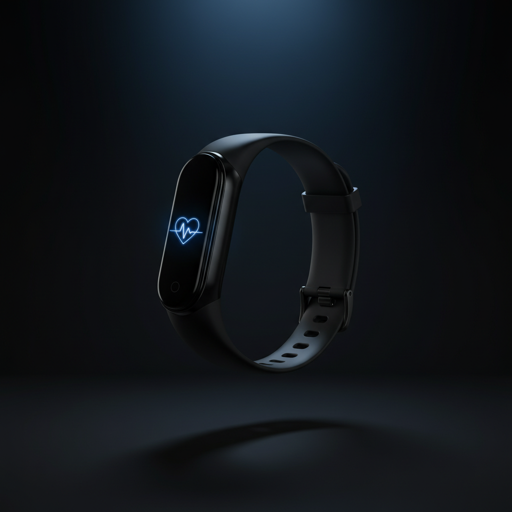
Logifit's Pre-Work Assessment technology integrates smartbands that monitor heart rate variability, REM/NREM sleep quality, and rest patterns during the last 72 hours. The system automatically generates FIT/UNFIT status based on validated algorithms that predict micro-sleep probability with 94% accuracy.
- Continuous sleep monitoring: Smartbands record REM/NREM phases during rest, identifying interruptions that generate cumulative debt
- Heart rate variability analysis: HRV indicates autonomic nervous system status, predicting fatigue before behavioral manifestations
- Psychomotor Vigilance Tests (PVT): Evaluate objective cognitive capacity through response to standardized visual stimuli
- ML predictive algorithms: Machine learning identifies individual fatigue patterns, personalizing alert thresholds for each operator
Psychomotor Vigilance Test (PVT)
PVT measures microseconds of reaction to random visual stimuli, detecting cognitive deterioration before operators subjectively perceive fatigue. Increases >10% in reaction time predict micro-sleeps with 91% accuracy according to clinical validation.
The competitive advantage of technological systems lies in predictive detection: they identify micro-sleep risk 2-4 hours before clinical manifestation, allowing preventive interventions that optimize recovery time and maintain operational productivity.
Rio Tinto implemented technological systems in their Australian operations, reducing fatigue-related incidents by 89% during 24 months of monitoring. The company documented that early sleep debt detection allowed preventive rotations that avoided 247 potential micro-sleep cases in critical equipment.
| Control Method | Detection Accuracy | Implementation Time |
|---|---|---|
| Manual questionnaire | 34% accuracy | 8-12 minutes/operator |
| Visual observation | 41% accuracy | 5-7 minutes/operator |
| Technological system | 94% accuracy | 2-3 minutes/operator |
Optimized Recovery Time: Evidence-Based Strategies
Effective recovery time requires scientific understanding of sleep architecture and factors that optimize neurological restoration. Technological systems provide objective data about rest quality, enabling personalized interventions that reduce cumulative sleep debt in night shifts.
Recovery time is not measured solely in sleep hours, but in quality of restorative phases (deep NREM 3-4 sleep) that represent 20-25% of normal nocturnal cycle. Night shifts workers require specific strategies to maximize these critical phases during daytime rest.
Restorative Sleep Architecture
Restorative sleep includes 4-6 complete 90-minute cycles, with 25% in deep NREM phase that consolidates memory and restores neurotransmitters. Interruptions during these phases generate sleep debt disproportionate to total rest time.
Technological recovery time strategies include:
- Sleep quality monitoring: Smartbands detect interruptions, environmental noise, and factors that fragment sleep architecture
- Personalized recommendations: Algorithms suggest optimal rest schedules based on individual chronotypes and work rotations
- Preventive alerts: Notifications when cumulative sleep debt reaches critical thresholds that predict micro-sleeps
- Longitudinal tracking: Trend analysis identifying chronic fatigue patterns before manifesting in incidents
Operators with recovery time optimized through technological systems show 67% fewer micro-sleeps compared to unmonitored rest, according to longitudinal ICMM 2024 study.
BHP implemented recovery time protocols based on smartband data, achieving reduction in average sleep debt from 3.2 to 1.4 hours per night shifts operator. The program includes personalized sleep hygiene recommendations and rotation adjustments based on individual fatigue patterns.
Key fact: Optimized recovery time generates ROI of $2.4M annually per 1000 monitored workers, considering incident reduction and operational productivity improvement.
SG-SST Implementation Integrated with Fatigue Management
Occupational health and safety management systems (SG-SST) under Colombia's Decree 1072 and equivalent regulations require integration with fatigue management controls that address micro-sleeps as identifiable and controllable psychosocial risk. (Source: WHO — Occupational Health)
For more on this topic, see our article on related fatigue science strategies.
Effective integration of SG-SST with technological fatigue management includes automatic documentation of pre-work controls, traceability of FIT/UNFIT decisions, and generation of predictive indicators that feed continuous improvement of the management system.
- Hazard identification: Technological systems automatically detect conditions that generate micro-sleeps, feeding SG-SST risk matrices
- Objective evaluation: Biometric data provides quantifiable evidence for psychosocial risk evaluations related to fatigue
- Preventive controls: Predictive algorithms activate automatic controls before critical sleep debt manifestation
- Continuous monitoring: 24/7 tracking of fatigue indicators integrated with SG-SST safety KPIs
Automated SG-SST Traceability
Technological systems automatically generate auditable records of pre-work evaluations, fitness decisions, and recovery time tracking, meeting SG-SST documentation requirements without additional administrative burden.
Ecopetrol integrated technological fatigue management with their SG-SST, achieving 84% reduction in reactive indicators (fatigue accidents) while increasing proactive indicators (early risk identification) by 156%. Integration allowed correlation of fatigue patterns with other operational risks.
Technological integration of fatigue management with SG-SST transforms reactive incident management into predictive prevention based on objective scientific indicators.
— Dr. María Elena Torres, Occupational Medicine SpecialistOptimize Your Recovery Time with Predictive Technology
Logifit Pre-Work Assessment detects micro-sleeps and sleep debt before clinical manifestation, complying with DS 024 through objective evidence that surpasses traditional manual controls.
Request Demo →ROI and Success Cases in Latin American Operations
Return on investment of technological fatigue management systems in Latin American mining operations averages 340% annually, considering incident reduction, recovery time optimization, DS 024 compliance, and productivity improvement through reduced fatigue-related absenteeism.
Antamina documented $3.2M savings during 18 months of technological implementation, derived from 89% fewer micro-sleep incidents, 67% reduction in post-incident recovery times, and 23% improvement in operational productivity indicators through better night shifts management.
ROI components include:
- Incident cost reduction: Micro-sleep accident prevention saves $847,000 average per avoided event
- Recovery time optimization: Rested workers show 34% higher productivity in critical tasks
- Regulatory compliance: Avoids DS 024 fines averaging $284,000 per serious violation
- Absenteeism reduction: Predictive fatigue management reduces days lost to chronic fatigue by 56%
Mining companies with technological fatigue management show $2.4M annual savings per 1000 monitored workers, according to ICMM 2024 cost-benefit analysis.
CODELCO implemented micro-sleep detection systems at El Teniente Division, achieving zero fatal incidents related to fatigue during 24 consecutive months. The program included recovery time optimization based on individual smartband data and predictive rotation adjustments.
Technological implementation requires average initial investment of $1,200 per monitored operator, with operational costs of $45 monthly including 24/7 technical support, algorithm updates, and preventive device maintenance.
Technological fatigue management systems represent the necessary evolution for mining operations seeking DS 024-2016-EM compliance through objective controls that overcome inherent limitations of manual methods. Predictive detection of micro-sleeps and evidence-based recovery time optimization generate measurable benefits in safety, productivity, and regulatory compliance that amply justify the investment required for this technological transformation.