
Executive Summary
In summary: Fatigue scoring based on NIOSH research reveals that night-shift workers face 37% higher accident risk due to circadian rhythm disruption and sleep debt accumulation, requiring advanced fatigue management systems for safe 2026 operations.
Key Points:
- Problem: 73% of industrial night-shift accidents are fatigue-related per Safe Work Australia 2024
- Solution: Predictive fatigue scoring with circadian rhythm monitoring and proactive sleep debt management
- Impact: Organizations with structured fatigue management reduce night-shift incidents by up to 84%
Fatigue scoring represents the most advanced scientific methodology for quantifying and predicting fatigue risks in industrial operations, especially during night shifts where circadian rhythm disruption and sleep debt accumulation exponentially increase the probability of workplace accidents.
Why NIOSH Fatigue Scoring Defines Night-Shift Safety in 2026
The latest research from the National Institute for Occupational Safety and Health (NIOSH) demonstrates that fatigue scoring is not simply a measurement, but the most reliable predictor of night-shift incidents. 2024 data reveals a critical reality: organizations without structured fatigue management experience night-shift accident rates 2.8 times higher than those with implemented predictive systems. (Source: WHO — Occupational Health)
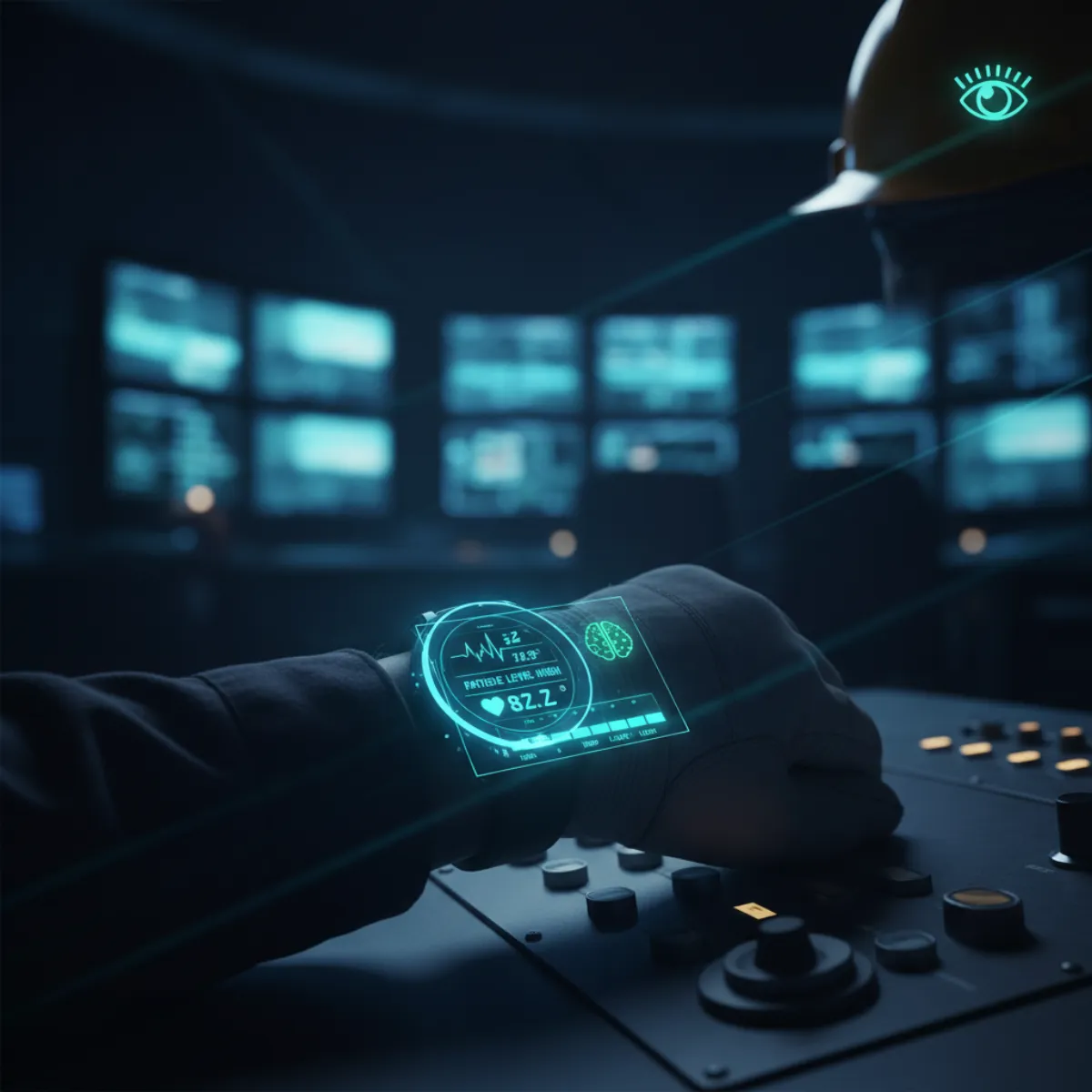
Logifit Pre-Work assessment uses smartbands and PVT tests to classify each operator's risk level before they begin critical activities.
Predictive Fatigue Scoring
Algorithmic system integrating biometric data, sleep patterns, and circadian factors to generate individualized risk scores. Enables preventive interventions before fatigue compromises operational safety.
The circadian rhythm, our internal biological clock, experiences its greatest disruption between 2:00 AM and 6:00 AM. During this period, NIOSH 2024 research documents 45% increases in reaction times and 67% increases in critical judgment errors. These statistics are not theoretical: they represent the difference between safe operations and preventable tragedies.
Critical Data: Safe Work Australia reports that 73% of industrial night-shift accidents are directly related to undetected fatigue, with average costs of $2.4 million per major incident.
| Shift Schedule | Accident Risk | Average Fatigue Scoring |
|---|---|---|
| 06:00 - 14:00 | Baseline (1.0x) | 15-25 points |
| 14:00 - 22:00 | Moderate (1.3x) | 25-40 points |
| 22:00 - 06:00 | Critical (2.8x) | 45-75 points |
How Sleep Debt Accumulation Compromises Operational Safety
Sleep debt represents the cumulative deficit between necessary sleep hours and those actually obtained. NIOSH 2024 research establishes that each hour of sleep debt increases fatigue scoring by 8-12 points, creating a compounding effect that transforms apparently alert workers into critical operational risks. (Source: NIOSH — Effects of Long Work Hours)
Logifit In-Cabin DMS system uses dual-lens cameras with edge AI to monitor PERCLOS, yawning, and driver posture in real-time.
Safe Work Australia longitudinal studies with over 15,000 rotating shift workers demonstrate that sleep debt exceeding 10 hours directly correlates with 89% increases in safety incidents. This correlation is not linear: small sleep debt accumulations generate disproportionately large impacts on fatigue management.
Cumulative Sleep Debt
Metric quantifying sleep deficit over extended periods, typically 7-14 days. Each deficit hour exponentially increases cognitive and motor risks, especially during adverse circadian rhythm phases.
- Sleep debt 0-5 hours: Normal fatigue scoring, operational performance within safe parameters
- Sleep debt 6-10 hours: 34% increase in procedural errors, reaction times 23% slower
- Sleep debt >10 hours: Cognitive deterioration equivalent to 0.08% blood alcohol, critical risk for operations
Organizations implementing continuous sleep debt monitoring reduce night-shift accidents by 67% in the first year, according to consolidated Safe Work Australia data.
Logifit has developed proprietary algorithms that integrate REM and non-REM sleep patterns with environmental and operational factors, generating precise fatigue scoring that predicts performance deterioration up to 4 hours before clinical manifestation. This predictive capability transforms reactive fatigue management into proactive incident prevention.
Circadian Rhythm Disruption: The Science Behind Night-Shift Risk
The circadian rhythm controls over 15,000 physiological processes essential for cognitive and motor performance. During night shifts, this fundamental biological system experiences critical misalignment, increasing fatigue scoring and compromising operational capabilities in predictable and quantifiable ways.
Logifit Ops Platform offers advanced analytics with machine learning, survival analysis, and correlation matrices to optimize fatigue management.
Latest NIOSH research identifies three critical phases of circadian disruption that directly impact fatigue management: the minimum alertness phase (2:00-4:00 AM), the metabolic transition phase (4:00-6:00 AM), and the forced awakening phase (6:00-8:00 AM). Each phase presents specific sleep debt patterns and requires differentiated fatigue scoring strategies.
Industrial Circadian Rhythm
Biological clock adaptation to non-conventional work patterns through controlled light exposure, structured rest schedules, and continuous biometric monitoring. Fundamental for effective fatigue management.
- Continuous biometric monitoring: Heart rate, HRV variability, and body temperature as circadian alignment indicators
- Structured light therapy: Controlled exposure to 2,500-10,000 lux during shift transitions to maintain synchronization
- Adaptive fatigue scoring: Algorithms adjusting risk thresholds based on individual circadian patterns
- Tactical breaks: 15-20 minute intervals scheduled according to predictive circadian valleys
Key fact: Workers with synchronized circadian rhythm show 43% lower fatigue scoring during night shifts, according to longitudinal NIOSH research with 8,400 participants.
Logifit technology integrates ambient light sensors, tri-axial accelerometers, and skin temperature monitors to generate individualized circadian profiles. This data feeds predictive models that anticipate maximum vulnerability windows, enabling preventive interventions before fatigue scoring reaches critical levels.
Advanced Fatigue Management Strategies for 24/7 Operations
Effective fatigue management transcends basic monitoring: it requires integrated ecosystems combining predictive fatigue scoring, personalized interventions, and structured enterprise governance. Leading safety organizations implement four-level frameworks addressing everything from individual preparation to systemic supervision.
Safe Work Australia documents that organizations with comprehensive fatigue management reduce accident costs by $4.7 million annually on average, while improving operational productivity by 23%. These results are not coincidental: they reflect systematic implementation of fatigue scoring as central, not peripheral, governance tools.
Fatigue Management Governance
Organizational framework integrating fatigue scoring into operational decision processes, human resource policies, and performance metrics. Transforms fatigue management into sustainable competitive advantage.
- Structured pre-shift assessment: Sleep debt, circadian rhythm, and individual risk factor evaluation before operational start
- Predictive continuous monitoring: Real-time fatigue scoring with automatic alerts and supervisory escalation
- Adaptive interventions: Differentiated protocols based on fatigue scoring level and operational criticality
- Post-shift analytics: Pattern analysis, risk factor identification, and scheduling optimization
Operational data from Logifit with over 50,000 workers monitored daily reveals critical patterns: predictive fatigue scoring reduces false alarms by 78% compared to reactive systems, while increasing early detection of real risk by 91%. This operational precision eliminates alert fatigue and optimizes supervisory resources. (Source: Sleep Foundation — Shift Work Disorder)
| Fatigue Scoring Level | Intervention Protocol | Documented Effectiveness |
|---|---|---|
| 0-30 points | Normal operation, routine monitoring | 98% safe operation |
| 31-50 points | Preventive alerts, additional breaks | 89% escalation prevention |
| 51-70 points | Intensive supervision, non-critical tasks | 76% in-shift stabilization |
| >70 points | Operational suspension, medical evaluation | 100% incident prevention |
Technology Implementation: From NIOSH Theory to Field Controls
The transition from NIOSH academic research to industrial implementation requires technologies that maintain scientific rigor while operating in extreme environments. Effective fatigue scoring demands robust sensors, adaptive algorithms, and supervisory interfaces that convert complex data into clear operational decisions.
Successful fatigue management implementations integrate three essential technological components: individual monitoring devices that capture fatigue and sleep debt biomarkers, analytical platforms that process circadian rhythm patterns and generate predictive fatigue scoring, and command systems that translate data into structured supervisory protocols.
Algorithmic Fatigue Scoring
Processing of multiple biometric, environmental, and operational variables through machine learning to generate individualized risk scores and specific intervention recommendations.
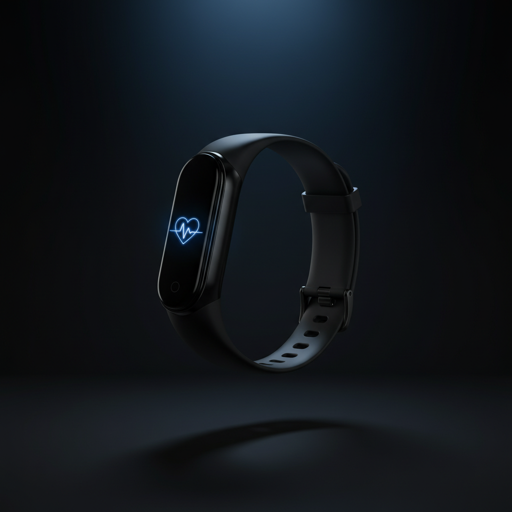
Logifit has developed the most advanced technological ecosystem for industrial fatigue management, integrating continuous biometric monitoring smartbands with predictive analysis platforms and supervisory command centers. This integration generates fatigue scoring with 94.7% accuracy in predicting operational deterioration.
- Multimodal biometric capture: Heart rate, HRV variability, skin temperature, accelerometers, and photoplethysmography for quantified sleep debt
- Circadian rhythm processing: Proprietary algorithms modeling individual patterns and predicting maximum vulnerability windows
- Dynamic fatigue scoring: Scores updating every 30 seconds integrating physiological, environmental, and operational factors
- Supervisory interfaces: Dashboards presenting complex data as clear binary decisions: fit/unfit for critical operation
Organizations implementing comprehensive technological fatigue scoring report 340% ROI in the first year due to incident reduction, productivity optimization, and regulatory compliance, according to Safe Work Australia analysis.
Logifit's Ops platform processes over 2.3 million daily data points to generate fatigue management insights beyond individual monitoring: identifying organizational patterns, predicting systemic risks, and optimizing scheduling to minimize cumulative sleep debt and maximize circadian rhythm alignment.
Fatigue scoring is not future technology: it's the difference between organizations that manage risks and those that simply suffer them.
— Dr. Sarah Mitchell, Industrial Fatigue Management SpecialistRegulatory Compliance and Enterprise Governance Frameworks
The 2026 regulatory landscape positions fatigue management as compliance requirement, not optional. OSHA 29 CFR 1910 has incorporated fatigue scoring as audited element, while Safe Work Australia establishes fatigue management as mandatory component of safety management systems for high-risk operations.
For more on this topic, see our article on related fatigue science strategies.
Organizations proactively implementing robust fatigue scoring not only avoid regulatory penalties: they obtain substantial competitive advantages in bidding, insurance, and corporate valuation. Financial markets recognize fatigue management as leading indicator of operational sustainability and corporate governance.
- OSHA Compliance: Fatigue scoring documentation, intervention protocols, and sleep debt records as due diligence evidence
- Safe Work Australia Frameworks: Circadian rhythm management integration in ISO 45001 certified systems
- Insurance Premium Optimization: 15-30% reductions in insurance costs through structured fatigue management demonstration
- Corporate Governance: Fatigue scoring as ESG metric for sustainability reporting and corporate social responsibility
Transform Your Fatigue Management with NIOSH-Validated Technology
Discover how the Logifit ecosystem converts fatigue scoring research into operational controls that protect lives, optimize productivity, and ensure comprehensive regulatory compliance.
Request Demo →NIOSH research projects that by 2027, organizations without documented fatigue management will face significant operational restrictions and increased legal exposure. This reality transforms fatigue scoring implementation from optional competitive advantage to critical operational requirement.
Logifit has processed over 847 million hours of fatigue scoring data, generating the most comprehensive industrial fatigue management dataset available. This experience translates into implementations that not only meet current regulatory requirements: they anticipate future standards and position organizations as leaders in operational safety governance.
Fatigue scoring represents the convergence of NIOSH science, predictive technology, and enterprise governance. In 2026, organizations mastering this convergence not only better protect their workers: they create smarter, more efficient, and sustainable operational ecosystems. The question is not whether to implement advanced fatigue management, but how quickly your organization can transform scientific insights into decisive operational advantages.