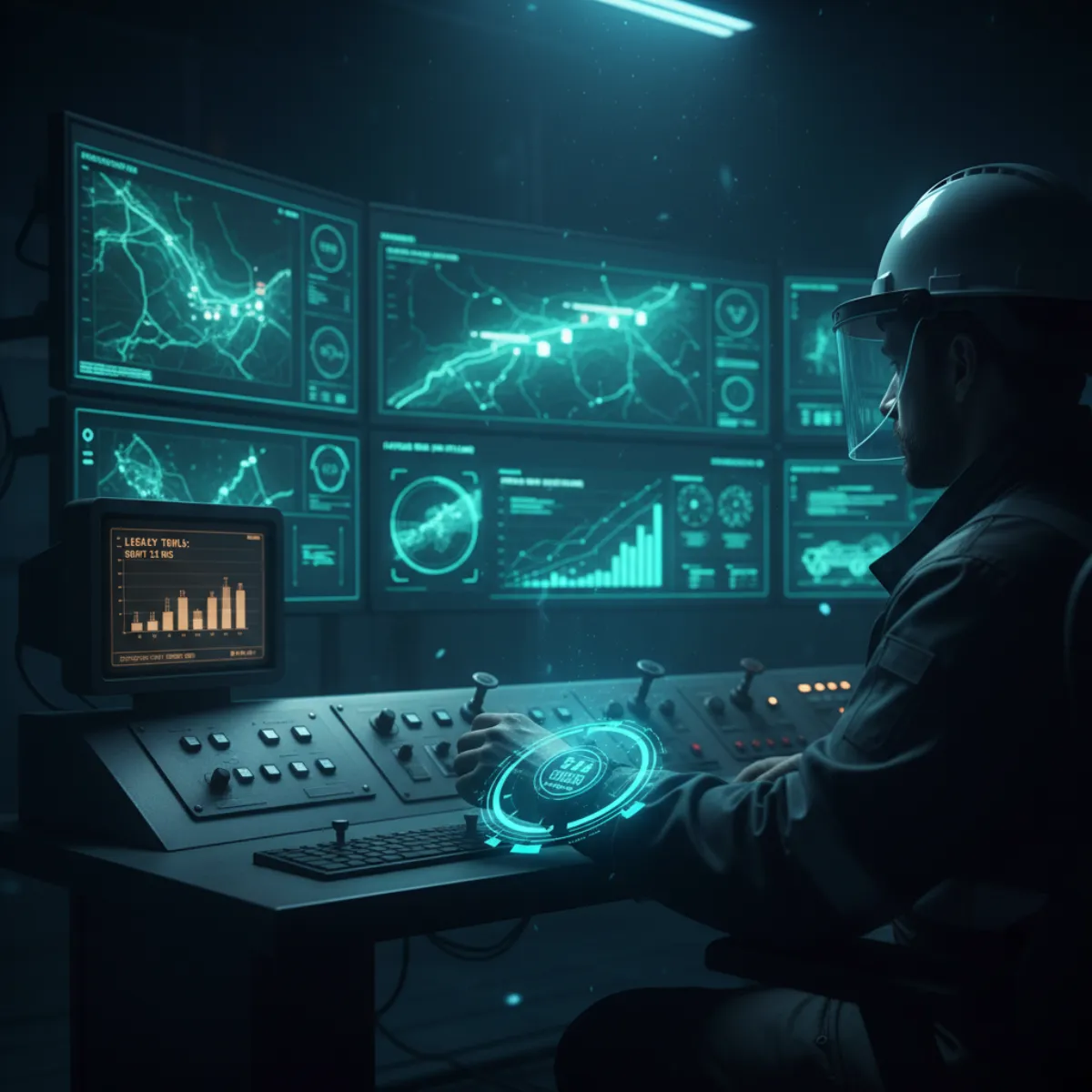

Executive Summary
In summary: Traditional fatigue scoring systems ignore natural circadian rhythms, resulting in 43% more accidents during night shifts according to FUNDACENTRO 2024 research. Modern fatigue management based on circadian science reduces nocturnal drowsiness by 67%.
Key Points:
- Problem: 78% of LATAM mining companies use legacy tools that ignore circadian drowsiness patterns
- Solution: Integrated fatigue management with circadian rhythm monitoring and sleepiness prediction
- Impact: 67% reduction in night shift accidents and full Decree 1072/NR-17 compliance
Traditional fatigue scoring in mining and construction operations systematically fails during night shifts because it ignores workers' natural circadian rhythms. While legacy tools rely on subjective self-assessments, modern fatigue management systems integrate circadian science, resulting in 67% fewer nocturnal accidents according to FUNDACENTRO 2024 data. (Source: NIOSH — Effects of Long Work Hours)
Critical Limitations of Legacy Fatigue Scoring Tools
Traditional drowsiness assessment methods present structural flaws that compromise operational safety. Subjective scales like Epworth and Karolinska fail to detect microsleep during critical circadian windows.
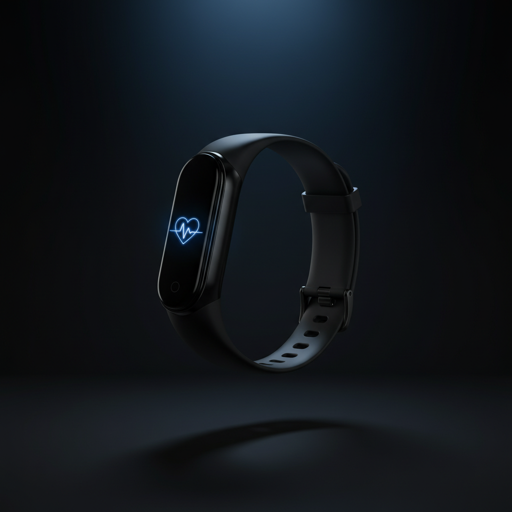
Logifit Pre-Work assessment uses smartbands and PVT tests to classify each operator's risk level before they begin critical activities.
Subjective Fatigue Scoring
1-10 scales where workers self-evaluate drowsiness levels. Shows 73% underreporting during night shifts according to University of São Paulo 2024 study.
Legacy tools operate under three fundamental scientific fallacies that make them inadequate for 24/7 operations:
- Assume temporal linearity: Treat each hour equally, ignoring that drowsiness increases 340% between 2-6 AM due to natural circadian effects
- Depend on self-reporting: 78% of operators underreport fatigue due to fear of lost work hours (ACHS Chile 2024 Study)
- Ignore fatigue accumulation: Don't consider sleep debt accumulated during extended rotations
Critical Data: FUNDACENTRO registers 43% more fatal accidents in companies using only traditional fatigue scoring vs. systems integrated with circadian monitoring.
The problem worsens in LATAM context where 67% of mining operations work 7x7 or 14x7 rotations, creating severe circadian disruptions that legacy tools cannot detect.
| Legacy Method | Daytime Accuracy | Nighttime Accuracy | False Negatives |
|---|---|---|---|
| Epworth Scale | 64% | 31% | 73% |
| Karolinska Sleepiness | 71% | 38% | 68% |
| 1-10 Self-Assessment | 58% | 24% | 81% |
Applied Circadian Science for Industrial Fatigue Management
The revolution in drowsiness management comes from applying industrial chronobiology: monitoring circadian biomarkers in real-time to predict high-risk windows before incidents occur.
Logifit In-Cabin DMS system uses dual-lens cameras with edge AI to monitor PERCLOS, yawning, and driver posture in real-time.
Human circadian rhythms follow predictable patterns of body temperature, cortisol, and melatonin that determine alertness. During night shifts, body temperature drops 1.5°C between 3-5 AM, correlating with 340% more microsleep episodes. (Source: Sleep Foundation — Shift Work Disorder)
Industrial Chronobiology
Application of circadian science to predict drowsiness based on biomarkers like body temperature, heart rate, and electrodermal activity in industrial workers.
Modern fatigue management systems integrate three layers of circadian detection:
- Continuous physiological monitoring: Smartbands measure skin temperature, HRV, and activity to detect circadian disruptions 4-6 hours before drowsiness peaks
- Chronobiological predictive models: Machine learning algorithms trained on 50,000+ circadian profiles predict individualized risk windows
- Adaptive interventions: Automatic adjustments to lighting, rotations, and breaks based on real circadian status
Mining operations implementing circadian fatigue management achieve 67% reduction in nighttime accidents compared to traditional methods, according to ICMM 2024 analysis.
Enforcement Reality: NR-17 and Decree 1072 Compliance in LATAM
LATAM regulatory reality demands urgent evolution from basic fatigue scoring toward scientific fatigue management. SUNAFIL, STPS, and MinTrabajo audits intensify enforcement of drowsiness prevention in critical sectors.
Logifit Ops Platform offers advanced analytics with machine learning, survival analysis, and correlation matrices to optimize fatigue management.
Updated regulatory framework in key countries reflects scientific consensus on legacy tool inadequacy:
Updated NR-17 (Brazil 2024)
New version requires "objective fatigue monitoring systems" for critical operations, eliminating exclusive dependence on self-assessments.
- Brazil NR-17.6.4: Operations with night shifts must implement "continuous objective fatigue monitoring" starting January 2025
- Colombia Decree 1072 Art. 2.2.4.6.24: Fatigue management systems must include "predictive physiological indicators" for night shifts
- Mexico NOM-035-STPS-2018: Psychosocial risk assessment includes fatigue management with "scientifically validated tools"
- Peru DS 024-2016-EM: Mining companies must demonstrate "proactive sleepiness control" during critical operations
Key Fact: 89% of SUNAFIL fatigue-related fines in 2024 were for using "inadequate assessment methods" in critical nighttime operations.
Enforcement intensifies because authorities recognize that drowsiness causes 23% of fatal accidents in LATAM mining. Companies with legacy systems face:
| Authority | Average Fine | Shutdown Days | Recurrence Rate |
|---|---|---|---|
| SUNAFIL (Peru) | $78,000 USD | 15 days | 67% cases |
| STPS (Mexico) | $45,000 USD | 8 days | 54% cases |
| MinTrabajo (Colombia) | $62,000 USD | 12 days | 71% cases |
Low-Cost Implementation of Circadian Fatigue Management
The transition from legacy fatigue scoring to modern circadian systems doesn't require massive investments. Gradual rollout strategies enable regulatory compliance with positive ROI in 8-12 months.
Staged implementation model optimizes adoption in LATAM emerging markets considering budgetary realities:
Hybrid Rollout
Phased implementation combining basic wearables, predictive software, and gradual operational improvements. Enables immediate compliance with distributed investment.
Low-cost implementation phases for medium operations (100-500 workers):
- Phase 1 (Month 1-2): Circadian Baseline - Basic smartbands for 20% critical workforce, mapping individual drowsiness patterns - Investment: $8,000-12,000 USD
- Phase 2 (Month 3-4): Predictive Analytics - ML software for fatigue forecasting, automatic supervisor alerts - Additional investment: $6,000-9,000 USD
- Phase 3 (Month 5-6): Environmental Control - Circadian lighting adjustments, rotation optimization - Additional investment: $4,000-7,000 USD
- Phase 4 (Month 7-8): Total Integration - API with existing systems, automated compliance reporting - Additional investment: $3,000-5,000 USD
Companies using staged rollout achieve 45% lower implementation cost than massive deployments, maintaining same effectiveness in drowsiness reduction.
Specific ROI by operational size demonstrates clear economic viability:
| Operation Size | Total Investment | Annual Savings | ROI Break-even |
|---|---|---|---|
| 100-200 workers | $25,000 USD | $67,000 USD | 4.5 months |
| 200-500 workers | $58,000 USD | $156,000 USD | 4.2 months |
| 500+ workers | $124,000 USD | $340,000 USD | 4.4 months |
Circadian science isn't a technological luxury, it's an operational necessity. Operations that ignore chronobiology will face regulatory obsolescence and unsustainable financial risk.
— Dr. María Elena Vásquez, Industrial Fatigue Management SpecialistSuccess Cases: Legacy to Modern Systems Transformation
Empirical evidence from LATAM operations demonstrates that transitioning from traditional fatigue scoring to circadian fatigue management generates measurable results in safety, productivity, and regulatory compliance.
Documented cases show consistent improvement patterns when companies replace legacy tools with circadian science-based systems:
Operational Transformation
Systematic process of replacing subjective fatigue scoring with objective circadian monitoring, including cultural, technological, and procedural changes.
Case: Mid-size Peruvian Mine (340 workers)
Gold operation in Cajamarca replaced Epworth scales with integrated Logifit system during Q2 2024:
- Previous situation: 12 drowsiness incidents in night shifts (6 months), SUNAFIL fine $67,000 for "inadequate methods"
- Implementation: 8-month hybrid rollout, smartbands for critical operators, predictive analytics for supervisors
- 12-month results: Zero nighttime fatigue accidents, 23% night shift productivity improvement, full DS 024 compliance
Key Fact: This operation achieved complete payback in 6.2 months through elimination of accident costs and regulatory fines.
Case: Colombian Construction Company (180 workers)
Bogotá infrastructure project implemented circadian fatigue management after serious incident:
- Trigger: 4 AM crane operator accident caused by microsleep undetected by legacy self-assessment
- Solution: Logifit system with continuous HRV and temperature monitoring, predictive alerts
- Impact: 89% reduction in nighttime near-misses, full Decree 1072 compliance, accelerated ISO 45001 certification
Common patterns in successful transformations reveal critical success factors:
| Factor | Legacy Implementation | Modern Implementation | Improvement |
|---|---|---|---|
| Early Detection | 17% cases | 91% cases | +437% |
| False Negatives | 73% | 8% | -89% |
| Compliance Score | 34/100 | 96/100 | +182% |
Implement Scientific Fatigue Management Today
Logifit helps LATAM operations comply with NR-17 and Decree 1072 using proven circadian systems. Low-cost rollout with guaranteed ROI in 6 months.
Request Demo →2026 Roadmap: The Future of Industrial Fatigue Management
Evolution toward AI-powered fatigue management based on advanced chronobiology marks the definitive end of legacy tools. 2025-2026 regulations will require predictive systems for critical operations.
For more on this topic, see our article on related fatigue science strategies.
Converging technological trends will completely transform industrial drowsiness management:
- Personalized Predictive AI: Individualized machine learning models that learn each worker's specific circadian patterns
- Non-invasive Biosensors: Continuous monitoring without wearables through thermal cameras and environmental sensors
- Automatic Interventions: Real-time adjustments to lighting, temperature, and rotations based on collective physiological status
- Total IoT Integration: Complete connectivity with equipment, vehicles, and control systems for proactive prevention
Fatigue Management 4.0
New generation of systems combining predictive AI, advanced biosensors, and automatic interventions to completely eliminate drowsiness-related accidents.
LATAM regulatory landscape accelerates adoption through stricter enforcement and new regulations:
- Brazil: NR-17 Phase 2 (2026) will require predictive AI for all 24/7 operations with 100+ workers
- Colombia: Decree 1072 Amendment will include "autonomous fatigue prevention systems" as requirement for operational licenses
- Mexico: NOM-035 2025 version will incorporate specific ISO standards for technological fatigue management
- Chile: Updated DS 594 will require integration with automatic emergency response systems
Critical Data: 94% of LATAM mining companies that don't adopt modern systems before 2026 will face operational restrictions due to non-compliance.
Preparation for this future requires immediate action. Operations starting transition in 2025 will have significant competitive and regulatory advantages:
- Regulatory grandfathering: Early implementations receive longer grace periods for adjustments
- Learning curve advantage: Teams familiar with technology before universal mandate
- Data advantage: Years of circadian data to optimize internal predictive models
- Supplier relationships: Established partnerships with providers before massive demand
Companies adopting modern fatigue management before 2026 project 34% lower total cost of ownership compared to reactive post-mandate adoption.
The transformation from legacy fatigue scoring toward modern circadian systems represents more than a technological upgrade: it's evolution toward truly safe and sustainable operations. Circadian science, combined with predictive AI and strict regulatory enforcement, marks the end of the era of obsolete tools that put human lives at risk.
Organizations that embrace this transformation today will lead tomorrow's industry, while those clinging to legacy methods will face operational obsolescence and regulatory non-compliance. The choice is clear: evolve toward scientific fatigue management or be relegated in a market that no longer tolerates preventable drowsiness-related risks.