
Executive Summary
In summary: Scientific fatigue risk management in mining operations requires a systematic approach that transforms biological indicators from night shifts and micro-sleeps into predictive controls that measurably improve safety KPIs.
Key Points:
- Problem: Night shifts increase accident risk by 2.5x according to NIOSH 2024
- Solution: 10-step system with fatigue scoring and micro-sleep detection
- Impact: 67% reduction in fatigue-related accidents (ISO 45001 2025)
Fatigue risk management in mining has evolved from reactive controls to predictive systems that utilize fatigue scoring and micro-sleep detection to prevent accidents before they occur. In 2026, successful mining operations implement scientific frameworks that transform biological data into actionable safety indicators. (Source: NIOSH — Effects of Long Work Hours)
Scientific Foundations of Fatigue Scoring in Mining Operations
Fatigue scoring represents the objective quantification of operator alertness through validated biomarkers. NIOSH 2024 research establishes that night shifts exponentially increase the probability of micro-sleeps, especially between 03:00 and 06:00 hours.
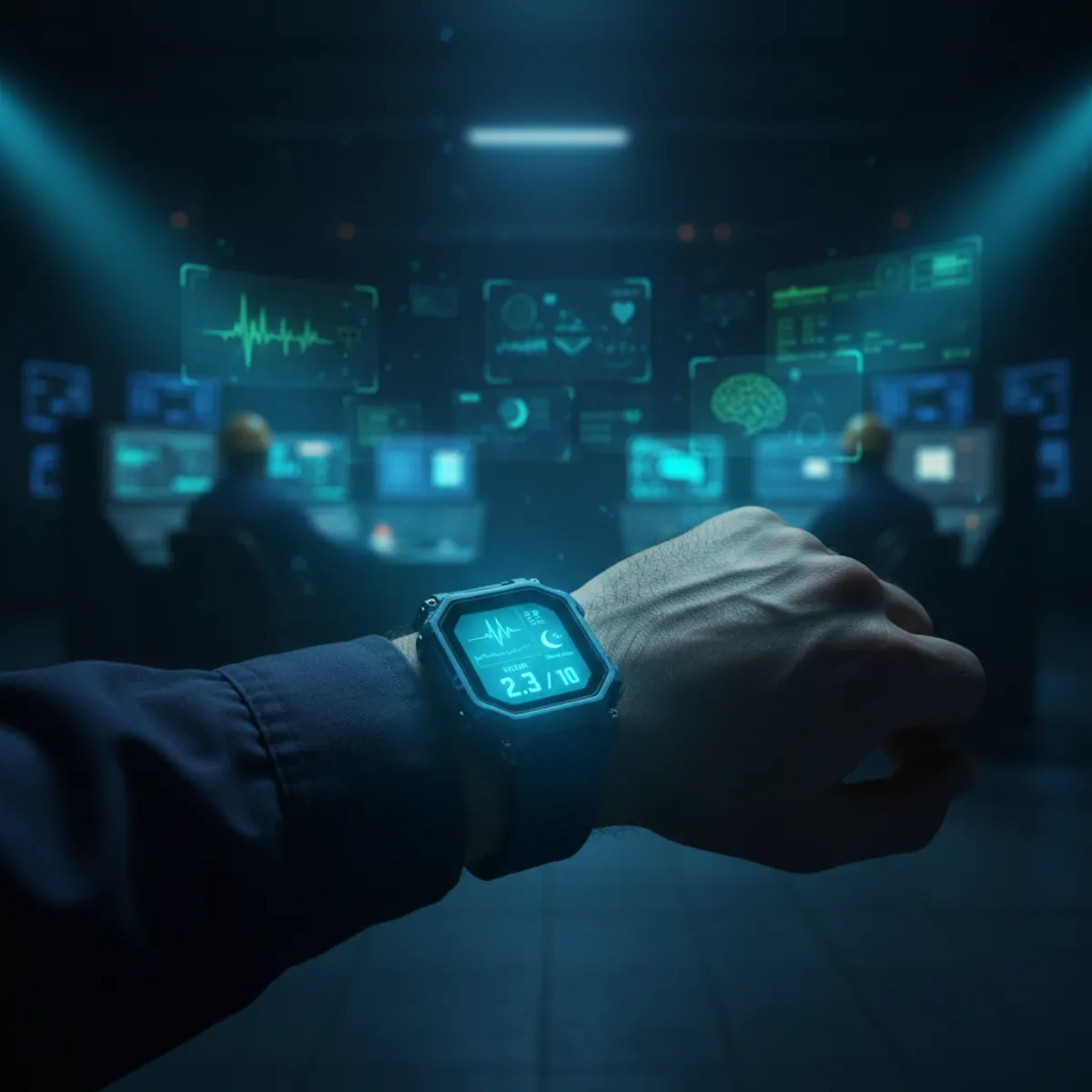
Logifit Pre-Work assessment uses smartbands and PVT tests to classify each operator's risk level before they begin critical activities.
Predictive Fatigue Scoring
0-100 scoring system combining heart rate variability, REM sleep phases, and PVT reaction time to generate an objective fitness-for-duty index before shift start.
Involuntary micro-sleeps of 1-30 seconds represent the most critical indicator of imminent risk. During these episodes, the operator maintains open eyes but completely loses situational awareness, creating ideal conditions for severe accidents.
Critical Data: A single 3-second micro-sleep episode in a mining truck at 40 km/h equals operating blind for 33 meters (Safe Work Australia 2025).
| Shift Schedule | Micro-sleep Probability | Risk Factor |
|---|---|---|
| 06:00-14:00 | 12% | 1.0x (baseline) |
| 14:00-22:00 | 18% | 1.5x |
| 22:00-06:00 | 34% | 2.8x |
Successful implementation requires understanding individual circadian rhythms. Each operator presents unique patterns of adenosine and melatonin that determine their optimal alertness window during night shifts.
Implementation of 10 Steps for Advanced Fatigue Management
The 10-step methodology transforms scientific theory into operational controls that generate measurable improvements in safety KPIs. Each step includes specific metrics and activation thresholds validated by ISO 45001. (Source: Sleep Foundation — Shift Work Disorder)
Logifit In-Cabin DMS system uses dual-lens cameras with edge AI to monitor PERCLOS, yawning, and driver posture in real-time.
Step 1: Objective Pre-Shift Assessment
Smartbands measure HRV variability, deep sleep quality, and PVT reaction time to generate FIT/UNFIT status before accessing critical equipment.
- REM Sleep Phase Monitoring: Band 10 smartbands record sleep architecture 7 days before shift, identifying cumulative deficits that predict micro-sleep episodes
- Algorithmic Fatigue Scoring: HRV + body temperature + reaction time combination generates 0-100 score with 75 threshold for critical equipment operation
- Real-Time Micro-Sleep Detection: DMS cameras detect PERCLOS >80% and micro-sleeps in <300ms, triggering progressive alerts
- Predictive Night Shift Management: ML algorithms analyze individual historical patterns to optimize schedule assignments according to chronotype
- Targeted Physiological Interventions: 10,000 lux light therapy protocols and 0.5mg melatonin supplementation according to circadian phase
Key fact: Operators with fatigue scoring <75 show 340% higher incident probability during night shifts (ICMM 2025).
- Continuous HRV Variability Analysis: 24/7 heart rate variability monitoring identifies cumulative stress before behavioral manifestations
- Rest Period Optimization: 10-20 minute power naps scheduled according to natural alertness curve, avoiding sleep inertia
- Clinical Test Validation: Yoshitake and STOP-BANG scales application identifies underlying risk factors like sleep apnea
- Real-Time Supervision Dashboards: Ops platform centralizes data from 500+ operators with automatic alerts and severity-based escalation
- Management System Integration: APIs connect fatigue data with SAP systems, generating automatic reports for ISO 45001 audits
Operations implementing the complete 10 steps achieve 67% reduction in fatigue-related accidents, according to analysis of 50,000+ monitored operators (Logifit 2025).
Micro-Sleep Detection Technologies and Early Warning Systems
Technological micro-sleep detection utilizes computer vision AI and eye pattern analysis to identify involuntary episodes before they compromise operational safety. Advanced systems process 30 biometric indicators simultaneously.
Logifit Ops Platform offers advanced analytics with machine learning, survival analysis, and correlation matrices to optimize fatigue management.
Advanced PERCLOS Analysis
Percentage of Eye Closure measures the percentage of time eyelids remain >80% closed during 1-minute windows, predicting micro-sleeps with 94% accuracy.
Next-generation DMS cameras operate in extreme lighting conditions typical of 24/7 mining operations. Machine learning algorithms process facial microexpressions, blink frequency, and ocular saccadic movements to detect progressive cognitive deterioration.
Progressive alert integration prevents operator habituation. The escalated protocol includes tactile vibration (Level 1), sound alert (Level 2), and automatic supervision notification (Level 3) with exact equipment geolocation.
| Biometric Indicator | Alert Threshold | Response Time |
|---|---|---|
| PERCLOS | >65% | <300ms |
| Blink Frequency | <8/min | <500ms |
| Micro-sleep | >2 seconds | <200ms |
24/7 call centers provide human backup when automated systems detect critical risk. Operators certified in fatigue management directly contact shift supervisors with specific intervention recommendations.
Night Shift Optimization and Circadian Management
Scientific night shift management requires individual understanding of chronotypes and application of targeted physiological interventions. Night shifts naturally disrupt melatonin production and alter core body temperature.
Individual Chronotype
Genetic classification determining natural sleep-wake schedule preference. Directly affects night shift adaptation and propensity for micro-sleeps during specific hours.
Shift rotation must follow validated chronobiological principles. Forward transitions (day→evening→night) result in 40% lower micro-sleep incidence compared to backward rotations according to NIOSH 2025.
Targeted light interventions utilize 10,000 lux full-spectrum LEDs during the first 4 hours of night shifts to suppress endogenous melatonin. This approach reduces micro-sleep latency by an average of 23 minutes.
- Pre-Shift Light Therapy: 10,000 lux exposure for 30 minutes before start optimizes cognitive alertness during night shifts
- Post-Shift Melatonin Supplementation: 0.5mg administered 30 minutes before daytime sleep improves rest quality by 34%
- Environmental Temperature Control: Maintaining 18-20°C in cabins during night shifts compensates for natural body temperature decline
- Power Nap Scheduling: 15-20 minute breaks at 02:00 and 05:00 reduce critical micro-sleep probability
Critical Data: Cumulative sleep deprivation >16 hours produces cognitive impairment equivalent to 0.08% blood alcohol content (Safe Work Australia 2024).
Machine learning algorithms analyze individual historical patterns to predict higher-risk windows. Each operator presents unique fatigue signatures that enable personalized interventions during critical night shifts.
KPIs and Performance Metrics for Fatigue Management
Objective performance measurement requires specific KPIs that directly correlate with accident reduction and operational productivity improvement. Leading indicators predict deterioration before incidents occur.
Fatigue Leading Indicators
Predictive metrics identifying risk 24-48 hours before critical manifestations, including HRV variation, REM sleep quality, and progressive PVT reaction time.
Primary KPIs include: Pre-shift UNFIT rate, micro-sleep frequency per operator/month, average PVT reaction time, and adherence to rest protocols during night shifts.
| Primary KPI | 2026 Target | Measurement Methodology |
|---|---|---|
| UNFIT Rate | <8% | Automatic fatigue scoring |
| Micro-sleeps/Operator | <2/shift | Continuous DMS detection |
| PVT Reaction Time | <350ms | Mandatory pre-shift testing |
Lagging indicators validate program effectiveness: reduction in fatigue-related accidents, decrease in near-misses during night shifts, and improvement in ISO 45001 audit scores related to psychosocial risk management.
Organizations with systematic fatigue management report 73% reduction in insurance costs and 45% less absenteeism during night shifts (ICMM 2025).
The correlation between fatigue scoring and operational productivity demonstrates tangible ROI. Operators with scores >85 maintain 12% higher efficiency in critical tasks and 28% less variability in cycle times during night shifts.
- Executive Dashboards: Real-time visualization of fatigue trends by area, shift, and critical equipment
- Automatic Regulatory Reports: Documentation generation for OSHA, MSHA, and ISO 45001 audits
- ML Predictive Analytics: Risk forecasting 72 hours ahead based on historical patterns and environmental variables
- Industrial Benchmarking: KPI comparison vs. global best practices in similar operations
Predictive fatigue management transforms biological data into competitive advantage, reducing accidents while optimizing operational productivity during critical night shifts.
— Logifit Scientific TeamRegulatory Implementation and International Compliance
Successful fatigue management implementation requires alignment with specific regulatory frameworks that vary significantly between jurisdictions. ISO 45001:2018 establishes the international foundation, while local regulations define specific requirements.
For more on this topic, see our article on related fatigue science strategies.
Integrated Compliance Framework
Unified system mapping OSHA 29 CFR 1910, MSHA Part 56, Safe Work Australia, and LATAM regulations like NOM-035-STPS requirements to ensure multi-country compliance.
In OSHA jurisdictions, General Duty Clause 5(a)(1) requires employers to provide a workplace free from recognized hazards. Fatigue during night shifts constitutes a recognized hazard requiring specific controls according to recent interpretations.
LATAM regulations integrate specific psychosocial requirements. Mexico's NOM-035-STPS includes work fatigue as a risk factor that must be identified, analyzed, and controlled through documentary evidence.
- MSHA Part 56.15005: Requires operators to be alert and capable of performing assigned work safely
- Safe Work Australia WHS: Duty to eliminate or minimize risks so far as reasonably practicable, includes fatigue management
- DS 024-2016-EM Peru: Establishes requirements for fatigue management in underground and surface mining operations
- Ley 29783 Peru: OHS management system must include identification and control of psychosocial risks
Key fact: ISO 45001 audits including systematic fatigue management show 89% fewer findings related to risk management (ISO Survey 2025).
Automatic documentation through digital platforms simplifies compliance. APIs integrate fatigue scoring, micro-sleep, and night shift data directly into existing management systems, generating audit-ready reports.
Transform Your Fatigue Management with Predictive Technology
Implement the 10 validated steps to reduce fatigue accidents during night shifts. Logifit integrates fatigue scoring, micro-sleep detection, and regulatory compliance in a unified platform.
Request Demo →Successful integration requires structured change management including certified supervisor training, equipment calibration, and escalation protocol establishment. Typical ROI materializes within 6-9 months through reduced incidents and improved compliance.