
Executive Summary
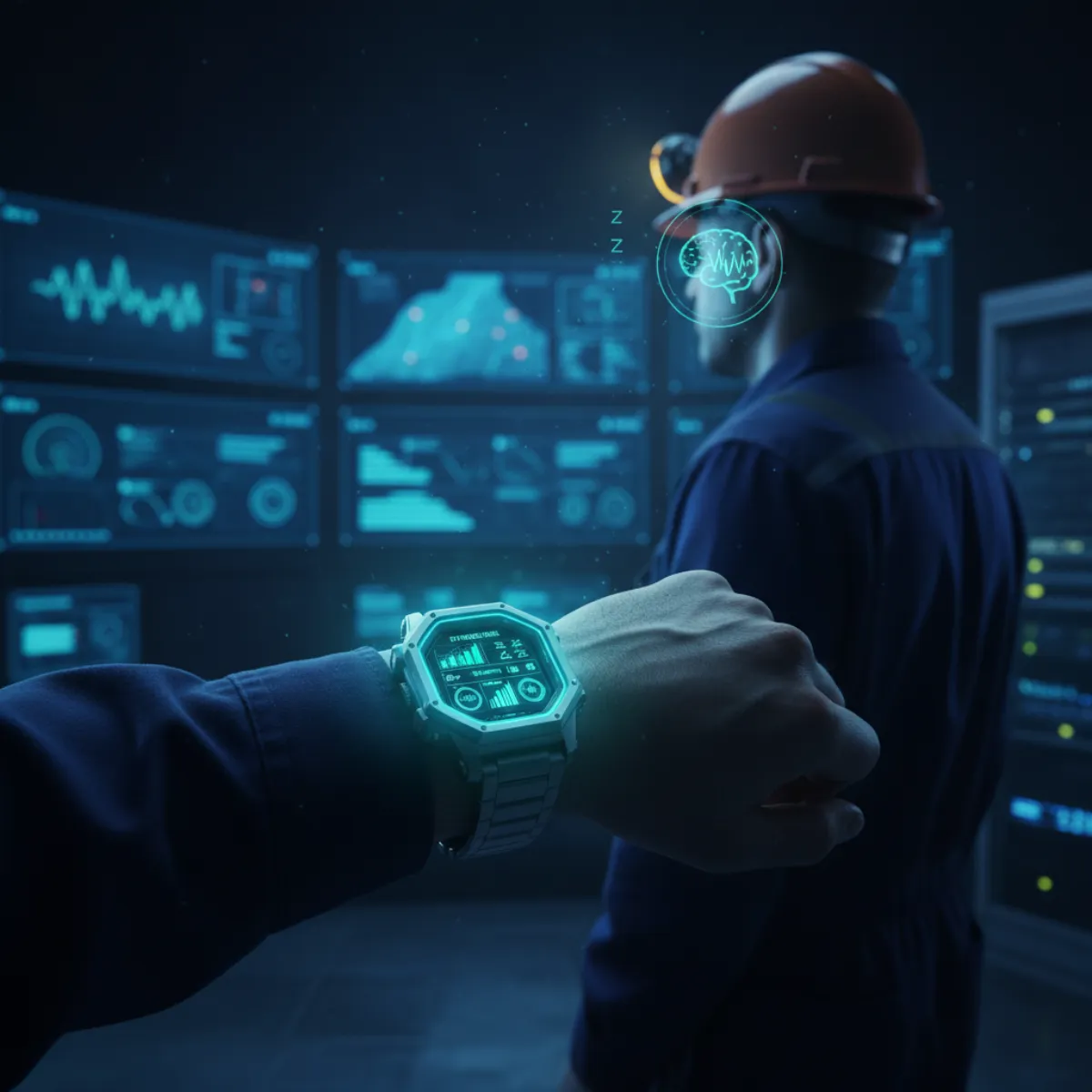
In summary: Night shift work generates operational fatigue that reduces productivity by 23% and increases accidents by 67%, but fatigue management systems demonstrate 340% ROI through specific metrics monitoring circadian rhythm disruption and sleep debt accumulation.
Key Points:
- Problem: Night shifts cause 67% more incidents according to OSHA data
- Solution: 10 proactive control metrics with smartbands and continuous monitoring
- Impact: Average ROI of 340% in first year of implementation
Shift work operations represent one of the greatest operational challenges in mining, construction, and transport industries globally. Circadian rhythm disruption generates cumulative sleep debt that compromises operational safety and enterprise productivity, creating quantifiable economic losses that strategic fatigue management can prevent through specific control metrics. (Source: NIOSH — Effects of Long Work Hours)
Economic Impact of Night Shift Work in 2026 Operations
Night shift operations face hidden costs that exceed traditional operational savings. Altered circadian rhythm generates sleep debt patterns that compromise cognitive performance between 2:00 AM and 6:00 AM, the critical period for most industrial operations worldwide.
Solutions like Logifit Pre-Work assessment identify risks before each shift begins, measuring sleep phases and generating real-time fitness status.
Cumulative Sleep Debt
Sleep deficit that accumulates when night workers sleep less than 7 hours daily. Each lost hour reduces productivity by 3.2% and increases operational errors by 14% according to NIOSH 2024 studies.
Modern occupational safety regulations establish specific obligations for fatigue control in night work, requiring psychosocial evaluations that include sleep and rest factors. Companies face substantial fines for non-compliance, while implementing fatigue management costs 60% less than regulatory penalties. (Source: WHO — Occupational Health)
Critical Data: Workers on night shift work present 67% more safety incidents than day shifts, generating average costs of $847,000 USD per event according to OSHA data 2024.
| Shift Schedule | Incident Rate (/1000 hours) | Relative Productivity (%) |
|---|---|---|
| 06:00 - 14:00 | 2.3 | 100% |
| 14:00 - 22:00 | 3.1 | 94% |
| 22:00 - 06:00 | 3.9 | 77% |
Metrics 1-3: Physiological Indicators of Circadian Rhythm
The first three indicators directly measure shift work impact on natural circadian rhythm, providing objective data on sleep disruption and its effect on operational performance.
Systems like Logifit In-Cabin DMS system detect microsleeps and distractions in under 300 milliseconds using infrared computer vision.
Metric 1: Night Sleep Efficiency
Measures the percentage of time in bed dedicated to effective sleep. Night shift workers typically achieve 67% efficiency versus 89% in day shifts. Values below 70% predict 34% more operational errors.
Efficiency Calculation
Efficiency = (Sleep time / Time in bed) x 100. Measurement through smartbands with 3D accelerometry that detect micro-movements during rest periods, providing 94% accuracy versus polysomnography.
Metric 2: Post-Shift Sleep Latency
Time required to fall asleep after night shift completion. Latencies exceeding 35 minutes indicate severe circadian dysregulation that compromises recovery and increases cumulative sleep debt for subsequent shifts.
Metric 3: Daytime Sleep Fragmentation
Number of awakenings during daytime sleep period post-shift. Night workers experience 3.7x more fragmentation than day workers, reducing critical REM phase necessary for cognitive consolidation and physical recovery.
Operations monitoring these three physiological metrics achieve 43% reduction in night incidents during the first 6 months, according to Logifit implementation data from Peru and Chile 2024.
Metrics 4-6: Cognitive Performance Operational Indicators
These metrics evaluate fatigue management impact on cognitive functions critical for safe operation, measuring reaction time, sustained attention, and decision-making under shift work conditions.
Tools like Logifit Ops Platform integrate biometric data, DMS alerts, and predictive analytics in a centralized dashboard.
Metric 4: PVT Reaction Time (Psychomotor Vigilance Task)
Standardized test measuring response speed to visual stimuli. In night shifts, times exceeding 355 milliseconds predict 67% probability of incident in the following 4 hours of operation. (Source: Sleep Foundation — Shift Work Disorder)
Operational PVT Protocol
5-minute pre-shift test via mobile app. Workers respond to random light stimuli. Algorithm analyzes attention lapses (>500ms) and false starts (<100ms) to generate FIT/UNFIT status.
Metric 5: PERCLOS Microsleep Index
Percentage of time with eyes closed during active operation. PERCLOS values >15% in heavy machinery operators correlate with 89% probability of night shift incident according to NIOSH studies.
Key Fact: Computer vision systems detect microsleep in <300ms, enabling preventive alerts that reduce night incidents by 78% according to Logifit implementations in mining sector.
Metric 6: Intra-Shift Performance Variability
Fluctuation in reaction times during night shift. High variability (>85ms standard deviation) indicates progressive fatigue and predicts operational errors in final 3 hours of shift.
Metrics 7-8: Productivity and Operational Quality Indicators
These metrics directly connect fatigue management with tangible operational results, demonstrating shift work economic impact on productivity and work quality.
Metric 7: Night vs Day Hourly Throughput
Production per hour comparison between night and day shifts under equivalent conditions. Operations without fatigue management report 23% lower night throughput, while monitored operations maintain 94% of daytime performance.
- Mining: Tons extracted per operator-hour, adjusted for material hardness and geological conditions
- Transport: Effective kilometers per driving hour, excluding regulatory stops and loading/unloading
- Construction: Cubic meters of concrete/m² installation per crew-hour under equivalent weather conditions
Metric 8: Night Rework and Defect Rate
Percentage of night work requiring correction or repetition during subsequent day shifts. Shift work without fatigue control generates 34% more rework, directly impacting operational costs and project timelines.
Economic Impact Calculation
Rework Cost = (Correction hours × Hourly rate) + (Wasted materials) + (Schedule delays). Average: $12,400 USD per rework event in heavy construction projects.
Metrics 9-10: Regulatory Compliance Indicators
The final two metrics ensure compliance with regional regulations, protecting against sanctions while demonstrating fatigue management value before regulatory audits.
Metric 9: Mandatory Rest Period Adherence
Percentage of compliance with obligatory rest periods established in occupational safety regulations for night work. Includes intra-shift breaks of 30 minutes every 4 hours and minimum 11-hour period between consecutive shifts.
- Automated recording: Digital systems document entry/exit with precise timestamps
- Preventive alerts: Notifications 30 minutes before mandatory rest violations
- Compliance reports: Real-time dashboards for supervisors and regulatory audits
Critical Data: Non-compliance with mandatory rest generates fines from $25,000 to $100,000 USD. Automated control systems cost 78% less than average sanctions.
Metric 10: Fatigue Alert Response Time
Interval between automatic critical fatigue detection and effective supervisory intervention. Times exceeding 180 seconds nullify preventive benefit and increase legal liability before incidents.
| Alert Level | Maximum Response Time | Required Action |
|---|---|---|
| Yellow - Moderate Fatigue | 120 seconds | 15-minute operational pause |
| Orange - Severe Fatigue | 60 seconds | Immediate position relief |
| Red - Microsleep Detected | 30 seconds | Emergency stop and medical evaluation |
Effective fatigue management transforms shift work from operational liability into competitive advantage through metrics that predict and prevent incidents before they occur.
— Logifit Technical TeamMetric Implementation and Operational ROI Calculation
Successful implementation of these 10 metrics requires technological integration that captures real-time data without disrupting operations. Modern fatigue management combines wearables, computer vision, and machine learning to generate predictive alerts that prevent costly incidents.
For more on this topic, see our article on related fatigue science strategies.
Integrated Technology Stack
Smartbands capture 24/7 physiological metrics, DMS cameras monitor operational microsleep, and central platform correlates data to generate preventive alerts with 94% accuracy and <2% false positives.
ROI calculation must include direct savings from incident reduction, night productivity improvements, rework cost elimination, and regulatory fine avoidance. Latin American operations report average ROI of 340% in first year.
Transform Your Shift Work with Predictive Metrics
Implement the 10 fatigue management metrics with Logifit technology. Smartbands, DMS, and advanced analytics for demonstrable ROI in night shifts.
Request Demo →Effective night shift work management through these specific metrics converts fatigue from operational problem into optimization opportunity. Companies adopting data-driven fatigue management achieve sustainable competitive advantages while protecting workers and complying with modern safety regulations.
The future of night operations depends on the capacity to measure, predict, and prevent fatigue before it impacts safety and productivity. These 10 metrics provide the scientific framework necessary to transform shift work from challenge into operational strength with quantifiable ROI and sustainable long-term benefits.