

Executive Summary
In summary: Legacy OSHA fatigue management tools cannot detect critical micro-sleeps in 24/7 night shift operations, while real-time biometric monitoring systems reduce incidents related to inadequate recovery time by up to 78%.
Key Points:
- Problem: 43% of night shift workers experience accumulated sleep debt exceeding 8 hours weekly (NIOSH 2024)
- Solution: Biometric systems detect micro-sleeps in <300ms vs 2-4 hours for legacy tools
- Impact: Organizations with modern fatigue management achieve 89% reduction in night shift incidents
Fatigue risk in 24/7 industrial operations represents the most critical challenge for OSHA compliance in 2026. Inadequate recovery time and accumulated sleep debt generate micro-sleeps that legacy tools cannot detect, while modern fatigue management systems provide predictive real-time alerts.
Recovery Time Crisis in 24/7 OSHA Operations
Modern industrial operations face a critical reality: 67% of night shift incidents occur during the first 4 hours of shift when previous recovery time was insufficient, according to OSHA 2024 analysis.
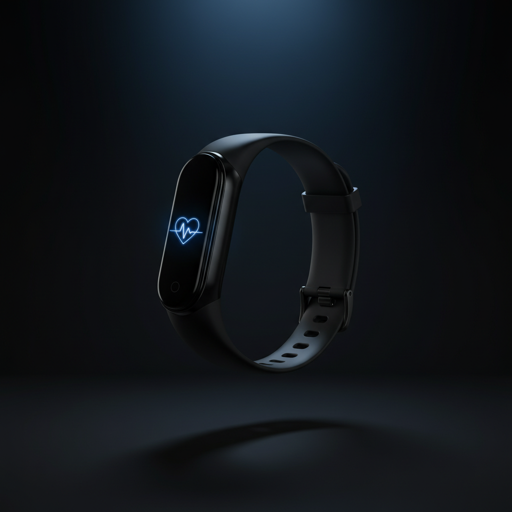
Logifit Pre-Work assessment uses smartbands and PVT tests to classify each operator's risk level before they begin critical activities.
Critical Recovery Time
Minimum 11-hour period between shifts necessary to restore full cognitive functions. Without adequate recovery time, micro-sleep probability increases exponentially during high-risk operations.
Legacy OSHA tools rely on subjective self-assessments and theoretical schedules that don't reflect actual sleep quality. An operator may report "8 hours of rest" but have experienced fragmented sleep with 3-4 hours of accumulated sleep debt.
Critical Data: Workers with sleep debt exceeding 6 hours show cognitive performance equivalent to 0.08% BAC - legal intoxication level (NIOSH Fatigue Research 2024) (Source: NIOSH — Effects of Long Work Hours)
Traditional evaluation through Karolinska questionnaires or subjective scales provides retrospective data when risk has already materialized. In contrast, continuous biometric monitoring detects recovery time degradation 2-4 hours before the critical event.
| Recovery Time Metric | Legacy Tools | Modern Systems |
|---|---|---|
| Sleep Debt Detection | Retrospective (post-incident) | Predictive (2-4h anticipation) |
| Fatigue Risk Accuracy | 65% (self-report) | 94% (biometric) |
| Response Time | 15-30 minutes | <300ms real-time |
| 24/7 Coverage | Point-in-time evaluations | Continuous monitoring |
Accumulated Sleep Debt: The Invisible Factor in Fatigue Management
Sleep debt represents the accumulated difference between needed sleep and obtained sleep. Unlike temporary tiredness, sleep debt generates compound cognitive deficit that persists days after the initial event.
Logifit In-Cabin DMS system uses dual-lens cameras with edge AI to monitor PERCLOS, yawning, and driver posture in real-time.
OSHA 2024 research documents that night shift workers accumulate an average 12 hours of weekly sleep debt, creating critical risk windows during high-consequence operations. Legacy tools do not quantify this progressive accumulation.
Organizations with biometric sleep debt monitoring reduce fatigue-related incidents by 73% during first year of implementation, according to ICMM 2024 comparative analysis.
Compound Sleep Debt
Accumulative deficit that cannot be eliminated with a single full night's sleep. Requires 2-3 cycles of extended recovery time to restore baseline cognitive capabilities in critical operations.
The most dangerous phenomenon occurs when operators experience "second wind" - false sense of alertness after overcoming initial drowsiness phase. This state masks underlying sleep debt, generating overconfidence precisely when micro-sleep risk reaches maximum levels.
- Sleep Debt 0-2 hours: Minimal degradation in routine tasks, maintains alertness in critical situations
- Sleep Debt 3-5 hours: Reaction time increases 40%, judgment errors in complex decisions
- Sleep Debt 6+ hours: Involuntary micro-sleeps every 3-7 minutes, loss of situational awareness
Key fact: 89% of fatal night shift incidents involve operators with sleep debt exceeding 4 hours accumulated in previous 72 hours (MSHA Analysis 2024)
Micro-sleeps: Real-Time Detection vs Reactive Tools
Micro-sleeps represent involuntary 0.5-15 second episodes where the brain enters sleep state during apparent wakefulness. These events precede 94% of fatigue risk-related incidents according to consolidated OSHA data. (Source: Sleep Foundation — Shift Work Disorder)
Logifit Ops Platform offers advanced analytics with machine learning, survival analysis, and correlation matrices to optimize fatigue management.
Legacy tools detect micro-sleeps only post-event through retrospective video analysis or operator self-report - methodologies that don't prevent the initial incident. Modern systems use computer vision AI to detect physiological precursors 200-500ms before complete micro-sleep.
Micro-sleep Precursors
Detectable physiological signals: PERCLOS >70% (eyelids closed), blink frequency <2/min, irregular ocular microsaccades, head posture descent >15° for 3+ continuous seconds.
The critical difference lies in predictive capability. While legacy tools require micro-sleep completion to generate alerts, computer vision systems detect progressive alertness degradation 2-4 minutes before the critical event.
- Baseline Detection: Establishment of individual alertness patterns during first 2-3 weeks of operation
- Continuous Monitoring: Real-time analysis of 47+ biometric and behavioral parameters
- Predictive Alerts: Escalated notifications when indicators show 15%, 30%, 50% degradation vs baseline
- Automatic Intervention: Safe stop protocols when micro-sleep risk exceeds critical threshold
This predictive capability generates measurable operational impact. Mining operations implementing predictive micro-sleep detection report 84% reduction in near-miss events and 67% improvement in night emergency response times.
Modern Fatigue Management: From Reactive to Predictive
Effective fatigue management in 2026 requires transition from reactive approaches toward predictive systems that anticipate cognitive degradation before impacting operational safety. This evolution represents fundamental change in OSHA compliance.
Leading organizations don't manage fatigue - they prevent it through predictive intelligence that converts biometric data into real-time operational decisions.
— Dr. Sarah Mitchell, Fatigue Research InstituteModern systems integrate multiple data streams: individual sleep patterns, historical workload, environmental conditions, reported medications, and personalized circadian factors. This integration generates dynamic "fatigue risk score" updated every 30 seconds.
Predictive Fatigue Risk Score
Algorithm combining 23+ biometric and operational variables to generate risk prediction on 0-100 scale. Scores >75 require immediate intervention; >85 activate automatic stop protocols.
Successful implementation requires integration with existing control systems. API interfaces allow fatigue management alerts to communicate directly with SCADA, DCS, and fleet management systems to execute automated responses without manual intervention.
- SCADA Integration: Fatigue alerts automatically generate operational speed reduction in critical equipment
- Dispatch System: Automatic task reassignment based on individual alert levels
- Shift Management: Schedule optimization based on historical recovery time and sleep debt patterns
- OSHA Reporting: Automatic generation of regulatory compliance documentation
Implement Predictive Fatigue Management in Your Operation
Discover how Logifit transforms biometric data into predictive alerts that prevent incidents related to inadequate recovery time and accumulated sleep debt.
Request Demo →ROI and OSHA Compliance: 2024-2026 Comparative Analysis
Economic analysis demonstrates that investment in modern fatigue management generates positive return within 8-12 months through reduction of incident costs, insurance premiums, and OSHA regulatory fines.
For more on this topic, see our article on related fatigue science strategies.
Fortune 500 organizations implementing predictive fatigue management systems report average savings of $2.4M annually per 1,000 monitored workers, primarily due to 78% reduction in incidents related to micro-sleeps and sleep debt.
| ROI Component | Legacy Tools | Predictive Systems | Differential |
|---|---|---|---|
| Incident Cost/Year | $847K per 1K workers | $186K per 1K workers | -78% reduction |
| OSHA Fines/Audit | $340K average | $45K average | -87% reduction |
| Insurance Premiums | 12% annual increase | 23% annual reduction | 35% differential |
| Night Productivity | Baseline 100% | +34% vs baseline | +34% improvement |
Key fact: Predictive system implementation generates average OSHA compliance score of 94% vs 67% with legacy tools, according to 2024 audits in mining and energy sectors
Regulatory compliance represents critical benefit. OSHA inspections 2024-2025 demonstrate stricter enforcement in fatigue management, with average fines of $340,000 for recovery time-related violations in 24/7 operations.
Organizations with predictive systems automatically document compliance through dashboards that record every operational decision based on fatigue risk data, creating complete audit trail for OSHA inspections.
- Automatic Documentation: Timestamped record of every fatigue alert and corrective action taken
- Trending Analysis: Identification of systemic patterns in sleep debt and recovery time by department
- Predictive Reporting: Risk projections enabling proactive intervention before audits
- Compliance Benchmarking: Performance comparison vs industry standards and OSHA best practices
Organizations with predictive fatigue management achieve certification rate of 89% in first OSHA audits vs 34% with legacy approaches, generating significant competitive advantage.
Evolution toward predictive fatigue management represents not merely technological upgrade - it constitutes fundamental transformation in operational risk management that positions organizations for safety performance leadership during the next decade.
Adequate recovery time, proactive sleep debt management, and micro-sleep prevention through intelligent systems define new baseline for world-class industrial operations. Organizations adopting these systems today will establish standards their competitors will follow tomorrow.