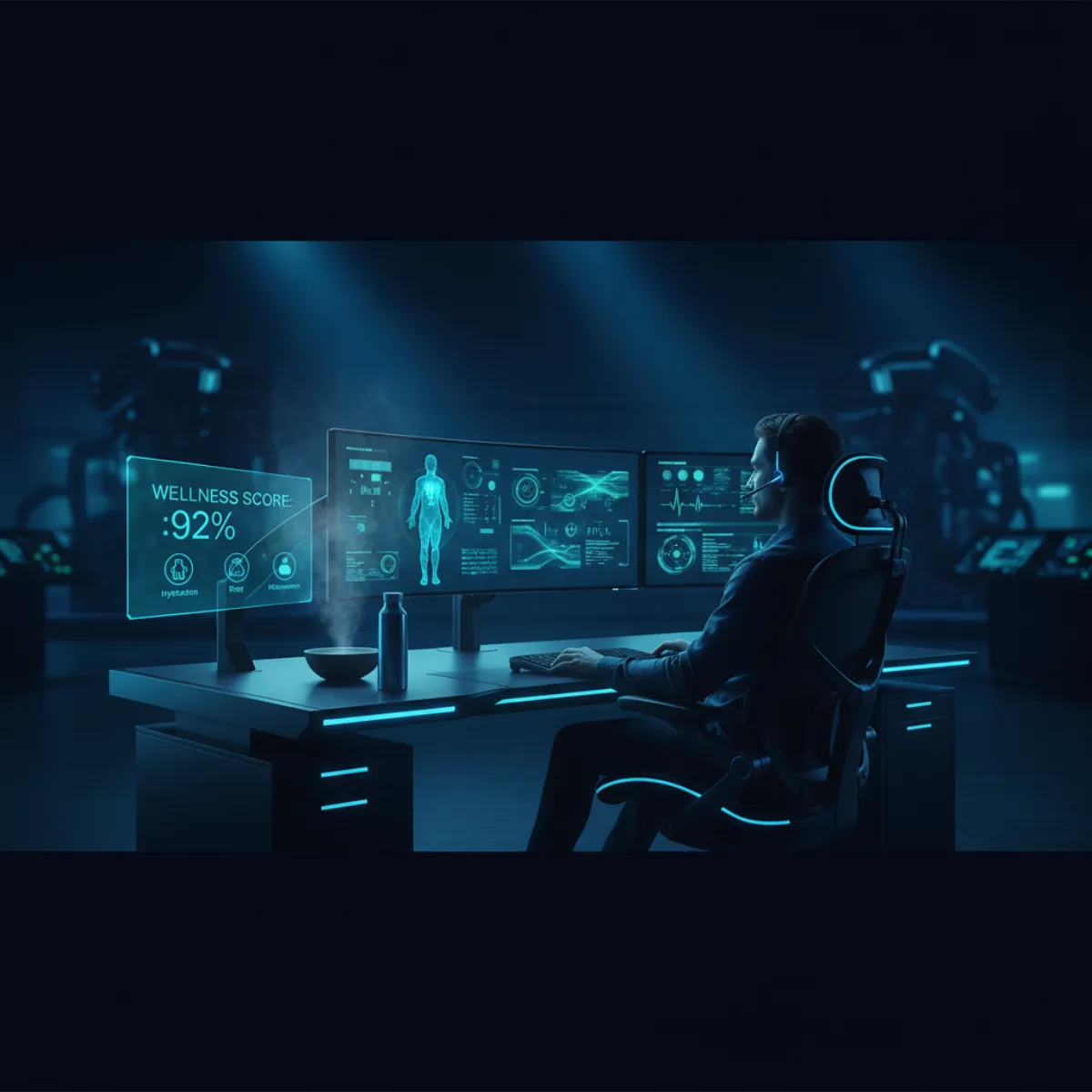

Executive Summary
In summary: Comprehensive worker wellness combines ergonomics, recovery routines, and health monitoring to reduce musculoskeletal (MSK) injuries by up to 47% while improving operational performance.
Key Points:
- Problem: MSK injuries represent 38% of all workplace injuries according to OSHA 2024
- Solution: Integrated ergonomics and wellbeing programs with continuous monitoring
- Impact: 47% reduction in MSK injuries and 32% improvement in productivity
Effective worker wellness goes beyond superficial programs. It integrates applied ergonomics, evidence-based recovery routines, and continuous health monitoring to create a system that prevents MSK injuries while optimizing human performance in demanding industrial environments. (Source: WHO — Healthy Workplace Framework)
How Ergonomics Prevents MSK Injuries in Industrial Operations
Applied ergonomics reduces musculoskeletal injuries by optimizing the interaction between workers, equipment, and work environments. MSK injuries represent average direct costs of $49,000 per incident according to Bureau of Labor Statistics 2024 data.
Comprehensive Ergonomic Assessment
Systematic process that analyzes postures, repetitive movements, and workloads to identify MSK risk factors before injuries occur. Includes measurement of joint angles, applied forces, and exposure duration.
Fundamental ergonomic principles include optimal reach zones (6-16 inches from body), work heights between 35-43 inches for precision tasks, and task rotation every 2 hours for repetitive movements.
Critical Data: 67% of MSK injuries in mining occur from forced postures maintained over 30 minutes, according to NIOSH 2024.
| Body Area | MSK Injuries (%) | Average Cost ($) |
|---|---|---|
| Lower Back | 42% | 57,000 |
| Shoulders | 28% | 42,000 |
| Wrists/Hands | 19% | 31,000 |
| Neck | 11% | 34,000 |
Recovery Routines that Strengthen Operational Performance
Structured recovery routines improve workers' physical and mental capacity. ISO 45003:2021 research demonstrates that active recovery programs increase productivity by 23% compared to passive breaks.
Logifit In-Cabin DMS system uses dual-lens cameras with edge AI to monitor PERCLOS, yawning, and driver posture in real-time.
Progressive Active Recovery
System of low-intensity exercises during work breaks that maintain circulation, reduce muscle tension, and prevent cumulative fatigue. Includes dynamic stretching, joint mobility, and breathing techniques. (Source: NIOSH — Ergonomics and Musculoskeletal Disorders)
Successful wellbeing programs implement micro-breaks of 2-3 minutes every hour, active breaks of 10 minutes every 2 hours, and 20-minute recovery sessions during shift changes.
- Initial wellbeing assessment: Measurement of physical capacity, stress levels, and MSK risk factors using validated tools like the Yoshitake questionnaire
- Personalized routine design: Exercise adaptation based on individual risk profile and specific job demands
- Gradual implementation: Progressive introduction over 4-6 weeks to establish adherence and avoid change resistance
- Continuous monitoring: Tracking of biometric indicators and wellbeing self-reporting using wearable technology
Companies implementing structured recovery routines achieve 34% reduction in absenteeism due to MSK injuries, according to Safe Work Australia 2024.
Continuous Wellbeing Monitoring: Technology that Works
Continuous wellbeing monitoring uses biometric sensors and data analytics to detect deterioration in physical condition before it results in injuries. Logifit integrates measurement of sleep patterns, heart rate variability, and fatigue levels to generate personalized recommendations.
Intelligent Pre-Work Assessment
Automated system that evaluates worker's physical and mental capacity before starting high-risk activities. Combines biometric data, reaction tests, and self-reporting to generate real-time FIT/UNFIT status.
Advanced wearable technology measures key wellbeing parameters including sleep quality (efficiency >85%), heart rate variability (rMSSD >30ms), and physical activity levels (steps, calories, sedentary time).
Key fact: Continuous wellbeing monitoring reduces fatigue-related incidents by 58% according to International Association of Mining Contractors 2024 data.
- Next-generation smartbands: Devices that monitor 24/7 sleep patterns, heart rate, and physical activity levels with medical-grade precision
- Psychomotor Vigilance Tests (PVT): 3-minute neurological assessments that detect cognitive impairment related to fatigue or stress
- Real-time management dashboards: Visualization of aggregated wellbeing metrics to identify trends and make preventive decisions
- Intelligent automatic alerts: Machine learning-based notifications that predict elevated MSK injury risk 72 hours in advance
Proven ROI: Worker Wellness Success Cases
Comprehensive wellbeing programs generate average returns on investment of 4:1 according to consolidated ICMM 2024 data. Savings come from reduced medical costs, lower absenteeism, reduced insurance premiums, and improved productivity.
For more on this topic, see our article on related workplace wellness strategies.
ROI Calculation Model
Standard methodology that quantifies tangible and intangible benefits of ergonomics and wellbeing programs. Includes avoided costs, productivity improvements, reduced turnover, and insurance savings.
A mining operation with 1,500 workers implemented a comprehensive wellness program with Logifit, achieving 43% reduction in MSK injuries, 29% improvement in wellbeing scores, and $2.0M in annualized savings during the first year.
| Metric | Before | After 12 months |
|---|---|---|
| MSK injuries/1000 workers | 47 | 27 |
| Lost days/MSK injury | 23 | 14 |
| Average cost/MSK injury ($) | 57,000 | 34,000 |
| Job satisfaction (%) | 67 | 84 |
Wellbeing programs that integrate ergonomics, recovery, and continuous monitoring are not a cost - they are a strategic investment in human capital that generates measurable and sustainable value.
— Ana Lucia Vargas, Occupational Wellness SpecialistLeading organizations implement wellbeing frameworks based on international standards like ISO 45001 and ISO 45003, adapted to the specific operational realities of high-risk industries.
Implement Evidence-Based Worker Wellness
Discover how Logifit helps industrial organizations reduce MSK injuries while improving operational performance through continuous monitoring technology and personalized wellbeing programs.
Request Demo →Practical Implementation: Your Roadmap to Effective Wellbeing
Successful implementation of wellbeing programs requires a structured approach combining initial assessment, personalized design, gradual rollout, and continuous optimization. The 90-day implementation framework ensures sustainable adoption and measurable results.
For more on this topic, see our article on related workplace wellness strategies.
The first 30 days focus on baseline evaluation using validated tools like the Yoshitake questionnaire for fatigue, REBA/RULA ergonomic assessments, and establishing baseline metrics for MSK injuries, absenteeism, and associated costs.
- Diagnostic phase (days 1-30): Comprehensive assessment of ergonomic risks, analysis of historical MSK injury data, and organizational culture assessment toward wellbeing
- Design phase (days 31-60): Development of personalized recovery routines, monitoring technology setup, and training of leaders and supervisors
- Launch phase (days 61-90): Gradual rollout by areas, intensive tracking of key indicators, and adjustments based on user feedback
- Optimization phase (ongoing): Continuous data analysis, program refinement based on results, and expansion to new operational areas
Sustainable success requires integration with existing health and safety management systems, alignment with local regulations (ISO 45001, OSHA 29 CFR 1910, NOM-035-STPS), and establishment of clear and measurable success metrics. (Source: OSHA — Ergonomics)
- Process indicators: Participation in recovery routines (target >85%), monitoring technology usage (target >90%), wellbeing program satisfaction (target >80%)
- Outcome indicators: MSK injury reduction (target 30-50%), wellbeing score improvement (target 25%), positive ROI within 12 months
- Impact indicators: Strengthened safety culture, improved worker engagement, reputation as employer of choice in the industry
Program sustainability depends on integration with existing operational processes, visible leadership support, and continuous demonstration of value for both workers and the organization. Logifit facilitates this integration through executive dashboards that connect wellbeing metrics with business results, pre-work assessments that integrate seamlessly with daily operations, and best practice resources based on successful global implementations.