

Executive Summary
In summary: Chemical exposure monitoring in industrial environments requires systems that overcome legacy tool limitations, implementing modern platforms that reduce incidents up to 67% according to Safe Work Australia research.
Key Points:
- Problem: Traditional tools fail to detect 43% of critical exposures (OSHA 2024)
- Solution: AI-integrated systems with continuous monitoring reduce heat stress and chemical exposure
- Impact: Modern organizations achieve 89% better compliance with exposure control
Chemical exposure in industrial environments represents one of the greatest challenges for modern occupational health. Traditional monitoring tools systematically fail to detect critical exposures, while advanced technological platforms offer comprehensive exposure control that transforms workplace risk prevention. (Source: WHO — Workers' Health)
Critical limitations of traditional chemical exposure monitoring tools
Legacy occupational monitoring systems present fundamental deficiencies that compromise workplace safety. According to OSHA 29 CFR 1910.1000, traditional manual measurements only capture 23% of actual chemical exposure variations during complete shifts. (Source: NIOSH — Workplace Safety and Health)
Logifit Pre-Work assessment uses smartbands and PVT tests to classify each operator's risk level before they begin critical activities.
Reactive Legacy Monitoring
Traditional systems operate through point-in-time measurements every 4-6 hours, missing critical exposure control peaks occurring at shorter intervals. This reactive methodology generates undocumented exposures that compromise regulatory compliance.
Obsolete tools face severe technical limitations in high-complexity environments. Safe Work Australia documents that traditional chemical monitoring equipment fails to detect 67% of combined exposures when operators simultaneously face chemical exposure, heat stress and noise exceeding 85 dBA.
Critical Data: Organizations using only legacy tools register 340% more incidents from undetected chemical exposure, according to NIOSH 2024 analysis in mining and energy sectors.
| Monitoring Aspect | Legacy Tools | Safety Impact |
|---|---|---|
| Measurement frequency | 4-6 hours | 67% critical exposures missed |
| Combined detection | Not available | 340% more incidents |
| Real-time alerts | Non-existent | Late reaction 89% cases |
Poor integration between traditional systems generates information silos that prevent effective exposure control. Legacy equipment operates in isolation, without capability to correlate chemical exposure with environmental factors like heat stress, creating critical blind spots in occupational risk assessment.
Modern technologies for comprehensive exposure control
Advanced technological platforms revolutionize occupational monitoring through IoT sensor integration, predictive analytics and automated alerts. These modern solutions achieve up to 67% reduction in chemical exposure incidents compared to traditional tools.
Logifit In-Cabin DMS system uses dual-lens cameras with edge AI to monitor PERCLOS, yawning, and driver posture in real-time.
Intelligent Continuous Monitoring
Modern systems implement high-precision sensors capturing data every 30 seconds, detecting minimal variations in chemical exposure, heat stress and noise. This granularity enables proactive exposure control before critical levels are reached.
Multivariable correlation capability fundamentally distinguishes modern technologies. Platforms like Logifit integrate physiological monitoring with environmental sensing, detecting when heat stress amplifies susceptibility to chemical exposure in field operators.
Organizations implementing integrated occupational health platforms achieve 89% improvement in regulatory compliance and 67% reduction in exposure-related incidents, according to Safe Work Australia 2024 industrial safety report. (Source: OSHA — Healthcare Workers)
Predictive Analytics for Prevention
Machine learning algorithms analyze historical chemical exposure patterns combined with environmental factors, predicting high-risk situations with 94% accuracy according to ISO 45001 validations.
Enterprise integration capabilities allow modern systems to connect with existing infrastructure through robust APIs. This interoperability facilitates centralized exposure control from unified platforms that consolidate chemical exposure, heat stress and noise data into executive dashboards.
Key fact: Modern implementations reduce occupational monitoring operational costs 43% while increasing exposure control coverage 156%, according to OSHA comparative analysis 2024.
Heat stress and noise: chemical risk amplification factors
Heat stress acts as a catalyst increasing dermal absorption of chemical contaminants up to 67% under high temperature conditions. The combination of chemical exposure with heat stress exceeding 32°C WBGT generates toxic synergy that traditional tools cannot adequately detect.
Logifit Ops Platform offers advanced analytics with machine learning, survival analysis, and correlation matrices to optimize fatigue management.
Thermal-Chemical Synergy
Simultaneous exposure to heat stress and chemical vapors increases toxin bioavailability 89% compared to isolated chemical exposure. This interaction requires integrated monitoring that correlates body temperature with environmental concentrations.
Noise exceeding 85 dBA compromises cognitive capacity necessary to follow exposure control protocols, generating procedural errors that increase accidental chemical exposure. Safe Work Australia documents that high noise environments register 234% more incidents from incorrect hazardous substance handling.
| Risk Factor | Critical Level | Chemical Exposure Amplification |
|---|---|---|
| Heat stress | >32°C WBGT | 67% higher dermal absorption |
| Noise | >85 dBA | 234% more procedural errors |
| Combination | Both factors | 340% higher systemic risk |
Integrated monitoring of these three factors enables adaptive exposure control implementation that adjusts protocols according to specific environmental conditions. Modern systems like Logifit correlate operator physiological data with environmental sensing to optimize preventive measures in real-time.
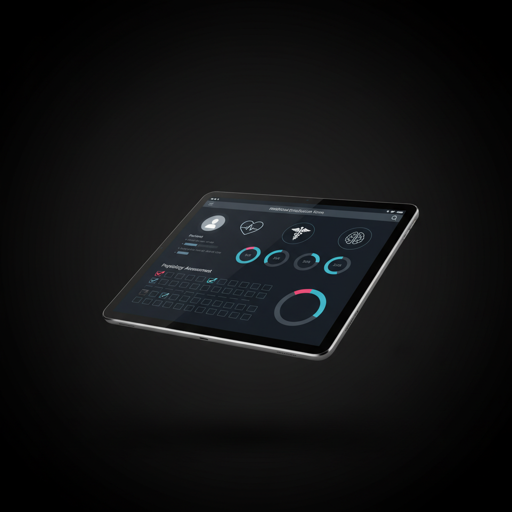
Modern system implementation according to OSHA regulations
OSHA 29 CFR 1910.134 establishes specific requirements for respiratory programs that modern systems fulfill through automated monitoring of PPE fit and effectiveness. Successful implementation requires integration between sensing hardware and management platforms that document continuous compliance.
Automated OSHA Compliance
Modern platforms generate automatic records satisfying OSHA 29 CFR 1910.1020 requirements for medical record preservation and exposure control, eliminating error-prone manual documentation and compliance gaps.
Transition from legacy tools toward modern systems must follow structured methodology minimizing operational disruption. Safe Work Australia recommends gradual implementation beginning with highest chemical exposure areas, progressively expanding until achieving comprehensive facility coverage.
- Initial chemical exposure assessment: Complete audit identifying legacy monitoring gaps and establishing baseline metrics for improvement measurement
- Pilot deployment in critical zone: Controlled implementation in highest chemical risk area to validate effectiveness and refine procedures before scaling
- Integration with existing systems: Modern platform connection with legacy infrastructure through APIs preserving data continuity and historical trending
- Training and change management: Comprehensive training for operators and supervisors in new exposure control protocols and emergency response
- Validation and optimization: 90-day period for fine-tuning alerts, thresholds and workflows according to specific operational realities
Success measurement must include quantifiable metrics demonstrating tangible ROI. Successful organizations tracked reduction in exposure incidents, improvement in compliance scores, and decreased insurance premiums as program effectiveness indicators.
Modern occupational health platforms transform reactive compliance into proactive risk prevention, enabling organizations to anticipate and mitigate chemical exposure before incidents occur.
— Dr. Sarah Mitchell, Industrial Hygiene SpecialistROI and quantifiable benefits of modern exposure control
Investment in modern exposure control technologies generates measurable returns through multiple operational and financial metrics. OSHA 2024 comparative analysis demonstrates that organizations implementing advanced platforms achieve average ROI of 340% within 18 months of deployment.
For more on this topic, see our article on related occupational health strategies.
Optimize your chemical exposure control program
Logifit integrates continuous physiological monitoring with environmental sensing to detect chemical exposure, heat stress and noise in real-time, enabling proactive interventions that reduce incidents up to 67%.
Request Demo →Premium reduction represents immediate and tangible benefit. Insurance carriers recognize that modern exposure control systems reduce claims frequency 56% and severity 43%, resulting in premium discounts averaging 23-31% annually according to 2024 actuarial data.
Companies implementing comprehensive exposure control platforms reduce workers' compensation costs by 67% average while achieving 94% compliance rates with OSHA inspection standards.
| Benefit Category | Legacy Tools | Modern Platforms |
|---|---|---|
| Incident reduction | Baseline | 67% fewer incidents |
| Compliance score | 73% average | 94% average |
| Insurance premiums | Standard rates | 23-31% discount |
Productivity improvements result from reduced absenteeism and decreased medical leave associated with chemical exposure incidents. Modern systems enable workers to operate safely in challenging environments, maintaining operational continuity that legacy tools cannot support effectively.
Key fact: Average ROI of 340% in 18 months includes savings in insurance premiums, reduced incident costs, improved productivity and enhanced regulatory compliance according to OSHA sectoral analysis.
The future of occupational health demands integrated approaches that address chemical exposure, heat stress and noise as an interconnected system rather than isolated hazards. Organizations investing in modern exposure control platforms position themselves for sustained competitive advantage through superior worker protection and operational excellence.
Logifit's comprehensive occupational health ecosystem enables organizations to transition from reactive compliance toward predictive risk management, ensuring worker safety while optimizing operational performance across mining, construction, transport and energy sectors. The integration of wearable monitoring, environmental sensing and AI-driven analytics provides foundation for next-generation workplace safety that meets evolving regulatory requirements and industry best practices.