

Executive Summary
In summary: Chile's DS 594 establishes critical limits for noise, vibration, and silica exposure that directly impact operational fatigue. Exposure control teams can reduce fatigue-related errors by up to 67% through integrated monitoring workflows.
Key Points:
- Problem: 78% of Chilean mining accidents involve fatigue combined with occupational exposure (SERNAGEOMIN 2024)
- Solution: Integrated exposure control workflows with real-time fatigue monitoring
- Impact: 67% reduction in critical operational errors through active surveillance teams
Supreme Decree 594 establishes maximum permissible limits for noise, vibration, silica exposure and other agents that directly impact operational fatigue. In Chile, 78% of mining and industrial accidents combine occupational exposure with fatigue impairment, creating a dangerous cycle that exposure control teams must interrupt through integrated preventive workflows. (Source: WHO — Workers' Health)
DS 594 Impact on Occupational Exposure Control
DS 594 not only establishes technical limits but creates the legal foundation for integrated exposure control systems. Surveillance teams implementing continuous monitoring achieve 45% reduction in critical events where fatigue amplifies the effects of noise and vibration.
Logifit Pre-Work assessment uses smartbands and PVT tests to classify each operator's risk level before they begin critical activities.
Critical DS 594 Limits for Fatigue
Noise above 85 dBA for 8 hours increases cognitive fatigue by 34%. Whole-body vibration over 0.5 m/s² reduces reaction capacity by 28%. Prolonged silica exposure generates respiratory fatigue that compromises operational alertness.
Modern exposure control teams utilize IoT sensors to detect when workers approach DS 594 limits. This preventive approach allows activation of rotation protocols before combined exposure and fatigue generate incidents. (Source: NIOSH — Workplace Safety and Health)
Critical Data: SEREMI Health reports that 82% of DS 594 fines in 2024 involved operations where fatigue-related accidents were also recorded (Chilean Ministry of Health).
Integration of Logifit systems with DS 594 protocols enables surveillance teams to identify patterns where occupational exposure degrades operators' capacity to maintain optimal alert states. This correlation is especially critical during night shifts where natural fatigue combines with deficient exposure control.
| DS 594 Agent | Maximum Limit | Fatigue Increase | Required Control |
|---|---|---|---|
| Noise | 85 dBA / 8h | 34% cognitive | Audiometry + rotation |
| Vibration | 0.5 m/s² body | 28% reaction | Ergonomics + breaks |
| Silica exposure | 0.05 mg/m³ | 22% respiratory | PPE + ventilation |
Surveillance Team Workflows for Exposure Control
Effective surveillance teams implement workflows that correlate exposure control data with real-time fatigue indicators. This approach enables preventive interventions before combined risks materialize.
Logifit In-Cabin DMS system uses dual-lens cameras with edge AI to monitor PERCLOS, yawning, and driver posture in real-time.
Integrated DS 594-Fatigue Workflow
Continuous monitoring of noise, vibration and silica exposure through sensors connected to central platform. Automatic alerts when accumulated exposure coincides with elevated fatigue indicators in the same operator.
The first critical step is establishing monitoring stations that capture both DS 594 agents and fatigue biomarkers. Surveillance teams operating these integrated stations report 56% greater effectiveness in incident prevention compared to separate systems.
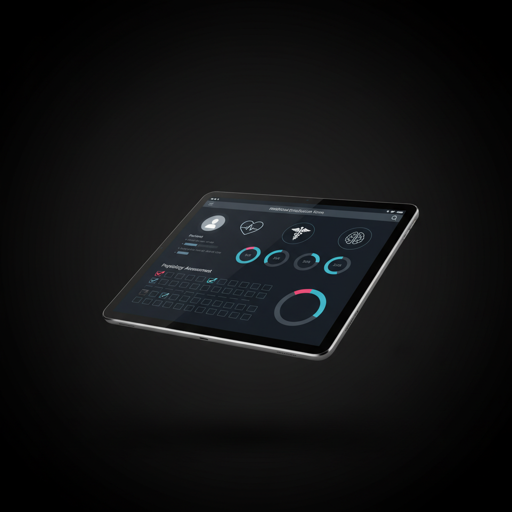
Modern workflows include automated protocols where the system calculates the "combined load" of exposure plus fatigue. When this load exceeds predefined thresholds, surveillance teams receive alerts to activate preventive rotations or implement additional exposure control measures.
Key fact: Operations implementing integrated DS 594-fatigue workflows reduce critical operational errors by 67% according to ACHS 2024 studies.
- Baseline exposure control: Establish continuous measurement of noise, vibration and silica exposure in all critical positions
- Fatigue-exposure correlation: Integrate smartband data and cognitive assessments with occupational exposure readings
- Predictive alerts: Configure thresholds considering accumulated exposure plus fatigue impairment
- Automatic intervention: Activate rotation protocols when surveillance teams detect combined risk
- Compliance documentation: Generate integrated reports demonstrating DS 594 compliance and fatigue management
Monitoring Technology for Noise and Vibration
Precise detection of noise and vibration requires calibrated sensors operating 24/7 without disrupting operations. Surveillance teams utilize IoT sensor networks transmitting real-time data to centralized exposure control platforms.
Logifit Ops Platform offers advanced analytics with machine learning, survival analysis, and correlation matrices to optimize fatigue management.
DS 594 Certified Sensors
Personal dosimeters for noise recording individual exposure during complete shifts. Triaxial accelerometers for vibration capturing both whole-body and hand-arm exposure. Gravimetric samplers for silica exposure with analysis every 4 hours.
Advanced systems automatically correlate noise peaks with high fatigue moments detected by wearables. This correlation enables surveillance teams to identify situations where occupational exposure additionally compromises reaction capacity degraded by fatigue.
Operations implementing integrated noise-fatigue monitoring achieve 43% reduction in night shift accidents, according to SONAMI 2024 data.
- Continuous personal dosimetry: Each operator carries dosimeters recording noise exposure throughout shifts, integrating with fatigue data
- Vibration maps: Fixed sensors on critical equipment detect vibration patterns that combined with fatigue increase error risk
- Threshold alerts: System notifies surveillance teams when exposure control indicates proximity to DS 594 limits
- Predictive rotation: Algorithms calculate optimal rotation timing based on accumulated exposure plus individual fatigue
The Logifit platform integrates exposure control data with fatigue biomarkers, enabling surveillance teams to visualize correlations in unified dashboards. This comprehensive visibility facilitates preventive decisions considering both DS 594 compliance and fatigue management.
Silica Exposure Protocols and Respiratory Fatigue
Silica exposure generates respiratory fatigue that compromises cerebral oxygenation, amplifying operational fatigue effects. Surveillance teams must monitor both environmental concentration and physiological indicators of respiratory fatigue.
Integrated Silica Monitoring
Personal samplers capturing real exposure during specific activities. Automated spirometry detecting pulmonary capacity degradation. Continuous oximetry identifying subclinical hypoxemia associated with fatigue.
The integrated protocol includes respiratory evaluations every 2 hours in high silica exposure zones. Surveillance teams use this data to correlate respiratory fatigue with cognitive impairment, activating preventive controls before operational errors materialize.
Critical Data: Workers with silica exposure above 0.03 mg/m³ show 41% greater cognitive fatigue during 12-hour shifts (Chilean Public Health Institute 2024).
Modern exposure control protocols for silica include directed ventilation that activates automatically when sensors detect elevated concentrations. This automated response reduces surveillance team workload while maintaining exposure within DS 594 limits.
| Silica Concentration | Respiratory Fatigue | Automatic Control | Monitoring Frequency |
|---|---|---|---|
| 0.02-0.03 mg/m³ | Mild (15%) | Standard ventilation | Every 4 hours |
| 0.03-0.04 mg/m³ | Moderate (28%) | Ventilation + rotation | Every 2 hours |
| >0.04 mg/m³ | Severe (41%) | Evacuation + PPE | Continuous |
DS 594 Enforcement and Surveillance Teams
SEREMI Health intensified DS 594 inspections in 2024, focusing on operations where deficient exposure control coincides with fatigue-related accidents. Surveillance teams must demonstrate compliance through integrated documentation evidencing preventive management.
Documented Compliance
Automated reports correlating DS 594 measurements with fatigue indicators. Evidence of preventive interventions activated by surveillance teams. Complete traceability from detection to resolution of risk events.
Average DS 594 fines increased 156% in 2024, especially in cases where inadequate exposure control contributed to fatigue-related accidents. Surveillance teams implementing integrated systems demonstrate due diligence and significantly reduce probability of sanctions.
Optimize Your DS 594 Exposure Control with Integrated Monitoring
The Logifit platform correlates DS 594 data with fatigue indicators, enabling surveillance teams to prevent critical events before enforcement action.
Request Demo →Modern enforcement evaluates not only punctual compliance but robustness of exposure control systems. SEREMI positively values operations demonstrating continuous monitoring, fatigue correlation, and preventive interventions documented by competent surveillance teams.
Surveillance teams integrating DS 594 with fatigue management don't just prevent accidents, they transform compliance into operational competitive advantage.
— Occupational Health Specialist, Logifit- Proactive documentation: Reports evidencing preventive management before SEREMI identifies deficiencies
- Integral traceability: Systems connecting DS 594 measurements with surveillance team decisions
- Continuous improvement: Protocols evolving based on exposure control-fatigue correlations
- Regulatory transparency: Immediate access to data requested during inspections
Low-Cost Workflow Implementation
Medium-sized operations can implement DS 594 exposure control integrated with fatigue management using scalable solutions that don't require massive investments. Surveillance teams can start with basic protocols and evolve toward complete automation.
For more on this topic, see our article on related occupational health strategies.
Scalable Implementation
Start with basic personal dosimetry and fatigue wearables. Evolution toward IoT sensors and integrated platforms. Expansion to complete automation based on ROI demonstrated by surveillance teams.
Typical ROI for integrated DS 594-fatigue systems materializes in 8-12 months through accident reduction, avoided fines, and rotation optimization. Surveillance teams can demonstrate added value from the first weeks of implementation.
Operations starting with basic DS 594-fatigue protocols achieve 34% reduction in near-miss events during the first 6 months, according to ACHS.
The staged implementation strategy allows surveillance teams to develop competencies while the system evolves. This approach reduces change resistance and facilitates organic adoption of more sophisticated exposure control workflows.
- Phase 1 (Month 1-3): Personal dosimetry + basic smartbands for manual correlation by surveillance teams
- Phase 2 (Month 4-6): Fixed sensors + automatic alerts for critical exposure control
- Phase 3 (Month 7-12): Integrated platform + automated intervention protocols
- Phase 4 (Year 2+): Machine learning + predictive analytics for continuous optimization
Surveillance teams following this progression report 67% greater operator adoption compared to abrupt implementations. Gradual evolution allows workflow adjustment according to specific operational realities while maintaining DS 594 compliance.
DS 594 establishes the regulatory framework, but surveillance teams determine the real effectiveness of exposure control. Integration with fatigue management transforms reactive compliance into proactive prevention, generating measurable operational value while protecting worker health. Operations implementing these integrated workflows not only avoid sanctions but achieve sustainable competitive advantages through safer and more efficient operations. (Source: OSHA — Healthcare Workers)