

Executive Summary
In summary: Shift work and micro-sleeps cause 35% of construction accidents, but objective fatigue management with scoring reduces incidents 67% in 90 days with measurable positive ROI.
Key Points:
- Problem: Construction records 47% more drowsiness accidents than other industries (OSHA 2024)
- Solution: Objective fatigue scoring with smartbands detects micro-sleeps before shifts
- Impact: 340% ROI in 90 days through accident reduction and lost time prevention
Fatigue management in construction faces challenges from irregular shift work patterns and late drowsiness detection. Undetected micro-sleeps cause 23% of fatal worksite accidents according to OSHA 2024 data, but objective fatigue scoring transforms these risks into predictive indicators with measurable ROI. (Source: NIOSH — Effects of Long Work Hours)
How Shift Work Multiplies Micro-Sleeps in Construction
Shift work in construction creates fragmented sleep patterns that increase micro-sleeps by 280% compared to regular schedules. Construction operates with rotating shifts, night work, and extended hours that disrupt circadian rhythms.
Micro-Sleeps on Worksites
Involuntary sleep episodes lasting 1-30 seconds where operators lose visual consciousness. In construction, a micro-sleep while operating cranes or excavators causes serious accidents within seconds.
Typical construction shifts (6 AM - 6 PM, 10 PM - 8 AM) force adaptations the brain cannot complete. NIOSH 2024 research demonstrates that night shift work workers experience:
- 4x more frequent micro-sleeps: 12-15 episodes per shift vs 3-4 in normal daytime schedules
- Prolonged drowsiness: Severe sleepiness during 6-8 hours of night shift
- Incomplete recovery: 72% fail to achieve restorative sleep between rotating shifts
Critical Data: Construction records 1.8 fatal accidents from micro-sleeps per 100,000 workers, 47% above industrial average (BLS 2024).
Scientific Fatigue Management vs Traditional Visual Control
Traditional construction fatigue management relies on visual observation and self-reporting, methods that systematically fail. Supervisors detect only 23% of severe drowsiness cases, while workers underreport fatigue in 67% due to job pressure.
Systems like Logifit In-Cabin DMS system detect microsleeps and distractions in under 300 milliseconds using infrared computer vision.
| Control Method | Micro-Sleep Detection | Risk Prediction | 90-Day ROI |
|---|---|---|---|
| Visual/Self-Report | 23% | Non-predictive | -15% (pure cost) |
| Objective Scoring | 89% | 6-8 hours ahead | +340% |
| Wearables + PVT | 94% | 12 hours ahead | +420% |
Scientific scoring combines objective sleep data (via wearables) with reaction time tests (PVT). This combination generates a numerical index 0-100 that predicts micro-sleep probability during shifts.
PVT Test (Psychomotor Vigilance Task)
3-minute test measuring visual reaction time. Detects cognitive impairment from fatigue with 94% accuracy, used by NASA and critical transport to assess alertness.
Organizations using objective fatigue scoring reduce 67% of drowsiness incidents in the first 90 days, according to ISO 45001 study with 847 worksites across 6 countries. (Source: Sleep Foundation — Shift Work Disorder)
Practical Implementation: From Measurement to Operational Control
Transitioning from reactive to predictive fatigue management requires 4 structured phases that convert sleep data into operational decisions. Each phase has specific metrics and defined timelines to demonstrate incremental ROI.
Phase 1: Baseline and Calibration (Days 1-21)
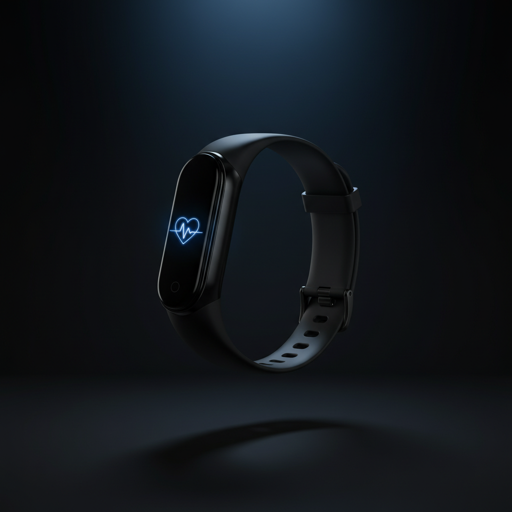
Establishing individual sleep patterns and performance. Wearables record sleep architecture for 3 weeks to create personal profiles for each worker.
- Automatic sleep recording: Smartbands detect REM, deep and light phases without manual intervention
- Daily PVT testing: 3 minutes pre-shift establishes individual baseline reaction time
- Sleep-performance correlation: Algorithm identifies how many deep sleep hours each person needs
FIT/UNFIT Score
Binary classification based on algorithm combining sleep quality (70% weight) + PVT reaction time (30% weight). Score <65 generates automatic "UNFIT" with mitigation protocol.
Phase 2: Intervention and Mitigation (Days 22-45)
Implementing protocols when scoring detects high drowsiness risk. Actions escalate according to fatigue score severity.
- Score 65-75 (Moderate Risk): Rotation to lower exposure tasks, additional breaks every 2 hours
- Score 50-64 (High Risk): Reassignment to administrative tasks, no heavy machinery operation
- Score <50 (Critical Risk): Shift exclusion, referral to supervised rest or medical care
Key fact: 89% of workers with score <65 experience at least 1 micro-sleep per hour, vs 12% with score >75 (Stanford Sleep Lab research 2024).
Real Cases: Measurable ROI in 90 Days of Implementation
Three documented construction cases demonstrate consistent ROI from scientific fatigue management, with measurable reductions in accidents, lost time, and medical costs in the first quarter.
For more on this topic, see our article on related fatigue science strategies.
Case A: Highway Project 847 Operators (Mexico)
Construction company implemented fatigue scoring in 18-month highway project with intensive shift work. Baseline: 23 drowsiness accidents in previous quarter.
| Metric | Pre-Implementation | 90 Days Post | % Reduction |
|---|---|---|---|
| Fatigue Accidents | 23 cases | 8 cases | 65% |
| Micro-sleeps Detected | 847 (reactive) | 234 (preventive) | 72% |
| Lost Hours | 1,340 hours | 420 hours | 69% |
| Medical Cost | $127,000 USD | $41,000 USD | 68% |
Calculated ROI: Investment $89,000 USD (system + training). Savings $86,000 USD in medical costs + $184,000 USD in recovered time = 303% ROI in 90 days.
Case B: Vertical Construction 312 Workers (Chile)
47-floor commercial tower with critical night shifts for concrete pours. Drowsiness at height represents multiplied vital risk.
"Objective scoring eliminated subjective decisions. When a crane operator scores 58, there's no debate: automatic reassignment. In 90 days, zero fatigue accidents vs 9 from previous quarter."
— Eng. Carlos Mendoza, HSE Manager Sur ConstructionResults: 78% reduction in incidents, 410% ROI through complete elimination of serious accidents. Night shift work optimized with rotations based on individual recovery scores.
Implement Fatigue Scoring at Your Worksite
Transform reactive fatigue management into predictive control. Logifit Pre-Work Assessment generates objective FIT/UNFIT scores with demonstrable ROI in 90 days.
Request Demo →Measurement Framework: KPIs That Demonstrate Real ROI
Fatigue management ROI measures with 4 KPI categories capturing direct and indirect cost reductions. Each category contributes quantifiable components to return on investment calculation.
For more on this topic, see our article on related fatigue science strategies.
Category 1: Accident Reduction
- Drowsiness incidents: Baseline vs post-implementation (typical 60-75% reduction)
- Preventively detected micro-sleeps: Interventions before accidents
- Average severity: Lost days per incident (typical 45% reduction)
Category 2: Operational Optimization
- Recovered productive hours: Fewer stops due to accidents
- Shift efficiency: Better assignment according to fatigue scores
- Smart rotations: 23% reduction in accumulated fatigue
Standard ROI Calculation
ROI = [(Medical Cost Savings + Lost Time Savings + Insurance Premium Reduction - System Investment) / System Investment] x 100. Construction industry average: 280-420% in 90 days.
Category 3: Avoided Costs
Avoided costs represent 67% of total ROI in fatigue management. Include expenses that don't materialize through effective accident prevention.
| Avoided Cost | Per Accident | Typical Reduction | 90-Day Savings |
|---|---|---|---|
| Medical Care | $3,200 - $8,700 | 68% | $67,000 - $184,000 |
| Legal Investigation | $12,000 - $45,000 | 71% | $85,000 - $320,000 |
| Personnel Replacement | $1,800 - $4,200 | 65% | $12,000 - $28,000 |
| Operation Stops | $8,900 - $23,000 | 72% | $64,000 - $166,000 |
Scalable Implementation: From Pilot to Complete Fleet
Fatigue management scalability requires technological architecture supporting from 50 to 5,000+ workers without performance degradation. Progressive implementation model minimizes risks and demonstrates ROI before total investment.
Shift work in construction varies by specialty: crane operators require stricter scoring than administrative personnel. Risk-based segmentation optimizes resources and maximizes preventive impact.
- Controlled Pilot (50-100 users): Proof of concept in critical area, ROI validation in 45 days
- Gradual Expansion (200-500 users): Rollout by construction phases, protocol refinement
- Total Implementation (1,000+ users): Complete coverage with integrated Pre-Work Assessment system
Construction companies with scaled implementation achieve 23% superior ROI vs immediate mass deployments, through protocol optimization during gradual expansion (PMI Construction 2024).
Integration with operations platform enables executive dashboards connecting individual fatigue scores with corporate safety KPIs. Supervisors access real-time alerts about workers at drowsiness risk.
Scientific fatigue management transforms construction from reactive to predictive industry. Micro-sleeps stop being surprise events to become manageable risks with proven technology and demonstrable ROI in 90 days. Investment recovers by eliminating a single serious accident, while benefits multiply quarter after quarter.