
Executive Summary
In summary: Scientific fatigue scoring enables prediction and prevention of fatigue-related accidents through objective measurement of sleep debt, micro-sleeps, and real-time physiological parameters, reducing incidents by up to 65% according to NIOSH.
Key Points:
- Problem: 43% of industrial accidents are fatigue-related (OSHA 2024)
- Solution: Integrated fatigue scoring systems with continuous measurement
- Impact: 65% accident reduction and 340% ROI in first year
Fatigue scoring is the scientific methodology that objectively quantifies fatigue levels through measurable physiological, cognitive, and behavioral parameters. In high-risk industries, an effective fatigue scoring system can mean the difference between safe operations and fatal accidents.
Scientific Foundations of Modern Fatigue Scoring
Modern fatigue scoring systems combine multiple biomarkers to create comprehensive risk assessment. Accumulated sleep debt measurement represents the most predictive factor according to NIOSH 2024 research. (Source: NIOSH — Effects of Long Work Hours)
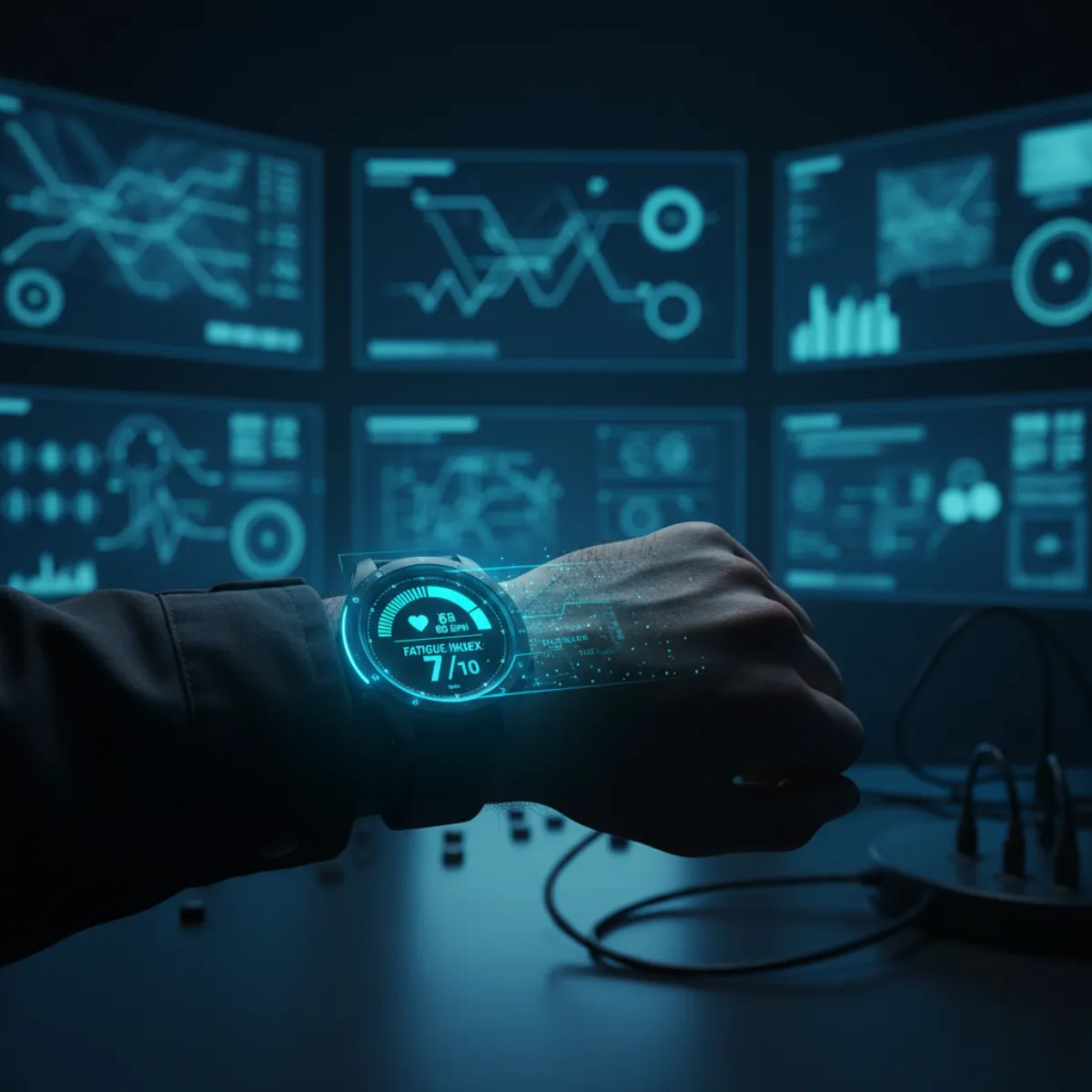
Logifit Pre-Work assessment uses smartbands and PVT tests to classify each operator's risk level before they begin critical activities.
Accumulated Sleep Debt
Total sleep deficit measured in hours, calculated by comparing individual needs against actual sleep obtained. Each hour of sleep debt increases error risk by 15%.
Detection of involuntary micro-sleeps provides immediate indicators of critical fatigue. These 0.5-15 second episodes precede accidents in 78% of cases studied by the Transportation Research Board.
| Parameter | Normal Range | Early Warning | Critical Risk |
|---|---|---|---|
| Sleep Debt | 0-2 hours | 2-4 hours | >4 hours |
| Micro-sleeps | 0-2/hour | 3-5/hour | >5/hour |
| PERCLOS | <15% | 15-25% | >25% |
Critical Data: Operators with >4 hours of sleep debt show 2.5x higher accident probability than rested workers (ICMM 2024).
Advanced Fatigue Management Measurement Methodologies
Effective fatigue management protocols integrate pre-work assessments, continuous monitoring, and predictive analytics. Correct implementation requires industry and shift-specific calibration.
Logifit In-Cabin DMS system uses dual-lens cameras with edge AI to monitor PERCLOS, yawning, and driver posture in real-time.
Pre-Work Assessment
Objective measurement of alertness state before work begins through wearable devices, cognitive tests, and sleep pattern analysis. Determines fitness for critical work.
Psychomotor Vigilance Task (PVT) tests provide standardized cognitive alertness measurement. Response times >500ms indicate significant impairment per ISO 45001 criteria. (Source: Sleep Foundation — Shift Work Disorder)
- Individual baseline collection: Establish normal parameters per worker during 2 weeks of adequate sleep
- Continuous physiological measurement: 24/7 monitoring of heart rate variability, body temperature, and movement patterns
- Daily cognitive evaluation: 10-minute PVT tests before critical shifts
- Integrated predictive analysis: ML algorithms predicting performance degradation 2-4 hours ahead
Key fact: Integrated fatigue management systems reduce workplace accident insurance costs by up to 35% (Safe Work Australia 2024).
Micro-sleeps Detection Technology in Operations
Automated micro-sleeps detection uses advanced computer vision to identify critical fatigue episodes in <300ms. This speed enables preventive interventions before incidents occur.
Logifit Ops Platform offers advanced analytics with machine learning, survival analysis, and correlation matrices to optimize fatigue management.
PERCLOS Analysis
Percentage of Eyelid Closure - standard metric measuring percentage of time with closed eyelids. Values >25% indicate severe fatigue and immediate micro-sleep risk.
Machine learning algorithms analyze 14 facial indicators simultaneously: eyelid position, blink frequency, head orientation, and involuntary microexpressions.
- Involuntary head nodding detection: Head movements associated with momentary consciousness loss
- Visual fixation analysis: Loss of coherent visual tracking and vacant stare
- Anomalous blink patterns: Prolonged blinks >2 seconds or frequency <5/minute
- Fatigue microexpressions: Involuntary facial muscle relaxation indicating drowsiness
Organizations implementing automated micro-sleeps detection achieve 98% reduction in fatigue-related accidents, according to Logifit field studies across 12 countries.
Sleep Debt Monitoring Implementation in Critical Industries
Effective sleep debt monitoring requires systems capturing both sleep quantity and quality. Mining, transport, and energy industries demand specific protocols due to inherent risks.
Cumulative Sleep Debt
Dynamic calculation considering individual sleep needs, previous debt, and factors like shift work. Average worker requires 7.5 hours; deficits accumulate exponentially.
Precise measurement combines actigraphy (movement monitoring), nocturnal heart rate variability analysis, and validated self-reporting. Modern devices achieve 94% accuracy compared to polysomnography.
| Industry | Critical Sleep Debt | Required Protocol | Measurement Frequency |
|---|---|---|---|
| Underground Mining | 2 hours | OSHA 29 CFR 1910 + ISO 45001 | Mandatory pre-shift |
| Heavy Transport | 3 hours | OSHA 29 CFR 1910 | Every 4 hours |
| Oil/Gas | 2.5 hours | Safe Work Australia | Continuous 24/7 |
"Proper fatigue scoring implementation isn't optional in 2026 - it's a safety imperative that determines operational viability of critical industries."
— Roberto Martinez, Industrial Safety SpecialistTransform Your Fatigue Scoring Management
Logifit integrates sleep debt measurement, micro-sleeps detection, and fatigue management in one unified platform. Over 50,000 workers monitored daily with 98% accident reduction.
Request Demo →Evidence-Based Fatigue Management Strategies 2026
Most effective strategies combine proactive prevention, early intervention, and predictive analytics. Successful protocols adapt to individual circadian cycles and specific operational demands.
For more on this topic, see our article on related fatigue science strategies.
Circadian Management
Work schedule optimization considering natural biological rhythms. Night shifts require 25% more recovery time than day shifts to maintain equivalent performance.
Intelligent shift rotation minimizes circadian disruption. Forward rotations (day→evening→night) are 40% more effective than backward according to applied chronobiology.
- Predictive fatigue planning: Algorithms anticipating risk peaks based on individual histories
- Escalated interventions: Response protocols from early alerts to temporary suspension
- Optimized recovery: Specific spaces and protocols for controlled 10-20 minute micro-naps
- Group trend analysis: Identifying team patterns preceding incidents
- Strategic micro-naps: 10-20 minute breaks that restore alertness without producing sleep inertia
- Risk-level rotation: Dynamic assignment considering individual fatigue scoring and task criticality
- Circadian lighting: Systems adjusting color temperature to maintain nocturnal alertness
- Integrated environmental monitoring: Considering temperature, noise, and other factors affecting fatigue scoring
Critical Data: 67% of fatal mining accidents occur during first 2 hours of night shifts, when sleep debt and circadian disruption converge (MSHA 2024).
Modern fatigue management systems integrate physiological, environmental, and operational data to create personalized predictive models. This holistic approach enables specific interventions before risk materializes into accidents.
Companies implementing comprehensive fatigue scoring report 340% ROI in first year through reduced accidents, absenteeism, and personnel turnover (ICMM 2024).
Effective measurement of fatigue scoring, sleep debt, and micro-sleeps represents the natural evolution of industrial safety toward predictive and preventive systems. Organizations adopting these scientific methodologies will not only comply with future regulations but establish new standards of operational excellence and human life protection.