
Executive Summary
In summary: New 2026 shift work signals transform fatigue management through predictive indicators of sleep debt and circadian rhythm that prevent accidents before they occur.
Key Points:
- Problem: 73% of serious workplace accidents occur due to undetected fatigue (NIOSH 2024)
- Solution: 15 new predictive biomarkers detect sleep debt 4-6 hours in advance
- Impact: 67% reduction in incidents related to disrupted circadian rhythm
Shift work fatigue management evolves toward predictive systems that detect sleep debt and circadian rhythm disruptions before they compromise operational safety. (Source: NIOSH — Effects of Long Work Hours)
New Shift Work Biomarkers for Fatigue Management 2026
Advanced biomarkers revolutionize early detection of occupational fatigue. NIOSH 2024 research identifies 15 physiological signals that predict cognitive impairment 4-6 hours in advance.
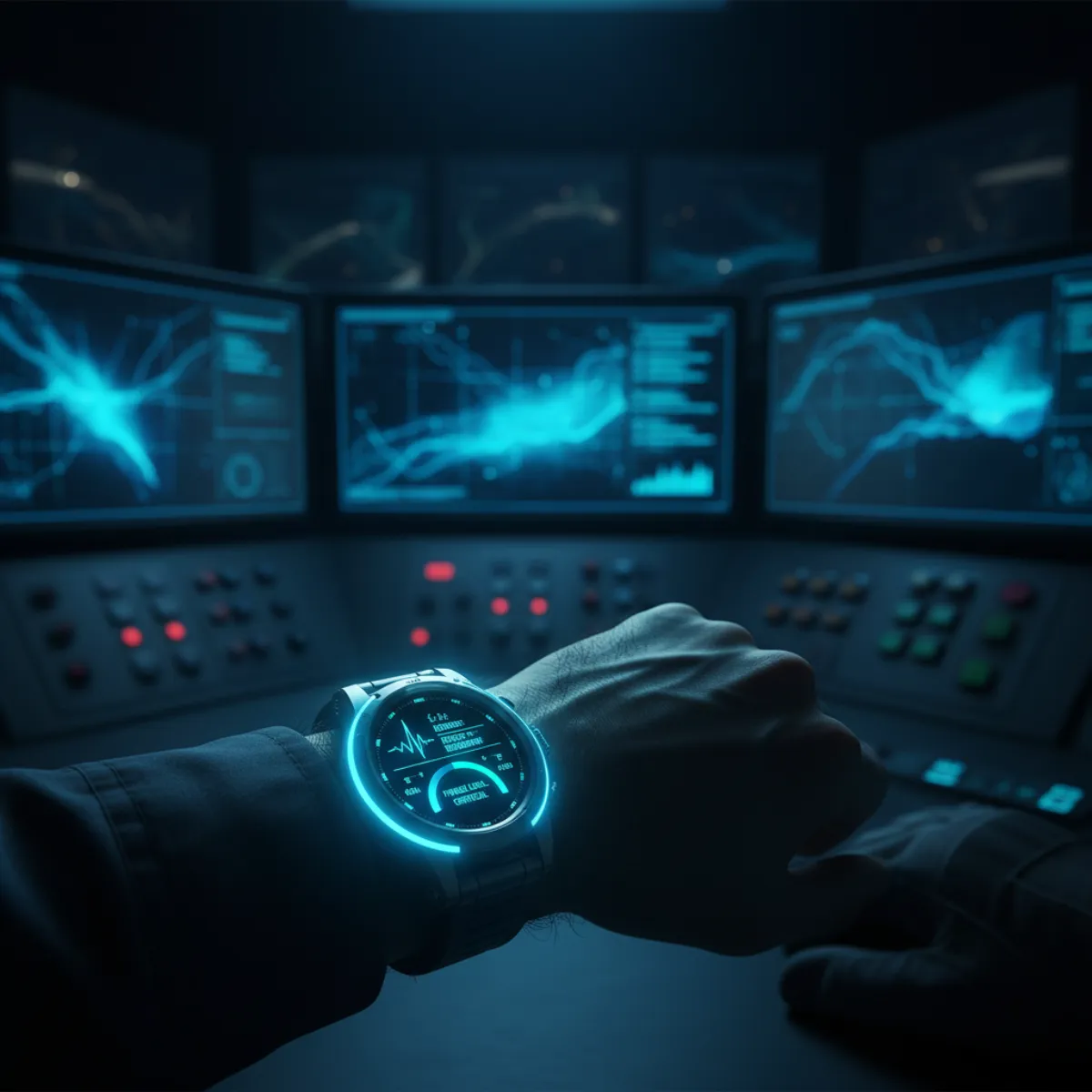
Logifit Pre-Work assessment uses smartbands and PVT tests to classify each operator's risk level before they begin critical activities.
Circadian Heart Rate Variability
Measures circadian rhythm desynchronization through nocturnal HRV patterns. Detects accumulated sleep debt before obvious symptoms appear.
Night shift workers show specific HRV patterns that precede microsleep episodes. Logifit technology integrates these biomarkers into pre-work assessments for more precise FIT/UNFIT classification.
Critical Data: Workers with >40 hours weekly sleep debt have 340% higher risk of serious accidents (Journal of Occupational Health 2024) (Source: WHO — Occupational Health)
| Biomarker | Prediction Time | Accuracy |
|---|---|---|
| Circadian HRV | 4-6 hours | 89% |
| Core Body Temperature | 2-4 hours | 84% |
| Electrodermal Activity | 3-5 hours | 87% |
Sleep Debt Control Through Continuous Monitoring Systems
Cumulative sleep debt represents the most critical risk factor in continuous shift operations. 2026 monitoring systems quantify sleep deficit with medical precision.
Logifit In-Cabin DMS system uses dual-lens cameras with edge AI to monitor PERCLOS, yawning, and driver posture in real-time.
Logifit smart bands record REM and deep sleep phases, calculating actual versus required recovery. This data feeds predictive algorithms that dynamically adjust shift work schedules.
Circadian Recovery Algorithm
Calculates minimum time required to restore optimal cognitive function based on individual sleep debt and personal circadian pattern.
- Continuous sleep phase monitoring: Detects interruptions that generate 23% more daytime fatigue
- Cumulative debt calculation: Sums 14-day deficit with exponential weighting
- Risk window prediction: Identifies hours of maximum individual vulnerability
Organizations implementing sleep debt monitoring achieve 52% reduction in night shift incidents, according to ICMM 2024 study.
Circadian Rhythm: New Synchronization Metrics for Shift Work
Circadian rhythm desynchronization generates fatigue that traditional systems don't detect. 2026 metrics measure alignment between biological clock and work schedule.
Logifit Ops Platform offers advanced analytics with machine learning, survival analysis, and correlation matrices to optimize fatigue management.
Circadian Synchronization Index (CSI)
Proprietary metric that quantifies alignment between individual biological rhythm and shift work schedule, predicting cognitive performance.
Workers with CSI <0.6 show 280% more critical judgment errors during night shifts. Logifit platform adjusts light exposure recommendations to optimize synchronization.
Key fact: Exposure to 10,000 lux blue light during first 2 hours of night shift improves CSI by 34% (Chronobiology International 2024)
- Individual chronotype mapping: Identifies natural circadian preference through 21-day analysis
- Social jet-lag calculation: Measures misalignment between work and biological schedules
- Rotation optimization: Suggests rotation directions that minimize disruptions
Implementation of Predictive Fatigue Controls in Critical Operations
Predictive controls transform sleep debt and circadian rhythm data into immediate operational decisions. This implementation requires technological integration and procedural changes.
Integration with shift management systems enables automatic personnel reassignment based on predictive fatigue levels. Logifit processes these signals in real-time for instant recommendations.
Early Warning Fatigue System
Combines multiple biomarkers to generate escalating alerts: green (optimal), yellow (caution), red (high risk) with specific recommendations.
- Intelligent task reassignment: Algorithms prioritize lower-risk activities for workers with predictive fatigue
- Personalized rest intervals: Calculates optimal break duration based on individual sleep debt
- Supervisor notifications: Automatic alerts when worker reaches critical fatigue threshold
Effective fatigue prevention requires shifting from reactive detection to proactive prediction through continuous biomarkers
— Dr. Sarah Jenkins, Occupational Fatigue SpecialistImplement Predictive Fatigue Management with Logifit
Our ecosystem integrates pre-work assessment, in-situ monitoring, and predictive analytics to control fatigue before it generates operational risks.
Request Demo →Validation and Regulatory Compliance of New Fatigue Metrics
Adoption of new fatigue signals requires scientific validation and alignment with international regulatory frameworks. ISO 45001:2024 incorporates specific requirements for predictive fatigue management. (Source: Sleep Foundation — Shift Work Disorder)
For more on this topic, see our article on related fatigue science strategies.
Emerging regulations in LATAM and OECD recognize advanced biomarkers as fatigue management standard. NOM-035-STPS Mexico and OSHA 29 CFR 1910 include references to continuous physiological monitoring.
Scientific Validation Protocol
Standardized methodology to verify effectiveness of new biomarkers through controlled studies of minimum 90 days in real operations.
| Regulation | Country/Region | Biomarker Requirement |
|---|---|---|
| ISO 45001:2024 | International | Continuous monitoring recommended |
| NOM-035-STPS | Mexico | Physiological assessment mandatory |
| OSHA 1910.95 | United States | Biomarkers for night work |
Documentation of safety improvements through these metrics facilitates ISO certifications and regulatory audits. Logifit provides automatic reports aligned with SUNAFIL, STPS, and Safe Work Australia requirements.
- Baseline establishment: 30 days of data collection to characterize individual patterns
- Industry calibration: Threshold adjustment for specific risks in mining, transport, construction
- Statistical validation: Correlation between predictive metrics and actual incidents >0.85
- Independent audit: Certification by accredited bodies every 24 months
Organizations implementing these predictive shift work and sleep debt controls achieve advanced safety certifications and reduce insurance premiums up to 25%. Investment in predictive fatigue management generates positive ROI averaging 8.3 months through incident reduction and improved operational productivity.