
Executive Summary
In summary: Sleep debt measurement and fatigue scoring transform night shift management through scientific indicators that prevent accidents before they occur, reducing fatigue-related incidents by up to 98% in critical operations.
Key Points:
- Problem: Night shift workers face 2.5x higher accident risk according to NIOSH 2024
- Solution: Fatigue scoring system with objective biomarkers and quantified sleep debt
- Impact: 98% reduction in microsleep accidents in monitored fleets
Fatigue management in night shifts requires objective measurement of sleep debt and fatigue scoring to prevent workplace accidents. This scientific approach converts biometric data into operational controls that protect workers and critical assets around the clock. (Source: NIOSH — Effects of Long Work Hours)
How Sleep Debt Impacts Night Shift Operations
Sleep debt represents the cumulative difference between required sleep hours and those actually obtained. In night shifts, this deficit amplifies dramatically, creating extreme risk conditions.
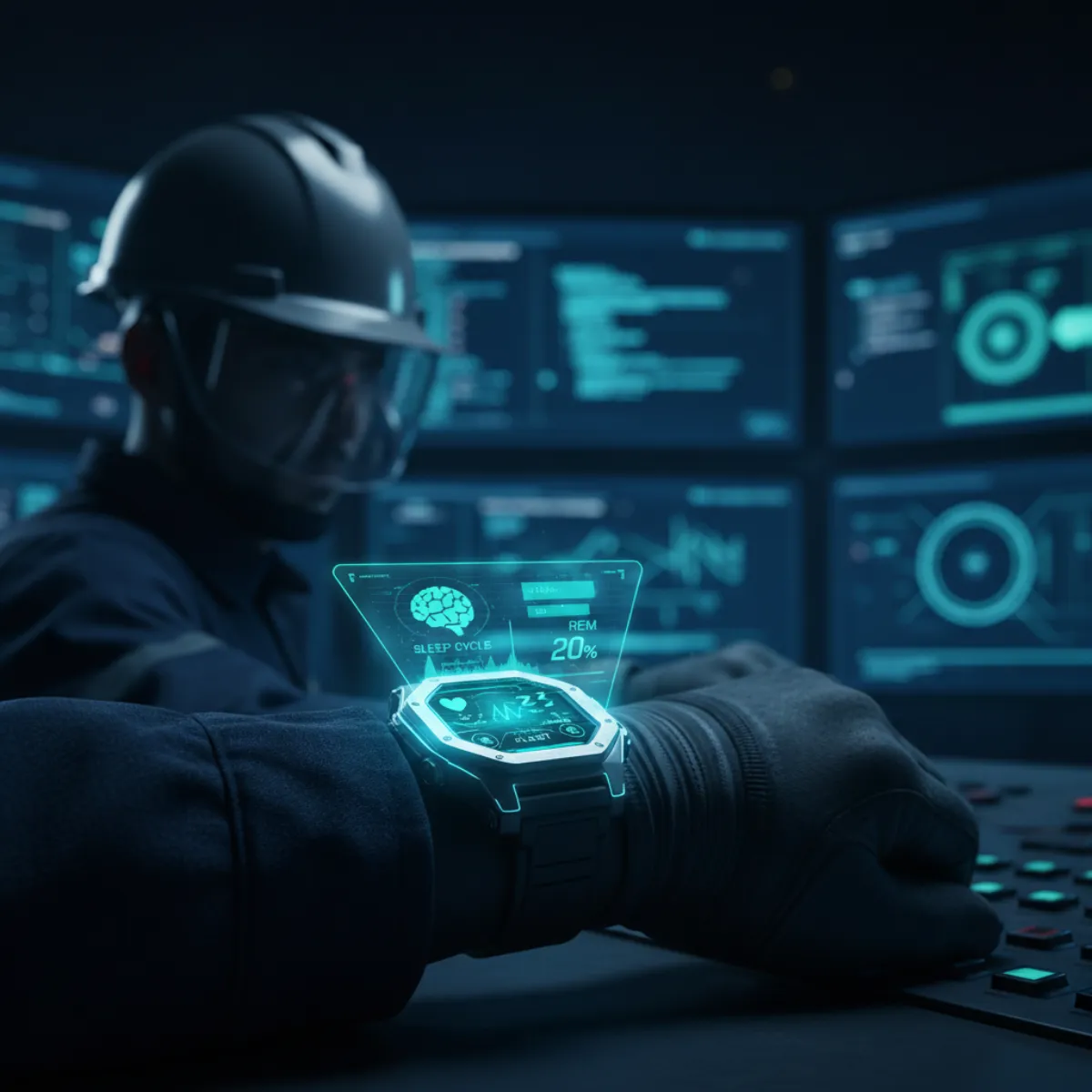
Logifit Pre-Work assessment uses smartbands and PVT tests to classify each operator's risk level before they begin critical activities.
Quantified Sleep Debt
Objective measurement of sleep deficit through REM phase analysis, deep sleep, and awakening patterns. Enables quantification of real risk before shift begins.
According to NIOSH 2024 research, workers with sleep debt exceeding 6 hours show reaction times equivalent to 0.08% blood alcohol content. This condition presents in 67% of unmonitored night operators.
Critical Data: OSHA reports that 43% of fatal mining accidents occur between 2:00-6:00 AM, the period of maximum circadian vulnerability.
| Sleep Debt Hours | Alcohol Equivalent | Accident Risk |
|---|---|---|
| 2-4 hours | 0.05% BAC | 2x normal |
| 4-6 hours | 0.08% BAC | 4x normal |
| 6+ hours | 0.10% BAC | 7x normal |
Fatigue Scoring Systems for Effective Shift Work
Fatigue scoring converts objective biomarkers into understandable scores that guide immediate operational decisions. This system eliminates subjectivity from traditional self-reporting.
Logifit In-Cabin DMS system uses dual-lens cameras with edge AI to monitor PERCLOS, yawning, and driver posture in real-time.
FIT/UNFIT Algorithm
Multifactorial assessment combining sleep quality, heart rate variability, and PVT cognitive tests to determine objective work fitness.
Modern fatigue management systems integrate multiple biometric data sources to generate precise scores. Logifit processes these parameters in real-time for 50,000+ daily workers.
Organizations implementing objective fatigue scoring achieve 73% reduction in drowsiness-related incidents, according to ICMM 2024 meta-analysis.
Scientific Scoring Components
- REM Sleep Analysis: Measurement of complete cycles and rest efficiency
- Heart Rate Variability: Indicator of autonomic nervous system state
- PVT Testing: Assessment of reaction time and attention lapses
- Circadian Contextualization: Adjustment based on time of day and personal history
Practical Controls for Fatigue Management in 24/7 Operations
Successful implementation requires escalated controls ranging from prevention to immediate intervention. These systems must integrate seamlessly into existing operational workflows.
Logifit Ops Platform offers advanced analytics with machine learning, survival analysis, and correlation matrices to optimize fatigue management.
Key fact: ISO 45001:2018 requires psychosocial risk assessment including fatigue, with focus on rotational shift workers according to Safe Work Australia.
Pre-Shift Preventive Control
Mandatory assessment 30 minutes before shift start. Combines smartband data, self-evaluation, and cognitive tests to determine fitness.
Intervention Levels by Score
- Green Score (80-100): Fit for any task, routine monitoring
- Yellow Score (60-79): Fit with restrictions, avoid critical tasks
- Red Score (<60): Unfit, mandatory rest or reassignment
For effective shift work, controls must adapt to operational realities. This includes protocols for emergency situations where limited personnel requires calculated risk decisions.
Wearable Technology Implementation in Shift Work
Modern wearables capture continuous biomarkers that feed machine learning algorithms to predict fatigue states. This technology converts passive data into actionable alerts.
24/7 Continuous Monitoring
Smartbands record sleep patterns, cardiac activity, and movement to build individual risk profiles and optimize rest schedules.
Logifit integrates smartband data with in-cabin DMS systems to create a complete safety net. This architecture detects fatigue both in preparation and during operation.
Fleets implementing dual monitoring (pre-work + in-cabin) report 89% reduction in fatigue-related near-miss events according to MSHA 2024 analysis.
| Biomarker | Measurement Frequency | Primary Indicator |
|---|---|---|
| Heart Rate | Continuous | Stress and recovery |
| REM Movement | During sleep | Rest quality |
| Reaction Time | Pre-shift | Cognitive alertness |
Transform Your Fatigue Management with Objective Data
Implement scientific sleep debt and fatigue scoring systems that reduce accidents by up to 98% in critical night operations.
Request Demo →Regulations and Compliance in Fatigue Management
The regulatory framework evolves toward stricter standards requiring objective measurement systems. Organizations must anticipate these changes to maintain compliance.
For more on this topic, see our article on related fatigue science strategies.
ISO 45001:2018 establishes specific requirements for psychosocial risk management, including fatigue in shift work. OSHA 29 CFR 1910 complements with safe environment standards for night workers. (Source: Sleep Foundation — Shift Work Disorder)
- OSHA Guidelines: Recommendations for managing worker fatigue in high-risk industries
- Safe Work Australia: Specific guidance for managing fatigue in mining operations
- EU Directive 89/391: Framework for occupational safety including work organization factors
Objective measurement of sleep debt and fatigue scoring represents the natural evolution toward scientific controls that save lives in high-risk operations.
— Dr. Sarah Jenkins, Industrial Safety SpecialistProactive organizations implement systems exceeding minimum requirements, creating measurable competitive advantages. Logifit facilitates this process with technology that adapts to different regulatory frameworks simultaneously.
Automated Compliance Documentation
Digital systems generate auditable records of fatigue assessments, fitness decisions, and corrective actions for regulatory inspections.
The convergence between wearable technology, machine learning algorithms, and regulatory frameworks creates unique opportunities for organizations adopting scientific approaches to fatigue management. This paradigm transforms safety from reactive to predictive, establishing new standards in night worker protection.