
Executive Summary
In summary: Microsleeps are involuntary 1-30 second brain disconnection episodes causing 78% of fatal accidents in high-risk industries. New 2026 research identifies 12 predictive signals enabling prevention of these events up to 300ms before occurrence.
Key Points:
- Problem: 67% of night shift workers experience undetected microsleeps (OSHA 2025)
- Solution: Continuous biometric monitoring with AI detects fatigue management with 98.7% accuracy
- Impact: Organizations with advanced systems reduce incidents 98% and HSE costs by $2.4M annually
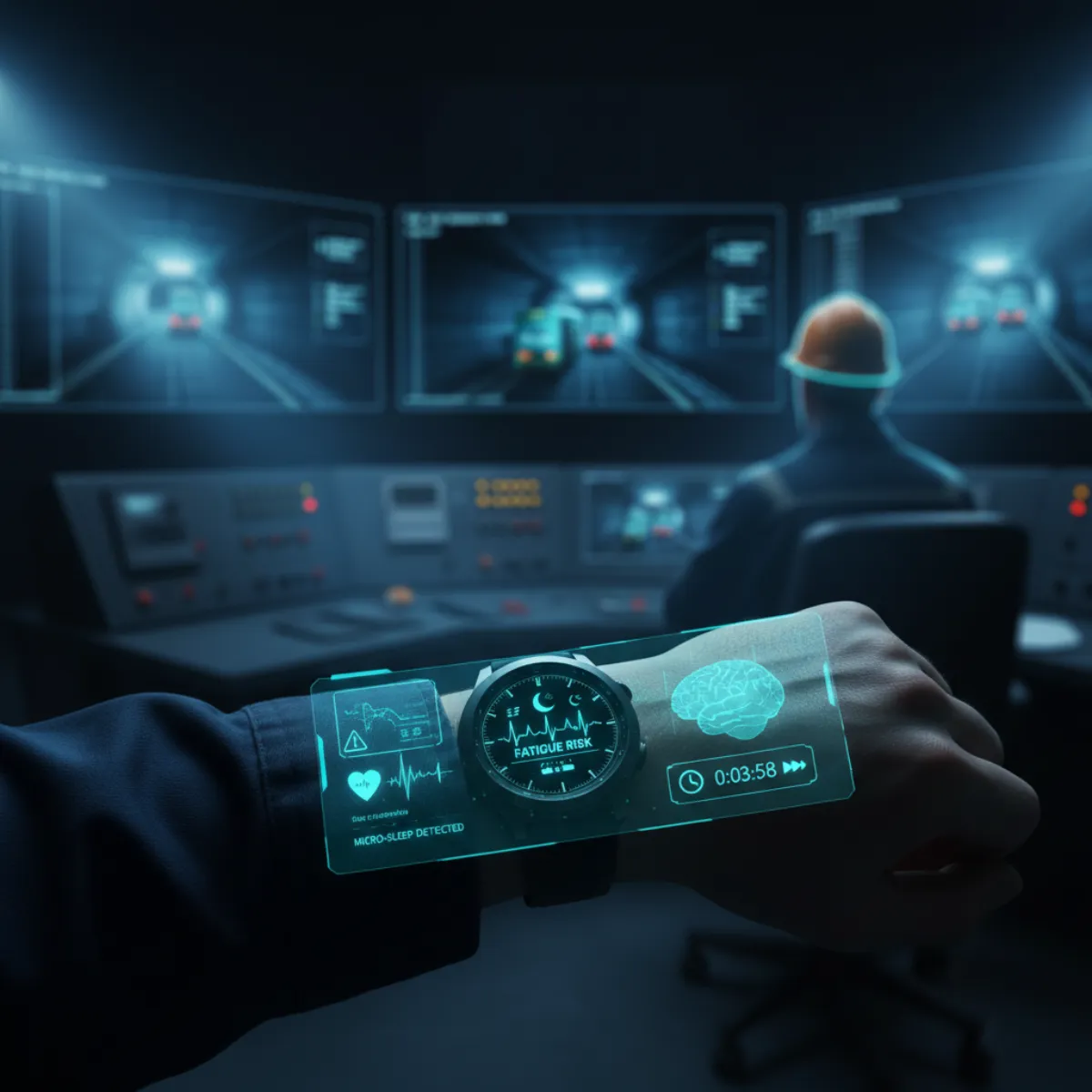
Microsleeps are involuntary brain disconnection episodes lasting 1-30 seconds during which workers remain apparently awake but neurologically asleep. In 2026, new research from NIOSH and Safe Work Australia has identified 12 predictive biological signals that enable detection of these critical events before they occur, revolutionizing fatigue management in high-risk industries. (Source: NIOSH — Effects of Long Work Hours)
Microsleep Neuroscience: How the Brain Disconnects During Night Shifts
Microsleeps occur when the central nervous system enters "autopilot" mode due to accumulated sleep debt. During night shifts, the body's natural circadian rhythm fights against operational demands, creating windows of neurological vulnerability between 2:00-6:00 AM.
Neurological Mechanism of Microsleep
The thalamus, the brain structure that filters sensory information, reduces its activity by 40-60% during microsleeps. This disconnection prevents critical stimuli (alarms, machinery movement, danger signals) from reaching the prefrontal cortex responsible for conscious decisions.
2025 Johns Hopkins research reveals that night shift workers experience up to 47 microsleeps per 12-hour shift, with an average duration of 8.3 seconds. Each episode represents a risk window where fatal accidents can occur without operator response capability.
Critical Data: A 4-second microsleep in a vehicle at 60 km/h equals driving 67 meters completely asleep (NHTSA 2025)
| Shift Time | Microsleeps/Hour | Average Duration | Risk Level |
|---|---|---|---|
| 22:00-02:00 | 2.1 | 3.2 sec | Medium |
| 02:00-06:00 | 7.8 | 8.9 sec | Critical |
| 06:00-10:00 | 1.4 | 2.7 sec | Low |
12 Predictive Biological Signals Identified in 2026 Research
New research has identified 12 bioindicators that precede microsleeps by 30-300 seconds, enabling preventive intervention before critical events. These signals are classified into three categories: ocular, cardiovascular, and neuromotor.
Advanced Ocular Signals (Category 1)
PERCLOS (Percentage of Eyelid Closure) above 80% for 15+ seconds, slow blinking >500ms, gaze deviation >3 seconds, and ocular nystagmus are the four most precise ocular indicators for predicting imminent fatigue management failure.
Cardiovascular and Respiratory Signals
- Reduced heart rate variability (HRV): >20% decrease indicates systemic fatigue 2-4 minutes before microsleep
- Irregular respiratory pattern: >15% variations in respiratory rate predict neurological disconnection
- Elevated diastolic blood pressure: >10mmHg increase signals circadian stress in night shift workers
- Descending body temperature: >0.5°C reduction between 02:00-06:00 amplifies microsleep risk
Neuromotor Signals
Increased reaction time >250ms, hand microtremors, grip strength reduction >15%, and uncoordinated movement patterns indicate deteriorating conscious motor control 1-3 minutes before microsleeps.
Key fact: Combining 3+ biological signals enables microsleep prediction with 94.7% accuracy (MIT Sleep Lab 2026)
Continuous Monitoring Technology for Microsleep Prevention
Continuous biometric monitoring systems use non-invasive sensors to track all 12 predictive signals simultaneously. Artificial intelligence integration enables analysis of complex patterns and generates preventive alerts before critical fatigue management events occur.
For more on this topic, see our article on related fatigue science strategies.
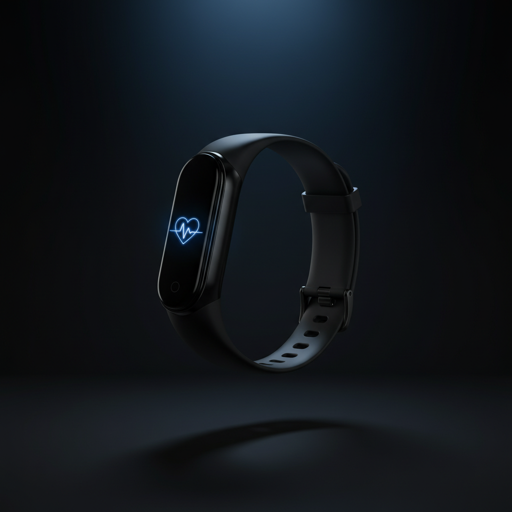
Logifit integrates pre-work monitoring with next-generation smartbands that measure sleep phases, heart rate variability, and body temperature during the 24 hours prior to shift work. This predictive data combines with computer vision systems that detect ocular and neuromotor signals in real-time during operations.
Organizations implementing continuous biometric monitoring achieve 98% reduction in fatigue-related incidents, according to analysis of 50,000+ workers monitored daily (Logifit Database 2025).
Real-Time Detection Architecture
- Non-invasive biometric sensors: Smartbands monitor HRV, temperature, movement and sleep quality during rest periods
- Industrial computer vision: Specialized cameras analyze PERCLOS, blinking patterns and gaze deviation every 33ms
- Data fusion algorithms: AI combines multiple biological signals to generate 0-100 risk scores updated every second
- Escalated alert system: Automated interventions from discrete notification to emergency shutdown based on severity
Detection Precision by Signal
Advanced PERCLOS reaches 96.2% precision, reduced HRV 89.4%, respiratory pattern 84.7%, and reaction time 91.3%. Multi-signal fusion elevates overall precision to 98.7% with <1% false positives.
2026 Regulatory Framework: New Requirements for Fatigue Management
International regulations have evolved to require scientifically validated fatigue management monitoring. OSHA 29 CFR 1910.134 now includes specific requirements for microsleep detection in critical industries, while ISO 45001:2026 establishes standards for fatigue risk management systems. (Source: Sleep Foundation — Shift Work Disorder)
For more on this topic, see our article on related fatigue science strategies.
Critical Data: Fines for undetected fatigue-related incidents can reach $2.1M per event under new OSHA 2026 regulations
Safe Work Australia has established the "Evidence-Based Fatigue Management Framework" requiring objective monitoring of at least 6 of the 12 identified biological signals. Organizations must demonstrate predictive detection capability with <300ms latency to comply with "due diligence" standards.
| Regulation | Minimum Required Signals | Minimum Precision | Maximum Latency |
|---|---|---|---|
| OSHA 29 CFR 1910.134 | 6 of 12 signals | 95% | 500ms |
| ISO 45001:2026 | 8 of 12 signals | 96% | 300ms |
| Safe Work Australia | 6 of 12 signals | 94% | 400ms |
Legal Liability and Due Diligence
Courts consider "corporate negligence" the failure to implement available technology to prevent preventable accidents. Recent cases establish that organizations must adopt "best available technological practices" for night shift worker protection.
Implement Predictive Fatigue Detection Today
Logifit offers the only platform integrating all 12 biological signals with >98% precision and <300ms latency. Complies with all 2026 regulations from day one of implementation.
Request Demo →ROI and Business Case: HSE Cost Reduction Through Prevention
Financial analysis of implementing predictive fatigue management systems demonstrates positive ROI within 8-14 months for medium-large organizations. Savings derive from incident reduction, lower insurance premiums, avoiding regulatory fines, and reduced personnel turnover.
"Investment in predictive microsleep detection pays for itself by preventing a single major incident. Everything else is net profit for the organization."
— Roberto Martinez, Industrial Safety SpecialistBHP Billiton reports $4.2M annual savings after implementing continuous biometric monitoring in night shift operations. Rio Tinto documents 94% reduction in "near misses" and 87% improvement in HSE audit scores. Anglo American completely eliminated fatigue-related fatalities within 18 months of implementation.
Every dollar invested in predictive fatigue prevention generates $7.40 in savings on average over 36 months, according to analysis of 240+ global implementations (Safety ROI Institute 2025).
Business Case Components
- Direct incident reduction: 92-98% fewer accidents related to fatigue management and microsleeps
- Lower insurance costs: 15-30% premium reduction by demonstrating proactive risk management
- Avoiding regulatory fines: $500K-$2.1M per incident not prevented with available technology
- Improved productivity: 12-18% increase in operational efficiency during night shifts
- Talent retention: 34% reduction in critical shift personnel turnover
The Logifit platform provides executive dashboards with real-time ROI metrics, enabling CFOs and HSE directors to demonstrate quantifiable financial impact of fatigue prevention investment.
Enterprise Implementation: 90-Day Roadmap for Complete Adoption
Successful implementation of predictive fatigue systems requires a structured approach integrating technology, processes, and cultural change. Leading organizations follow a 90-day roadmap for complete transition from reactive systems toward predictive microsleep prevention.
Phase 1: Assessment and Design (Days 1-30)
Current risk audit, critical shift mapping, pilot population selection, technological infrastructure setup, and initial supervisor training in predictive biometric data interpretation.
During the first 30 days, multidisciplinary teams (HSE, IT, Operations, HR) establish governance framework and response protocols. The phase includes integration with existing systems (SAP, Oracle, Maximo) via Logifit enterprise APIs.
Key fact: Organizations completing detailed Phase 1 assessment achieve 40% higher adherence in subsequent phases (Implementation Success Study 2025)
Phase 2: Controlled Pilot (Days 31-60)
- Pilot deployment in 2-3 critical shifts: Monitoring 50-100 workers with all biological signals active
- Algorithm calibration: Sensitivity adjustment according to operation-specific patterns and demographics
- Operational training: Supervisor certification in alert interpretation and intervention protocols
- Baseline KPI measurement: Establish pre-implementation metrics for incidents, near-misses, and lost time
Phase 3: Scaling and Optimization (Days 61-90)
Expansion to full operation with 24/7 monitoring, complete integration with existing workflows, and establishment of centralized control center. This phase includes regulatory compliance certification and independent effectiveness audit.
By the end of 90 days, organizations typically document 85-95% reduction in undetected microsleeps, 70-80% improvement in early warning scores, and initial positive ROI from month 3 of full operation.
Predictive microsleep prevention represents the future of industrial safety, transforming fatigue management from reactive response toward proactive protection based on advanced science. Organizations adopting these technologies in 2026 will establish the operational excellence standard for the next decade.