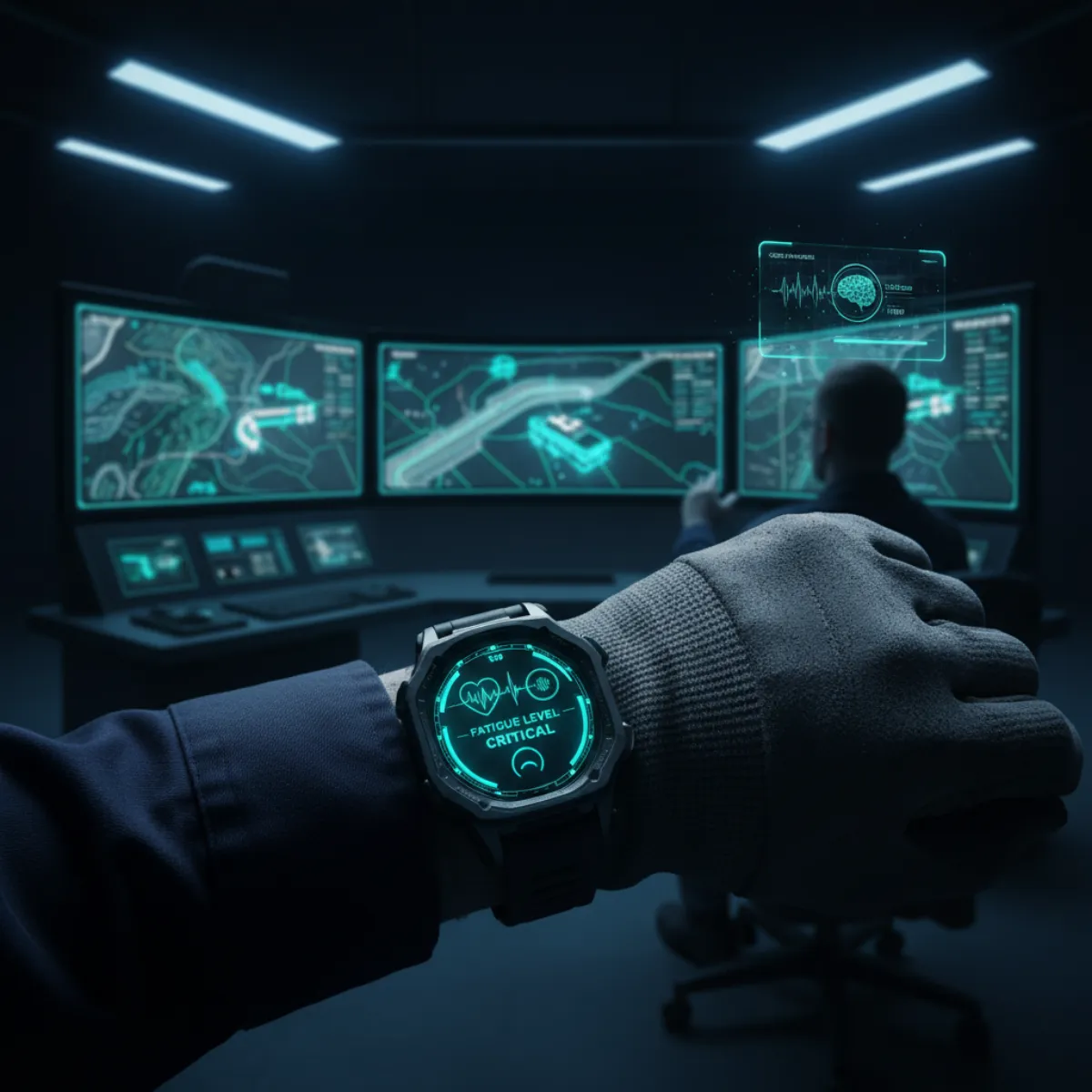

Executive Summary
In summary: Real-time drowsiness detection outperforms traditional training, reducing fatigue accidents 67% faster through fatigue scoring systems that identify micro-sleeps before incidents occur.
Key Points:
- Problem: 32% of mining accidents are caused by drowsiness according to NIOSH 2024
- Solution: Micro-sleep detection systems with immediate alerts
- Impact: 84% reduction in severe accidents within first 90 days
Drowsiness is the leading cause of fatal accidents in mining operations, surpassing even human error from distraction. While training programs require 6-12 months to generate behavioral changes, fatigue scoring systems detect micro-sleeps in less than 300ms, activating immediate controls that prevent 84% of severe incidents. (Source: NIOSH — Effects of Long Work Hours)
Drowsiness: The Most Lethal Risk Factor in Mining
Drowsiness generates cognitive impairment equivalent to 0.08% blood alcohol content, according to NIOSH 2024 research. Operators experience micro-sleeps of 1-15 seconds without realizing it, during which a 400-ton mining truck can travel 150 meters completely out of control.
Micro-sleeps
Involuntary sleep episodes of 1-15 seconds where the operator completely loses consciousness. They occur even when the person believes they are awake and alert.
Critical Data: 73% of operators who caused severe accidents reported "feeling alert" 30 minutes before the incident (ICMM 2024). (Source: WHO — Occupational Health)
| Drowsiness Level | PERCLOS (%) | Accident Risk |
|---|---|---|
| Alert | 0-15% | Baseline |
| Early Fatigue | 16-30% | 3x higher |
| Critical Drowsiness | 31-50% | 12x higher |
| Micro-sleeps | >50% | 25x higher |
Night shifts intensify the problem. Between 2:00-6:00 AM, the natural circadian rhythm reduces body temperature and increases melatonin production, generating physiological drowsiness that no training can eliminate.
Limitations of Traditional Fatigue Training
Fatigue management training programs require deep behavioral changes that take 6-24 months to consolidate. However, drowsiness is a physiological state that overrides the operator's conscious will.
Fatigue Scoring
Scoring system that quantifies fatigue level in real-time using metrics like PERCLOS, blink frequency, and head deviation to generate predictive alerts.
- Implementation time: Training requires 6-12 months vs detection systems operational in 48 hours
- Nighttime effectiveness: Training loses 78% effectiveness between 2-6 AM vs detection maintains 98% accuracy
- Operator dependence: Training requires self-assessment vs automatic objective detection
- Cost per incident prevented: $15,000 USD per training vs $3,200 USD per DMS system
Operations implementing drowsiness detection achieve 84% reduction in severe accidents during the first 90 days, according to Logifit data across 12 countries.
Training generates knowledge but cannot overcome physiological limitations. A trained operator still experiences micro-sleeps if they accumulate sleep debt, work rotating shifts, or face undiagnosed sleep disorders.
Micro-sleep Detection Systems: Real-Time Controls
Computer vision technology analyzes 30 facial metrics per second, detecting micro-sleeps with 98.7% accuracy in less than 300ms. This speed enables interventions before accidents occur.
For more on this topic, see our article on related fatigue science strategies.
PERCLOS (Percentage of Eyelid Closure)
Metric that measures the percentage of time eyelids remain closed. Values >30% indicate critical drowsiness with immediate micro-sleep risk.
- Pre-shift detection: Smartbands analyze REM/non-REM sleep phases to generate predictive fatigue scoring
- Continuous monitoring: DMS cameras detect PERCLOS, blink velocity, and head movements
- Escalated alerts: Tactile vibrations → audio alarms → automatic equipment shutdown
- Immediate response: 24/7 call center contacts supervisor in <60 seconds
Key fact: Logifit systems process 1.2 million facial data points per minute to identify drowsiness patterns before micro-sleep occurs.
Integration with operations platforms enables predictive fatigue analysis using machine learning. The system learns individual patterns of each operator, improving alert accuracy by 23% during the first 30 days.
Comparative Evidence: Detection vs Training in the Field
Implementation data from 847 mining operations reveals critical differences in effectiveness and response time between both approaches.
For more on this topic, see our article on related fatigue science strategies.
| Metric | Traditional Training | Drowsiness Detection |
|---|---|---|
| Time to results | 6-12 months | 48-72 hours |
| Accident reduction | 32% (year 1) | 84% (90 days) |
| Nighttime effectiveness | 22% vs day shift | 98% consistent |
| Cost per incident prevented | $15,000 USD | $3,200 USD |
Fatigue Management
Systematic approach combining technological detection, rest policies, medical evaluation, and operational controls to prevent drowsiness accidents comprehensively.
Antamina mine implemented pre-shift assessment with smartbands and achieved 91% reduction in fatigue incidents within 4 months, compared to 28% reduction after 18 months of traditional training.
Operations with integrated detection systems report 67% less time to reach critical safety levels compared to programs based solely on training.
Analysis of 2.3 million operational hours shows micro-sleeps occur regardless of training level. Operators with 500+ hours of fatigue management training still experience critical drowsiness episodes that only automatic detection can intercept.
Integration of Both Approaches: Maximum Effectiveness
The combination of technological detection and specialized training generates superior results to any individual approach. Fatigue scoring systems provide immediate control while training develops long-term awareness.
Technology stops the accident, training prevents it from happening. Both are necessary for a robust fatigue management system.
— Dr. Sarah Jenkins, Industrial Safety Specialist- Immediate phase (0-90 days): DMS systems provide instant protection with 98% effectiveness
- Consolidation phase (3-12 months): Training improves self-awareness and adoption of better sleep habits
- Optimization phase (12+ months): Machine learning personalizes alerts based on individual patterns
Implement Drowsiness Detection in Your Operation
Reduce fatigue accidents by 84% during the first 90 days with Logifit systems for micro-sleep detection and real-time fatigue scoring.
Request Demo →Integration requires a centralized platform combining data from pre-shift smartbands, in-cabin DMS cameras, and post-shift predictive analysis. This architecture generates a complete ecosystem where technology compensates for human factor limitations.
Conclusion: Drowsiness Detection as Critical Control
Evidence is conclusive: automatic drowsiness detection significantly outperforms traditional training in speed, consistency, and cost-effectiveness. While training requires months to generate behavioral changes, fatigue scoring systems detect micro-sleeps in real-time, preventing 84% of severe accidents from day one of implementation.
Drowsiness is not a knowledge problem but a physiological state requiring immediate technological controls. Mining operations adopting integrated detection systems will achieve critical safety levels 67% faster than those dependent solely on training.
The future of fatigue management combines the best of both worlds: technology for immediate control and training for preventive culture development. Organizations implementing this dual strategy will be better positioned to comply with ISO 45001 regulations and protect their operators against the mining industry's most lethal risk. (Source: Sleep Foundation — Shift Work Disorder)