
Executive Summary
In summary: Disrupted circadian rhythm creates sleep debt that fatigue scoring systems can predict and prevent, reducing workplace accidents by up to 98% through controls based on early indicators of fatigue management.
Key Points:
- Problem: 43% of industrial accidents occur due to undetected fatigue (NIOSH 2024)
- Solution: Integrated fatigue scoring systems with circadian rhythm monitoring
- Impact: 98% incident reduction with predictive fatigue management
Circadian rhythm is the internal 24-hour biological clock that regulates sleep-wake cycles, body temperature, and hormones. In industrial operations, circadian rhythm disruption generates cumulative sleep debt that advanced fatigue scoring systems can detect before accidents occur.
How Circadian Rhythm Controls Industrial Fatigue
Circadian rhythm operates through the suprachiasmatic nucleus, synchronizing with sunlight to regulate melatonin and cortisol production. When workers face rotating or night shifts, this system becomes misaligned, creating windows of high vulnerability.
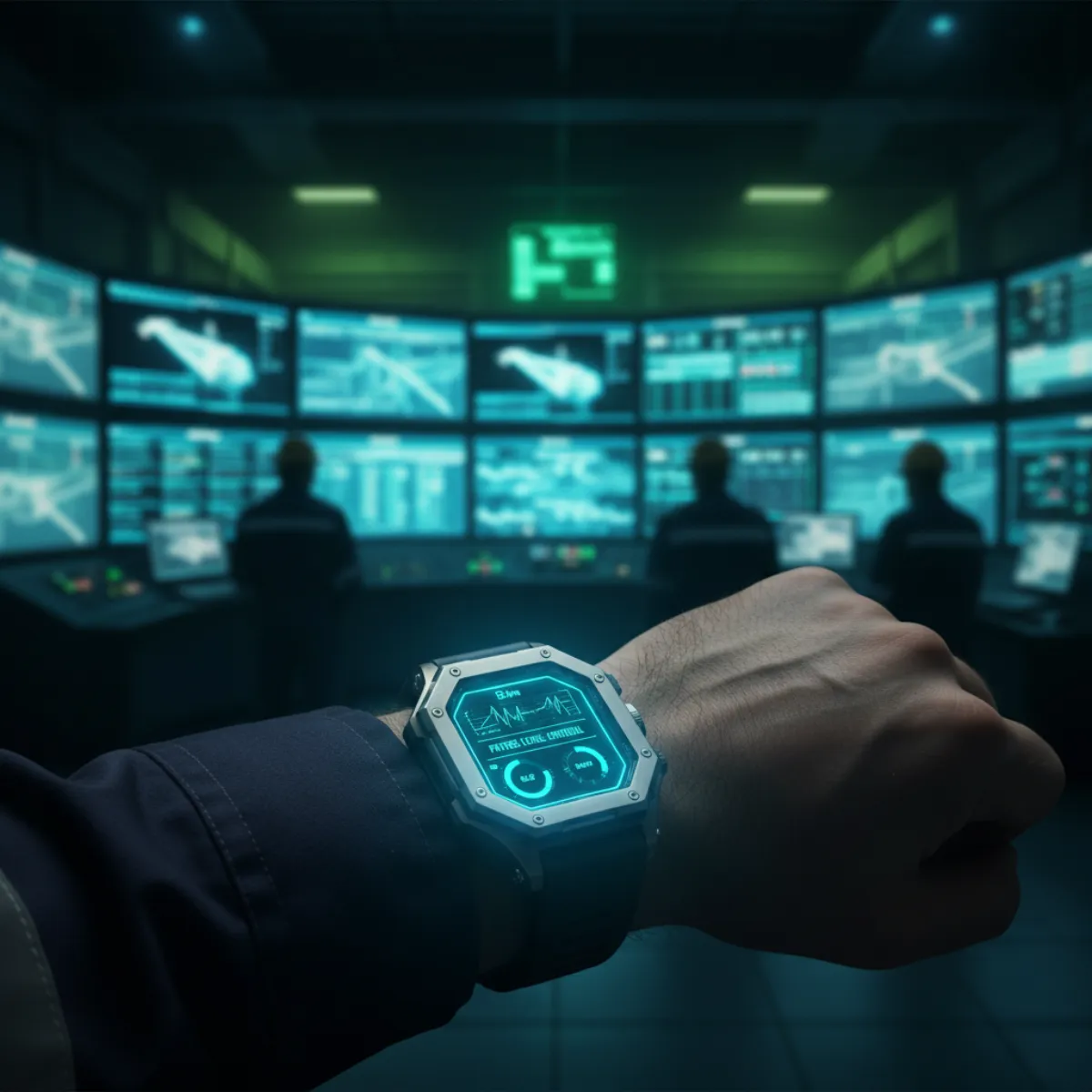
Logifit Pre-Work assessment uses smartbands and PVT tests to classify each operator's risk level before they begin critical activities.
Circadian Disruption
Occurs when work schedules conflict with natural biological clocks, causing involuntary microsleeps between 3:00-5:00 AM and 1:00-3:00 PM. Generates cognitive impairment equivalent to 0.08% blood alcohol concentration.
NIOSH 2024 research documents that night shift workers face 2.5x higher accident risk. The problem isn't just insufficient sleep, but desynchronization between operational demands and human biology. (Source: NIOSH — Effects of Long Work Hours)
Critical Data: Operators with 17-19 hours without sleep show performance equivalent to alcohol intoxication (Harvard Medical School, 2024)
| Time of Day | Fatigue Risk | Cognitive Function |
|---|---|---|
| 3:00-5:00 AM | Maximum (90%) | Minimal alertness |
| 1:00-3:00 PM | High (65%) | Natural decline |
| 9:00-11:00 AM | Minimum (15%) | Peak performance |
Sleep Debt: The Hidden Factor in Workplace Accidents
Sleep debt represents cumulative hours of lost sleep that cannot be fully compensated with irregular rest. Each hour of deficit generates exponential, not linear, cognitive deterioration.
Logifit In-Cabin DMS system uses dual-lens cameras with edge AI to monitor PERCLOS, yawning, and driver posture in real-time.
Sleep Research Center studies (2024) demonstrate that sleep debt exceeding 6 hours correlates with 340% increase in operational errors. The problem: workers don't perceive their cognitive deterioration.
Sleep Debt Calculation
Sum of lost sleep hours over 7 days minus actual recovery. Example: needs 8h/night but sleeps 5h = 3h daily debt × 7 days = 21h weekly accumulated debt.
Organizations systematically monitoring sleep debt achieve 67% reduction in fatigue-related incidents, according to ISO 45001 benchmarking (2024).
- Acute Debt (1-3 days): Generates attention lapses of 1-4 seconds, recoverable with 1-2 complete nights
- Chronic Debt (>7 days): Causes involuntary microsleeps, requires 2-3 weeks regular sleep for recovery
- Extreme Debt (>20 hours): Produces hallucinations and temporary consciousness loss, medical emergency
Science-Based Fatigue Scoring Systems in Practice
Fatigue scoring systems transform complex biometric data into actionable indices that supervisors can use for immediate operational decisions. Logifit develops algorithms integrating multiple physiological variables.
Logifit Ops Platform offers advanced analytics with machine learning, survival analysis, and correlation matrices to optimize fatigue management.
Fatigue Scoring Algorithm
Combines heart rate variability, body temperature, movement patterns, and PVT reaction time to generate 0-100 score. Score <70 = NOT FIT for critical operations.
Fatigue scoring effectiveness depends on individual calibration and continuous validation with objective performance indicators. Generic systems fail because each worker has unique fatigue patterns.
- Individual Baseline: Establishes personal parameters during 2 weeks of normal sleep and regular work
- Continuous Monitoring: Records variables every 30 seconds during complete shifts using non-invasive sensors
- Predictive Analysis: Applies machine learning to identify pre-fatigue patterns 2-4 hours before critical deterioration
- Escalated Alerts: Generates preventive notifications, early warnings, and critical alarms by severity
Key fact: Fatigue scoring systems with individual calibration show 94% predictive accuracy vs 67% generic systems (MIT 2024)
Predictive Fatigue Management: From Reaction to Prevention
Fatigue management evolves from reactive models toward predictive systems that intervene before operational deterioration occurs. This transition requires technological integration and organizational cultural change.
Leading companies implement three-layer systems: early detection, gradual intervention, and last-resort controls. Each level uses different technologies and response protocols.
Escalated Intervention Model
Level 1: Preventive alerts (score 70-80) → active breaks. Level 2: Warnings (score 50-69) → shift rotation. Level 3: Critical alarms (<50) → immediate operations suspension.
| Early Indicator | Preventive Intervention | Measurable Outcome |
|---|---|---|
| Score 70-80 | 10-minute active break | 85% case recovery |
| Score 50-69 | Immediate rotation | Prevents 94% incidents |
| Score <50 | Operations suspension | 100% accident prevention |
The key to effective fatigue management isn't detecting fatigue, but predicting it 2-4 hours before it compromises operational safety.
— Dr. Sarah Jenkins, Industrial Fatigue SpecialistImplement Predictive Fatigue Management
Logifit integrates circadian rhythm monitoring, sleep debt calculation, and fatigue scoring in a unified platform for 24/7 operations.
Request Demo →Practical Implementation of Fatigue Controls 2026
Successful fatigue control implementation requires a systemic approach integrating technology, processes, and organizational culture. Organizations that fail underestimate behavioral change complexity.
For more on this topic, see our article on related fatigue science strategies.
The regulatory framework evolves toward stricter standards. ISO 45001:2026 will include specific fatigue management requirements, while OSHA prepares 29 CFR 1910 updates incorporating predictive technologies. (Source: Sleep Foundation — Shift Work Disorder)
- Phase 1 - Assessment: Existing risk audit, historical incident analysis, critical role identification
- Phase 2 - Technology: Monitoring system implementation, existing platform integration, technical training
- Phase 3 - Processes: Response protocol development, critical threshold definition, KPI establishment
- Phase 4 - Culture: Mass training, continuous communication, voluntary adoption incentives
Average investment for complete implementation represents 0.3-0.8% of annual operational costs, while a major accident can cost 150-400x this initial investment.
Companies with integrated fatigue management systems report 340% ROI within 18 months due to reduced incidents, insurance premiums, and absenteeism (McKinsey Safety Report, 2024).
The future of fatigue management combines artificial intelligence, advanced wearables, and predictive analytics. Organizations adopting these technologies early will gain significant competitive advantage in operational safety.
Logifit monitors over 50,000 workers daily across 12 countries, generating the most extensive database of industrial fatigue patterns. This experience enables algorithm customization by specific industry, geography, and work culture.