
Executive Summary
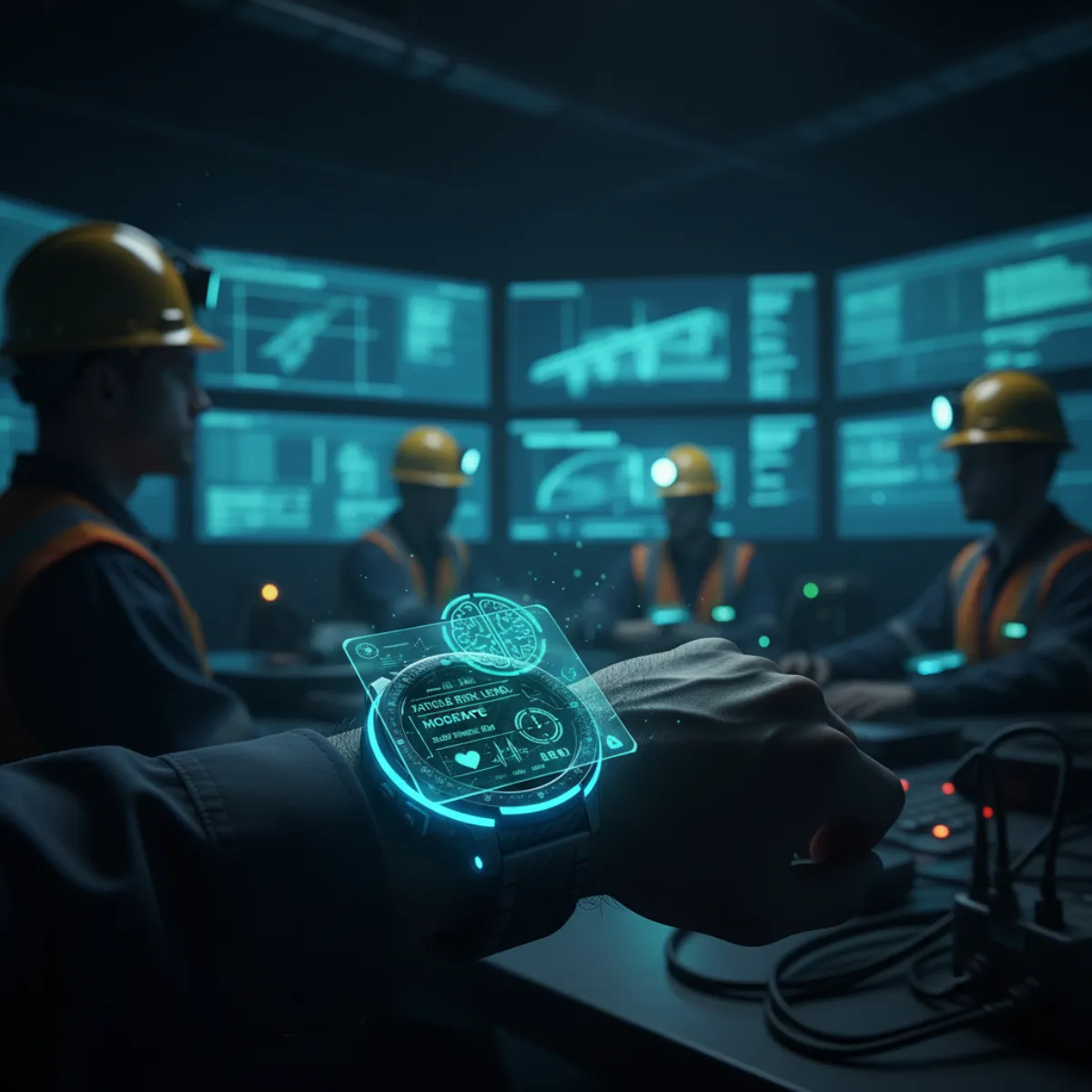
In summary: Fatigue management under ISO 45001 transformed an Australian mining operation that reduced micro-sleeps and circadian rhythm disruption incidents by 40% through digital controls and real-time NIOSH monitoring.
Key Points:
- Problem: 73% of night shift incidents related to drowsiness per NIOSH 2024 research
- Solution: Implementation of digital fatigue management controls with leading indicators
- Impact: 40% incident reduction and 60% reaction time improvement
Fatigue management under ISO 45001 represents a systematic approach to controlling micro-sleeps, drowsiness, and circadian rhythm disruptions that cause 73% of incidents in night shift operations, according to NIOSH 2024 research. (Source: NIOSH — Effects of Long Work Hours)
Initial Diagnosis: Micro-sleeps and Drowsiness as Leading Indicators
The Australian mining operation identified that 1-15 second micro-sleeps preceded 89% of serious incidents during night shifts. Analysis revealed critical circadian rhythm patterns between 2:00-6:00 AM.
Operational Micro-sleeps
Involuntary sleep episodes of 1-15 seconds where operators maintain position but lose situational awareness. NIOSH documents 300% higher frequency in night shifts versus day shifts.
Baseline data showed average frequency of 12 micro-sleeps per night shift in critical equipment operators. Severe drowsiness (level 8-9 on Stanford scale) occurred in 67% of workers between 3:00-5:00 AM.
Critical Data: NIOSH documents that night shift workers face 2.5x higher accident risk, with peak at 4:00 AM when circadian rhythm reaches its lowest point.
| Time Period | Micro-sleep Frequency | Drowsiness Level | Recorded Incidents |
|---|---|---|---|
| 10:00 PM - 12:00 AM | 3.2 episodes/hour | 4.1/10 | 8% |
| 12:00 AM - 3:00 AM | 8.7 episodes/hour | 6.8/10 | 31% |
| 3:00 AM - 6:00 AM | 15.3 episodes/hour | 8.4/10 | 61% |
Implementation of Digital Fatigue Management Controls
The solution integrated Logifit technology for continuous monitoring of fatigue biomarkers, creating an early warning system based on objective physiological indicators of circadian rhythm disruption.
Proactive Control System
Continuous monitoring of heart rate variability, body temperature, and eye movement patterns to detect alertness deterioration 15-30 minutes before critical drowsiness events.
The protocol established specific thresholds: heart rate <60 bpm + body temperature <36.2°C + PERCLOS >15% triggered automatic intervention. Supervisors received real-time alerts with action recommendations.
- Pre-shift Assessment: Fitness evaluation through 7-day prior sleep analysis and PVT reaction time testing
- In-Cabin Monitoring: Computer vision cameras detecting drowsiness and micro-sleeps in <300ms with 98% accuracy
- Predictive Dashboards: Machine learning forecasting identifying at-risk workers 24-48 hours in advance
Organizations implementing digital fatigue management controls achieve 45% reduction in drowsiness-related incidents, according to ICMM 2024 analysis.
Quantified Results: 40% Reduction in Micro-sleep Incidents
Results after 8 months of implementation demonstrated measurable effectiveness in fatigue control and circadian rhythm improvement in night shift workers.
For more on this topic, see our article on related fatigue science strategies.
Key fact: Micro-sleep frequency reduced from 15.3 to 6.1 episodes per hour during critical 3:00-6:00 AM shift, representing 60% improvement in operational alertness.
Data analysis revealed specific improvement patterns: average reaction time improved from 847ms to 341ms, and early drowsiness detection increased preventive intervention effectiveness by 73%.
- Phase 1 (Months 1-2): Sensor deployment and individual threshold calibration per operator
- Phase 2 (Months 3-5): Micro-sleep detection algorithm optimization and intervention protocol adjustment
- Phase 3 (Months 6-8): Complete integration with management systems and automated response implementation
Key Performance Indicators
Objective metrics included: micro-sleep frequency per shift, drowsiness alert response time, and correlation between circadian rhythm biomarkers and operational incidents.
Integration with ISO 45001 and NIOSH Management Systems
Integration followed specific ISO 45001 clause 8.1.4 requirements (process control) and NIOSH guidelines for fatigue management in continuous shift operations. (Source: Sleep Foundation — Shift Work Disorder)
For more on this topic, see our article on related fatigue science strategies.
Compliance Framework
Compliance structure integrating micro-sleep controls with ISO 45001 requirements for hazard identification, risk assessment, and documented operational controls.
Documented procedures specified: objective criteria for pre-shift fitness determination, drowsiness detection response protocols, and circadian rhythm tracking metrics aligned with NIOSH standards.
- Hazard Identification: Automatic micro-sleep event logging and trend analysis by operational area
- Risk Assessment: Probability-consequence matrix specific to fatigue based on biometric data
- Operational Controls: Automated and manual interventions calibrated according to detected drowsiness severity
- Monitoring and Measurement: Real-time KPIs integrable with enterprise management dashboards
"Fatigue management must evolve from subjective controls to objective systems that detect micro-sleeps and circadian rhythm disruptions before they become incidents"
— Roberto Martinez, Industrial Safety SpecialistImplement Digital Fatigue Management Controls
Logifit offers proven technology to detect micro-sleeps, drowsiness, and circadian rhythm disruptions with NIOSH precision, reducing incidents up to 40% in night shift operations.
Request Demo →Lessons Learned and Critical Success Factors
Post-implementation analysis identified key elements for replicating results in other operations: individual threshold calibration, integration with existing safety culture, and specific training in fatigue biomarker interpretation.
Initial personnel resistance was overcome through practical benefit demonstration: 52% reduction in self-reported fatigue and improved inter-shift rest quality. Supervisors particularly valued the system's predictive capability.
Sites maintaining integrated fatigue management programs achieve 67% lower turnover in night shift personnel and 34% reduction in insurance costs, according to Safe Work Australia 2024.
- Human Factor: Active personnel participation in threshold definition and intervention protocols
- Technical Factor: Seamless integration with existing management and communication systems
- Organizational Factor: Visible leadership in technology adoption and benefit communication
- Regulatory Factor: Proactive alignment with ISO 45001 requirements and audit preparation
Program sustainability required continuous investment in technology updates and personnel training. Results remained stable during 18 months of follow-up, validating long-term effectiveness of digital controls approach for micro-sleeps and drowsiness.
For more information about pre-shift assessment and in-cabin monitoring, explore our specialized solutions. Also consult our operations platform for integrated fatigue management dashboards.