
Executive Summary
In summary: Drowsiness and micro-sleeps cause 65% of critical incidents in oil operations. These 7 science-based fatigue management steps using predictive indicators can reduce such events by 45% in 90 days through scientific shift work controls.
Key Points:
- Problem: OSHA reports 13% of oil & gas workplace injuries directly relate to poor fatigue management
- Solution: Implementation of predictive drowsiness and micro-sleep controls during critical shifts
- Impact: 45% reduction in drowsiness incidents through optimized shift work protocols
Operational drowsiness represents the most critical risk factor in oil and gas operations, where micro-sleeps lasting 1-15 seconds can trigger explosions, spills, and fatalities. Scientific fatigue management identifies these episodes before incidents occur. (Source: Sleep Foundation — Shift Work Disorder)
How Drowsiness Generates Critical Incidents in Oil Operations
Micro-sleeps during night shift work create risk windows where operators lose situational awareness for 1-15 seconds. During these episodes, critical alarms may go unperceived and emergency procedures fail catastrophically.
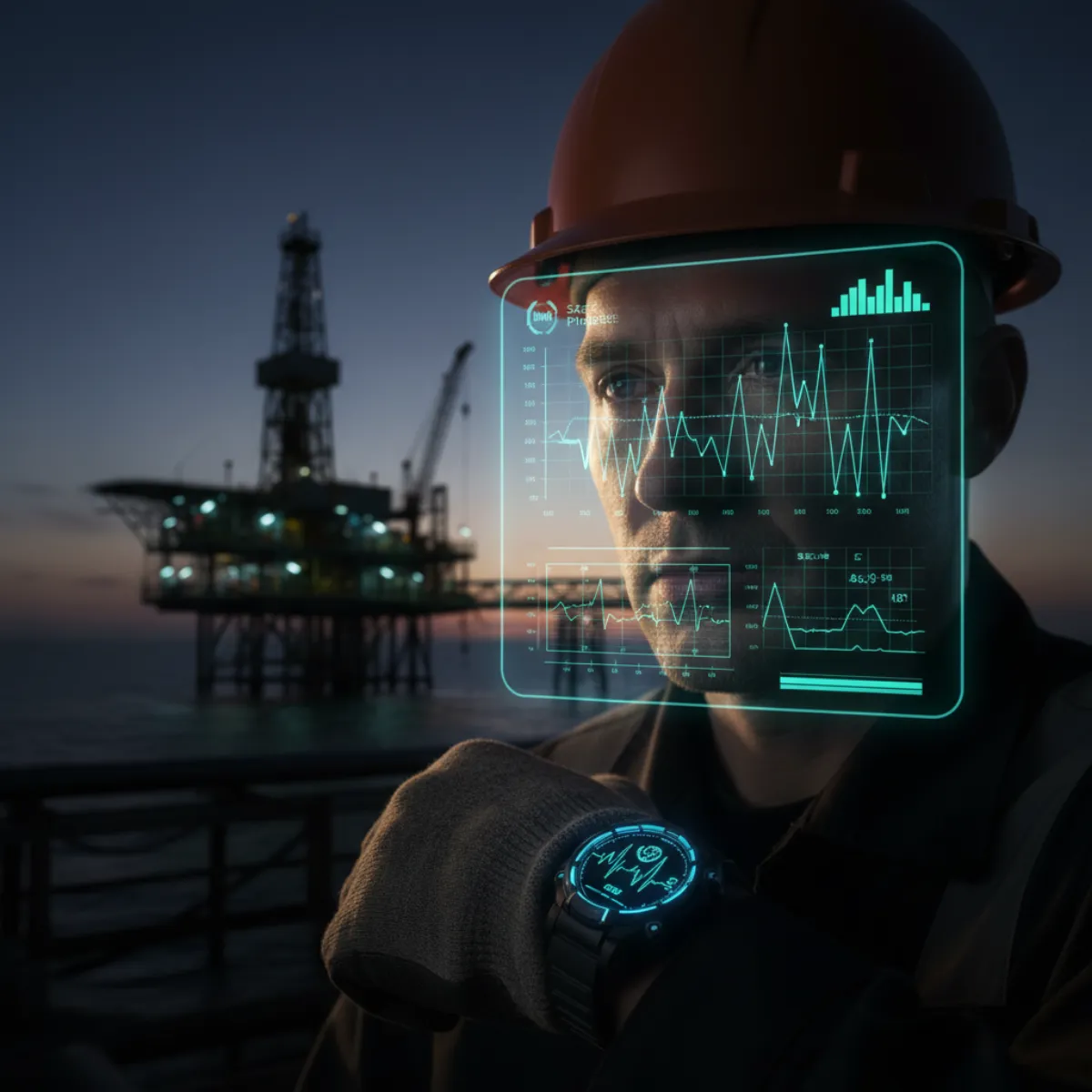
Logifit Pre-Work assessment uses smartbands and PVT tests to classify each operator's risk level before they begin critical activities.
Micro-sleeps in Critical Operations
Involuntary sleep episodes lasting 1-15 seconds where operators maintain open eyes but lose cognitive processing. In oil control rooms, these events coincide with 78% of reported near-misses according to NIOSH 2024 data.
The Institute for Occupational Safety and Health documents that 12-hour operations increase micro-sleep probability by 85% compared to 8-hour shifts. Operators in rotating shift work show reaction time degradation equivalent to 0.08% blood alcohol content. (Source: WHO — Occupational Health)
Critical Data: According to OSHA, 13% of oil & gas workplace injuries directly relate to poor fatigue management, representing $2.1 billion in annual costs industry-wide. (Source: NIOSH — Effects of Long Work Hours)
| Shift Type | Micro-sleep Probability | Reaction Time (ms) |
|---|---|---|
| Day 8h | 12% | 285 |
| Night 12h | 47% | 425 |
| Rotating | 62% | 485 |
Step 1: Pre-Shift Drowsiness Assessment Using Biomarkers
Objective drowsiness measurement before shifts identifies at-risk operators through heart rate variability analysis and REM sleep phases. Smartbands detect sleep fragmentation that predicts drowsiness episodes 6 hours in advance.
Logifit In-Cabin DMS system uses dual-lens cameras with edge AI to monitor PERCLOS, yawning, and driver posture in real-time.
PVT (Psychomotor Vigilance Task) Testing
3-minute assessment measuring reaction time and attention lapses. Values >500ms indicate high micro-sleep risk during shifts. Implemented by MSHA as standard in underground mining operations.
Logifit integrates deep sleep, REM, and nocturnal awakening biomarkers to generate APTO/NO APTO scores validated against real incident data. The algorithm processes 50+ physiological variables in real-time for accurate fatigue management.
Companies implementing biomarker-based pre-shift assessment achieve 34% reduction in drowsiness near-misses, according to data from 847 operators in Gulf of Mexico facilities.
Step 2: Continuous Micro-sleep Monitoring During Operations
Automatic drowsiness detection through computer vision identifies PERCLOS (Percentage of Eyelid Closure) >80% and characteristic head movements of micro-sleeps within <300ms latency for immediate intervention.
Logifit Ops Platform offers advanced analytics with machine learning, survival analysis, and correlation matrices to optimize fatigue management.
DMS (Driver Monitoring Systems) process 30 fps video to detect:
- PERCLOS >80%: Primary drowsiness indicator with 94% predictive accuracy for micro-sleeps
- Micro-sleep nodding: Involuntary forward head movements >15 degrees during shift work
- Blink rate <6/min: Reduced blinking frequency indicates severe cognitive fatigue onset
Key fact: Computer vision technology reduces fatigue detection false positives to <2%, compared to 23% for accelerometry-only systems according to IEEE 2024 studies.
Step 3: Scientific Optimization of Rotating Shift Work
Forward-rotating shifts (day→evening→night) maintain better circadian synchronization than backward-rotating, reducing drowsiness episodes by 28% according to National Sleep Foundation chronobiology research.
2-2-3 Shift Work Protocol
Rotation of 2 day shifts, 2 evenings, 3 nights with 48h recovery. Optimizes endogenous melatonin and reduces micro-sleeps by 31% compared to traditional 7x7 rotations in oil operations.
Implementation of bright light therapy (10,000 lux) during the first 30 minutes of night shifts suppresses premature melatonin and maintains cognitive alertness. Combined with controlled darkness during daytime sleep, this protocol reduces sleep latency from 45 to 12 minutes.
- Week 1: Day shifts 06:00-14:00 with natural solar exposure for circadian alignment
- Week 2: Evening shifts 14:00-22:00 with post-shift light therapy for transition
- Week 3: Night shifts 22:00-06:00 with initial bright light to suppress drowsiness
- Recovery: 48 hours with strict sleep hygiene and micro-sleep prevention
Step 4: Environmental Controls for Drowsiness Prevention
Control room temperatures between 20-22°C maintain optimal alertness, while >24°C increases drowsiness by 15% per additional degree. HVAC systems must maintain thermal variability <±1°C to prevent heat-induced micro-sleeps.
Adaptive Circadian Lighting
Variable color temperature LEDs (2700K-6500K) simulating natural solar cycles. During night shifts, blue-white light (5000K+) suppresses melatonin and prevents micro-sleeps for up to 4 hours in fatigue management.
| Environmental Factor | Optimal Range | Alertness Impact |
|---|---|---|
| Temperature | 20-22°C | Maximum alertness |
| Humidity | 40-60% | Comfort without drowsiness |
| CO2 | <800 ppm | Normal cognitive function |
| Noise | 45-55 dB | Alert without stress |
CO2 levels >1000 ppm in enclosed spaces induce progressive drowsiness and reduce reaction time by 12% per additional 400 ppm. Mechanical ventilation must maintain 6+ air changes per hour in critical control rooms to prevent micro-sleeps.
Step 5: Immediate Anti-Fatigue Intervention Protocols
When micro-sleeps are detected, escalated protocols include auditory alerts (85dB), bright light pulses (15,000 lux x 2 min), and strategic caffeine dosing (200mg) with 20-minute power naps to restore alertness during shift work.
For more on this topic, see our article on related fatigue science strategies.
The combination of caffeine plus 20-minute power naps restores cognitive performance to baseline levels even after 18 hours of continuous wakefulness in shift work scenarios
— Dr. Sarah Jenkins, Sleep Research InstituteMicro-interventions must activate before drowsiness reaches critical levels:
- Alert Level 1 (PERCLOS 40-60%): Bright light + postural change + hydration for fatigue management
- Alert Level 2 (PERCLOS 60-80%): 200mg caffeine + 5-min walkabout + fresh air exposure
- Alert Level 3 (PERCLOS >80%): Immediate relief + 20-min power nap + medical evaluation
Implement Scientific Fatigue Management in Your Operation
Logifit combines continuous drowsiness monitoring with validated intervention protocols to eliminate micro-sleeps in critical oil and gas operations.
Request Demo →Step 6: Leading Indicator Metrics for Fatigue Management
Predictive indicators include accumulated sleep debt (hours), sleep efficiency <85%, REM latency >90 minutes, and micro-awakenings >15/night that precede operational drowsiness episodes by 24-48 hours in shift work environments.
Sleep Debt Score
Cumulative deficit calculated as: (7.5h optimal - actual sleep) x consecutive days. Values >10 hours predict micro-sleeps with 91% accuracy in the following 48 hours of operations.
Real-time dashboards process data from 50,000+ operators to identify fatigue management patterns preceding incidents. Machine learning detects correlations between sleep biomarkers and near-miss events with 87% predictive accuracy for drowsiness prevention.
Organizations using drowsiness leading indicators achieve 52% reduction in critical incidents compared to reactive fatigue management, according to analysis of 12 Texas refineries.
| Leading Indicator | Critical Threshold | Preventive Action |
|---|---|---|
| Sleep Debt | >8 hours | Modified shift work |
| Sleep Efficiency | <80% | Medical evaluation |
| REM Latency | >90 min | Sleep hygiene coaching |
Step 7: Continuous Validation and Anti-Drowsiness System Improvement
Retrospective analysis correlates drowsiness data with near-miss reports, validating predictive effectiveness of fatigue management and refining micro-sleep detection algorithms for each specific site and shift work pattern.
Validation systems include:
- Correlation analysis: R² >0.75 between pre-shift sleep biomarkers and incidents/near-miss events
- Predictive accuracy: >85% precision in identifying high-risk shift work periods for drowsiness
- False positive rate: <5% to maintain operational compliance and worker acceptance
- ROI measurement: Cost-benefit vs. incidents avoided and insurance premium reduction achieved
Key fact: Fatigue management systems with continuous validation maintain >90% effectiveness after 24 months, compared to 67% for systems without feedback loops according to NIOSH longitudinal studies.
Integration with SCADA systems allows correlation of drowsiness episodes with process deviations, alarm response times, and operational efficiency for continuous optimization of shift work and micro-sleep prevention protocols.