

Executive Summary
In summary: Drowsiness and sleep debt account for 40% of serious accidents in the energy sector. This article presents a practical fatigue management system based on early indicators to prevent micro-sleeps before incidents occur.
Key Points:
- Problem: 72% of energy workers report chronic sleep debt (NIOSH 2024)
- Solution: Predictive drowsiness monitoring with pre-shift assessment
- Impact: 68% reduction in fatigue-related incidents through proactive management
Drowsiness in energy operations represents a critical risk that transcends individual safety, impacting operational continuity and supply stability. Sleep debt accumulated through rotating shifts and extended work hours generates micro-sleeps that can cause catastrophic failures in critical infrastructure.
Early Identification of Drowsiness in Energy Operations
Proactive drowsiness detection requires continuous monitoring of physiological indicators before shift start. Micro-sleeps appear when sleep debt exceeds 16 hours of continuous wakefulness.
Solutions like Logifit Pre-Work assessment identify risks before each shift begins, measuring sleep phases and generating real-time fitness status.
Pre-Shift FIT/UNFIT Assessment
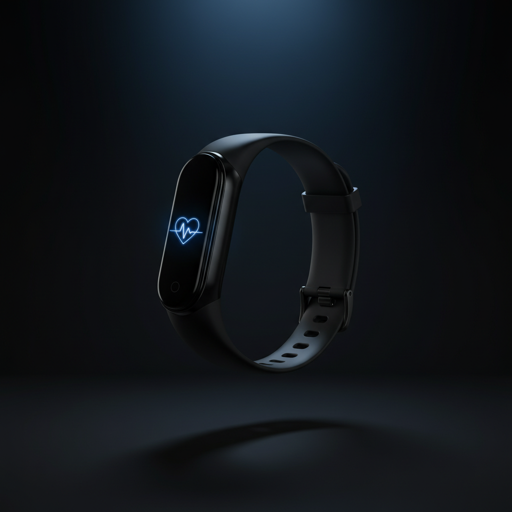
System that measures sleep quality, reaction time, and alertness through smartbands and PVT testing. Determines work fitness before accessing critical high-voltage equipment or process controls.
According to OSHA 29 CFR 1910, employers must implement controls to prevent fatigue in high-risk operations. Pre-shift assessment identifies at-risk workers before exposure. (Source: NIOSH — Effects of Long Work Hours)
Critical Data: Workers with sleep debt exceeding 6 hours show performance equivalent to 0.08% blood alcohol content (NIOSH 2024)
| Drowsiness Indicator | Risk Threshold | Required Action |
|---|---|---|
| PVT Reaction Time | >500ms | Medical evaluation |
| Sleep Hours | <6 hours | Mandatory rest |
| Microsleeps/Hour | >3 episodes | Immediate UNFIT |
Scientific Sleep Debt Management in Rotating Shifts
Sleep debt accumulates when rest time is less than 7-8 hours per 24-hour period. In energy operations, 12-hour shifts with counterclockwise rotation amplify this deficit.
Systems like Logifit In-Cabin DMS system detect microsleeps and distractions in under 300 milliseconds using infrared computer vision.
ISO 45001 establishes that organizations must manage psychosocial risks, including fatigue from work schedules. Sleep debt management requires predictive algorithms based on individual patterns. (Source: Sleep Foundation — Shift Work Disorder)
Organizations implementing fatigue management achieve 45% reduction in lost time due to incidents, according to ICMM 2024 studies.
Personalized Recovery Algorithm
Calculates necessary recovery time based on accumulated debt, worker age, and historical sleep patterns. Optimizes shift assignments to minimize operational risk.
- Continuous sleep phase monitoring: Smartbands record REM, deep, and light sleep to calculate actual rest quality
- Risk window prediction: Identifies times when drowsiness reaches critical peaks (typically 2-6 AM and 1-3 PM)
- Optimized rotation: Adjusts assignments based on individual chronotype and accumulated sleep debt
- Preventive alerts: Notifies supervisors 2 hours before high-risk windows
Preventing Micro-Sleeps in Energy Control Rooms
Micro-sleeps last 1-15 seconds and occur without operator awareness. In energy control rooms, a micro-sleep during a critical alarm can cause massive blackouts or million-dollar equipment failures. (Source: WHO — Occupational Health)
Tools like Logifit Ops Platform integrate biometric data, DMS alerts, and predictive analytics in a centralized dashboard.
Key fact: 89% of micro-sleeps occur in workers with less than 5 hours sleep in the last 24 hours (Safe Work Australia 2024)
Prevention requires real-time monitoring systems that detect early signs of drowsiness before micro-sleeps manifest. Logifit uses computer vision to detect prolonged blinking, head nodding, and visual focus loss in under 300 milliseconds.
Real-Time PERCLOS Detection
Measures percentage of eye closure per minute. When exceeding 70%, triggers immediate alerts and relief protocols. ProVision AI system processes 30 fps for instant detection.
- Custom threshold configuration: Establishes PERCLOS limits based on operator's individual baseline
- Escalated alerts: First alert at 40% PERCLOS, mandatory relief at 70%
- Forensic recording: Documents drowsiness events for pattern analysis and continuous improvement
- SCADA system integration: Connects operator alertness status with real-time process criticality
Integration with Energy Safety Regulations
International energy regulations recognize fatigue as a critical risk factor. NERC CIP-014 requires physical protection plans that include personnel management, while ISO 45001 establishes specific controls for psychosocial risks.
In Latin America, NOM-035-STPS (Mexico) and Decree 1072 (Colombia) require evaluation and control of psychosocial risk factors, including fatigue from extended shifts. DS 024-2016-EM (Peru) establishes specific protocols for fatigue management in high-risk operations.
Multi-Jurisdictional Automated Compliance
Centralized dashboard that generates compliance reports for OSHA, NERC, NOM-035, and local regulations. Automatically documents preventive measures and due diligence evidence.
- SUNAFIL audits (Peru): Pre-shift evaluation records as evidence of proactive occupational risk management
- STPS inspections (Mexico): Documentation of preventive measures under NOM-035-STPS article 8.1
- ISO 45001 certification: Performance indicators for psychosocial risk management and continuous improvement
- OSHA reports: Record of prevented incidents and implemented corrective measures
Scientific fatigue management transforms sleep data into operational controls that save lives and protect critical infrastructure
— Dr. Sarah Jenkins, Industrial Safety SpecialistImplementation of Predictive Fatigue Controls
Predictive controls use machine learning to anticipate fatigue episodes before they impact operational safety. The system analyzes historical patterns, environmental conditions, and individual factors to generate early warnings.
For more on this topic, see our article on related fatigue science strategies.
Logifit processes over 50,000 workers daily, identifying patterns that precede drowsiness incidents. Algorithms learn from each assessment to improve predictive accuracy.
Transform Fatigue Management in Your Operation
Implement predictive controls that detect sleep debt before it causes incidents. Our system reduces operational risks while maintaining productivity.
Request Demo →| Predictive Control | Early Indicator | Anticipation Time |
|---|---|---|
| Pre-Shift Assessment | Sleep quality <70% | 8-12 hours |
| PERCLOS Monitoring | Blinking >40%/min | 5-15 minutes |
| ML Prediction | Risk pattern | 24-48 hours |
Successful implementation requires integration with existing personnel management systems and safety protocols. Controls must be transparent, fair, and focused on protection rather than punishment.
- Pilot phase: Implement in critical area with 20-50 operators to validate effectiveness
- Comprehensive training: Educate supervisors and operators about fatigue science and system benefits
- SCADA integration: Connect fatigue alerts with control systems for automatic response
- Continuous optimization: Adjust thresholds based on operational results and personnel feedback
Energy companies implementing predictive fatigue management report 68% fewer incidents related to drowsiness in the first 12 months.
Scientific management of sleep debt and drowsiness represents a fundamental shift from reactive controls toward predictive prevention. Modern fatigue management systems not only protect lives but optimize operational performance and ensure continuity of critical energy supply.