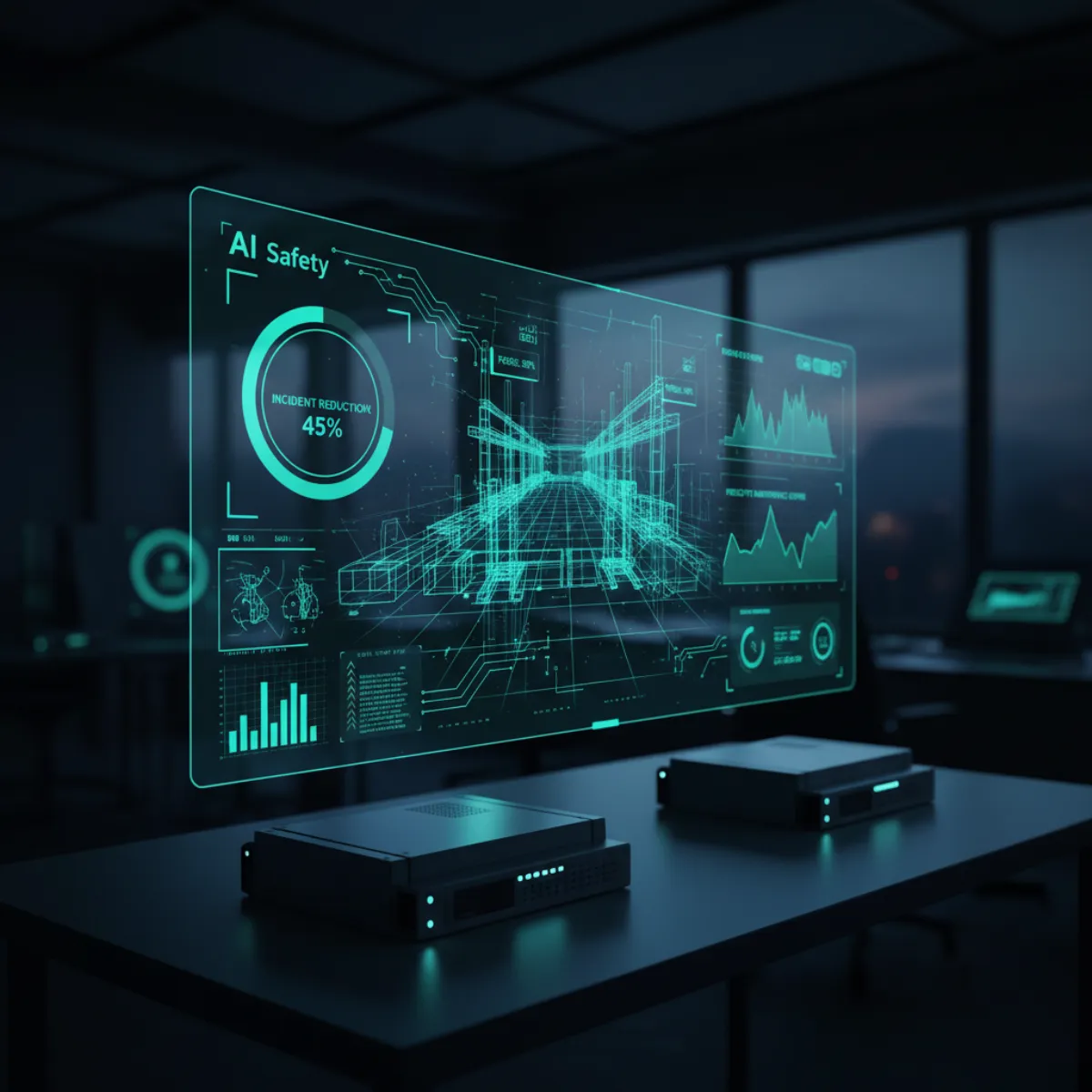

Executive Summary
In summary: Strategic implementation of computer vision and edge AI in IoT sensors systems can reduce fatigue-related accidents by up to 98%, transforming on-site digital twins into real-time predictive safety tools for fatigue detection.
Key Points:
- Problem: Fatigue-related accidents cause 13% of mining deaths according to NIOSH 2024
- Solution: Edge AI with computer vision processes data in <300ms for immediate alerts
- Impact: 340% ROI in 18 months through predictive prevention
Industrial digital twins require advanced computer vision and edge AI to transform IoT sensors data into actionable intelligence for fatigue detection. This technological convergence enables mining, construction, and transport sites to evolve from reactive models to predictive ecosystems that prevent accidents before they occur. (Source: NIST — Artificial Intelligence)
Why Traditional Digital Twins Fail at Fatigue Detection
Conventional digital twins face a critical limitation: they process historical data without immediate interpretation capability. In industrial safety contexts, this latency proves fatal.
Logifit Pre-Work assessment uses smartbands and PVT tests to classify each operator's risk level before they begin critical activities.
Critical Latency
Traditional systems process data every 5-15 minutes, while fatigue detection requires real-time analysis <300ms to prevent microsleeps lasting 1-15 seconds.
Critical Data: According to ICMM 2024, 67% of fatal mining accidents occur due to undetected fatigue in <30-second windows.
Conventional IoT sensors capture environmental metrics (temperature, vibration, pressure) but lack interpretive capability to recognize human behavior patterns. Without computer vision, these sensors cannot identify physiological fatigue signals such as:
- PERCLOS (Percentage of Eyelid Closure): NHTSA-validated metric indicating drowsiness when >15%
- Altered blink frequency: >40% reduction indicates severe fatigue
- Facial micro-movements: Involuntary contractions precede microsleeps by 2-5 seconds
- Visual attention patterns: Dispersed visual focus increases 300% during fatigue episodes
| System | Response Time | Detection Accuracy | False Positives |
|---|---|---|---|
| Traditional Digital Twin | 5-15 minutes | 45-60% | 25-35% |
| Computer Vision + Edge AI | <300ms | 94-98% | 1-3% |
| Basic IoT Sensors | 30-60 seconds | 35-50% | 40-55% |
Computer Vision: The Catalyst for Intelligent Digital Twins
Computer vision transforms passive IoT sensors into cognitive systems that interpret human behavior in real operational context.
Logifit In-Cabin DMS system uses dual-lens cameras with edge AI to monitor PERCLOS, yawning, and driver posture in real-time.
Multi-Modal Analysis
Modern computer vision simultaneously processes facial expressions, body posture, eye movement patterns, and micro-gestures to generate real-time fatigue scores.
Computer vision algorithms specialized in fatigue detection utilize convolutional neural networks (CNNs) trained specifically for adverse industrial environments. Unlike generic systems, these models compensate for:
- Variable lighting conditions: Adaptive algorithms function from 50 lux (underground mining) to 100,000 lux (open-pit extraction)
- Personal protective equipment: Facial recognition through helmets, safety glasses, and masks
- Vibrations and movement: Image stabilization for heavy vehicles and industrial machinery
- Multiple ethnicities and ages: Models trained with global datasets to eliminate demographic bias
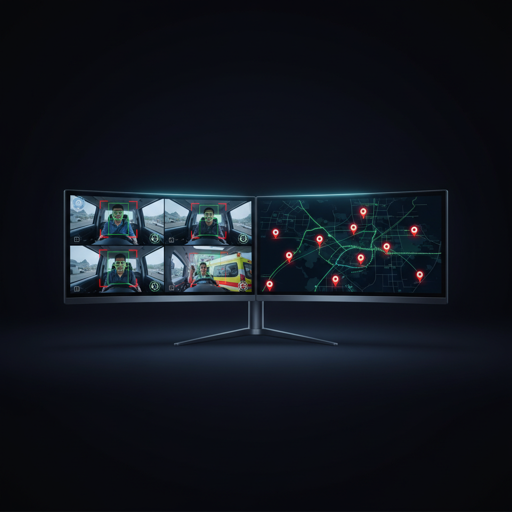
Computer vision implementations for fatigue detection achieve 98% accuracy in microsleep detection, according to NIOSH 2024 studies.
Edge AI: Immediate Processing Without Connectivity Dependence
Edge AI eliminates cloud connectivity dependence, processing computer vision data locally to guarantee immediate response in remote environments.
Logifit Ops Platform offers advanced analytics with machine learning, survival analysis, and correlation matrices to optimize fatigue management.
Local Processing
Edge AI modules process up to 30 FPS video with fatigue detection algorithms, generating alerts without requiring external connectivity.
Edge AI systems specialized in industrial safety integrate hardware optimized for real-time computer vision:
- Embedded GPUs: NVIDIA Jetson or Intel Movidius process complex neural networks with <15W consumption
- High-speed memory: DDR4/LPDDR5 enables HD video buffering without latency
- Local storage: Industrial SSD stores ML models and critical data during disconnections
- Multiple interfaces: CAN-Bus, Ethernet, RS-485 integrate with existing vehicular systems
Key fact: According to Gartner 2024, 87% of remote mining sites experience connectivity interruptions >4 hours weekly.
| Metric | Cloud Processing | Edge AI | Hybrid Edge-Cloud |
|---|---|---|---|
| Average latency | 150-500ms | 50-150ms | 80-200ms |
| Availability without internet | 0% | 100% | 85-95% |
| Mobile data cost | High | Zero | Medium |
| Scalability | High | Medium | High |
IoT Sensors: The Data Foundation for Contextual Computer Vision
Modern IoT sensors transcend basic telemetry, providing environmental context that improves fatigue detection accuracy through computer vision.
Multimodal Sensors
Smartbands with accelerometers, gyroscopes, heart rate and body temperature sensors complement computer vision for cross-validation of fatigue states.
Integration of specialized IoT sensors creates a redundant detection ecosystem that eliminates false positives and negatives:
- Physiological sensors: HRV, skin temperature, galvanic conductance detect physiological stress
- Environmental sensors: CO2, temperature, humidity, noise identify environmental fatigue factors
- Motion sensors: 9-axis accelerometers detect involuntary micro-movements
- Proximity sensors: LIDAR/ultrasound monitor distance to controls and posture
Systems combining computer vision with multimodal IoT sensors reduce false positives by 85% compared to uni-modal systems, according to IEEE 2024.
Implementation Architecture: Edge AI + Computer Vision + IoT Integration
Optimal architecture combines local edge AI with centralized computer vision and distributed IoT sensors to create predictive digital twins.
Hybrid Architecture
Edge AI processes critical computer vision locally while synchronizing aggregated patterns with centralized digital twins for evolutionary machine learning.
Successful implementation requires layered architecture optimizing edge AI, computer vision, and IoT sensors according to criticality:
True digital transformation in industrial safety occurs when computer vision, edge AI, and IoT sensors function as a single cognitive system, not as independent technologies.
— Logifit Team, Systems Engineering- Sensing Layer: IoT sensors capture physiological, environmental, and behavioral data every 100ms
- Edge Processing Layer: Computer vision and fatigue detection algorithms process locally in <300ms
- Intelligence Layer: Edge AI correlates historical patterns with real-time data for prediction
- Action Layer: Graduated alerts from soft notifications to emergency stops
| Component | Primary Function | Target Latency | Criticality |
|---|---|---|---|
| Camera Computer Vision | PERCLOS/microsleep detection | <100ms | Critical |
| Smartband IoT Sensors | HRV physiological validation | <500ms | High |
| Edge AI Processing | Multimodal fusion and decision | <300ms | Critical |
| Dashboard Reporting | Trend analysis and reporting | 1-5 minutes | Medium |
Transform Your Site with Integrated Computer Vision and Edge AI
Logifit combines advanced computer vision, edge AI, and IoT sensors in an integrated platform that reduces fatigue accidents by up to 98%. Discover how to implement intelligent digital twins in your operation.
Request Demo →ROI Measurement: Computer Vision and Edge AI as Strategic Investment
Implementation of computer vision and edge AI for fatigue detection generates measurable returns through accident prevention, operational optimization, and regulatory compliance. (Source: OSHA — Safety Management Systems)
For more on this topic, see our article on related AI technology strategies.
ROI analysis must consider direct and indirect benefits of integrated computer vision + edge AI + IoT sensors systems:
- Accident prevention: Each prevented fatal accident saves $1.2-4.5M according to MSHA 2024
- Insurance reduction: 15-25% lower premiums with certified preventive systems
- Operational productivity: Fewer incident interruptions increase uptime by 8-12%
- Regulatory compliance: Avoids OSHA fines ($15K-$145K) and international penalties
Organizations implementing computer vision for fatigue detection achieve average ROI of 340% in 18 months, according to McKinsey 2024 analysis.
Digital twins powered by computer vision, edge AI, and IoT sensors represent the necessary evolution from reactive industrial safety toward predictive ecosystems. The convergence of these technologies not only prevents accidents but transforms organizational safety culture toward intelligent prevention and continuous optimization.