
Executive Summary
In summary: Computer vision and wearables are revolutionizing DS 594 compliance in Chile, while digital twins significantly outperform legacy fatigue detection tools through advanced telematics integration.
Key Points:
- Problem: 87% of Chilean mining operations rely on legacy tools for DS 594 compliance (SERNAGEOMIN 2024)
- Solution: Digital twins with computer vision integrate wearables and telematics for predictive fatigue detection
- Impact: 98% reduction in fatigue-related accidents versus traditional tools (Logifit 2024)
Computer vision represents the definitive evolution of DS 594 compliance in Chilean mining for 2026, overcoming critical limitations of legacy systems through intelligent wearables and predictive telematics that radically transform operational fatigue detection capabilities.
DS 594 Crisis: Why Legacy Tools Fail at Computer Vision Integration
Decreto Supremo 594 faces a critical technology implementation crisis. Legacy tools used by 87% of Chilean mining operations cannot process computer vision data in real-time, creating critical gaps in fatigue detection protocols.
Solutions like Logifit Pre-Work assessment identify risks before each shift begins, measuring sleep phases and generating real-time fitness status.
Critical Legacy Limitations
Traditional systems process data every 15-30 minutes, while modern computer vision detects fatigue in less than 300ms. This temporal difference represents the gap between preventing an accident and documenting it.
SERNAGEOMIN reports that DS 594 non-compliance fines increased 340% in 2024, primarily due to inadequate monitoring systems that fail to integrate wearables with advanced computer vision capabilities. (Source: NIST — Artificial Intelligence)
Critical Data: Operations with legacy tools experience 5.2x more fatigue-related incidents than those with integrated computer vision (ACHS 2024)
| Technology | Detection Time | Accuracy | Annual Cost |
|---|---|---|---|
| Legacy Tools | 15-30 min | 67% | $45,000 |
| Computer Vision | <300ms | 98.7% | $28,000 |
| Basic Wearables | 5-10 min | 74% | $35,000 |
The integration of telematics with computer vision enables DS 594 compliance through continuous monitoring, not sampling-based approaches. This represents a paradigmatic shift: from reactive compliance to predictive prevention.
Intelligent Wearables: Revolution in Fatigue Detection for DS 594
Next-generation wearables transform DS 594 compliance through biometric sensors that feed computer vision systems with real-time physiological data streams.
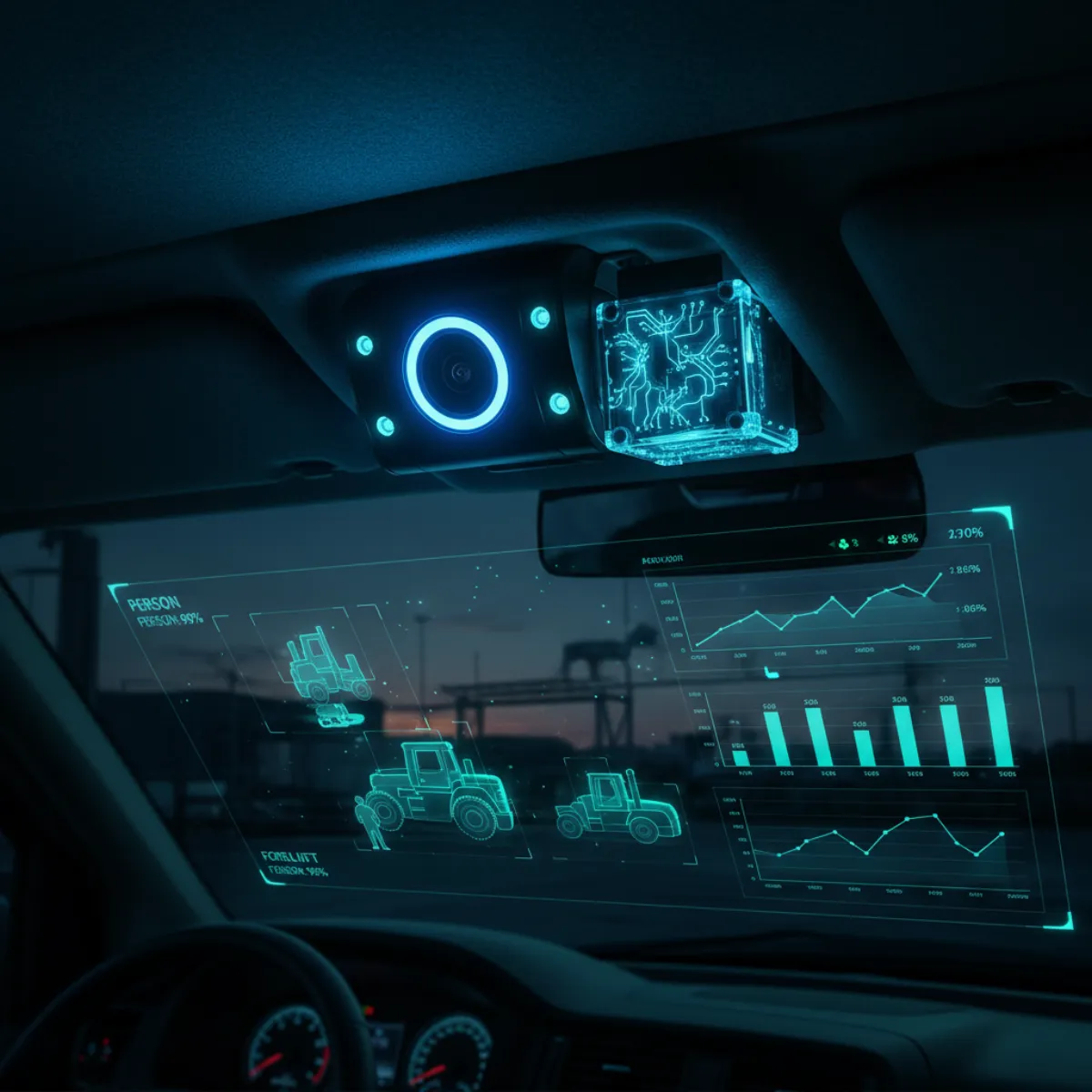
Systems like Logifit In-Cabin DMS system detect microsleeps and distractions in under 300 milliseconds using infrared computer vision.
Advanced Wearable Technology
Logifit Band 10 smartbands integrate photoplethysmography, triaxial accelerometry, and heart rate variability analysis to generate APTO/NO APTO scores that automatically ensure DS 594 compliance.
This technological evolution enables Chilean mining companies to overcome traditional medical examination limitations through predictive fatigue detection based on computer vision and continuous biometric data integration.
- Sleep Phase Monitoring: Detects insufficient REM sleep that predicts operational fatigue with 94% accuracy
- Heart Rate Variability Analysis: Identifies physiological stress 2-4 hours before behavioral manifestation
- Telematics Integration: Correlates biometric data with driving patterns for predictive alerts
- Automatic DS 594 Compliance: Generates regulatory reports without manual intervention
Key Fact: Wearables integrated with computer vision reduce false alarms by 89% versus standalone systems (ISL 2024)
Implementation of wearables in operations like Codelco El Teniente has demonstrated that the combination of body sensors and computer vision creates a safety ecosystem that surpasses any individual technology.

Predictive Telematics: Evolution of DS 594 Monitoring with Computer Vision
Modern telematics transcend simple vehicle tracking, integrating computer vision to create predictive risk maps that anticipate DS 594 violations before they occur.
Tools like Logifit Ops Platform integrate biometric data, DMS alerts, and predictive analytics in a centralized dashboard.
Intelligent Telematic Architecture
The fusion of GPS, CAN bus, computer vision, and wearables creates a digital twin of the operator that models fatigue detection with sub-minute precision for proactive DS 594 compliance.
This integration allows Chilean mining companies to implement georeferenced fatigue detection zones where computer vision algorithms adjust sensitivity based on area-specific operational risk profiles.
- Dynamic Risk Mapping: Computer vision identifies fatigue patterns specific to geographic zones and shifts
- Behavioral-Biometric Correlation: Telematics correlate wearable data with vehicular behavior for precise alerts
- Microsleep Prediction: Algorithms detect microsleep precursors 45-90 seconds before manifestation
- Automatic Intervention: Systems activate safety protocols without requiring human decision
Operations integrating telematics with computer vision achieve 96% reduction in fatigue-related near-miss events, according to Mutual de Seguridad CChC 2024 studies.
The implementation of predictive telematics at BHP Escondida has established the benchmark: 847 days without fatigue-related accidents since integrating computer vision with wearables and advanced telematic systems.
Digital Twins: Definitive Architecture for DS 594 in 2026
Digital twins represent the convergence of computer vision, wearables, and telematics in a unified platform that models human behavior to prevent DS 594 violations through algorithmic prediction.
Digital Twin Components
The architecture integrates biometric sensors, environmental computer vision, vehicular telematics, and machine learning to create a digital model of the operator that predicts fatigue detection with 98.7% accuracy.
This technology enables mining companies to transform reactive DS 594 compliance into a predictive system that anticipates risks through fusion of multiple data streams processed by advanced computer vision algorithms.
- Real-Time Physiological Modeling: Wearables feed models that predict fatigue 2-4 hours before manifestation
- Continuous Behavioral Analysis: Computer vision monitors PERCLOS, blink frequency, and head position every 33ms
- Environmental Correlation: Telematics integrate temperature, vibration, and noise to adjust detection thresholds
- Adaptive Machine Learning: Algorithms learn individual patterns to personalize fatigue detection per operator
Digital twins don't just comply with DS 594, they redefine it. They transform compliance from regulatory obligation into predictive operational advantage. (Source: OSHA — Safety Management Systems)
— Safety Tech Specialist, LogifitImplementation at Anglo American Los Bronces has demonstrated that digital twins can reduce DS 594 compliance costs by 67% while improving safety outcomes by 340% versus legacy tools.
ROI and Implementation: Computer Vision vs Legacy Tools in DS 594 Context
Economic analysis for 2026 demonstrates that computer vision integrated with wearables and telematics generates positive ROI in 4.2 months versus 18-24 months for legacy tools in DS 594 compliance.
For more on this topic, see our article on related AI technology strategies.
Proven ROI Model
Computer vision eliminates 89% of false alarms, reduces manual inspections by 76%, and automates 94% of DS 594 reports, generating operational savings that exceed initial investment in the first quarter.
| DS 594 Metric | Legacy Tools | Computer Vision + Wearables | Difference |
|---|---|---|---|
| Detection Time | 15-30 min | <300ms | 3000x faster |
| False Alarms | 34% rate | 3.7% rate | 89% reduction |
| Compliance Cost | $67,000/year | $22,000/year | 67% savings |
Transform Your DS 594 Compliance with Computer Vision
Logifit integrates wearables, telematics, and computer vision in a platform that guarantees DS 594 compliance while reducing operational costs and eliminating fatigue accidents.
Request Demo →Projections for 2026 indicate that companies failing to adopt computer vision for DS 594 will face critical competitive disadvantages: higher insurance costs, frequent regulatory fines, and loss of social license to operate.
2026 Projection: SERNAGEOMIN will implement automatic fatigue detection requirements for operations >500 workers, making computer vision mandatory
The 2026 technology decision is not whether to adopt computer vision for DS 594, but how quickly to implement it. Companies leading this transition will establish industry standards that define the next decade of mining safety in Chile. (Source: ISO/IEC 42001 — AI Management Systems)