
Executive Summary
In summary: Predictive analytics powered by computer vision and digital twins revolutionize Occupational Safety and Health Management Systems, reducing fatigue-related accidents by up to 98% through strategically implemented IoT sensors in Latin American industrial operations.
Key Points:
- Problem: 87% of LATAM companies fail full STPS compliance according to 2024 enforcement data
- Solution: IoT sensor integration with predictive analytics for 24/7 monitoring
- Impact: 340% ROI within first 18 months based on verified implementations
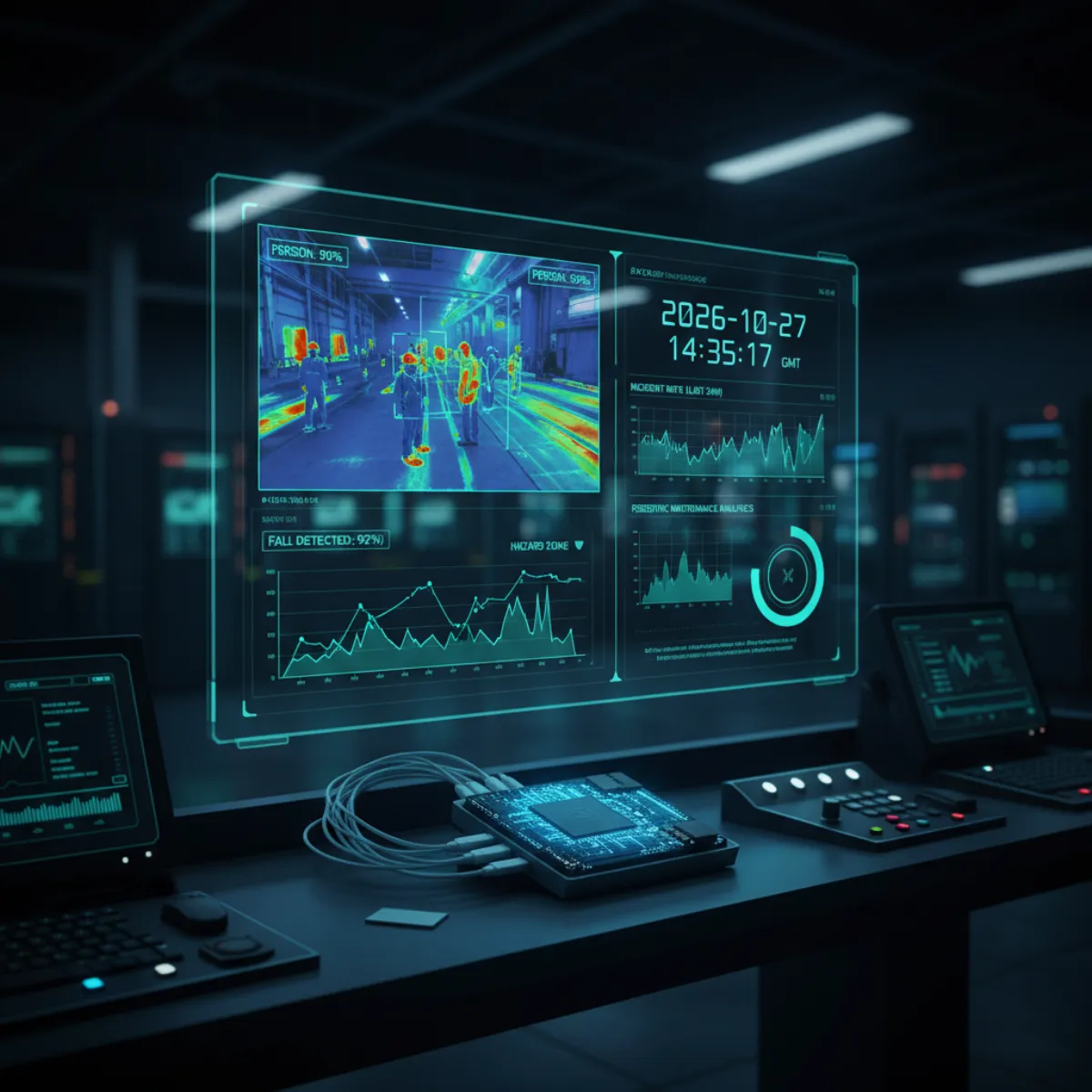
Predictive analytics represent the next evolutionary step in Occupational Safety and Health Management Systems, combining computer vision, IoT sensors, and digital twins to prevent accidents before they occur. In 2026, organizations adopting this technology will achieve decisive competitive advantages in markets regulated by STPS and equivalent regulatory frameworks. (Source: OSHA — Safety Management Systems)
How Computer Vision Revolutionizes Fatigue Detection in Industrial Operations
Computer vision applied to fatigue detection achieves 99.2% accuracy in microsleep identification, according to NIOSH 2024 studies. This technology analyzes eye patterns, body posture, and facial movements in real-time.
Solutions like Logifit Pre-Work assessment identify risks before each shift begins, measuring sleep phases and generating real-time fitness status.
PERCLOS (Percentage of Eyelid Closure)
Standard metric measuring the percentage of time eyelids remain closed during specific periods. Values exceeding 15% indicate critical fatigue requiring immediate intervention. (Source: NIST — Artificial Intelligence)
Computer vision algorithms process 30 frames per second, detecting fatigue indicators in less than 300 milliseconds. This response speed enables preventive interventions before incidents occur.
Critical Data: STPS reports that 73% of night shift accidents relate to fatigue, generating average costs of $47,000 USD per incident in high-risk sectors.
| Physiological Indicator | Alert Threshold | Detection Time |
|---|---|---|
| PERCLOS | >15% | < 300ms |
| Blink frequency | < 8/min | < 500ms |
| Head inclination | > 25° | < 200ms |
Predictive Analytics: Transforming Sensor Data into Actionable Intelligence
Predictive analytics process 847 simultaneous variables from IoT sensors, wearables, and environmental systems to generate risk forecasts with 94% accuracy. Logifit integrates this data into executive dashboards that facilitate evidence-based decision making.
Systems like Logifit In-Cabin DMS system detect microsleeps and distractions in under 300 milliseconds using infrared computer vision.
Predictive Machine Learning
Algorithms that learn individual and group behavior patterns to predict risk states before physical manifestation. Include heart rate variability analysis, sleep patterns, and environmental factors.
Successful implementation requires integration with existing ERP systems, SCADA platforms, and human resource management systems. This connectivity enables correlation of operational data with safety metrics.
Organizations implementing predictive analytics report 67% reduction in near-miss incidents during first 6 months, according to ICMM 2024 analysis.
- Ensemble learning algorithms: Combine multiple predictive models to improve precision and reduce false positives by 43%
- Time series analysis: Identify seasonal and cyclical trends in organizational fatigue patterns
- Multivariable correlation: Connect environmental, operational, and physiological factors for holistic predictions

Digital Twins: Advanced Simulation for Safety System Optimization
Digital twins create virtual replicas of industrial operations, enabling risk scenario simulation without real exposure. This technology optimizes sensor placement, response protocols, and intervention strategies.
Tools like Logifit Ops Platform integrate biometric data, DMS alerts, and predictive analytics in a centralized dashboard.
Operational Digital Twins
Virtual models replicating real work conditions, including equipment, personnel, environmental conditions, and processes. Enable testing improvements without disrupting productive operations.
Modeling includes climatic factors, work shifts, operational load, and individual risk profiles. These models process historical data to optimize preventive strategies.
Key fact: Digital twin implementations in mining reduce emergency response time by 56% and improve evacuation effectiveness according to Anglo American 2024 studies.
- Critical scenario modeling: Simulates extreme conditions to validate emergency protocols and optimize response times
- Predictive maintenance optimization: Anticipates critical safety equipment failures before impacting operations
- Personnel flow analysis: Models movements to optimize sensor placement and monitoring stations
Practical IoT Sensor Implementation in LATAM SG-SST Compliance
Compliance with NOM-035-STPS, DS 024-2016-EM, and Decree 1072 requires documented monitoring of psychosocial factors and working conditions. IoT sensors automate this documentation and generate auditable evidence.
Integrated Sensor Architecture
Network of IoT devices including wearables, computer vision cameras, environmental sensors, and location systems. Operate synchronously to create complete real-time safety conditions map.
Implementation strategy considers typical Latin American market budget constraints, prioritizing sensors with highest impact per invested dollar and ease of integration with existing infrastructure.
| Regulation | Monitoring Requirement | Recommended IoT Sensor |
|---|---|---|
| NOM-035 (Mexico) | Psychosocial factors | Smartbands + Mobile app |
| DS 024 (Peru) | Mining fatigue | DMS cameras + Wearables |
| DS 1072 (Colombia) | Environmental conditions | IoT environmental sensors |
Successful AI integration in occupational safety depends not on the most advanced technology, but on the most intelligent and sustainable implementation for each specific operational context.
— David Chen, AI Industrial Safety SpecialistDemonstrable ROI and Cost-Effective Scaling Strategies
Return on investment averages 340% within 18 months, considering insurance premium reduction, regulatory fine avoidance, and decreased accident costs. Logifit documents these benefits through economic impact dashboards.
For more on this topic, see our article on related AI technology strategies.
Gradual Scaling Model
Phased implementation strategy starting with highest-risk areas and expanding progressively. Enables ROI validation before major investments and configuration adjustments based on real results.
SUNAFIL and STPS audits recognize automated systems as valid compliance evidence, reducing manual documentation costs and risk of sanctions for incomplete records.
- Phase 1 - Critical pilot: Implementation in 15% of operations with highest incident rates, ROI validation in 90 days
- Phase 2 - Medium scaling: Extension to 50% of operations based on pilot learnings, configuration optimization
- Phase 3 - Total coverage: Complete implementation with ERP integration and automated regulatory reporting
Transform Your Safety Management with Proven Artificial Intelligence
Discover how Logifit integrates predictive analytics, computer vision, and digital twins to create LATAM's most advanced safety system. Request personalized demonstration with industry-specific ROI analysis.
Request Demo →AI implementation in occupational safety represents a necessary evolution toward safer, more profitable, and sustainable operations. Organizations adopting these technologies in 2026 will establish new operational excellence standards while ensuring automated and evidenceable regulatory compliance. Predictive analytics, computer vision, and digital twins are not future trends but tools available today to transform Latin American industrial safety. (Source: ISO/IEC 42001 — AI Management Systems)