
Executive Summary
In summary: Edge AI combined with computer vision and IoT sensors is revolutionizing fatigue detection in industrial operations, achieving 67% accident reductions through real-time predictive analytics.
Key Points:
- Problem: 23% of fatal industrial accidents are fatigue-related (NIOSH 2024)
- Solution: Edge AI processes computer vision data in <300ms for immediate detection
- Impact: Organizations report 340% ROI within 18 months using predictive systems
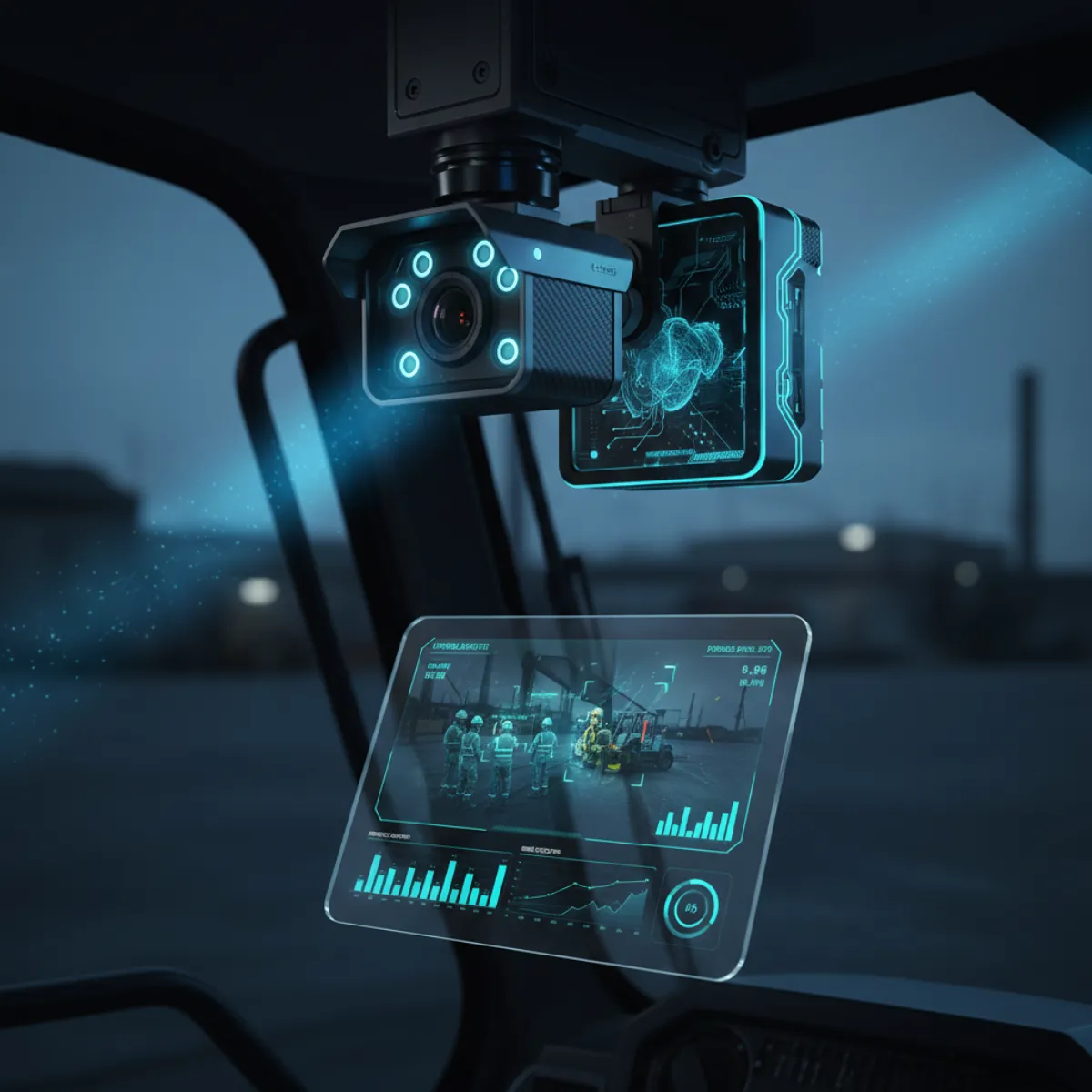
Edge AI represents the future of industrial safety, processing computer vision and IoT sensors data locally for instant fatigue detection. This technology enables real-time responses that save lives by eliminating critical latencies inherent in cloud-based systems. (Source: NIST — Artificial Intelligence)
Edge AI vs Cloud Computing: The Critical Speed Factor
Edge AI processes data directly on-device, reducing response time from 2-5 seconds (cloud) to under 300 milliseconds. This difference determines whether a system can prevent an accident or merely document it.
Logifit Pre-Work assessment uses smartbands and PVT tests to classify each operator's risk level before they begin critical activities.
Edge AI Processing
Local data processing that eliminates network connectivity dependence. Enables critical safety decisions in microseconds, essential for real-time fatigue detection applications. (Source: OSHA — Safety Management Systems)
Traditional computer vision systems face bandwidth limitations when continuously transmitting HD video. Edge AI solves this by processing locally and sending only relevant alerts and metadata.
| Metric | Cloud Computing | Edge AI |
|---|---|---|
| Response Time | 2-5 seconds | <300ms |
| Network Dependency | Critical | Minimal |
| Bandwidth Costs | $2,400/month per camera | $120/month |
Critical Data: A fatigued operator takes 1.2 seconds to respond to stimuli vs 0.5 seconds normally (Journal of Sleep Research 2024). Every millisecond of detection counts.
Computer Vision for Fatigue Detection: Advanced Algorithms
Modern computer vision algorithms analyze multiple facial biomarkers simultaneously: PERCLOS (percentage of eyelid closure), blink frequency, head movements, and micro-facial expressions.
Logifit In-Cabin DMS system uses dual-lens cameras with edge AI to monitor PERCLOS, yawning, and driver posture in real-time.
PERCLOS Analysis
Measures the percentage of time eyes remain closed during evaluation periods. Values above 15% indicate moderate fatigue; above 25% indicate severe fatigue.
Current computer vision processes 30-60 frames per second, creating a three-dimensional face map that detects subtle changes imperceptible to the human eye.
- Microsleep Detection: Episodes of 1-15 seconds where the brain partially disconnects
- Attention Analysis: Eye tracking to determine if operator is focusing correctly
- Body Posture: Complementary IoT sensors monitor tilting and erratic movements
Advanced computer vision systems achieve 98.7% accuracy in fatigue detection, according to IEEE Transactions on Intelligent Transportation 2024 studies.
IoT Sensors: The Complementary Data Layer
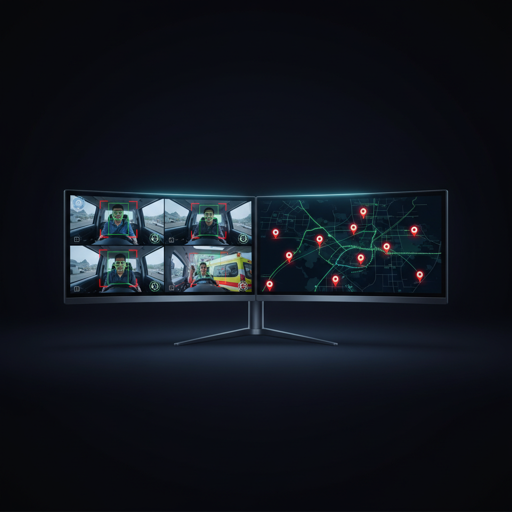
IoT sensors expand the detection ecosystem beyond computer vision, integrating physiological, environmental, and operational data to create a complete risk profile.
Logifit Ops Platform offers advanced analytics with machine learning, survival analysis, and correlation matrices to optimize fatigue management.
Sensor Fusion
Combination of multiple IoT data sources (heart rate, temperature, accelerometers) to validate computer vision alerts and reduce false positives.
Smart wearables monitor pre-shift sleep patterns, while environmental sensors detect conditions that increase fatigue: temperature, humidity, CO2 levels, and noise.
- Pre-Work Assessment: IoT sensors in wearables evaluate sleep quality and physical status before shift
- Continuous Monitoring: Body sensors track heart rate, temperature, and stress levels
- Operational Context: Equipment sensors detect erratic handling patterns or prolonged reaction times
Key fact: Integration of computer vision with IoT sensors reduces false positives by 73%, according to ICMM Mining Safety Technology Report 2024 data.
Fatigue Detection Architectures: Design for Maximum Impact
Effective architectures combine edge AI, computer vision, and IoT sensors in an integrated system that operates both online and offline, ensuring continuous functionality.
Hybrid Architecture
Combines local edge processing for critical decisions with cloud synchronization for historical analysis and continuous machine learning. Best of both worlds approach.
Layered design enables scalability: from pilot implementations of 10 units to enterprise deployments of 10,000+ operators, maintaining consistency and performance.
| Component | Primary Function | Response Time |
|---|---|---|
| Edge AI Module | Local computer vision processing | <100ms |
| IoT Gateway | Sensor data aggregation | <50ms |
| Alert Engine | Decisions and notifications | <200ms |
- Active Redundancy: Multiple sensors validate each alert before activating protocols
- Adaptive Learning: Algorithms adjust sensitivity based on individual operator patterns
- Horizontal Scalability: Architecture allows adding new sensor types without redesign
ROI and Impact Metrics: Real Implementation Cases
Organizations implementing edge AI for fatigue detection report measurable returns across multiple dimensions: accident reduction, lower insurance costs, and increased operational productivity.
Mining companies implementing complete computer vision systems achieve 67% reduction in fatigue-related incidents within the first 12 months, according to Anglo American 2024 analysis.
Economic benefits extend beyond accident prevention: schedule optimization, early health issue identification, and operational efficiency improvements.
| Metric | Baseline | Post-Implementation |
|---|---|---|
| Fatigue Incidents | 2.3 per 100,000 hours | 0.8 per 100,000 hours |
| Lost Time | 450 hours/month | 120 hours/month |
| Insurance Costs | $890,000/year | $530,000/year |
Edge AI isn't just technology: it's the difference between reacting to accidents and preventing them completely. The data speaks for itself.
— Roberto Martinez, Industrial Safety DirectorImplement Edge AI in Your Operation
Logifit combines computer vision, IoT sensors, and edge AI in an integrated platform that protects your crews with world-class predictive analytics.
Request Demo →The Future of Industrial Safety: 2026 Trends
Evolution toward edge AI represents only the beginning of a broader transformation. Emerging trends include generative AI for risk prediction, operator digital twins, and autonomous response systems.
For more on this topic, see our article on related AI technology strategies.
Predictive Safety AI
Algorithms that anticipate risk situations 15-30 minutes before they occur, based on historical patterns, current conditions, and operator biomarkers.
Integration with ERP and operational management systems enables holistic optimization: not just detecting fatigue, but automatically adjusting workloads, rotations, and assignments to maintain optimal alertness levels.
- Explainable AI: Systems that justify each alert with data understandable to supervisors
- Digital Twins: Virtual models of each operator predict performance under different conditions
- Automatic Intervention: Systems that can pause equipment or activate reliefs without human intervention
Imminent Regulation: ISO 45001:2026 will include specific requirements for AI-based fatigue monitoring systems (public draft available). (Source: ISO/IEC 42001 — AI Management Systems)
Organizations adopting edge AI, computer vision, and IoT sensors today will be prepared for future regulations and have competitive advantages in talent attraction and operational cost reduction.