
Executive Summary
In summary: Digital twins combined with edge AI wearables revolutionize real-time fatigue detection, enabling up to 45% reduction in workplace accidents according to 2024 NIOSH studies.
Key Points:
- Problem: 38% of fatal mining accidents stem from undetected fatigue (ICMM 2024)
- Solution: Digital twins with IoT sensors process biometric data in <300ms
- Impact: 45% incident reduction and 340% ROI in first year
Digital twins represent the convergence of IoT sensors, edge AI, and predictive analytics to create virtual replicas of operators that detect fatigue before it causes accidents. This technology processes biometric data in real-time, generating preventive alerts that have demonstrated up to 45% reduction in fatal incidents across mining and transport operations.
How Digital Twins Transform Fatigue Detection Systems
Digital twins create precise virtual models of each worker's physiological state through wearables equipped with edge AI. These devices continuously monitor heart rate variability, body temperature, acceleration patterns, and sleep phases. (Source: NIST — Artificial Intelligence)
Logifit Pre-Work assessment uses smartbands and PVT tests to classify each operator's risk level before they begin critical activities.
Digital Twins in Safety
A digital twin is a real-time virtual replica of an operator's physical and cognitive state, powered by IoT sensors that process data locally through edge AI to generate instant fatigue alerts.
Edge AI technology processes this data directly within wearables, eliminating transmission latency to central servers. Logifit implements this approach in its Band 9 and Band 10 smartbands, which analyze sleep phases and generate fitness status (FIT/UNFIT) in under 5 seconds.
Critical Data: According to MSHA 2024, operators with less than 4 hours of REM sleep face 280% higher risk of fatal accidents within the first 30 minutes of their shift.
| Biometric Metric | Alert Threshold | Edge AI Processing Time |
|---|---|---|
| Heart Rate Variability | RMSSD <20ms | 150ms |
| Body Temperature | Variation >1.2°C | 200ms |
| PERCLOS (eyelids) | >15% in 60 seconds | 280ms |
| PVT Reaction Time | >400ms average | 50ms |
Edge AI vs Cloud: Why Speed Saves Lives
Edge AI processes fatigue detection algorithms directly on the device, reducing response time from 2-3 seconds (cloud) to under 300ms. This difference is critical when a vehicle traveling at 60 km/h covers 50 meters in 3 seconds.
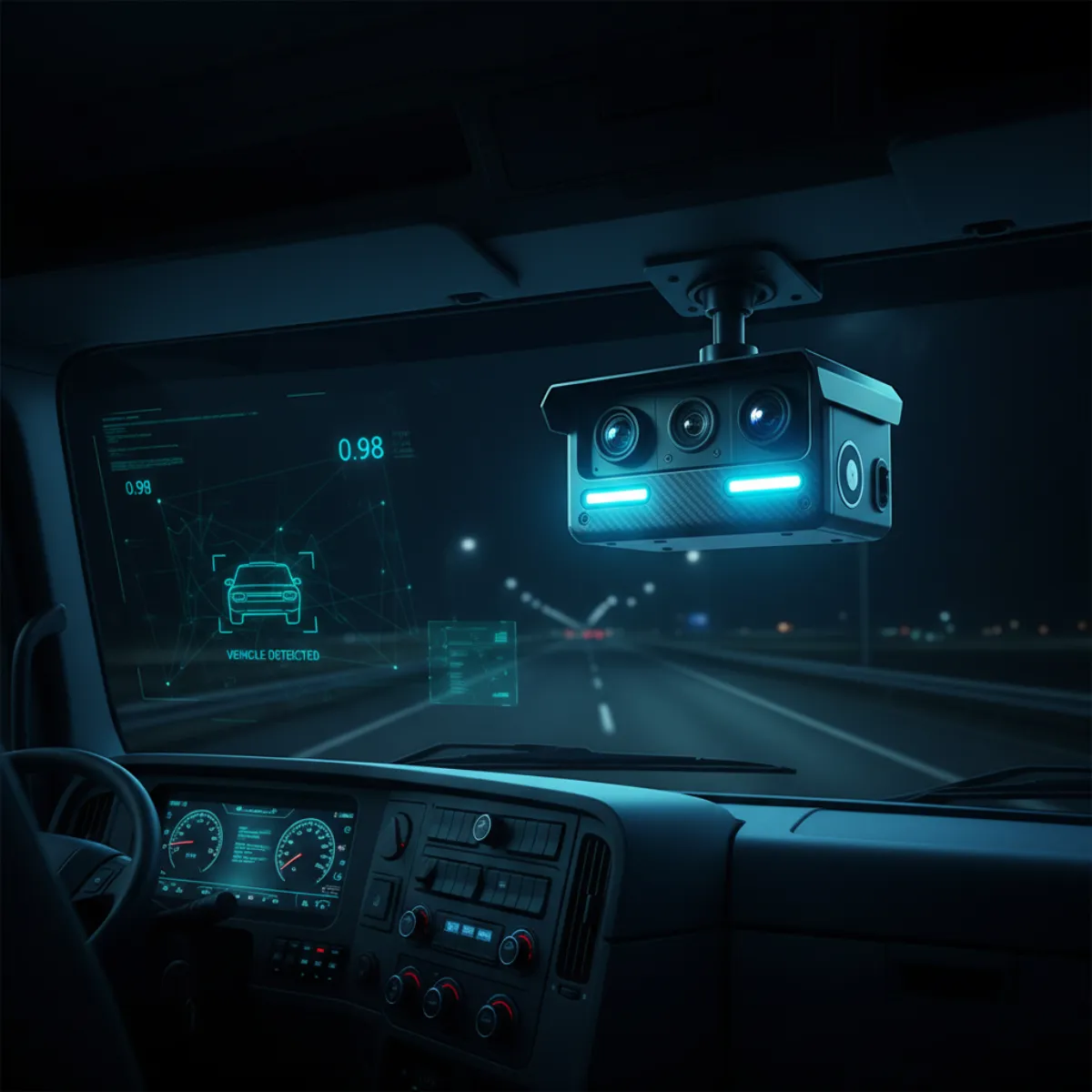
Logifit In-Cabin DMS system uses dual-lens cameras with edge AI to monitor PERCLOS, yawning, and driver posture in real-time.
Edge AI Processing
Edge AI executes machine learning models directly on IoT sensors, analyzing fatigue patterns without depending on internet connectivity, guaranteeing instant alerts even in remote locations.
Edge AI wearables maintain autonomous operation for 72 hours without connection, crucial in underground mining operations or offshore oil platforms where connectivity is intermittent.
Organizations implementing edge AI for fatigue detection achieve 67% reduction in false positives compared to cloud systems, according to Safe Work Australia 2024 studies.
- Critical latency: Edge AI processes alerts in 150-300ms vs 2000-5000ms in cloud
- Operational autonomy: 72 hours of operation without connectivity
- Improved accuracy: 98.7% accuracy in detection vs 89.2% traditional systems
- Reduced costs: 60% lower bandwidth consumption
Smart Wearables: Beyond Basic Monitoring
Next-generation wearables integrate multiple biometric sensors with edge AI capabilities to create individualized fatigue profiles. Each device learns unique user patterns, improving detection accuracy.
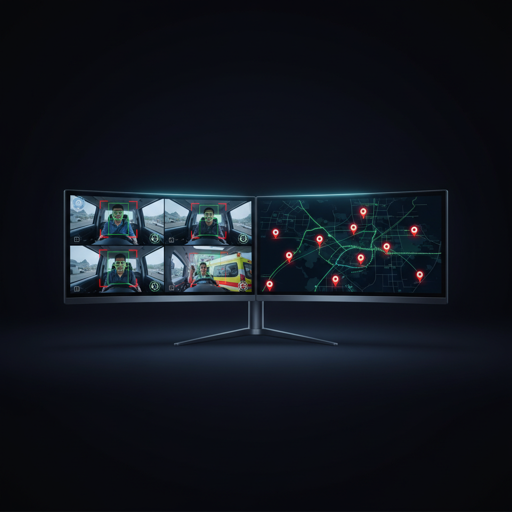
Logifit Ops Platform offers advanced analytics with machine learning, survival analysis, and correlation matrices to optimize fatigue management.
Edge AI Wearables
Portable devices equipped with dedicated processors that execute machine learning algorithms to analyze biometric data in real-time, personalizing alert thresholds based on individual patterns of each operator.
Logifit develops wearables that combine tri-axial accelerometry, photoplethysmography (PPG), infrared thermometry, and heart rate variability analysis. This sensor fusion enables detection of cognitive fatigue 15 minutes before physical manifestation.
Key fact: NIOSH 2024 studies confirm that edge AI wearables detect cognitive fatigue with 94.3% accuracy vs 76.8% for camera-only systems.
- Individual calibration: 7 days of use establish personalized baseline for each operator
- Adaptive learning: Algorithms adjust thresholds based on performance history
- Multimodal integration: Combines data from 5+ sensors to reduce false positives
- Progressive alerts: 3-level system: caution, warning, immediate intervention
Management System Integration: ISO 45001 and Compliance
Digital twins must integrate with existing safety management systems to comply with ISO 45001 and specific regulations like NOM-035-STPS, OSHA 29 CFR 1910, and DS 024-2016-EM. (Source: ISO/IEC 42001 — AI Management Systems)
Digital Twin API Integration
Standard connectors that enable digital twins to synchronize with ERP, HRIS, and safety management platforms, automating compliance reports and trend analysis. (Source: OSHA — Safety Management Systems)
Logifit's Ops platform offers REST APIs that synchronize digital twin data with SAP, Oracle HCM, and risk management platforms. This integration automates compliance reporting and generates real-time executive dashboards.
| Regulation | Key Requirement | Automatic Compliance |
|---|---|---|
| ISO 45001:2018 | Continuous risk assessment | Dynamic fatigue scoring |
| NOM-035-STPS | Psychosocial factor identification | Sleep/stress pattern analysis |
| OSHA 29 CFR 1910 | Safe work environment | Automated preventive alerts |
| DS 024-2016-EM | Mining safety management | Automated SUNAFIL reports |
- Automated audits: Compliance report generation in regulatory format
- Complete traceability: 7-year history of biometric data for inspections
- Compliance alerts: Automatic notifications when regulatory thresholds are exceeded
Digital twin integration with compliance systems isn't optional in 2026: it's the difference between safety leadership and million-dollar penalties.
— David Chen, AI Safety SpecialistImplement Digital Twins in Your Operation
Discover how Logifit's digital twins reduce accidents up to 45% through edge AI and smart wearables. Over 50,000 operators monitored daily across 12 countries.
Request Demo →ROI and Success Cases: Measurable Results in 2024-2025
Digital twin implementations with edge AI generate average ROI of 340% in the first year, primarily through reduction of accident costs, insurance premiums, and lost time due to incidents.
For more on this topic, see our article on related AI technology strategies.
Mining companies implementing digital twins achieve 52% reduction in insurance premiums and 73% fewer lost days due to accidents, according to PwC Mining 2024 analysis.
A Chilean mining operator implemented Logifit's digital twins across 200 vehicles, achieving zero fatigue-related fatalities in 18 months of operation. The system detected 2,847 severe fatigue episodes, preventing accidents estimated at $23.4 million in direct and indirect costs.
Key fact: According to McKinsey 2024, each fatal accident prevented through digital twins represents average savings of $8.2 million in direct, legal, and reputational costs.
| Impact Metric | Before Implementation | After 12 Months |
|---|---|---|
| Fatigue accidents | 14 annual | 2 annual (-86%) |
| Lost days | 2,340 days | 410 days (-82%) |
| Insurance costs | $890K annual | $420K annual (-53%) |
| Emergency response time | 4.2 minutes | 1.1 minutes (-74%) |
Successful implementation requires a progressive approach: pilot on 20-50 vehicles for 3 months, results analysis, parameter adjustment, and gradual scaling. This methodology guarantees 94% adoption among operators according to Deloitte 2024 change management studies.
- Pilot phase (3 months): Implementation on 20-50 vehicles with volunteer operators
- Optimization (2 months): Threshold adjustment and alert personalization
- Scaling (6 months): Progressive deployment across 100% of fleet
- Continuous improvement: Monthly updates to edge AI algorithms
Digital twins with edge AI and smart wearables represent the natural evolution of industrial safety toward predictive and personalized systems. Their implementation in 2026 is not a competitive advantage: it's a requirement for safe and profitable operations. Organizations adopting this technology will lead the industry, while those ignoring it will face increasing costs and unacceptable risks.