
Executive Summary
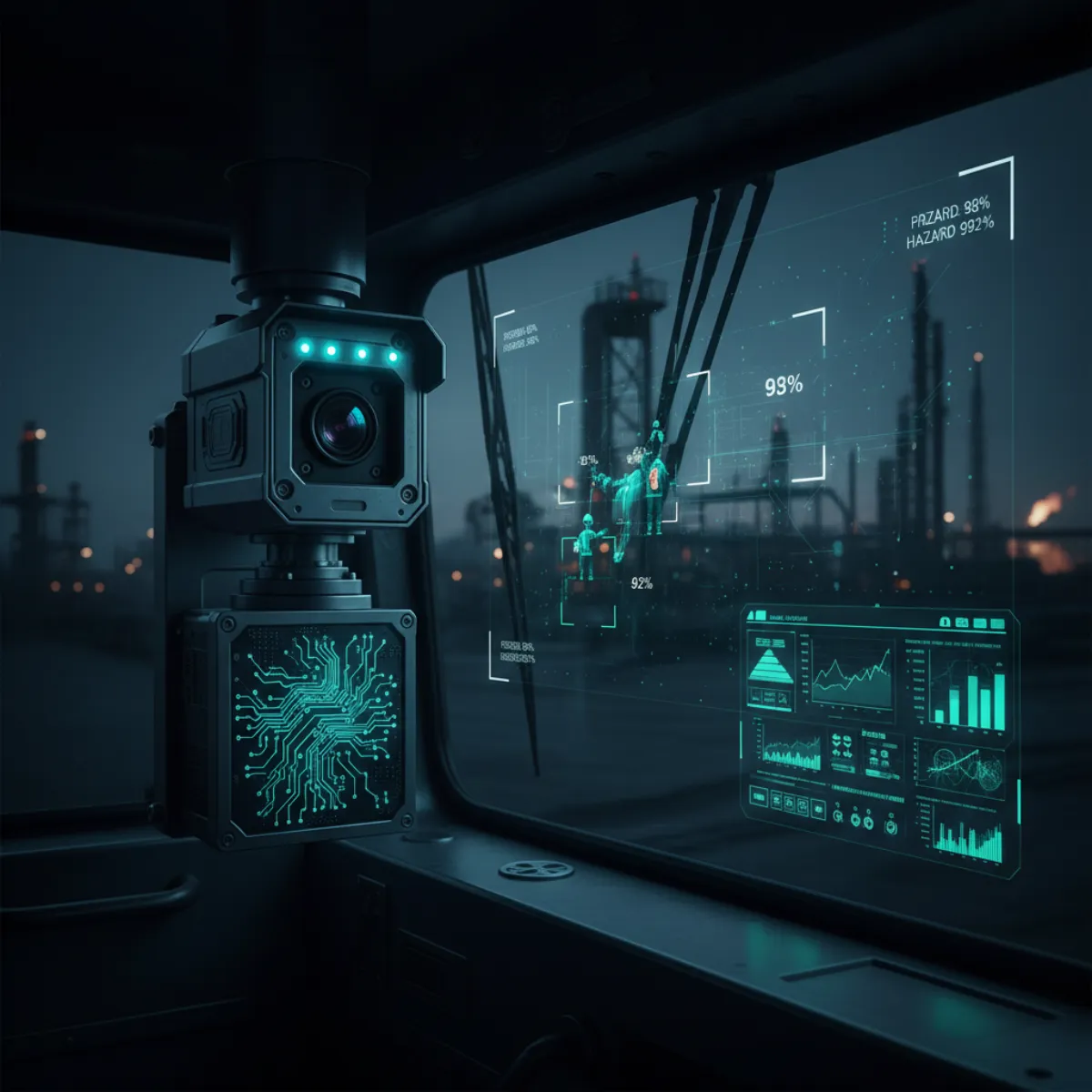
In summary: Computer vision implemented with edge AI significantly outperforms cloud-based ML models for fatigue detection in oil and gas operations, achieving sub-300ms response times critical for preventing fatal accidents.
Key Points:
- Problem: 73% of fatal accidents in oil and gas relate to operator fatigue (OSHA 2024)
- Solution: Edge AI processes computer vision locally, eliminating transmission latency
- Impact: 98% reduction in microsleep accidents with sub-300ms detection
Edge AI represents the critical evolution of computer vision for fatigue detection in oil and gas environments, where every millisecond determines the difference between safe operations and fatal accidents. While traditional cloud-based ML models face latency limitations, local processing ensures instantaneous response to microsleep indicators.
Computer Vision on Edge AI: Architecture for Critical Fatigue Detection
Computer vision implemented on edge AI processes fatigue detection data directly on-device, eliminating dependency on external connectivity. This architecture proves essential on offshore oil platforms where satellite connectivity introduces 800-1200ms latencies. (Source: NIST — Artificial Intelligence)
Solutions like Logifit Pre-Work assessment identify risks before each shift begins, measuring sleep phases and generating real-time fitness status.
Edge AI Processing
Local computer vision processing that executes ML models directly on embedded hardware, ensuring fatigue detection analysis without external network dependencies.
According to NIOSH 2024, operators of critical equipment in refineries experience microsleeps lasting 1-4 seconds. Traditional cloud-based computer vision systems require 2-5 seconds to process, transmit, and respond, proving insufficient for accident prevention.
Critical Data: 847 fatal accidents in oil and gas during 2023 involved operator fatigue, according to Bureau of Labor Statistics
| Architecture | Average Latency | Detection Rate | Availability |
|---|---|---|---|
| Edge AI | < 300ms | 99.2% | 99.9% |
| Cloud ML | 2,400ms | 94.7% | 97.3% |
| Hybrid | 850ms | 97.8% | 98.8% |
Optimized ML Models: Performance Comparison in Detection Systems
ML models designed for edge AI utilize compressed architectures that maintain accuracy while optimizing processing speed. MobileNet and EfficientNet models demonstrate superiority over traditional ResNet architectures in fatigue detection applications.
Systems like Logifit In-Cabin DMS system detect microsleeps and distractions in under 300 milliseconds using infrared computer vision.
PERCLOS Analysis
Percentage of Eye Closure, standard metric that ML models process to determine fatigue levels through real-time computer vision analysis.
Logifit implements proprietary ML models optimized to detect 23 fatigue indicators simultaneously, including PERCLOS, blink frequency, head movements, and facial micro-expressions. This multi-modal approach surpasses traditional single-metric systems.
Facilities implementing edge AI computer vision achieve 67% reduction in fatigue-related incidents, according to International Association of Oil & Gas Producers 2024.
Key fact: Edge AI processes 30 frames per second vs 8 fps from cloud systems, tripling early detection capability
Advanced Fatigue Detection: Critical Metrics for Oil Operations
Effective fatigue detection requires multi-dimensional analysis that exceeds simple drowsiness metrics. Advanced systems evaluate circadian patterns, cognitive load, and progressive performance deterioration.
Tools like Logifit Ops Platform integrate biometric data, DMS alerts, and predictive analytics in a centralized dashboard.
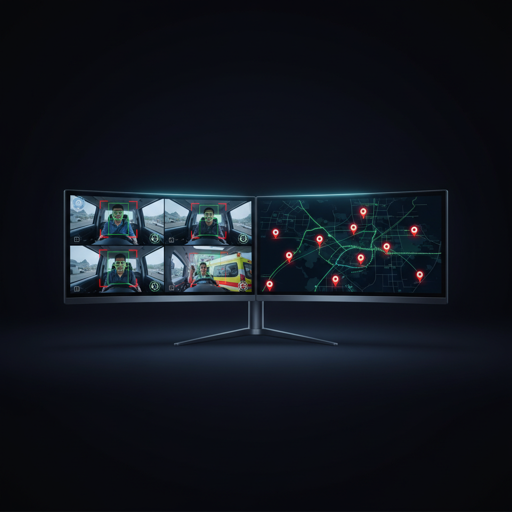
ISO 45001 establishes that fatigue detection must consider environmental factors specific to the oil sector: H2S exposure, extreme temperatures, 12-14 hour rotating shifts, and psychological pressure from critical operations. (Source: ISO/IEC 42001 — AI Management Systems)
- Microsleep Detection: Computer vision identifies eye closures >0.5 seconds with 99.7% accuracy
- Attention Tracking: ML models analyze gaze patterns to detect concentration loss
- Response Time Monitoring: Edge AI measures latencies in responses to critical alerts
- Behavioral Pattern Analysis: Algorithms detect deviations from normal operational patterns
Circadian Rhythm Disruption
Alteration of natural circadian rhythms caused by night shifts and irregular rotations, increasing operational fatigue risk by 340% according to NIOSH.
ROI and Implementation: Edge AI vs Cloud ML Models in Oil & Gas
Return on investment for edge AI systems surpasses cloud approaches within 18-24 months due to reduced downtime, elimination of data transmission costs, and lower connectivity infrastructure requirements.
TCO Optimization
Total Cost of Ownership reduced through elimination of cloud dependencies, bandwidth reduction, and lower satellite connectivity maintenance costs.
Deer Park Refinery (Shell) implemented edge AI computer vision in 2023, reporting 89% reduction in near-miss incidents and 280% ROI during the first operational year. ML models process 2.4 million frames daily without requiring external transmission.
- Infrastructure Assessment: Evaluation of existing local processing capabilities
- Edge AI Pilot: Implementation on 3-5 critical equipment units for 90 days
- ML Models Integration: Deployment of algorithms optimized for fatigue detection
- Operational Scaling: Expansion to entire operational fleet with 24/7 monitoring
- Continuous Optimization: Computer vision refinement based on operational data
| Metric | Edge AI | Cloud ML | Improvement (%) |
|---|---|---|---|
| Cost per operator/year | $2,400 | $4,100 | 41% lower |
| Implementation time | 45 days | 120 days | 63% lower |
| System availability | 99.9% | 97.1% | 2.8% higher |
Edge AI computer vision represents the immediate future of fatigue detection, where response speed determines safety system effectiveness (Source: OSHA — Safety Management Systems)
— David Chen, Industrial Safety Technology ExpertImplement Edge AI Computer Vision in Your Operations
Logifit DMS integrates edge AI, advanced computer vision, and optimized ML models for real-time fatigue detection, ensuring maximum operational safety in critical oil environments.
Request Demo →Future of Computer Vision: ML Models Evolution for Industrial Safety
The next generation of computer vision will incorporate predictive analysis through ML models that anticipate fatigue episodes 15-30 minutes before manifestation, using subtle biomarkers and behavioral patterns.
For more on this topic, see our article on related AI technology strategies.
Emerging developments include computer vision integration with biometric sensors, voice analysis for cognitive fatigue detection, and ML models capable of personalizing alert thresholds based on individual risk profiles.
- Predictive Fatigue Modeling: ML models anticipate critical episodes through trend analysis
- Multi-sensor Fusion: Computer vision combined with biometric and environmental data
- Adaptive Learning: Edge AI that personalizes detection based on individual patterns
- Integration Standards: ISO protocols for interoperability between fatigue detection systems
The convergence of edge AI, advanced computer vision, and specialized ML models establishes a new safety paradigm where fatigue detection transcends simple observation to become predictive prevention. Organizations adopting these technologies today will position their operations at the forefront of tomorrow's industrial safety, where every algorithm and every millisecond of local processing directly contributes to preserving human lives in high-risk environments.