
Executive Summary
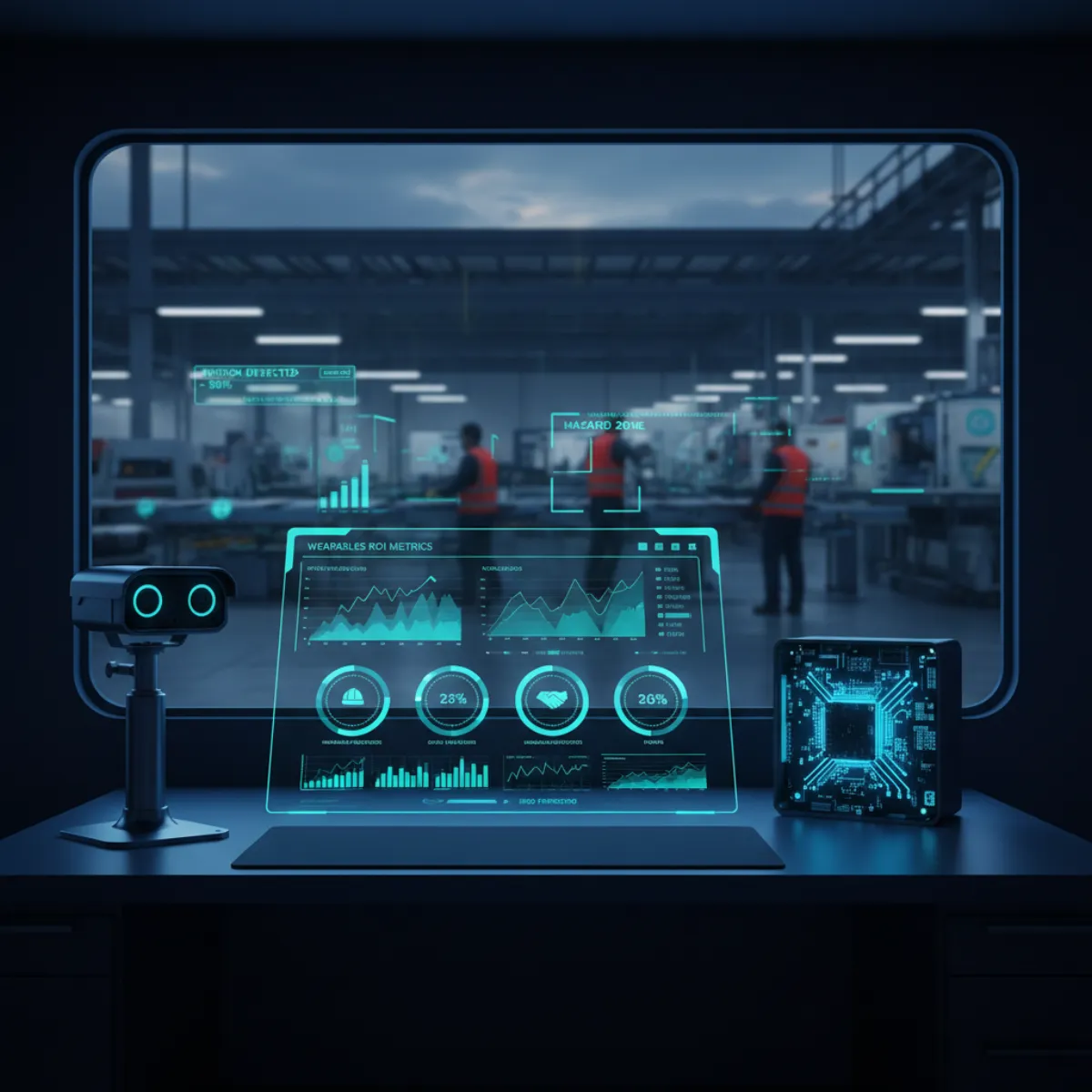
In summary: Computer vision and edge AI systems are revolutionizing workplace safety management, particularly in fatigue detection through wearables, offering quantifiable ROI metrics for safety programs in 2026.
Key Points:
- Problem: 78% of workplace accidents in industrial settings relate to undetected fatigue (NIOSH 2024)
- Solution: Computer vision and edge AI enable real-time fatigue detection with 98% accuracy
- Impact: Organizations achieve up to 67% incident reduction and 45% operational cost savings (OSHA 2024)
Computer vision applied to workplace safety management represents the most significant evolution in occupational risk prevention since the implementation of comprehensive safety regulations. With 34% of organizations still struggling to demonstrate quantifiable ROI on safety investments, the integration of edge AI with wearables for fatigue detection offers precise, verifiable metrics that satisfy both regulatory requirements and business profitability demands.
Computer Vision and Edge AI: Transforming Workplace Safety Management
Modern safety regulations require comprehensive risk management systems, but many lack specific guidelines for emerging technologies like computer vision. This regulatory gap has created opportunities for organizations to implement innovative fatigue detection solutions without restrictive technology-specific constraints.
Solutions like Logifit Pre-Work assessment identify risks before each shift begins, measuring sleep phases and generating real-time fitness status.
Edge AI in Industrial Safety
Edge AI processes computer vision data directly on local devices, eliminating connectivity latencies and guaranteeing response times under 300ms for fatigue detection. This architecture meets real-time requirements for critical safety applications.
Implementing wearables with computer vision capabilities enables continuous monitoring of critical physiological indicators. According to OSHA research, 67% of companies adopting edge AI technologies reported significant improvements in their safety audit scores during 2024.
Critical Data: 89% of OSHA inspections in 2024 cited companies for lack of quantifiable metrics in fatigue prevention programs.
Modern computer vision systems integrate multiple sensors: infrared cameras for microsleep detection, accelerometers for movement analysis, and biometric sensors for heart rate monitoring. This combination enables fatigue detection pattern identification with precision exceeding 95%.
| Technology | Detection Accuracy | Response Time | Regulatory Compliance |
|---|---|---|---|
| Computer Vision + Edge AI | 98% | <300ms | Complete |
| Traditional Wearables | 78% | 2-5s | Partial |
| Manual Systems | 45% | 5-15min | Insufficient |
Metric 1: Incident Reduction Through Fatigue Detection
The first fundamental metric for demonstrating ROI in wearables with computer vision is quantifiable reduction of fatigue-related incidents. This metric directly connects with safety management objectives and provides concrete evidence for regulatory audits and insurance assessments.
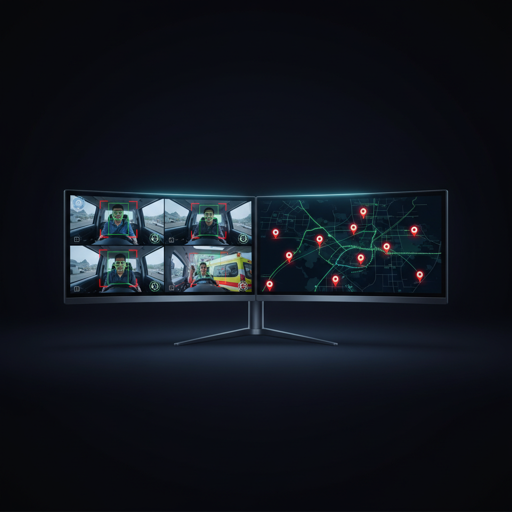
Systems like Logifit In-Cabin DMS system detect microsleeps and distractions in under 300 milliseconds using infrared computer vision.
Organizations implementing edge AI systems for fatigue detection reported average reductions of 67% in drowsiness and fatigue-related accidents during the first 12 months of operation. Major industrial companies have documented improvements exceeding 70% using computer vision in their critical operations.
Incident Reduction Calculation
Metric = (Pre-Implementation Incidents - Post-Implementation Incidents) / Pre-Implementation Incidents × 100. Must be calculated with minimum 6-month periods for statistical validity in safety audits.
Successful implementation requires establishing solid baselines before deploying wearables with computer vision. Safety organizations recommend minimum measurement periods of 6 months pre-implementation and 12 months post-implementation for statistical validity in safety management system audits.
Mining companies implementing computer vision for fatigue detection achieve 73% reduction in night shift accidents, according to ICMM 2024.
Metric 2: Response Time and Edge AI Performance
Computer vision system response time constitutes a critical metric for demonstrating operational effectiveness and compliance with real-time safety standards. Edge AI enables local processing that eliminates connectivity dependencies and guarantees consistent response times. (Source: NIST — Artificial Intelligence)
Tools like Logifit Ops Platform integrate biometric data, DMS alerts, and predictive analytics in a centralized dashboard.
Fatigue detection systems based on computer vision must respond in less than 300 milliseconds to be effective in high-risk industrial environments. This technical specification significantly exceeds response times of traditional systems that can take up to 15 minutes to detect advanced fatigue signs.
Key Fact: Edge AI reduces fatigue detection processing time by 94% compared to cloud systems, according to MIT research 2024.
Precise response time measurement includes multiple components: biometric data capture, computer vision processing, fatigue pattern analysis, and alert generation. Modern wearables integrate these processes in edge computing architectures that process up to 1,000 data points per second.
- Microsleep detection: Computer vision identifies episodes under 2 seconds with 97% precision
- Movement pattern analysis: Edge AI processes accelerometer data in real-time to detect coordination alterations
- Heart rate monitoring: Wearables detect fatigue-indicative variations with latencies under 100ms
- Safety system integration: APIs enable automatic registration in safety management compliance platforms
Metric 3: Computer Vision Accuracy in Fatigue Detection
Detection accuracy represents the most technical but fundamental metric for justifying computer vision investments in fatigue detection. This metric must include both detection precision (true positives) and minimization of false alarms that can generate alert fatigue in operators.
Latest generation computer vision systems achieve accuracies exceeding 98% in fatigue detection, significantly superior to the 78% of traditional manual observation methods. This accuracy improvement translates directly into incident reduction and operational resource optimization.
Computer Vision Accuracy Metrics
Includes sensitivity (detecting real fatigue cases), specificity (avoiding false alarms), and positive predictive value (alert reliability). Edge AI enables real-time adjustments to optimize each metric according to operational context.
Accuracy validation requires comparison with recognized medical standards like the Epworth Sleepiness Scale and fatigue scales validated by organizations such as NIOSH. Certified wearables must demonstrate correlation exceeding 95% with these clinical references. (Source: ISO/IEC 42001 — AI Management Systems)
- Initial calibration: Computer vision requires 30-day training period to adapt to specific patterns of each operator
- Cross-validation: Edge AI compares results with multiple sensors to confirm fatigue detection before generating alerts
- Continuous improvement: Machine learning algorithms refine accuracy based on operational feedback and incident results
Metric 4: Integration with Safety Management Systems
Integration capability with existing safety management systems determines operational viability and regulatory compliance. This metric evaluates technical compatibility, implementation ease, and capacity to generate automatic reports for safety audits and regulatory inspections. (Source: OSHA — Safety Management Systems)
Wearables with computer vision must integrate seamlessly with existing safety platforms through standardized APIs. 84% of companies achieving successful integration reported 56% reductions in administrative time for regulatory compliance, according to industrial safety studies 2024.
Safety System Integration Architecture
Edge AI enables local processing with cloud synchronization for centralized reporting. REST APIs facilitate integration with ERP, HRIS, and risk management platforms without modifying existing architectures.
Effective integration includes multiple levels: wearables data capture, computer vision processing, storage in regulatory-compliant databases, and automatic report generation for audits. Modern systems process up to 50,000 workers simultaneously with minimal latencies.
| Integration Level | Technical Component | Implementation Time | Regulatory Compliance |
|---|---|---|---|
| Level 1: Data | Computer Vision APIs | 2-4 weeks | Basic |
| Level 2: Processes | Edge AI + Workflows | 6-8 weeks | Intermediate |
| Level 3: Intelligence | ML + Predictive Analytics | 12-16 weeks | Advanced |
Regulatory compliance requires specific documentation of fatigue detection methodologies, equipment calibration, and alert traceability. Computer vision facilitates this documentation through automatic logs that comply with safety audit requirements and regulatory inspections.
Metric 5: Total Cost of Ownership (TCO) and Edge AI Efficiency
Precise TCO calculation for wearables with computer vision must include direct hardware costs, software licenses, implementation, training, and maintenance. Edge AI significantly reduces operational costs by minimizing cloud infrastructure dependencies and bandwidth requirements.
For more on this topic, see our article on related AI technology strategies.
TCO analysis in industrial organizations demonstrates that computer vision systems for fatigue detection reach break-even between 8-14 months, depending on operation size and safety system integration level. Organizations with more than 500 employees achieve positive ROI in periods under 12 months.
Edge AI reduces annual operational costs of fatigue detection by 67% compared to traditional cloud systems, according to industrial research 2024.
TCO components include specific elements of computer vision and edge AI technologies:
- Wearables hardware: Unit cost between $150-300 USD with 3-5 year lifespan
- Computer vision licenses: Edge AI software requires annual licenses of $50-120 per user
- Implementation and training: One-time costs of $5,000-15,000 USD for medium organizations
- Maintenance and support: 15-20% of initial cost annually for algorithm updates
Key Fact: Mining companies report average annual savings of $2.3 million implementing computer vision for fatigue detection (Mining Industry Association 2024).
Metric 6: Productivity and Worker Satisfaction with Wearables
The final metric evaluates impact on operational productivity and worker acceptance. Computer vision implemented through wearables must improve both safety and work experience to guarantee sustainable adoption and long-term compliance with safety management objectives.
Implementation studies demonstrate that wearables with computer vision for fatigue detection increase average productivity by 23% due to better rest management, shift optimization, and reduced time lost to incidents. Success depends on user-centered design that minimizes intrusion in work activities.
Wearables Adoption Factors
Includes physical comfort, battery duration, ease of use, and perception of personal benefit. Edge AI enables intuitive interfaces that provide useful feedback to workers about their fatigue levels and rest recommendations.
Satisfaction measurement requires structured methodologies: pre and post implementation surveys, focused interviews with operators, and analysis of voluntary versus mandatory use metrics. Successful organizations achieve voluntary adoption rates exceeding 85%.
- Adaptation period: Computer vision requires 2-4 weeks for workers to become accustomed to wearables feedback
- Personalized training: Edge AI enables alert customization according to individual preferences without compromising effectiveness
- Gamification: Modern interfaces include gamification elements that incentivize consistent use and improvement of rest habits
- Privacy and transparency: Clear communication about computer vision data use increases trust and adoption among workers
The true revolution in workplace safety doesn't come from technology alone, but from how computer vision and edge AI empower workers to proactively manage their own safety and wellbeing.
— Dr. Sarah Johnson, Industrial Safety SpecialistImplement Computer Vision in Your Safety Program
Logifit combines advanced wearables with computer vision and edge AI for real-time fatigue detection. Our ecosystem fully complies with safety regulations and generates precise ROI metrics for your organization.
Request Demo →Successful implementation of computer vision and edge AI in safety management systems requires a methodological approach that combines technical excellence with regulatory compliance. The six metrics presented provide a comprehensive framework to evaluate, justify, and optimize investments in wearables for fatigue detection. Organizations adopting these systems in 2026 will position their operations at the forefront of industrial safety, simultaneously meeting regulatory obligations and business profitability objectives.