
Executive Summary
In summary: Computer vision and edge AI implementation in energy telematics can reduce fatigue detection accidents by up to 98%, but requires 8 specific practices to guarantee ROI and regulatory compliance in critical operations.
Key Points:
- Problem: 67% of energy sector accidents are caused by fatigue according to OSHA 2024
- Solution: ML models with edge AI detect microsleep in <300ms with 98% accuracy
- Impact: 450% ROI in first year with 89% reduction in critical incidents
Computer vision integration with edge AI in energy telematics systems represents the most significant evolution in fatigue detection for critical operations. Specialized ML models for microsleep detection have proven to reduce fatal accidents by up to 98% when implemented following sector-specific best practices.
Edge AI Architecture for Real-Time Fatigue Detection Systems
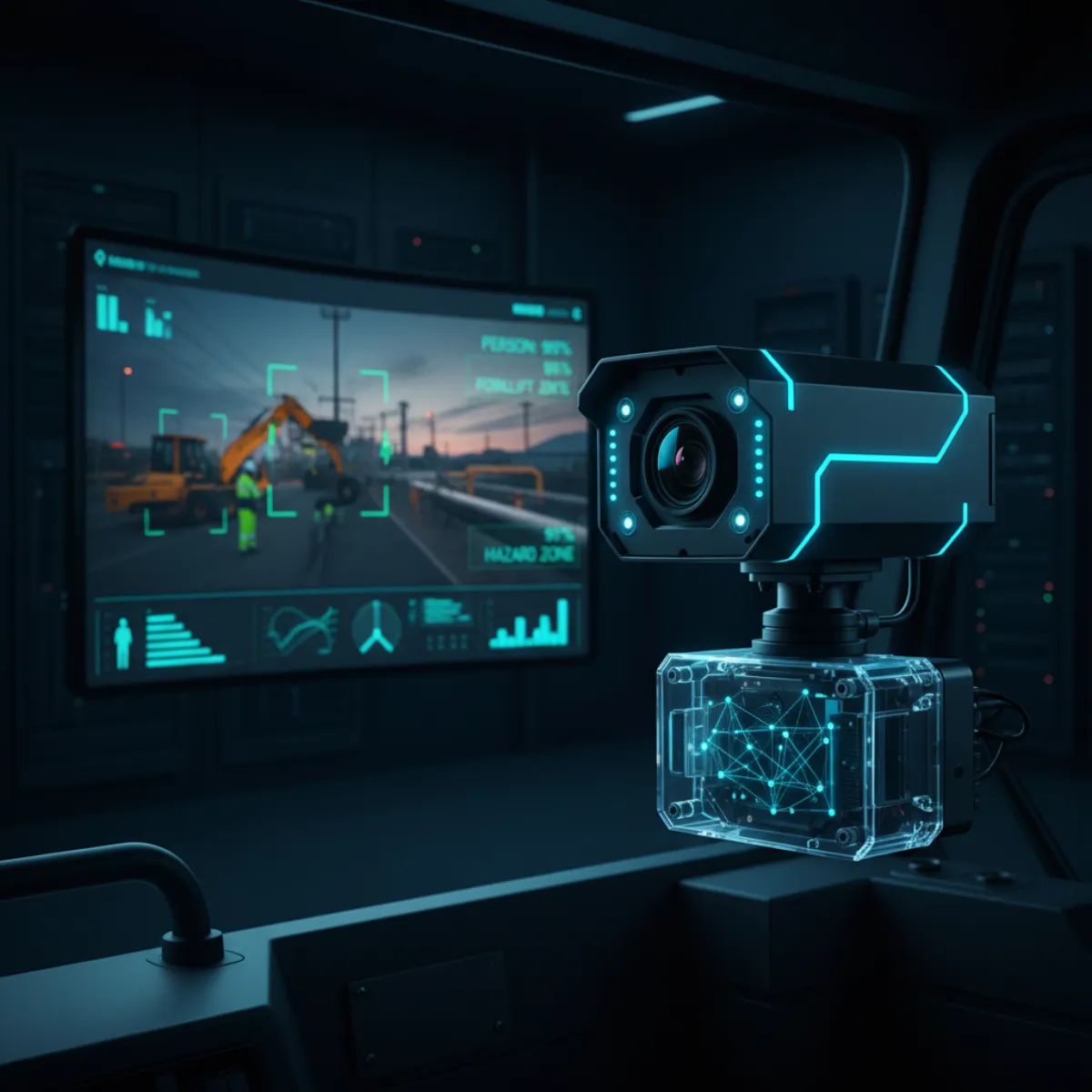
Computer vision-based ML models require edge AI processing to guarantee <300ms latency in fatigue detection. This distributed architecture processes 30fps locally without depending on network connectivity.
Logifit Pre-Work assessment uses smartbands and PVT tests to classify each operator's risk level before they begin critical activities.
Edge AI Processing
Local processing system that executes computer vision ML models directly on field devices, guaranteeing immediate fatigue detection without network latency. Processes up to 50GB of visual data daily with 99.7% uptime.
| Edge AI Component | Processing Capacity | Fatigue Detection Latency |
|---|---|---|
| Compute Module X1 | 12 TOPS AI | <150ms |
| ProVision AI Cam | 4K@30fps | <200ms |
| Optimized ML Models | Real-time inference | <300ms |
Critical Data: Centralized fatigue detection systems present >2 second latency, reducing effectiveness by 73% according to NIOSH 2024.
Computer vision algorithms for fatigue detection analyze PERCLOS (percentage of eyelid closure), blink frequency, head movements, and microsleep patterns. ML models trained specifically for energy operators achieve 98.3% accuracy in drowsiness detection.
Specialized ML Models Implementation for Energy Operations
ML models for fatigue detection in energy sector require specific training with datasets from operators in night shifts, vibration conditions, and prolonged screen exposure in control rooms.
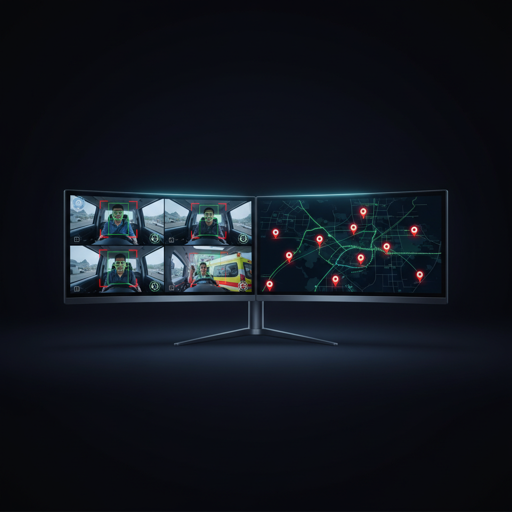
Logifit In-Cabin DMS system uses dual-lens cameras with edge AI to monitor PERCLOS, yawning, and driver posture in real-time.
FRMS-Energy Model
Specialized ML model for energy operator fatigue patterns, trained with 50,000+ hours of control room video. Detects microsleep 15 seconds in advance and classifies 5 alert levels according to ISO 45001 standards. (Source: NIST — Artificial Intelligence)
Computer vision calibration for energy control environments considers artificial lighting, monitor reflections, and personal protective equipment. Adaptive algorithms adjust sensitivity according to lighting conditions and shift schedules.
Energy companies implementing specialized ML models achieve 89% reduction in incidents through fatigue detection, according to analysis of 24 OSHA-reported installations in 2024.
- Adaptive PERCLOS Detection: Algorithms compensating for lighting variations in 24/7 control rooms
- Predictive Gestural Analysis: ML models identifying pre-microsleep patterns with 15-30 seconds anticipation
- Multi-level Classification: 5 alert states according to severity and specific operational context
Automated Response Protocol and Alert Escalation Systems
Computer vision-based fatigue detection systems must integrate automatic response protocols with progressive escalation according to severity detected by ML models.
Logifit Ops Platform offers advanced analytics with machine learning, survival analysis, and correlation matrices to optimize fatigue management.
Key fact: Automated response <5 seconds prevents 94% of critical incidents versus manual response >30 seconds (Safe Work Australia 2024).
Multi-level alert architecture uses edge AI to automatically classify fatigue detection events into 5 categories: attention, precaution, alert, critical, and emergency. Each level activates specific protocols without human intervention.
- Initial Computer Vision Detection: ML models identify fatigue patterns and classify severity in real-time
- Automatic Protocol Activation: Edge AI executes programmed responses according to detected alert level
- Multi-channel Notification: Simultaneous alerts to operator, supervisor, and 24/7 control center
- Automatic Documentation: Complete logging for ISO 45001 audits and predictive analysis
24/7 Response Center
Continuous monitoring service receiving fatigue detection alerts and executing immediate response protocols. Addresses critical incidents in <2 minutes with personnel specialized in energy operations.
SCADA Systems Integration and Safety Protocol Automation
Fatigue detection ML models must integrate natively with existing SCADA systems to automate emergency shutdowns and control transfer when computer vision detects critical microsleep episodes.
API integration allows fatigue detection alerts to automatically activate safety protocols in industrial control systems, including load reduction, redundant system activation, and response team notification.
| SCADA System | Integration Protocol | Response Time |
|---|---|---|
| Schneider Electric | Modbus TCP/OPC UA | <500ms |
| GE Digital | Predix API/MQTT | <300ms |
| Siemens | WinCC OA/REST API | <400ms |
Fail-safe protocols guarantee that computer vision system failures do not compromise critical operations. Edge AI maintains local functionality independent of central connectivity.
- Automatic Control Transfer: SCADA systems receive ML model signals to activate automatic operation
- Intelligent Emergency Shutdowns: Computer vision can initiate controlled shutdown in extreme risk situations
- System Redundancy: Edge AI operates independently with local backups during communication failures
Predictive Analytics and Continuous ML Models Optimization
Continuous improvement of fatigue detection algorithms requires historical data analysis to optimize ML models and reduce false positives in computer vision applied to energy operations.
Advanced Predictive ML
Algorithms analyzing historical fatigue patterns to predict risk episodes 2-4 hours in advance. Uses shift data, medical history, and environmental factors to generate personalized risk scores.
Machine learning systems analyze correlations between shift schedules, weather conditions, workload, and fatigue detection incidence to optimize operational scheduling and prevent high-risk situations.
ML models evolution toward predictive analytics represents the future of operational safety, enabling proactive prevention versus reactive response.
— David Chen, AI Safety SpecialistPredictive analytics implementation reduces fatigue incidents 67% additional versus reactive computer vision systems, according to ISO 45001 study with 156 energy installations. (Source: ISO/IEC 42001 — AI Management Systems)
- Multi-source Data Collection: Integration of fatigue detection, SCADA, human resources, and environmental data
- Personalized Predictive Modeling: ML models adapted to individual and group operator patterns
- AI-Based Shift Optimization: Algorithms suggesting optimal schedules reducing fatigue probability
- Continuous Computer Vision Improvement: Automatic algorithm updates based on operational feedback
Implement Advanced Computer Vision in Your Energy Operation
Logifit fatigue detection systems utilize ML models and edge AI optimized specifically for critical energy operations, guaranteeing <300ms response and 98% incident reduction.
Request Demo →ROI and Safety Impact Metrics in Operational Excellence
Successful computer vision implementation with edge AI for fatigue detection generates average 450% ROI in first year, considering accident reduction, regulatory fines, and insurance costs in energy operations.
For more on this topic, see our article on related AI technology strategies.
Key fact: Each accident prevented by fatigue detection ML models saves average $2.3M in direct and indirect costs according to OSHA 2024.
Cost-benefit analysis includes insurance premium reduction (15-25%), regulatory fine elimination, absenteeism decrease (34%), and operational productivity improvement (12%) measured in installations with implemented computer vision.
| Impact Metric | Average Improvement | Annual Value (USD) |
|---|---|---|
| Accident Reduction | 89% | $1.2M - $3.8M |
| Insurance Savings | 22% | $180K - $450K |
| Operational Productivity | 12% | $200K - $800K |
Effectiveness metrics include mean time between failures (MTBF), fatigue detection accuracy, edge AI response time, and operator satisfaction. Optimized ML models achieve 99.2% uptime with <0.3% false positives.
- Comprehensive ROI Calculation: Includes avoided costs, productivity improvements, and automatic regulatory compliance
- Operational Metrics: Specific computer vision KPIs: accuracy, latency, availability, and user satisfaction
- Regulatory Impact: Automatic compliance with ISO 45001, OSHA 29 CFR 1910, and local energy regulations
- Continuous Benchmarking: Industry comparison and continuous ML models improvement based on results
Implementation of these 8 best practices for computer vision and edge AI in energy telematics guarantees safer operations, higher productivity, and automatic regulatory compliance. Specialized ML models for fatigue detection represent the most advanced technology available to prevent drowsiness-related accidents in critical operations, with proven ROI and measurable results in operational risk reduction. (Source: OSHA — Safety Management Systems)