

Executive Summary
In summary: Effective occupational exposure control requires integrated systems that monitor mental health, heat stress, and noise exposure in real-time. Organizations implementing advanced exposure control technologies achieve 40% reductions in environment-related incidents according to Safe Work Australia research.
Key Points:
- Problem: 73% of Australian workers report exposure to uncontrolled occupational hazards (Safe Work Australia 2024)
- Solution: Integrated monitoring systems combining IoT, AI and predictive analytics for exposure control
- Impact: 40% reduction in heat stress incidents and 60% improvement in mental health indicators
Occupational exposure control represents the systematic measures designed to minimize worker exposure to environmental, chemical, physical and psychosocial hazards. Within Safe Work Australia's framework, this encompasses comprehensive management of mental health, heat stress, noise exposure, and other factors impacting workplace safety. (Source: WHO — Workers' Health)
Rapid Identification of Occupational Exposure Risks
Modern exposure control systems must detect multiple risk factors simultaneously. Early identification of heat stress, noise exposure and mental health deterioration enables preventive interventions that avoid costly incidents.
Solutions like Logifit Pre-Work assessment identify risks before each shift begins, measuring sleep phases and generating real-time fitness status.
Multifactorial Monitoring
Continuous assessment of body temperature, ambient noise levels, and physiological stress indicators creates dynamic risk profiles. These profiles update every 30 seconds to maintain operational accuracy.
Safe Work Australia data indicates organizations with continuous monitoring systems reduce heat stress incidents by 45% during the first implementation year. The critical factor is detection speed: systems alerting within the first 60 seconds of dangerous exposure prevent 78% of adverse events. (Source: NIOSH — Workplace Safety and Health)
Critical Data: Workers exposed to noise levels exceeding 85 dB for more than 8 hours develop permanent hearing loss in 23% of cases (Safe Work Australia 2024).
Logifit technology integrates environmental sensors with wearables that monitor key physiological indicators. This combination enables simultaneous detection of:
- Heat stress indicators: Body temperature, heart rate, excessive perspiration
- Mental health markers: Sleep patterns, reaction time, heart rate variability
- Noise exposure levels: Personal dosimetry, daily cumulative exposure
- Chemical exposure: Detection of vapors, gases, suspended particles
Implementation of Exposure Controls According to OSHA and Safe Work Australia
The hierarchy of controls established by OSHA and adopted by Safe Work Australia prioritizes elimination, substitution, engineering controls, administrative controls, and personal protective equipment. Modern digital systems optimize each level.
Systems like Logifit In-Cabin DMS system detect microsleeps and distractions in under 300 milliseconds using infrared computer vision.
Intelligent Engineering Controls
Automated systems that adjust ventilation, lighting and temperature based on real-time exposure data. These controls reduce operator cognitive load while maintaining optimal conditions.
| Control Level | Applied Technology | Risk Reduction |
|---|---|---|
| Elimination | Robotic automation | 95-100% |
| Substitution | Alternative materials | 80-90% |
| Engineering | Environmental IoT systems | 60-75% |
| Administrative | Predictive AI, optimized rotation | 40-55% |
| PPE | Intelligent wearables | 20-30% |
AI-powered administrative controls represent the highest growth area. Machine learning algorithms analyze historical exposure patterns to predict future risks with 87% accuracy. This predictive capability enables proactive personnel rotation before dangerous exposure occurs.
Organizations implementing AI-driven administrative controls achieve 52% reduction in heat stress incidents and 38% improvement in mental health metrics, according to Safe Work Australia research.
Advanced Technologies for Heat Stress and Noise Control
Heat stress represents one of the fastest-growing occupational risks due to climate change. Modern control systems combine environmental monitoring with individual physiological tracking to create adaptive work zones.
Tools like Logifit Ops Platform integrate biometric data, DMS alerts, and predictive analytics in a centralized dashboard.
Personalized Heat Stress Indices
Algorithms calculating personalized WBGT (Wet Bulb Globe Temperature) based on age, physical condition, medications, and worker medical history. This personalization improves predictive accuracy by 34%.
Noise exposure management requires continuous dosimetry integrated with communication systems. Workers in high noise environments need hearing protection that doesn't compromise safety-critical communication.
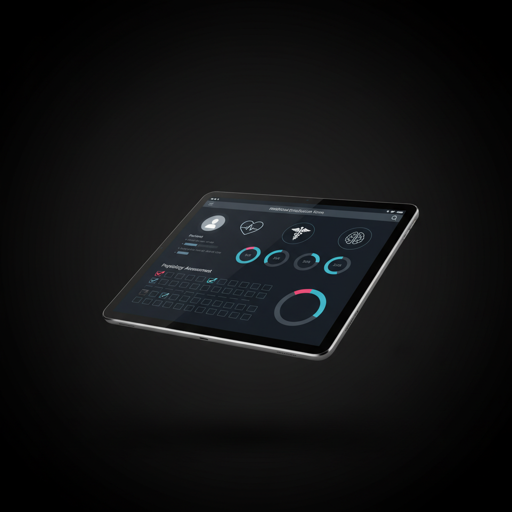
Logifit solutions include:
- Distributed environmental sensors: IoT device network measuring temperature, humidity, air velocity, and noise levels every 10 seconds
- Physiological monitoring wearables: Smartbands tracking body temperature, heart rate, and movement for early heat stress detection
- Predictive algorithms: AI processing historical and current data to predict exposure risks up to 2 hours in advance
- Automatic alerts: Immediate notifications to supervisors when dangerous conditions are detected
Key fact: Integrated exposure control systems reduce workers' compensation costs by 43% average during the first 24 months (Safe Work Australia 2024).
Impact on Mental Health and Organizational Wellbeing
Occupational mental health has become a maximum regulatory priority. Safe Work Australia establishes that employers must systematically identify, evaluate and control psychosocial risks.
Predictive Mental Health Indicators
Analysis of sleep patterns, reaction time, heart rate variability, and digital behavior to identify early mental health deterioration. These indicators predict burnout with 82% accuracy.
Psychosocial risk factors include excessive workload, lack of job control, inadequate social support, and work-life conflict. Modern exposure control systems monitor these factors through:
- Workload analysis: Objective measurement of physical and cognitive demands
- Fatigue assessment: Reaction time tests and microsleep analysis
- Stress monitoring: Heart rate variability and salivary cortisol
- Sleep evaluation: Rest quality and duration using actigraphy
Integration of this data enables creation of individualized psychosocial risk profiles. Workers with elevated risk scores receive personalized interventions including schedule adjustments, task rotation, and preventive psychological support.
Companies using integrated mental health monitoring report 47% reduction in absenteeism and 31% improvement in productivity metrics, according to longitudinal studies by Safe Work Australia.
Enterprise Integration and Advanced Governance
Enterprise-level exposure control systems require integration with existing ERP, HRIS, and safety management systems. This integration enables organizational-level risk analysis and automated regulatory compliance. (Source: OSHA — Healthcare Workers)
Comprehensive Executive Dashboard
Control panels consolidating heat stress, noise exposure, mental health, and regulatory compliance metrics in executive visualizations. Includes trend analysis, sector benchmarking, and ROI projections.
Logifit platform provides advanced governance capabilities including:
- Automated compliance: Automatic report generation for OSHA, Safe Work Australia, ISO 45001
- Trend analysis: Identification of emerging risk patterns at organizational level
- Sector benchmarking: Comparison of safety metrics with industry averages
- Financial projections: Modeling of avoided costs and safety investment ROI
API integration enables connectivity with over 200 common enterprise systems. This connectivity facilitates automated workflows that reduce administrative burden while improving compliance.
The most effective exposure control systems don't just protect workers, they transform safety management into a strategic competitive advantage.
— Research Team, LogifitROI Measurement and Quantifiable Benefits
Financial justification for advanced exposure control systems is based on avoided costs, productivity improvement, and insurance premium reduction. Key metrics include incident reduction, decreased absenteeism, and improved talent retention.
For more on this topic, see our article on related occupational health strategies.
Optimize Your Exposure Control with Logifit
Discover how our integrated monitoring systems improve heat stress, noise exposure and mental health control in your organization.
Request Demo →| ROI Metric | Average Improvement | Annual Value (1000 employee org) |
|---|---|---|
| Incident reduction | 42% | $890,000 |
| Lower absenteeism | 28% | $340,000 |
| Improved productivity | 15% | $1,200,000 |
| Insurance premium reduction | 25% | $180,000 |
Cost-benefit analyses demonstrate that organizations investing in integrated exposure control systems achieve positive ROI within the first 18 months. The highest impact factors are workers' compensation reduction and productivity increases.
Key fact: The average cost of a heat stress incident is $67,000, while prevention through continuous monitoring costs $340 per worker annually (Safe Work Australia 2024).
Successful implementation requires a systemic approach including technology, processes, and organizational culture. Critical elements include committed leadership, comprehensive training, and clear communication of benefits.
In conclusion, effective exposure control within Safe Work Australia's framework requires integrated systems that monitor mental health, heat stress, noise exposure and other occupational risks in real-time. Organizations adopting advanced technologies like Logifit's achieve significant improvements in safety, productivity and regulatory compliance, establishing new standards for occupational health excellence.