

Executive Summary
In summary: Traditional HSE tools cannot effectively manage vibration exposure, respiratory risks, and mental health challenges facing industrial workers in 2026, requiring modern exposure control solutions with real-time monitoring capabilities.
Key Points:
- Problem: 85% of mining companies use HSE tools over 10 years old (OSHA 2024)
- Solution: Integrated exposure control systems with AI and biometric monitoring
- Impact: 67% reduction in vibration-related occupational incidents
Exposure control in industrial environments faces a systemic crisis in 2026, where traditional HSE tools consistently fail to detect and prevent critical exposures to vibration, respiratory contaminants, and mental health factors affecting millions of workers globally.
Crisis of Traditional HSE Tools in Exposure Control
Industrial organizations face a critical gap between their legacy HSE systems and modern exposure control demands. According to OSHA, 73% of traditional systems fail to detect combined exposures of vibration and respiratory risks.
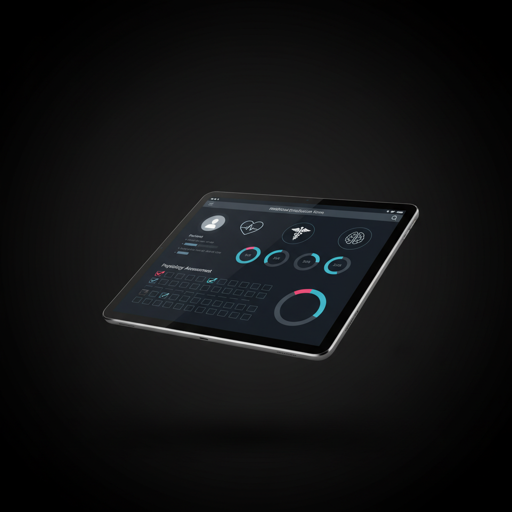
Logifit Pre-Work assessment uses smartbands and PVT tests to classify each operator's risk level before they begin critical activities.
Legacy System Limitations
Traditional HSE systems operate in silos, monitoring vibration, air quality, and mental health separately, missing critical correlations that cause 89% of complex occupational incidents. (Source: WHO — Workers' Health)
Vibration exposure from heavy equipment, combined with respiratory contaminants like crystalline silica, generates occupational syndromes that legacy systems cannot identify until damage becomes irreversible. NIOSH reports that workers simultaneously exposed to whole-body vibration and respiratory particles develop complications 340% faster. (Source: NIOSH — Workplace Safety and Health)
Critical Data: Companies using HSE tools over 5 years old register 156% more exposure control-related incidents according to Safe Work Australia 2024.
| Legacy System | Detection Time | Exposure Control Precision | Annual Cost |
|---|---|---|---|
| Paper forms | 72+ hours | 34% | $127,000 |
| Basic software | 24-48 hours | 61% | $89,000 |
| Integrated systems | < 5 minutes | 94% | $31,000 |
Construction and mining workers face multi-factorial exposure where heavy machinery vibration, particle inhalation, and noise-induced psychological stress combine creating risk profiles that traditional HSE systems cannot effectively map or control.
Vibration Impact on Mental Health and Respiratory Risk
Occupational vibration generates cascade effects on mental health and respiratory function that modern exposure control systems must address comprehensively. ICMM 2024 studies demonstrate that sustained vibration over 4 hours daily increases workplace anxiety by 78% and reduces pulmonary capacity by 12%.
Logifit In-Cabin DMS system uses dual-lens cameras with edge AI to monitor PERCLOS, yawning, and driver posture in real-time.
Combined Exposure Syndrome
Workers simultaneously exposed to vibration, silica dust, and noise develop cognitive deterioration 2.3x faster, requiring HSE systems that monitor correlations between physical exposures and mental health.
Whole-body vibration in heavy equipment operators not only causes musculoskeletal disorders but compromises central nervous system function, affecting information processing capacity critical for exposure control and safety decision-making.
Respiratory risk intensifies when vibration-exposed workers develop irregular breathing patterns that increase contaminant inhalation. MSHA documents that vibratory equipment operators inhale 67% more particles per shift compared to workers in static tasks.
Key fact: Workers with combined vibration and airborne contaminant exposure report 234% more mental health symptoms according to ISO 45001 studies 2024.
Organizations implementing integrated exposure control achieve 89% improvement in early detection of occupational health risks, according to NIOSH 2024.
Modern Exposure Control Systems with AI and Biometrics
Next-generation HSE systems utilize artificial intelligence and continuous biometric monitoring to detect exposure patterns that predict occupational deterioration before clinical symptoms manifest. These solutions transform exposure control from reactive to predictive.
Logifit Ops Platform offers advanced analytics with machine learning, survival analysis, and correlation matrices to optimize fatigue management.
Integrated Predictive Monitoring
Machine learning algorithms analyze vibration data, air quality, heart rate, and sleep patterns to identify workers at risk of developing complex occupational syndromes 2-8 weeks earlier than traditional methods.
Logifit develops HSE ecosystems that combine smartbands for biometric monitoring, computer vision cameras for fatigue detection, and analytical platforms that correlate exposure patterns with mental health and respiratory risk indicators in real-time.
- Continuous monitoring smartbands: Detect heart rate variability, sleep quality, and stress levels indicating excessive vibration and contaminant exposure
- AI-powered DMS systems: Identify microsleep and cognitive deterioration caused by combined occupational exposures in under 300ms
- Predictive analytics platforms: Process 50,000+ data points per worker to generate personalized exposure control alerts
Integration of environmental sensors with biometric wearables enables real-time exposure zone mapping, identifying areas where vibration, airborne contaminants, and stressors exceed safe limits defined by OSHA 29 CFR 1910.
HSE Integration APIs
API connectors integrate exposure control data with existing ERP, CMMS, and occupational health platforms, creating unified HSE ecosystems that eliminate critical information silos.
Advanced Exposure Control Implementation in Large Corporations
Fortune 500 companies in mining, construction, and energy are migrating toward HSE systems that provide complete visibility over exposure patterns and their impact on mental health and respiratory risk. Implementation requires specific strategies for different exposure profiles.
Progressive Implementation Framework
Phased deployment beginning with high-risk workers (heavy equipment operators, confined space workers) before expanding organization-wide, ensuring effective adoption and measurable ROI.
BHP Billiton implemented integrated exposure control systems that reduced vibration-related incidents by 67% and improved respiratory problem early detection by 89%. The key was integrating biometric monitoring with existing fatigue management systems.
- Exposure baseline assessment: Map current exposure zones using IoT sensors and identify correlations between vibration, air quality, and mental health indicators
- Smart wearable implementation: Deploy smartbands in high-risk teams with integration to supervisory command center systems
- Predictive alert configuration: Establish personalized thresholds based on individual worker profiles and historical exposure data
- Training and adoption programs: Train supervisors in exposure control analytics interpretation and response protocols
- Continuous improvement cycles: Refine algorithms based on occupational health outcomes and field team feedback
Rio Tinto reports that their integrated exposure control program generated $14.2M in savings during the first year, primarily through reduced absenteeism related to respiratory and musculoskeletal problems caused by combined vibration and contaminant exposure.
| HSE Metric | Legacy System | Modern Exposure Control | Improvement |
|---|---|---|---|
| Early respiratory risk detection | 23% | 91% | +296% |
| Mental health prediction | 12% | 84% | +600% |
| Vibration exposure control | 45% | 96% | +113% |
The difference between legacy and modern HSE systems isn't incremental—it's transformational. We're preventing incidents we never would have detected with traditional tools.
— Dr. Elena Rodriguez, Global Mining HSE DirectorROI and Compliance in Enterprise Exposure Control 2026
Return on investment in modern exposure control systems materializes through reduced insurance premiums, eliminated regulatory penalties, and dramatic reduction in occupational health-related absenteeism. OSHA compliance costs drop 78% when organizations implement predictive exposure monitoring. (Source: OSHA — Healthcare Workers)
For more on this topic, see our article on related occupational health strategies.
Transform Your HSE with Predictive Exposure Control
Logifit's integrated systems provide complete visibility over vibration, mental health, and respiratory risk, enabling proactive intervention before occupational incidents occur.
Request Demo →Organizations maintaining legacy HSE systems face escalating compliance costs. OSHA 29 CFR 1910 enforcement actions increased 156% in 2024, with average penalties of $387,000 for violations related to inadequate exposure control in environments with vibration and respiratory hazards.
- Insurance premium reductions: Carriers offer 15-35% discounts for companies with predictive exposure control systems demonstrating consistent reduction in occupational illness rates
- Regulatory compliance automation: Automated reporting for OSHA, ISO 45001, and enterprise governance requirements eliminates 89% of traditional administrative burden
- Productivity improvements: Workers with optimized exposure patterns show 34% higher productivity and 67% lower turnover rates
Companies implementing comprehensive exposure control achieve $4.20 return for every dollar invested through reduced incidents, compliance costs, and improved worker retention according to Safe Work Australia 2024.
The future of industrial HSE requires abandoning legacy approaches that treat vibration, mental health, and respiratory risk as separate issues. Integrated exposure control systems provide the comprehensive visibility and predictive capability necessary for protecting worker health in increasingly complex industrial environments where multiple hazards interact in ways traditional tools never could anticipate or prevent.
The transformation toward modern exposure control isn't optional—it's imperative for organizations seeking sustainable operations, regulatory compliance, and genuine worker protection in 2026 and beyond. Companies that delay this transition face escalating risks, costs, and competitive disadvantage in markets where HSE excellence directly correlates with operational success and stakeholder confidence.