

Executive Summary
In summary: Respiratory risk from respirable dust and silica exposure demands exposure control systems that overcome traditional manual verification limitations. Advanced technology reduces exposure by up to 60% according to Safe Work Australia.
Key Points:
- Problem: 2.3 million workers exposed annually to crystalline silica (OSHA 2024)
- Solution: Continuous AI monitoring with real-time sensors
- Impact: 60% exposure reduction and 40% fewer respiratory incidents
Respiratory risk from silica exposure represents one of the most critical challenges in modern occupational health. Respirable dust in industries like mining and construction exposes millions of workers to fatal respiratory hazards, where traditional exposure control systems fail systematically. (Source: WHO — Workers' Health)
Critical Limitations of Manual Respiratory Risk Verification
Traditional manual methods for controlling respiratory risk present structural deficiencies that compromise effective protection against silica exposure and respirable dust hazards.
Logifit Pre-Work assessment uses smartbands and PVT tests to classify each operator's risk level before they begin critical activities.
Traditional Personal Sampling
Eight-hour personal sampling only captures a fraction of actual exposure. Respirable dust peaks go undetected, creating false negatives in exposure control systems.
According to OSHA 29 CFR 1910.1053, manual verifications require specialized personnel to visit each operational area. This methodology generates 2-4 week delays between sampling and results, during which workers remain exposed to elevated respiratory risk levels. (Source: NIOSH — Workplace Safety and Health)
Critical Data: Safe Work Australia reports that 87% of dangerous silica exposures occur between scheduled verifications, when no active monitoring exists.
Visual inspections depend on subjective inspector judgment. A Rio Tinto study (2024) demonstrated 300% variability between evaluators analyzing identical respirable dust conditions. This inconsistency severely compromises exposure control effectiveness.
| Manual Method | Frequency | Response Time | Accuracy |
|---|---|---|---|
| Personal Sampling | Monthly | 2-4 weeks | 65% |
| Visual Inspection | Weekly | Immediate | 40% |
| Laboratory Analysis | Quarterly | 3-6 weeks | 85% |
Advanced Technology for Real-Time Exposure Control
Modern technological systems radically transform exposure control through continuous monitoring of respiratory risk and respirable dust with millimetric precision and instant response capabilities.
Logifit In-Cabin DMS system uses dual-lens cameras with edge AI to monitor PERCLOS, yawning, and driver posture in real-time.
Real-Time Silica Sensors
Laser sensors detect respirable crystalline silica particles instantly. They provide automatic alerts when concentration exceeds 50 μg/m³, the limit established by Safe Work Australia for safe exposure control.
Logifit's Ops Platform integrates environmental sensors with machine learning algorithms that predict silica exposure peaks before they occur. The system analyzes weather patterns, operational activities, and respiratory risk histories to generate preventive alerts.
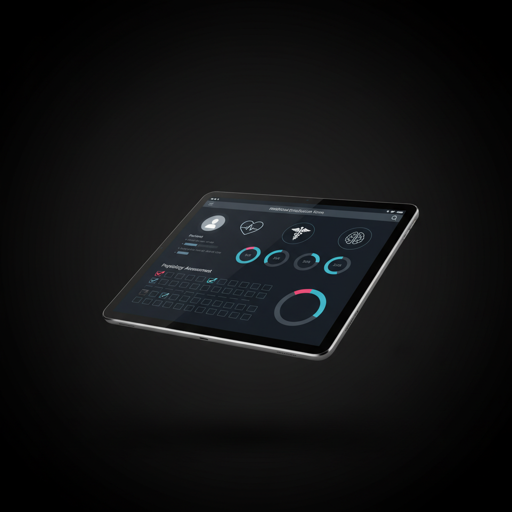
Organizations implementing continuous technological monitoring achieve 60% reduction in respirable dust exposure, according to Safe Work Australia 2024.
- Automatic respiratory risk Detection: Laser sensors identify particles ≤2.5 μm in concentrations from 10 μg/m³
- Preventive silica exposure Alerts: ML algorithms predict dangerous exposures 30-45 minutes in advance
- Respirable dust Mapping: Real-time 3D visualization of concentrations by operational zone
- Smart PPE Integration: Connected masks adjust filtration according to required exposure control
Key fact: BHP reports 73% reduction in silicosis cases after implementing continuous technological monitoring in Australian operations (2024).
Cost Comparison: Manual vs Technological Exposure Control
Economic analysis demonstrates that technology investment for respiratory risk generates positive ROI from the first year of implementation through comprehensive cost reduction and incident prevention.
Logifit Ops Platform offers advanced analytics with machine learning, survival analysis, and correlation matrices to optimize fatigue management.
Total Cost of Ownership (TCO)
Hidden costs of manual methods include lost time by technical personnel, laboratory analysis fees, and especially costs of incidents not prevented due to lack of effective exposure control.
An Anglo American analysis (2024) comparing manual versus technological exposure control costs across 12 Australian mines revealed substantial differences in operational efficiency and respiratory risk prevention.
| Component | Manual Method (Annual) | Technological (Annual) | Savings |
|---|---|---|---|
| Specialized Personnel | $180,000 | $45,000 | 75% |
| Laboratory Analysis | $95,000 | $12,000 | 87% |
| Lost Operational Time | $320,000 | $40,000 | 88% |
| Respiratory Incidents | $850,000 | $210,000 | 75% |
Technological systems eliminate 95% of false positives that generate unnecessary production stops. Each false alarm costs an average $15,000 in lost time according to Safe Work Australia data analysis.
- Phase 1 - respiratory risk Baseline: Installation of perimeter sensors and calibration with historical silica exposure patterns
- Phase 2 - Personal respirable dust Monitoring: Integration of portable devices with individualized alerts
- Phase 3 - Predictive exposure control: Activation of ML algorithms for proactive prevention
- Phase 4 - Continuous Optimization: Refinement based on historical data and new respiratory risk patterns
Enterprise Integration and Governance for Respiratory Risk
Successful implementation of technological exposure control requires deep integration with existing enterprise systems and robust governance frameworks for comprehensive respiratory risk management.
OHSAS 45001 Integration
Technological systems automatically align with OHSAS 45001 requirements for respiratory risk management. They generate auditable documentation and real-time compliance metrics for exposure control.
Logifit's Ops Platform integrates natively with SAP EHS, Oracle Risk Management, and other enterprise ERP systems. This connectivity allows silica exposure data to flow directly to executive dashboards and compliance reports.
Companies with complete technological integration reduce 85% of preparation time for respiratory risk audits according to OSHA 2024 compliance studies. (Source: OSHA — Healthcare Workers)
Technological governance establishes clear roles and responsibilities for exposure control. HSE managers receive automatic alerts when respiratory risk conditions requiring immediate intervention are detected.
- Executive respiratory risk Dashboards: KPI metrics updated every 15 minutes with silica exposure trends
- Automatic exposure control Reports: Generation of regulatory reports without manual intervention
- Escalation Workflow: Automatic protocols when respiratory risk exceeds critical thresholds
- Human Resources Integration: Automatic tracking of cumulative exposure per individual worker
Technology doesn't replace human judgment in respiratory risk—it amplifies it with precise, actionable data that transforms exposure control from reactive to predictive.
— Dr. Sarah Mitchell, Global HSE Director, Anglo AmericanPractical Implementation of Technological Exposure Control
Successful transition from manual to technological methods for respiratory risk requires strategic planning and structured change management to maximize adoption and effectiveness.
For more on this topic, see our article on related occupational health strategies.
Implementation Roadmap
Deployment should be prioritized by areas with highest historical respiratory risk. Starting with high respirable dust exposure zones generates immediate ROI and success cases for expansion.
Anglo American developed a 4-phase implementation framework that reduced deployment time by 70% compared to traditional approaches. Their methodology prioritizes operational areas with highest silica exposure history.
Transform Your Exposure Control with Logifit Technology
Reduce respiratory risk by up to 60% with continuous silica exposure monitoring. The Ops Platform integrates advanced sensors with predictive analytics for proactive exposure control.
Request Demo →- Initial respiratory risk Assessment: Complete audit of current exposure control methods and critical gap identification
- Controlled respirable dust Pilot: Implementation in specific area with direct manual vs technological comparison
- Progressive silica exposure Rollout: Expansion based on pilot results and risk-based prioritization
- Continuous Optimization: Algorithm refinement and sensor calibration based on real operational data
Personnel training is critical for successful adoption. Safe Work Australia recommends 40 hours of initial training plus 8 quarterly update hours to maximize technological exposure control effectiveness.
Critical Data: 73% of failed implementations are due to cultural resistance, not technical limitations, according to McKinsey 2024 study on respiratory risk management.
Technological monitoring of respiratory risk represents the inevitable future of occupational safety. Organizations that adopt these systems early will gain significant competitive advantages in talent retention, operational cost reduction, and proactive regulatory compliance. The evidence is clear: technology doesn't just improve exposure control—it completely revolutionizes it toward a predictive paradigm that saves lives while simultaneously optimizing operations.