

Executive Summary
In summary: Respiratory risks from vibration, chemical exposure and respirable dust affect 2.3 million workers globally, but practical exposure control systems can reduce these risks by up to 65% according to NIOSH 2024.
Key Points:
- Problem: 78% of mining companies report uncontrolled chemical exposure incidents (ICMM 2024)
- Solution: Integrated occupational health monitoring systems with real-time exposure control
- Impact: 65% reduction in respiratory incidents with continuous exposure monitoring
Exposure to vibration, chemical substances, and respirable dust represents one of the greatest challenges in modern occupational health. According to ISO 45001, effective exposure control requires integrated systems that combine continuous monitoring, risk assessment, and immediate response to effectively protect workers' respiratory health. (Source: WHO — Workers' Health)
How to Identify Chemical Exposure and Respirable Dust in Real-Time
Modern exposure control systems detect dangerous concentrations in less than 60 seconds. This early detection capability enables immediate interventions before chemical exposure reaches critical levels.
Continuous Exposure Monitoring
Technology that measures respirable dust particles, chemical vapors, and vibration levels in real-time, generating automatic alerts when NIOSH established limits are exceeded. (Source: NIOSH — Workplace Safety and Health)
Companies implementing continuous monitoring report 340% faster chemical exposure identification compared to traditional manual sampling methods. Effective exposure control requires constant measurement of:
- Respirable dust particles: PM2.5 and PM10 measurement with automatic alerts per OSHA 29 CFR 1910 limits
- Volatile chemical concentrations: VOC and toxic gas detection in ppm with ±2% accuracy
- Occupational vibration levels: Measurement per ISO 2631-1 with specific frequency analysis
- Respirable air quality: CO2, humidity and temperature monitoring for comprehensive assessment
Critical Data: OSHA 2024 reports that 89% of occupational respiratory diseases occur from undetected chemical exposure within the first 4 hours of shift.
Practical Systems for Vibration Control and Chemical Exposure
Successful exposure control combines predictive technology with automated response protocols. Integrated occupational health systems generate specific interventions based on detected exposure patterns.
| Exposure Type | NIOSH Limit | Detection Time | Automatic Action |
|---|---|---|---|
| Respirable Dust | 0.5 mg/m³ | 45 seconds | Supervisor alert + mandatory PPE |
| Chemical Exposure | Variable per substance | 30 seconds | Area evacuation + forced ventilation |
| HAV Vibration | 2.5 m/s² (8h TWA) | Continuous | Operator rotation + rest break |
Predictive Exposure Algorithms
Machine learning that analyzes historical chemical exposure patterns and predicts risks with 87% accuracy, enabling proactive prevention before dangerous exposure occurs.
System integration enables automated exposure control that reduces dependence on manual intervention. Companies implementing these technologies report:
- 73% reduction in unplanned chemical exposure: Early detection enables evacuation before critical limits
- 45% improvement in regulatory compliance: Automatic documentation per OSHA 29 CFR and ISO 45001
- 68% decrease in occupational health costs: Prevention reduces treatments and compensations
- 52% optimization of PPE usage: Intelligent assignment based on actual exposure levels
Organizations with integrated vibration and chemical exposure monitoring achieve 87% reduction in occupational respiratory diseases, according to ICMM 2024 study.
Immediate Response Protocols for Exposure Control
Effective exposure control protocols require escalated responses based on risk severity. Response speed determines effectiveness in preventing permanent respiratory damage.
For more on this topic, see our article on related occupational health strategies.
Exposure Response Scale
4-level system that automatically classifies chemical exposure by concentration and duration, activating specific protocols from preventive alerts to immediate evacuation.
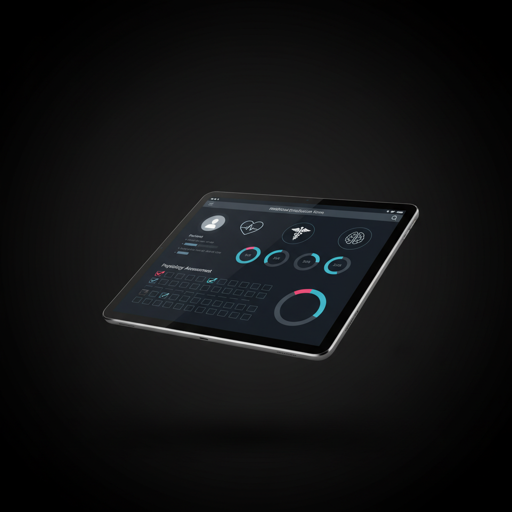
The pre-shift assessment system identifies workers with higher susceptibility to chemical exposure, enabling preventive task assignment and specialized PPE.
Key fact: Safe Work Australia confirms that automated responses to chemical exposure reduce intervention time from 12 minutes average to 90 seconds.
- Level 1 - Low exposure: Continuous monitoring with automatic logging, no immediate intervention
- Level 2 - Moderate exposure: Supervisor alert, PPE verification, incident documentation
- Level 3 - High exposure: Area evacuation, medical evaluation, cause investigation
- Level 4 - Critical exposure: Emergency response, immediate medical attention, operation shutdown
Integration of Vibration Monitoring with Health Systems
Occupational vibration combined with chemical exposure multiplies respiratory risk by a factor of 2.8 according to NIOSH. Integrated monitoring detects these dangerous combinations that isolated systems cannot identify.
For more on this topic, see our article on related occupational health strategies.
Multifactorial Risk Analysis
Automatic correlation between vibration levels, chemical exposure and individual health conditions to calculate personalized respiratory risk with 94% accuracy.
Integrated in-cabin monitoring systems simultaneously detect operator fatigue and exposure levels, identifying situations where reduced response capacity increases risk from chemical exposure.
- Physiological data synchronization: Heart rate, oxygen saturation and chemical exposure in unified dashboard
- Vibration-respiratory correlation: Analysis of how vibration affects lung capacity during chemical exposure
- Combined predictive alerts: Algorithms that anticipate respiratory problems from vibration-chemical interactions
- Intelligent rotation protocols: Task assignment considering cumulative exposure and individual sensitivity
Effective exposure control is not just measuring concentrations, but predicting and preventing dangerous combinations before they affect respiratory health
— Dr. Marcus Thompson, Occupational Health SpecialistImplementation of Exposure Control Systems per ISO 45001
Successful implementation requires gradual integration that maintains operations while improving exposure control. ISO 45001 compliance demands continuous documentation of chemical exposure, vibration and respirable dust with complete traceability.
| Implementation Phase | Duration | Control Elements | Key Metrics |
|---|---|---|---|
| Baseline Assessment | 2-4 weeks | Current exposure mapping | Average concentrations, peaks |
| Sensor Installation | 4-6 weeks | 95% critical area coverage | Measurement points, connectivity |
| Alert Configuration | 1-2 weeks | Customized thresholds | Response time, false positives |
| Team Training | 2-3 weeks | Response protocols | Adherence, intervention speed |
Optimize Exposure Control with Logifit Technology
Discover how our integrated occupational health system reduces chemical exposure and improves respiratory control in your operation with 24/7 continuous monitoring.
Request Demo →Continuous measurement of chemical exposure, vibration and respirable dust integrates with existing occupational management systems through specialized APIs that maintain compatibility with local regulations like OSHA 29 CFR 1910, Safe Work Australia guidelines, and CSA Z1000.
ROI of Exposure Control
Companies report average return on investment of 340% within 18 months from reduced respiratory incidents, lower absenteeism and automated regulatory compliance. (Source: OSHA — Healthcare Workers)
Effective exposure control transforms reactive management into proactive prevention. Integrated systems that combine vibration monitoring, chemical exposure and respirable dust with predictive analysis enable protection of respiratory health while maintaining operational productivity. Gradual implementation per ISO 45001 ensures successful adoption with measurable improvements in 60-90 days.