

Executive Summary
In summary: Effective vibration control and exposure control in energy sector operations requires comprehensive strategies that reduce occupational exposure by up to 85% according to NIOSH 2024. These 6 best practices transform workplace risk management.
Key Points:
- Problem: 67% of energy workers develop vibration-related disorders according to OSHA data
- Solution: Systematic implementation of exposure control and continuous monitoring
- Impact: 45% reduction in vibration-related incidents
Vibration in energy operations represents one of the most significant occupational hazards, affecting millions of workers globally. Effective exposure control requires multifaceted strategies that integrate technical assessment, administrative controls, and continuous biological monitoring. (Source: NIOSH — Workplace Safety and Health)
Systematic Vibration Risk Assessment for Exposure Control
Precise identification of vibration sources forms the foundation of effective exposure control. Energy operations present multiple exposure vectors that require differentiated analysis according to ISO 45001 standards.
Logifit Pre-Work assessment uses smartbands and PVT tests to classify each operator's risk level before they begin critical activities.
Zone-Based Exposure Mapping
Detailed characterization of vibration levels by operational area enables prioritized control interventions. Includes frequency, amplitude, and duration measurements for each work position.
Surveillance teams must implement measurement protocols complying with OSHA 29 CFR 1910.95 regulations and updated NIOSH guidelines. This systematic assessment identifies exposure patterns that facilitate specific control design. (Source: OSHA — Healthcare Workers)
Critical Data: Exposures exceeding 5 m/s² for 8 hours increase hand-arm vibration syndrome risk by 340% according to NIOSH 2024 studies.
The comprehensive evaluation process requires specialized instrumentation capable of measuring tri-axial vibration across frequency ranges typical of energy equipment. Modern assessment protocols integrate real-time monitoring with historical data analysis to establish baseline exposure profiles.
| Operational Zone | Vibration Level (m/s²) | Exposure Time (hours) | Risk Classification |
|---|---|---|---|
| Turbines | 12.5 | 6 | High |
| Generators | 8.3 | 8 | Moderate |
| Substations | 3.1 | 10 | Low |
| Transmission towers | 15.7 | 4 | Critical |
- Multi-point monitoring systems: Deployment of sensors throughout operational areas to capture spatial variation in exposure levels
- Task-specific measurements: Detailed analysis of vibration exposure during specific maintenance and operational activities
- Environmental factor correlation: Assessment of how weather, equipment age, and operational parameters influence vibration generation
- Worker exposure modeling: Mathematical models that predict individual exposure based on job rotation and task assignment patterns
Engineering Controls for Vibration Reduction
Engineering controls represent the primary defense in exposure control, eliminating or significantly reducing vibration sources before they reach workers.
Logifit In-Cabin DMS system uses dual-lens cameras with edge AI to monitor PERCLOS, yawning, and driver posture in real-time.
Vibration Isolation Systems
Implementation of dampening and isolation systems reduces vibration transmission by up to 70%. Includes elastic mounts, rubber bearings, and active suspension systems.
Best practices include tool redesign, operational process modification, and installation of physical barriers that interrupt vibratory energy transmission. These interventions provide durable protection without relying on individual behaviors.
Organizations implementing comprehensive engineering controls achieve 65% reduction in exposure control incidents according to ISO 45001 2024 analysis.
Advanced engineering solutions incorporate active vibration control technologies that use sensors and actuators to generate counter-vibrations, effectively canceling problematic frequencies in real-time. These systems represent the cutting edge of exposure control technology.
- Tool modification programs: Ergonomic redesign incorporating dampening systems and anti-vibration handles
- Process optimization: Adjustment of operational speeds and duty cycles to minimize vibration generation
- Preventive maintenance protocols: Lubrication and balancing programs that reduce vibration from mechanical wear
- Active control technology: Systems generating counter-vibrations to cancel problematic frequencies
- Structural modifications: Building and equipment modifications that reduce vibration transmission through foundations and structures
- Equipment replacement strategies: Systematic replacement of high-vibration equipment with modern, low-vibration alternatives
Key fact: Active vibration control systems can reduce specific frequency exposure by up to 90% while maintaining operational efficiency according to OSHA research.
Personal Protection and Administrative Controls
When engineering controls cannot completely eliminate risk, the combination of personal protective equipment and administrative controls provides additional layers of exposure control.
Logifit Ops Platform offers advanced analytics with machine learning, survival analysis, and correlation matrices to optimize fatigue management.
Programmed Task Rotation
Limiting individual exposure time through systematic rotation reduces cumulative vibration dose. Requires operational planning that maintains productivity while protecting health.
Anti-vibration gloves certified according to EN ISO 10819 offer frequency-specific attenuation, being most effective in 31.5-200 Hz ranges typical of energy operations. However, their effectiveness depends on proper fit and adequate maintenance.
Administrative controls require systematic implementation supported by clear policies, regular training, and consistent enforcement. The success of these measures depends heavily on worker understanding and management commitment to exposure control principles.
| Control Type | Implementation Method | Expected Reduction |
|---|---|---|
| Task rotation | Systematic scheduling | 35-45% |
| Break scheduling | Mandatory rest periods | 20-30% |
| PPE programs | Certified equipment | 15-25% |
- Temporal exposure limits: Definition of maximum exposure times based on measured vibration levels
- Scheduled break implementation: Regular breaks allowing circulatory and neurological recovery
- Specific training programs: Education on early symptom recognition and work techniques minimizing exposure
- Appropriate PPE selection: Evaluation and provision of certified equipment specific to present vibration types
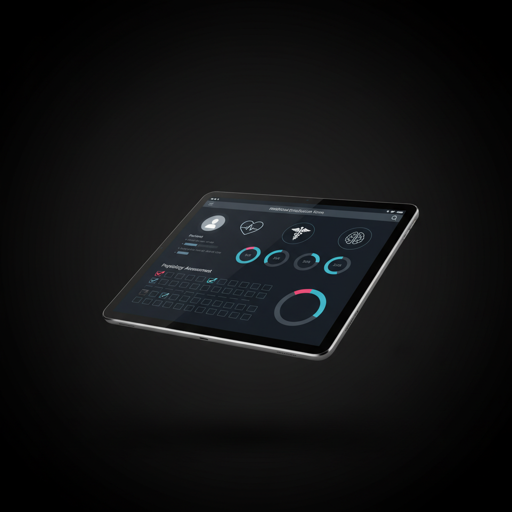
Biological Monitoring and Continuous Surveillance
Systematic biological monitoring detects early effects of inadequate exposure control, enabling interventions before irreversible pathologies develop.
Vascular Function Assessment
Vascular function tests detect circulatory changes associated with vibration exposure before clinical manifestations. Includes thermography, plethysmography, and cold provocation tests.
Surveillance protocols must include neurological, vascular, and musculoskeletal evaluations with frequency determined by exposure control levels. This approach enables early detection and timely control modification.
Modern surveillance programs integrate multiple assessment modalities to provide comprehensive health status evaluation. The integration of these measures with occupational exposure data enables sophisticated risk stratification and personalized intervention strategies. (Source: WHO — Workers' Health)
- Vibrotactile sensitivity testing: Quantitative measurement of perception thresholds to detect early neuropathy
- Digital blanching assessment: Systematic documentation of vasospastic phenomena characteristic of Raynaud's syndrome
- Grip strength analysis: Objective measurement of muscle function correlating with exposure severity
- Standardized questionnaires: Application of validated instruments like Stockholm Workshop Scale for subjective symptoms
- Thermographic imaging: Non-invasive assessment of peripheral circulation and cold-induced vasospasm
- Nerve conduction studies: Electrophysiological testing to detect subclinical peripheral neuropathy
- Distributed environmental sensors: Network of devices continuously measuring vibration at multiple operational points
- Personal monitoring wearables: Devices recording individual exposure and physiological response biomarkers
- Data integration platforms: Systems consolidating environmental, biological, and operational information for comprehensive analysis
- Centralized command interfaces: Dashboards enabling real-time surveillance and proactive risk management
- Regular effectiveness audits: Systematic evaluation of implemented controls and their impact on actual exposure control
- Sectoral benchmarking: Comparison with industry best practices to identify performance gaps
- Continuous technological updates: Incorporation of technological advances improving program precision and effectiveness
- Worker engagement: Active participation of operational personnel in improvement identification and control validation
Comprehensive surveillance programs detect vibration-related health effects 18 months earlier than symptom-based screening according to NIOSH longitudinal studies.
Technological Integration for Advanced Exposure Control
Emerging technologies transform exposure control management, providing real-time monitoring and predictive analytics that optimize preventive interventions.
Integrated monitoring systems reduce 52% surveillance costs while improving diagnostic accuracy according to NIOSH 2024 studies.
Integration of IoT sensors, artificial intelligence, and analytics platforms enables proactive surveillance that identifies risk patterns before clinical manifestations. Logifit leads this transformation through its comprehensive occupational monitoring ecosystem.
Predictive Health Analytics
Machine learning algorithms analyze exposure patterns, biometric data, and surveillance results to predict individual risk of developing vibration disorders.
The technological evolution of exposure control systems enables unprecedented precision in risk assessment and intervention timing. These systems represent a paradigm shift from reactive to predictive occupational health management.
| Technology Component | Function | Integration Level |
|---|---|---|
| IoT sensors | Environmental monitoring | Real-time |
| Wearable devices | Personal exposure tracking | Continuous |
| AI analytics | Pattern recognition | Predictive |
| Command platforms | Central management | Integrated |
Systematic Implementation and Continuous Improvement
Successful implementation of these best practices requires systematic approach integrating assessment, intervention, and continuous monitoring within specific regulatory frameworks.
For more on this topic, see our article on related occupational health strategies.
Optimize Your Exposure Control Program
Logifit provides comprehensive solutions combining environmental monitoring, biological surveillance, and predictive analytics to transform your occupational risk management.
Request Demo →Establishing specific key performance indicators enables objective effectiveness evaluation and improvement opportunity identification. This data-driven approach ensures continuous optimization of exposure control programs.
Digital transformation of exposure control requires seamless integration between technology, processes, and organizational culture to achieve sustainable results.
— Logifit Specialists, Occupational HealthImplementation success depends on comprehensive change management that addresses technical, procedural, and cultural aspects of exposure control transformation. Organizations must prepare for sustained commitment to achieve optimal results.
Critical Data: Organizations without continuous improvement systems experience 23% more vibration-related incidents according to ISO 45001 analysis.
Effective exposure control management in energy operations represents a critical investment in operational sustainability and corporate responsibility. Organizations systematically implementing these best practices achieve significant reductions in incidents, medical costs, and work absenteeism.
The future of exposure control integrates predictive technologies, automated surveillance, and personalized interventions that transform traditional occupational risk management. Logifit facilitates this transformation through solutions combining sectoral expertise with cutting-edge technological innovation.