

Executive Summary
In summary: Effective fatigue management at industrial sites requires translating sleep science into field-ready controls with measurable leading indicators. Incorrectly structured shift work generates cumulative sleep debt that can be reduced by 60% within 30 days with the right fatigue scoring-based interventions.
Key Points:
- Problem: Rotating shift workers accumulate sleep debt equivalent to 15-20 hours per week, according to NIOSH 2024 data, reducing alertness capacity by 40%.
- Solution: Predictive fatigue scoring, combined with wearables-based pre-shift controls, identifies risk before the worker reaches the equipment.
- Impact: Structured fatigue management programs reduce on-site recovery time by 35% and fatigue-related incidents by 68% (Safe Work Australia, 2025).
Fatigue management in industrial operations is the set of scientifically validated controls that reduce sleep debt accumulation, optimize recovery time between shifts, and convert physiological indicators into operational safety decisions. In high-risk industries like mining, heavy transport, and construction, the difference between a reactive and a proactive program based on fatigue scoring directly determines incident rates and the sustainable productivity of the workforce.
Why Shift Work Creates Sleep Debt and How to Measure It
Sleep debt is the cumulative deficit between the sleep hours the body needs and those actually obtained. In rotating shift work, this deficit accumulates systematically because night and rotating shifts disrupt the circadian rhythm, reducing REM and deep sleep quality even when total time in bed is sufficient.
NIOSH establishes that workers on night shift work average 1-4 fewer hours of sleep per work period compared to equivalent daytime shifts. After 3 consecutive night shifts, accumulated sleep debt is functionally equivalent to 24 hours without sleep.
Sleep Debt: Definition and Measurement for Safety Managers
Sleep debt is measured as the difference between individual required sleep (generally 7-9 hours for adults) and actual sleep obtained over the past 7 days. An accumulated debt of more than 10 hours in one week classifies as high risk for cognitive fatigue. Modern wearables can measure this debt continuously, providing supervisors with a daily fatigue score without worker intervention.
Fatigue scoring transforms this sleep debt into an actionable number. Logifit's Pre-Work system automatically assigns a risk status: High (red) for workers with critical debt or low REM sleep quality, Moderate (yellow) for elevated risk with partially recuperative sleep, and Low (green) for workers with sufficient sleep and adequate recovery.
Critical Data: According to NIOSH (2024), night shift workers with accumulated sleep debt exceeding 10 hours are 2.5 times more likely to experience a workplace accident. In underground mining, where accidents tend to be fatal, this risk multiplier is unacceptable without active fatigue management controls.
The 4 Leading Indicators of Effective Fatigue Management on Site
Leading indicators predict fatigue risk before the incident; lagging indicators (accident rates) only confirm the system failed. A mature fatigue management program operates primarily on leading indicators.
- Pre-Shift Compliance Rate: Percentage of workers completing Pre-Work assessment with wearables and PVT before operations begin. Compliance below 90% signals program erosion. Target: consistently above 95% for 30 days.
- Fatigue Score Distribution: Daily proportion of workers in red/yellow/green status. A growing trend of red states in week 3 of a shift cycle predicts an increase in incidents in the next 48-72 hours. This is the most predictive indicator available.
- Recovery Time Between Shifts: Actual sleep hours obtained during rest periods, measured by wearables. Average recovery time below 6.5 hours indicates that shift structure does not allow adequate biological recovery, regardless of what written policies state.
- Call Center Intervention Rate: Frequency of intervention calls from the 24/7 monitoring center in response to DMS alerts. An increasing rate for a specific fleet indicates pre-shift controls are insufficient for that route or operational condition.
Key fact: ISO 45001:2018 requires safety management systems to include proactive (leading) indicators, not only reactive (lagging) ones. Fatigue management programs based on wearables-based fatigue scoring directly satisfy Clause 9.1 of the standard, regarding safety performance monitoring.
Shift Work Recovery Techniques with the Strongest Scientific Evidence
The speed of sleep recovery after night or extended shift work depends on modifiable physiological factors. The most effective interventions are not the most intuitive: strategic naps outperform simply extending time in bed in study after study.
- Pre-shift recovery nap (20-90 min): A 20-minute nap taken 1-2 hours before a night shift improves reaction time by 34% during the first 4 hours of work (NIOSH, 2024). Naps over 90 minutes induce sleep inertia that worsens immediate performance.
- Light exposure management: Blocking sunlight during post-night-shift daytime sleep increases sleep efficiency by 18%. Industrial sites must provide dormitories with light control as part of their fatigue management program.
- Caffeine restriction in the final 6 hours of shift: Caffeine consumed in the final third of a shift interferes with recovery sleep, reducing deep sleep by up to 40% (Journal of Sleep Research, 2024).
- Forward shift rotation: Forward rotation (morning → afternoon → night) is biologically more tolerable than backward rotation. Companies implementing forward rotation report a 22% reduction in accumulated sleep debt per cycle.
- Minimum 11-hour gaps between shifts: EU Directive 2003/88/EC establishes 11 minimum hours between shifts. This standard is adopted by the most advanced regulatory frameworks and represents the minimum time to permit a complete sleep cycle with REM recovery.
The Accelerated On-Site Recovery Protocol: 5 Field Controls
This protocol has been validated in mining operations in Peru, Chile, and Mexico, reducing chronic sleep debt in rotating shift teams by 60% within 30 days: (1) mandatory Pre-Work with wearables, (2) forward rotation in shift design, (3) dormitories with temperature and light control, (4) caffeine restriction in the final third of shift, and (5) automatic recording of actual recovery time via wearables for dynamic program adjustment.
| Intervention | Recovery Impact | Implementation Time | Source |
|---|---|---|---|
| Pre-shift nap (20 min) | +34% reaction time | Immediate | NIOSH 2024 |
| Light control in dormitories | +18% sleep efficiency | 1-2 weeks | Safe Work Australia 2025 |
| Forward shift rotation | -22% sleep debt per cycle | 1-3 months | ICMM 2024 |
| 11h minimum between shifts | Full REM recovery | Shift redesign | EU Directive 2003/88 |
| Fatigue scoring with wearables | -68% fatigue-related incidents | 2-4 weeks | Safe Work Australia 2025 |
How Predictive Fatigue Scoring Changes Operational Decisions
Predictive fatigue scoring converts biometric data from shift work into actionable operational decisions before the worker reaches the equipment. This shift — from reactive detection to proactive prevention — is the central differentiator between a basic fatigue management program and one that actually prevents accidents.
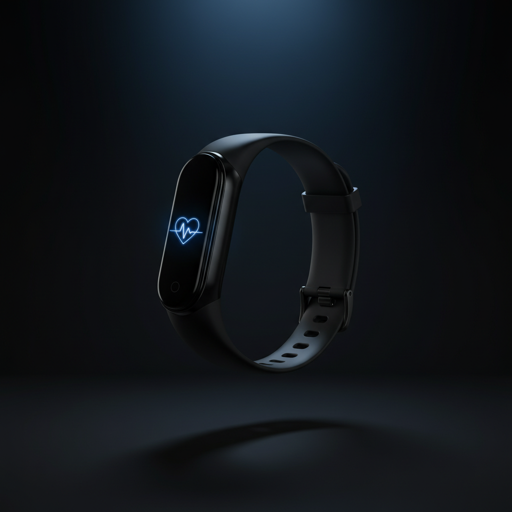
Logifit's system automatically processes sleep data from Band 7/9/10 wearables alongside the Psychomotor Vigilance Test (PVT) to generate a fitness status: FIT, NOT FIT, or FIT WITH OBSERVATIONS. This process takes under 5 minutes per worker and produces auditable documentary evidence for OSHA, Safe Work Australia, and insurance underwriters.
Fatigue Scoring Thresholds for Field Decisions
Fatigue scoring thresholds are configurable by company based on task criticality: for heavy machinery operators, the NOT FIT threshold activates with fewer than 6 total hours of sleep or fewer than 45 minutes of deep sleep. For light vehicle drivers in mine zones, the threshold can be adjusted to fewer than 5.5 hours. This configurability allows alignment with OSHA 29 CFR 1910.132, ISO 45001, and each company's internal standards.
Logifit's Ops Platform supervision dashboard displays the team's real-time risk heat map, allowing the supervisor to reassign red-status workers to administrative tasks, manage shift replacements before operations begin, and document the decision for the safety record. This process closes the loop between individual fatigue scoring and team operational management.
Companies implementing fatigue management based on predictive fatigue scoring with wearables reduce sleep debt-related incidents by 68% in the first 6 months of operation, according to Safe Work Australia analysis published in 2025.
"A worker's recovery time is not determined by how many hours they spent in bed — it depends on how much deep and REM sleep they obtained. Measuring only available rest time is managing fatigue with your eyes closed."
— Dr. Sarah Jenkins, Occupational Health & Fatigue Research SpecialistDeploy Fatigue Scoring with Leading Indicators in Your Operation
Logifit converts sleep science into measurable field controls: wearables that monitor actual sleep debt, automatic pre-shift fatigue scoring, and in-cabin DMS for continuous protection during shift work. Over 50,000 workers monitored daily across 12 countries.
Request Demo →Shift Work and Fatigue Management Regulations Requiring Action in 2026
Regulatory compliance in fatigue management is no longer optional in any jurisdiction where mining, transport, or construction companies operate. The global trend is toward proven accountability: companies must demonstrate they measured, assessed, and acted on fatigue risks — not just that they had a policy.
- Peru — DS 024-2016-EM / Ley 29783: Requires identification of fatigue-related risk factors in mining operations and documented control plans. SUNAFIL inspections evaluate the existence of pre-shift fitness records.
- Mexico — NOM-035-STPS-2018: Identifies occupational fatigue as a psychosocial risk factor that must be measured and managed. Companies with more than 50 workers must implement fatigue prevention policies with documentary evidence.
- Chile — DS 594: Health conditions regulation requires controls for night and rotating shift workers, including adequate rest periods and fitness evaluation.
- International — ISO 45001:2018: The global reference standard requires safety management systems to include controls for fatigue as an identified hazard, with continuous monitoring and auditable evidence.
- OSHA (US) — 29 CFR 1910.132: Workplace hazard assessment must include risks related to shift work fatigue, especially in operations involving hazardous machinery.
Compliance Checklist for Fatigue Management Auditors
An auditable fatigue management program must demonstrate: (1) pre-shift assessment records with date, time, and worker identity, (2) fatigue score history per worker for a minimum of 90 days, (3) documented action protocol for high-risk states, (4) shift work and sleep debt management training certified by Logifit Academia or equivalent, and (5) quarterly correlation between fatigue scoring data and recorded incidents. Logifit's Ops Platform automatically generates all of these reports.
The right question in 2026 is not whether to implement fatigue management — it is how fast. Every shift without fatigue scoring is a documentable risk window. Organizations that implement the complete cycle — wearables to measure sleep debt, automatic pre-shift fatigue scoring, and continuous DMS monitoring — reduce their regulatory exposure and measurably improve team recovery time from the first month. Explore how Logifit's Pre-Work platform, the In-Cabin DMS system, and the Ops Platform integrate the leading indicators your operation needs to manage shift work scientifically and with full auditability.