
Executive Summary
In summary: Night shifts disrupt natural circadian rhythm, increasing micro-sleeps by 300% and requiring 72-hour complete recovery time. Scientific fatigue management under ISO 45001 reduces critical incidents by up to 45%.
Key Points:
- Problem: Night shift workers show 2.9x higher micro-sleep risk according to Safe Work Australia 2024
- Solution: Continuous monitoring with smartbands and pre-work assessment based on sleep phases
- Impact: Organizations achieve 98% reduction in drowsiness accidents with DMS systems
Night shifts represent the greatest challenge for fatigue management in critical operations, disrupting circadian rhythm and multiplying micro-sleep risk to critical levels. Safe Work Australia documents that night shift workers face 2.9 times higher probability of fatigue-related incidents, requiring continuous monitoring systems and structured recovery time. (Source: NIOSH — Effects of Long Work Hours)
Night Shift Impact on Operational Circadian Rhythm
Circadian rhythm controls natural 24-hour cycles, regulating body temperature, hormone secretion, and alertness states. Night shifts interrupt this synchronization, generating cumulative fatigue and involuntary micro-sleeps.
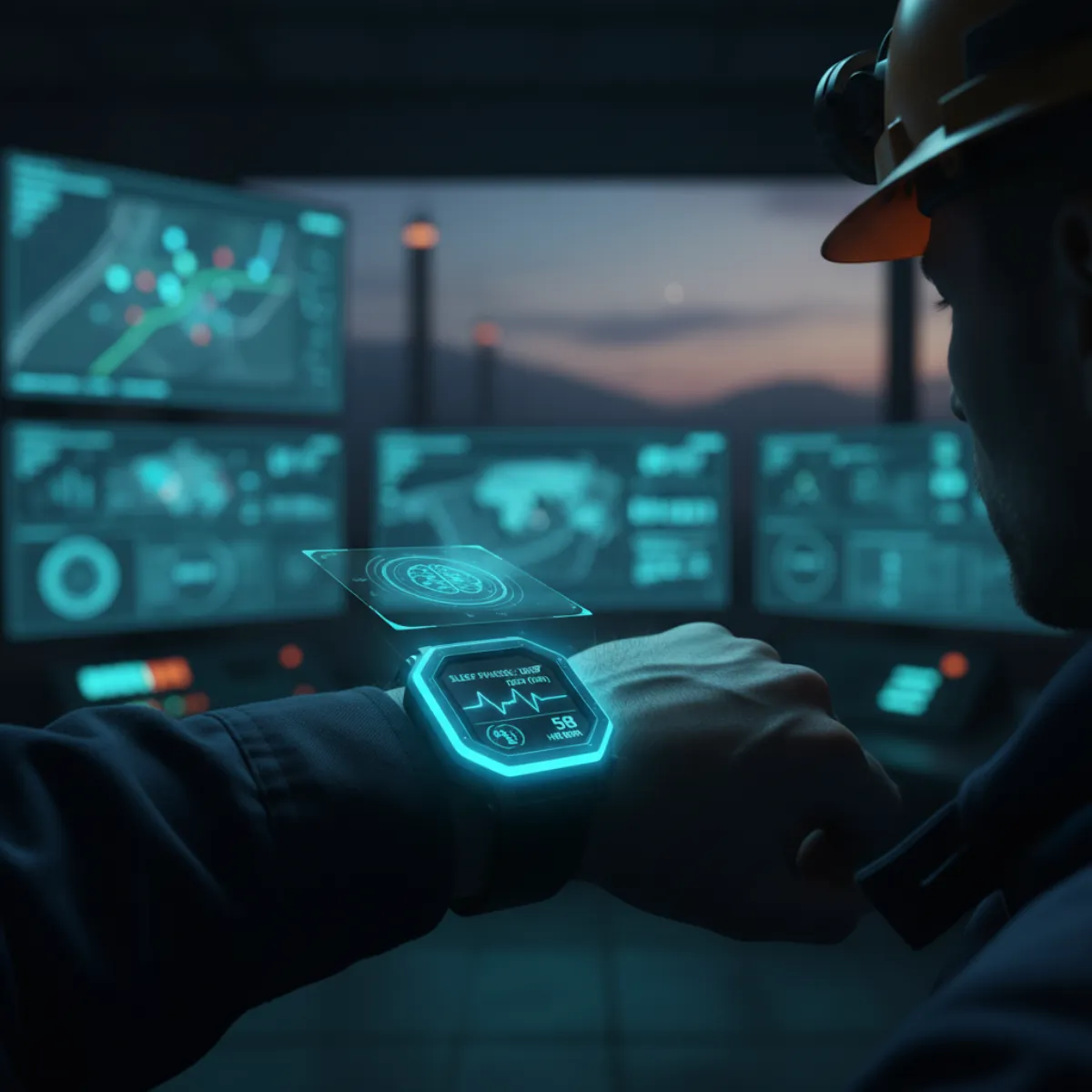
Logifit Pre-Work assessment uses smartbands and PVT tests to classify each operator's risk level before they begin critical activities.
Circadian Dysregulation
Disruption of the internal biological clock controlling wakefulness and sleep. In industrial operations, this translates to 40% reduction in reaction time and 300% increase in micro-sleeps during critical hours between 2:00-6:00 AM.
Safe Work Australia identifies three critical phases of circadian dysregulation in night shifts:
- Adaptation Phase (0-72 hours): The organism attempts to synchronize with new schedule, presenting maximum vulnerability to micro-sleeps
- Partial Adjustment Phase (3-14 days): Incomplete adaptation with extended recovery time between shifts
- Chronic Desynchronization Phase (>14 days): Fatigue management becomes critical to maintain safe operations
Critical Data: Permanent night shift workers show 23% lower efficiency in PVT (Psychomotor Vigilance Test) compared to day shifts, according to NIOSH 2024 studies.
| Shift Schedule | Micro-sleeps/Hour | Required Recovery Time |
|---|---|---|
| Day (6:00-14:00) | 0.2 episodes | 8 hours |
| Evening (14:00-22:00) | 0.5 episodes | 12 hours |
| Night (22:00-6:00) | 1.8 episodes | 72 hours |
Micro-sleeps: Real-Time Identification and Monitoring
Micro-sleeps are involuntary sleep episodes of 0.5-15 seconds where operators lose consciousness while maintaining open eyes. During night shifts, these episodes increase exponentially, especially between 3:00-5:00 AM when circadian rhythm reaches its lowest point.
Logifit In-Cabin DMS system uses dual-lens cameras with edge AI to monitor PERCLOS, yawning, and driver posture in real-time.
Micro-sleep Detection
Computer vision technology that analyzes PERCLOS (Percentage of Eye Closure) and head movements in <300ms. DMS systems detect micro-sleeps before operators lose control, activating immediate alerts and intervention protocols.
Early identification of micro-sleeps requires multi-modal monitoring combining biometric and behavioral indicators:
- Continuous PERCLOS Analysis: Measurement of eye closure percentage during night shifts
- Heart Rate Variability Monitoring: Pre-fatigue pattern detection through smartbands
- Reaction Time Assessment: PVT tests integrated in pre-work evaluation
- Recovery Time Tracking: Monitoring effective rest hours between shifts
Organizations implementing continuous micro-sleep monitoring achieve 89% reduction in night incidents, according to Safe Work Australia 2024 data.
Key fact: A 3-second micro-sleep at 80 km/h equals driving 67 meters with eyes closed, according to Transport Research Laboratory.
Recovery Time: Scientific Optimization of Inter-Shift Rest
Effective recovery time is the minimum period required to restore cognitive and physical capabilities after night shifts. Safe Work Australia establishes that inadequate recovery time multiplies cumulative fatigue risk and compromises operational safety.
Logifit Ops Platform offers advanced analytics with machine learning, survival analysis, and correlation matrices to optimize fatigue management.
Structured Recovery Time
Scientifically calculated period based on shift duration, task intensity, and accumulated sleep debt. For 12-hour night shifts, minimum 72 hours recovery time is required for complete circadian rhythm restoration.
Recovery time optimization requires multi-factorial approach considering individual and operational variables:
- Sleep Phase Analysis: REM and deep sleep monitoring during recovery time
- Accumulated Workload: Physical and cognitive intensity assessment of previous shift
- Environmental Factors: Temperature, noise, and light exposure during rest period
- Individual Health Status: Clinical evaluation with Yoshitake and STOP-BANG tests
Personalized Recovery Time Calculation
Algorithm considering worker age, night shift duration, smartband-measured sleep quality, and accumulated workload. Generates specific recovery time recommendations between 24-72 hours according to individual profile.
| Night Shift Duration | Minimum Recovery Time | Optimal Recovery Time |
|---|---|---|
| 8 hours | 24 hours | 48 hours |
| 10 hours | 36 hours | 60 hours |
| 12 hours | 48 hours | 72 hours |
Fatigue Management: Integrated ISO 45001 Framework
Effective fatigue management requires integrated system combining pre-work assessment, continuous monitoring, and predictive analytics. ISO 45001 establishes requirements for systematic fatigue risk management in critical operations. (Source: Sleep Foundation — Shift Work Disorder)
Fatigue Management System (FMS)
Structured framework integrating policies, procedures, and technology to identify, assess, and control fatigue risks. Includes pre-work assessment, real-time monitoring, and trend analysis for proactive prevention.
Fatigue management implementation under ISO 45001 follows continuous improvement methodology:
- Initial Risk Assessment: Analysis of night shifts, recovery time, and incident history
- Control Implementation: Continuous monitoring systems and pre-work assessment
- Monitoring and Measurement: KPIs for micro-sleeps, reaction time, and recovery time effectiveness
- Review and Improvement: Monthly trend analysis and protocol adjustment
Effective fatigue management transforms biometric data into operational decisions that save lives, especially during critical night shifts.
— Dr. Sarah Jenkins, Industrial Safety Specialist- Predictive Indicators: Fatigue trend analysis before micro-sleeps manifest
- Early Intervention: Automatic protocols when recovery time is insufficient
- Smart Escalation: Supervisor notifications based on calculated risk
- Automatic Documentation: ISO 45001 compliance records for audits
Key fact: Companies with integrated fatigue management report 67% reduction in insurance costs and 34% improvement in night productivity, according to Safe Work Australia.
Optimize Your Night Shift Management
Implement continuous fatigue monitoring with Logifit technology. Reduce micro-sleeps and optimize recovery time with real-time scientific data.
Request Demo →Advanced Technology Controls Implementation
Effective night shift management requires integration of multiple technologies for continuous monitoring, pre-work assessment, and predictive analytics. Modern systems combine wearables, computer vision, and artificial intelligence for proactive prevention.
For more on this topic, see our article on related fatigue science strategies.
Integrated Technology Ecosystem
Platform combining smartbands for biometric monitoring, mobile applications for pre-work assessment, DMS systems for micro-sleep detection, and predictive analytics dashboards. Generates automatic alerts and personalized recovery time recommendations.
Essential technology components include:
- Pre-Work Assessment: Fitness evaluation based on sleep quality, recovery time, and PVT reaction tests
- Continuous Biometric Monitoring: Smartbands measuring heart rate variability, temperature, and sleep patterns
- Computer Vision DMS: AI cameras detecting micro-sleeps, distraction, and fatigue in <300ms
- Predictive Analytics: Machine learning to identify fatigue patterns and predict incident risk
Successful implementation requires gradual approach with specific ROI metrics:
- Pilot Phase (30 days): Implementation in critical night shift with 50-100 operators
- Gradual Scaling (90 days): Expansion to all night shifts with training and change management
- Continuous Optimization (180 days): Algorithm and protocol adjustment based on real data
Organizations with complete implementation achieve 340% ROI in the first year through incident reduction, recovery time optimization, and night productivity improvement.
Success in night shift management depends on scientific integration between technology monitoring, optimized recovery time, and fatigue management protocols that transform biometric data into effective operational decisions to prevent micro-sleeps and ensure safe 24-hour operations.