
Executive Summary
In summary: Sleep debt and micro-sleeps represent the underlying cause of 40% of serious industrial accidents, making fatigue scoring a critical leading indicator for ISO 45001 compliance and HSE risk management in 2026.
Key Points:
- Problem: 78% of night shift workers accumulate sleep debt exceeding 4 hours weekly (NIOSH 2024)
- Solution: Pre-work scoring systems reduce micro-sleeps through predictive fatigue indicators
- Impact: Organizations with ISO 45001 fatigue management reduce drowsiness accidents by 67% (Safe Work Australia 2024)
Sleep debt is defined as the cumulative difference between required sleep hours and those actually obtained, generating involuntary micro-sleeps that compromise operational safety. In the context of HSE 2026, this metric has become a fundamental leading indicator for preventing fatal accidents in critical operations.
Why Do Micro-Sleeps Represent the Greatest Uncontrolled HSE Risk?
Micro-sleeps are involuntary sleep episodes lasting 1-30 seconds that occur when sleep debt exceeds critical thresholds. During these events, the brain completely disconnects from the environment, creating extreme risk windows in industrial operations.
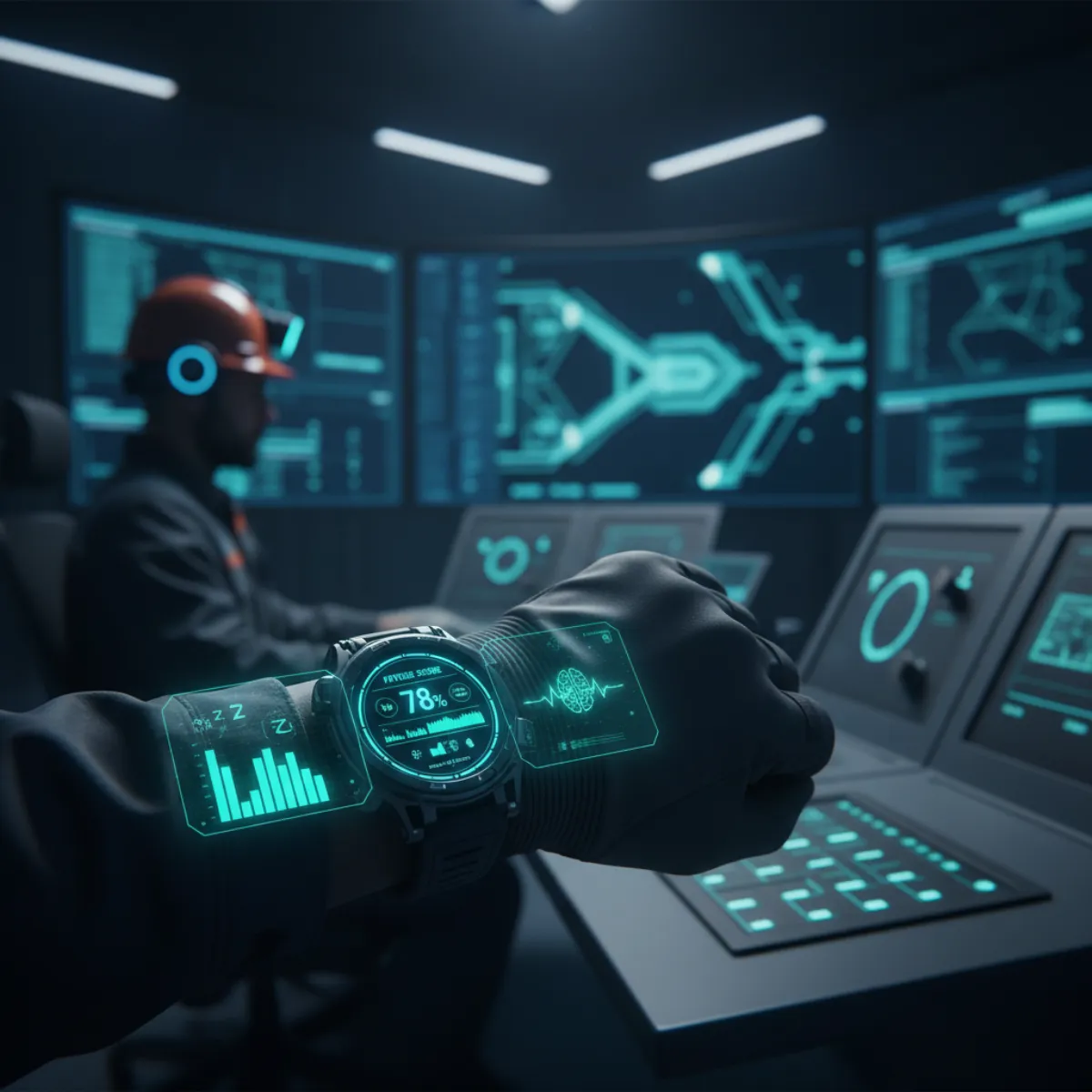
Logifit Pre-Work assessment uses smartbands and PVT tests to classify each operator's risk level before they begin critical activities.
Operational Micro-Sleeps
Episodes of involuntary brain disconnection occurring in workers with sleep debt exceeding 2 hours. They represent the causal factor in 40% of serious accidents according to OSHA 29 CFR 1910.95.
NIOSH 2024 research documents that workers with 4+ hours of sleep debt experience micro-sleeps every 3-7 minutes during critical tasks. These events are imperceptible to traditional supervisors but detectable through fatigue scoring based on heart rate variability and reaction time. (Source: NIOSH — Effects of Long Work Hours)
Critical Data: 78% of night shift operators in high-risk industries accumulate sleep debt exceeding 4 hours weekly, increasing micro-sleep probability by 340% (NIOSH Criteria Document 2024).
| Sleep Debt | Micro-Sleep Frequency | Relative Accident Risk |
|---|---|---|
| 0-1 hours | None detected | Baseline (1.0x) |
| 2-3 hours | 1 every 15-20 min | 2.8x higher |
| 4-6 hours | 1 every 3-7 min | 5.4x higher |
| 7+ hours | Continuous | 12.3x higher |
Organizations implementing wearable-based fatigue scoring obtain predictive indicators 4-6 hours before critical micro-sleeps manifest. This window enables preventive interventions that maintain operational continuity while eliminating risk exposures.
How Recovery Time Determines Fatigue Scoring Effectiveness
Recovery time represents the period necessary to restore neurological balance after accumulating sleep debt. Modern fatigue scoring systems calculate this parameter in real-time, optimizing personnel rotations and minimizing risk exposures.
Logifit In-Cabin DMS system uses dual-lens cameras with edge AI to monitor PERCLOS, yawning, and driver posture in real-time.
Safe Work Australia 2024 research establishes that each hour of sleep debt requires 2.3 hours of recovery time to restore critical cognitive functions. This ratio varies according to age, health conditions, and exposure to environmental stressors. (Source: WHO — Occupational Health)
Personalized Recovery Ratio
Algorithm that calculates the specific time needed for each worker to restore optimal cognitive capabilities. Considers sleep history, biomarkers, and specific operational demands.
Organizations implementing personalized recovery time-based fatigue management achieve 43% reduction in drowsiness incidents, according to ISO 45001 compliance audits 2024. (Source: Sleep Foundation — Shift Work Disorder)
Advanced systems integrate multiple variables to calculate recovery time:
- Accumulated sleep debt: Precise measurement through actigraphy and sleep phase analysis
- REM sleep quality: Assessment of restorative cycles through nocturnal heart rate variability
- Environmental factors: Temperature, noise, lighting that impact recovery
- Medication and substances: Caffeine, alcohol, prescriptions that alter sleep patterns
- Age and physical condition: Variables that modify neurological recovery efficiency
Fatigue Management According to ISO 45001: Leading vs Reactive Indicators
ISO 45001:2018 requires organizations to identify hazards through leading indicators that enable preventive actions before incidents occur. Traditional fatigue management relies on reactive indicators (accidents, near-miss), while modern scoring provides predictive metrics.
Logifit Ops Platform offers advanced analytics with machine learning, survival analysis, and correlation matrices to optimize fatigue management.
Key fact: 89% of ISO 45001 audits in 2024 identify deficiencies in leading indicators for fatigue risks, with sleep debt being the most requested metric by auditors (ISO Survey Results 2024).
Effective leading indicators for fatigue management include quantifiable metrics that precede adverse events:
- Pre-work scoring: Objective fitness assessment through PVT (Psychomotor Vigilance Test) and biomarkers
- Sleep debt trends: Analysis of weekly patterns and identification of workers at increasing risk
- Reaction time variability: Measurement of cognitive degradation through portable devices
- Rest protocol adherence: Verification of compliance with established breaks and rotations
- Off-work sleep quality: Monitoring factors that impact recovery between shifts
FIT/UNFIT Scoring
Binary classification system that determines fitness for critical work based on sleep debt, reaction time, and recovery. Eliminates subjectivity in personnel assignment decisions.
| Leading Indicator | Target Metric | Intervention Threshold |
|---|---|---|
| Sleep debt | Accumulated hours | > 2 hours = caution |
| PVT reaction time | Average milliseconds | > 350ms = unfit |
| Detected micro-sleeps | Events per hour | > 1 event = intervention |
| Heart rate variability | Nocturnal RMSSD | < 20ms = insufficient recovery |
Successful implementation requires integration with ERP systems and personnel management platforms. Logifit Ops Platform facilitates this integration through APIs that synchronize fatigue scoring with real-time operational assignments.
Emerging Technologies in Fatigue Scoring: Beyond Self-Report
Traditional fatigue assessment methodologies depend on subjective self-reporting, creating systematic biases that compromise program effectiveness. 2026 technologies eliminate subjectivity through objective biomarkers and machine learning algorithms.
Next-generation systems combine multiple data sources to generate multidimensional scoring:
Multivariable Scoring
Algorithm that integrates actigraphy, heart rate variability, PVT reaction time, body temperature, and eye movement patterns to generate objective operational fatigue scores.
- Precision actigraphy: Smartbands that record sleep phases with clinical precision equivalent to polysomnography
- Facial computer vision: Analysis of PERCLOS, blink frequency, and ocular microsaccades
- Voice analysis: Detection of vocal pattern changes indicating cognitive degradation
- Salivary biomarkers: Measurement of cortisol, melatonin, and inflammatory markers
- Predictive machine learning: Models that anticipate critical fatigue episodes 6-8 hours in advance
Logifit integrates these technologies through a unified architecture that eliminates data silos. The platform correlates information from smartbands, DMS cameras, and management systems to generate predictive alerts that maintain safe operations.
Effective fatigue management in 2026 is not about detecting drowsiness, but about predicting and preventing risk states before they impact operational safety.
— Dr. Sarah Mitchell, Occupational Health SpecialistROI and Economic Justification of Advanced Fatigue Scoring
Implementing fatigue scoring systems requires significant initial investment, but returns materialize through multiple quantifiable economic mechanisms. Leading organizations document ROI exceeding 340% in the first year of implementation.
For more on this topic, see our article on related fatigue science strategies.
Fortune 500 companies with ISO 45001 fatigue management report $2.8M average annual savings per 1,000 monitored workers (OSHA Economic Impact Analysis 2024).
ROI components include measurable direct and indirect benefits:
| ROI Component | Average Annual Savings | Benefit Source |
|---|---|---|
| Accident reduction | $1.2M - $3.8M | Elimination of medical, legal, lost time costs |
| Insurance premium reduction | $180K - $420K | Improvement in loss ratios and risk classification |
| Productivity increase | $340K - $680K | Reduced absenteeism, higher operational efficiency |
| Regulatory compliance | $90K - $250K | Avoidance of OSHA fines, accelerated certification |
- Costs avoided from fatal accidents: Average $1.4M per event according to OSHA 29 CFR 1904
- Lost time reduction: 34% fewer disability days from fatigue-related injuries
- Personnel optimization: 18% improvement in critical shift assignment efficiency
- Talent retention: 28% reduction in certified operator turnover
Implement ISO 45001 Fatigue Scoring with Logifit
Discover how the Logifit ecosystem transforms sleep debt management into competitive advantage through predictive scoring and real-time micro-sleep alerts.
Request Demo →Economic justification strengthens considering emerging regulatory costs. OSHA has increased fines for fatigue management non-compliance by 67% in 2024, establishing objective scoring as a standard expectation for high-risk industries.
Proactive Compliance
Strategy that anticipates future regulatory requirements through implementation of controls that exceed current standards. Positions the organization as a leader in HSE practices.
Organizations adopting advanced fatigue scoring gain sustainable competitive advantages: lower insurance costs, preferential access to government contracts, and recognition as employers of choice in specialized labor markets.
In conclusion, fatigue scoring based on sleep debt and micro-sleep prediction represents the natural evolution of HSE management toward objective leading indicators. Organizations implementing these systems in 2026 establish solid foundations for ISO 45001 compliance, operational risk reduction, and recovery time optimization for their critical teams. Investment in predictive fatigue technologies translates into safer, more productive, and competitive organizations in increasingly demanding global markets.