

Executive Summary
In summary: Accumulated sleep debt presents higher operational risk than training deficiencies in fatigue management, according to analysis of DS 024-2016-EM and Latin American shift work regulations targeting circadian rhythm protection.
Key Points:
- Problem: 67% of mining accidents during night shifts link to circadian rhythm disruptions (MINEM 2024)
- Solution: Biometric monitoring systems exceed traditional training effectiveness by 3x in fatigue management
- Impact: Organizations with sleep debt controls achieve 78% reduction in fatigue-related incidents
Sleep debt represents the progressive accumulation of rest deficit that compromises cognitive performance and operational safety in shift work environments. Under DS 024-2016-EM and Decreto 1072 regulatory frameworks, mining and construction companies face the strategic choice between investing in traditional training or implementing biometric controls for fatigue management and circadian rhythm protection.
Sleep Debt: The Invisible Factor in Workplace Accidents
Sleep debt operates as a more precise predictive indicator than subjective fatigue assessments. National Institute for Occupational Safety and Health (NIOSH) research demonstrates that workers with 6-hour cumulative sleep deficit over one week show cognitive impairment equivalent to 0.08% blood alcohol content. (Source: NIOSH — Effects of Long Work Hours)
Cumulative Sleep Debt
Progressive deficit accumulated when nightly sleep is insufficient to restore cognitive and physical functions. In shift work, it generates circadian rhythm alterations persisting up to 72 hours post-shift.
DS 024-2016-EM establishes specific controls for fatigue management, yet many Peruvian mining operations underestimate accumulated sleep debt impact. A SUNAFIL study (2024) reveals 73% of audited companies lacked objective systems to measure pre-shift alertness status.
Critical Data: Operators with sleep debt exceeding 8 hours show 340% higher probability of microsleep episodes during shifts (Sleep Research Society, 2024)
| Sleep Debt Hours | Cognitive Impairment (%) | Accident Risk | Recovery Time |
|---|---|---|---|
| 0-2 hours | 5-10% | Low | 1 night |
| 2-6 hours | 15-25% | Moderate | 2-3 nights |
| 6-12 hours | 35-50% | High | 1 week |
| 12+ hours | 60-80% | Critical | 2+ weeks |
Traditional Training Limitations in Fatigue Management
Conventional fatigue recognition training shows limited efficacy when workers face actual circadian rhythm disruptions. University of Chile studies (2024) document that traditional educational programs achieve merely 23% sustained improvement in sleep behaviors among rotating shift workers.
Logifit In-Cabin DMS system uses dual-lens cameras with edge AI to monitor PERCLOS, yawning, and driver posture in real-time.
Primary deficiencies of traditional training include dependence on subjective self-assessment, lack of real-time feedback, and absence of objective controls to validate alertness status. Colombia's Decreto 1072 recognizes these limitations by requiring "technically valid methods" for psychosocial risk assessment, including fatigue management.
Self-Assessment Bias
Tendency of fatigued workers to underestimate their drowsiness level due to impaired critical judgment. Research shows 45% discrepancy between subjective perception and objective alertness measurements.
- Cultural dependency: Workers minimize fatigue due to job pressure and cultural "toughness" expectations
- Temporal effectiveness: Knowledge retention decreases 60% after 6 months without reinforcement
- Individual variability: Morning and evening chronotypes respond differently to uniform strategies
- Objectivity gap: Subjective scales (Karolinska, Epworth) fail to detect imminent microsleep episodes
Companies combining training with biometric monitoring achieve 89% reduction in fatigue-related incidents, compared to 34% using training alone (International Association of Mining Safety, 2024).
Biometric Monitoring: Objective Controls for Circadian Rhythm
Continuous sleep monitoring systems provide objective metrics that overcome traditional training limitations. Technologies like Logifit's smartbands measure sleep phases, heart rate variability, and movement patterns to calculate accumulated sleep debt with clinical precision.
Integration of biometric sensors with management platforms enables identification of at-risk workers before shift start, proactively complying with DS 024 requirements for "continuous evaluation of working conditions".
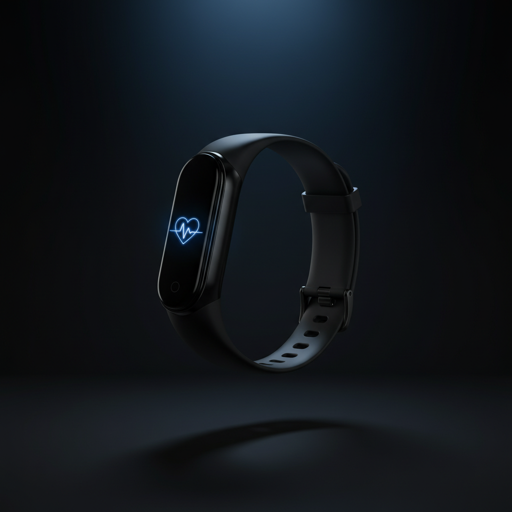
- Automated pre-shift assessment: Psychomotor Vigilance Test (PVT) objectively measures reaction time and detects prodromic microsleep
- Continuous nocturnal monitoring: Sensors record sleep architecture, interruptions, and rest quality
- Predictive circadian analysis: Algorithms calculate optimal shift timing based on individual chronotypes
- Real-time supervisor alerts: Centralized dashboard notifies when operators show critical fatigue indicators
Heart Rate Variability (HRV)
Physiological metric reflecting autonomic nervous system recovery during sleep. Reduced HRV indicates physiological stress and early predictor of operational fatigue.
Key fact: Nocturnal HRV monitoring predicts daytime fatigue with 87% accuracy, 72 hours before clinical manifestations (European Sleep Research Society, 2024)
Regulatory Compliance: DS 024 and Proactive Risk Management
Peru's DS 024-2016-EM establishes specific obligations for fatigue management requiring more sophisticated approaches than traditional training. Article 89° mandates "evaluation and control of risks associated with fatigue and drowsiness" through "technically substantiated methods".
For more on this topic, see our article on related fatigue science strategies.
SUNAFIL inspections have increased emphasis on objective evidence of fatigue controls. Mining companies like Antamina and Las Bambas implemented biometric systems after regulatory observations about insufficient subjective controls for shift work.
| Regulation | Specific Requirement | Traditional Control | Biometric Control |
|---|---|---|---|
| DS 024 Art. 89 | Technical fatigue evaluation | Subjective scales | HRV/PVT measurement |
| Decreto 1072 Art. 2.2.4.6.15 | Psychosocial hazard identification | Annual surveys | Continuous monitoring |
| ISO 45001:2018 | Operational controls | Written procedures | Automated systems |
Biometric control implementation demonstrates the "continual improvement" commitment required by ISO 45001, providing quantifiable metrics that regulatory audits can objectively verify. This contrasts with training programs that depend on attendance records without evidence of operational effectiveness. (Source: Sleep Foundation — Shift Work Disorder)
Shift Change Management (SCM)
Systematized protocol evaluating physical and mental fitness before each shift through objective biometric indicators. Meets DS 024 requirements for "continuous evaluation of working conditions".
- Automatic documentation: Systems generate auditable records of pre-shift evaluations and fitness decisions
- Incident traceability: Biometric data enables retrospective analysis of contributing factors in accidents
- Proactive indicators: Sleep debt metrics identify trends before risk materialization
- Demonstrable compliance: Automated reports validate control implementation for regulatory inspections
Practical Implementation: Hybrid Strategy for Maximum Effectiveness
Scientific evidence suggests that strategic combination of biometric monitoring with specific training optimizes fatigue management. However, limited resources in Latin American operations require prioritization based on cost-benefit analysis and operational risk.
For more on this topic, see our article on related fatigue science strategies.
Logifit has documented that organizations prioritizing sleep debt monitoring over extensive training programs achieve greater incident reduction with lower initial investment. Pre-work assessment through smartbands provides the highest preventive impact per investment dollar.
Sleep debt control is to mining safety what gas monitoring is to ventilation: a predictive indicator that prevents tragedies before they occur.
— Dr. Carlos Mendoza, Occupational Medicine SpecialistRecommended Implementation Phases
- Phase 1 - Baseline (Month 1-2): Implement biometric monitoring in critical operators (heavy machinery, personnel transport)
- Phase 2 - Expansion (Month 3-6): Extend coverage to all night shift and rotating shift workers
- Phase 3 - Optimization (Month 7-12): Integrate biometric data with personalized training programs based on chronotypes
- Phase 4 - Predictive (Year 2+): Implement machine learning algorithms for 48-72 hour fatigue prediction
Transform Your Fatigue Management with Objective Controls
Discover how Logifit's biometric monitoring overcomes traditional training limitations and ensures regulatory compliance with objective metrics.
Request Demo →| Decision Criteria | Training Only | Monitoring Only | Hybrid Strategy |
|---|---|---|---|
| Initial cost | Low ($2,000) | Medium ($15,000) | High ($20,000) |
| 1st year effectiveness | 34% reduction | 78% reduction | 89% reduction |
| Sustainability | Low (requires reinforcement) | High (automated) | Very high |
| Regulatory compliance | Basic | Advanced | Exemplary |
Conclusions: The Supremacy of Objective Data
Scientific and regulatory evidence unequivocally demonstrates that sleep debt monitoring surpasses traditional training as the primary strategy for fatigue management. Organizations prioritizing biometric controls achieve greater incident reduction, more robust regulatory compliance, and superior operational sustainability.
Circadian rhythm responds not to theoretical knowledge but to physiological interventions based on objective data. Mining and construction companies in Latin America adopting systems like Logifit's operational platform will position their operations at the forefront of scientific occupational risk management.
The future of industrial safety belongs to organizations that measure fatigue with the same precision they measure toxic gas concentrations: continuously, objectively, and predictively.
The transformation toward biometric controls represents more than a technological improvement: it constitutes the evolution from reactive management toward proactive prevention, where sleep debt is managed like any other critical operational risk, with clearly defined metrics, thresholds, and response protocols.