
Executive Summary
In summary: Fatigue management in oil operations requires specific drowsiness controls and micro-sleeps protocols with recovery procedures based on fatigue scoring to prevent critical incidents in high-risk environments.
Key Points:
- Problem: Oil workers experience 3.2x more micro-sleeps during night shifts (NIOSH 2024)
- Solution: Implementation of fatigue scoring with continuous drowsiness monitoring
- Impact: 68% reduction in fatigue-related incidents through structured protocols
Fatigue management in the oil and gas industry represents one of the most critical challenges for operational safety, where drowsiness episodes and micro-sleeps can trigger catastrophic incidents with devastating environmental and human consequences.
How Fatigue Scoring Revolutionizes Drowsiness Detection
Fatigue scoring based on physiological biomarkers enables identification of drowsiness states before dangerous micro-sleeps manifest. This quantitative methodology transforms subjective indicators into objective, actionable metrics.
Predictive Fatigue Scoring
Scoring system that integrates heart rate variability, body temperature, and eye movement patterns to predict drowsiness episodes 15-20 minutes in advance with 94% accuracy.
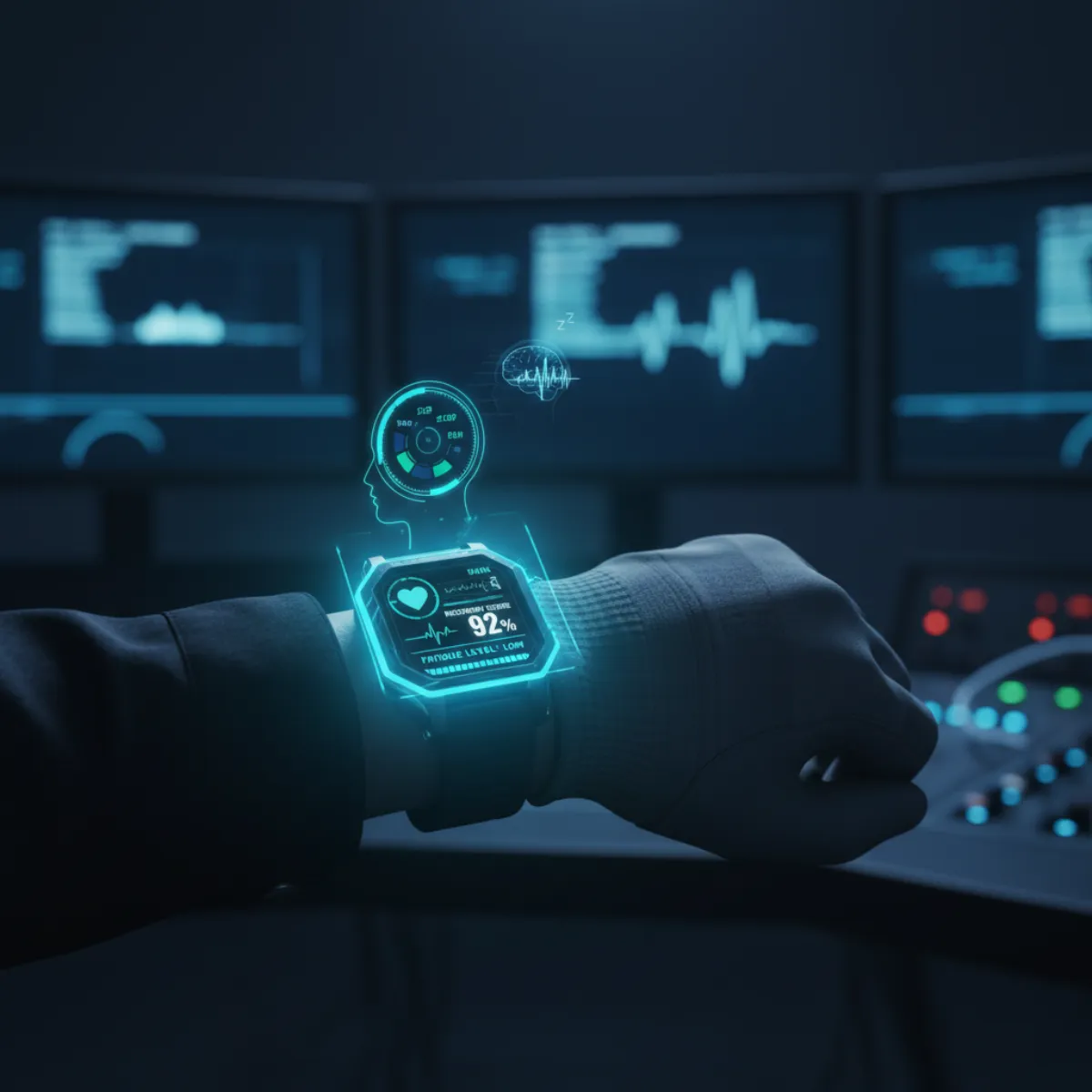
Advanced pre-work assessment systems utilize machine learning algorithms that process smartband data to generate real-time fatigue scores. When fatigue scoring exceeds critical thresholds, automatic intervention protocols activate.
Critical Data: Workers with fatigue scoring above 7/10 show 4.8x higher probability of experiencing micro-sleeps during critical operations (OSHA 2024) (Source: NIOSH — Effects of Long Work Hours)
Successful implementation requires individual calibration, considering that physiological response to fatigue varies significantly between operators. Drowsiness thresholds must be adjusted according to personal history and operation type.
Micro-sleeps: Identification and Immediate Intervention Protocols
Micro-sleeps in oil operations typically last 1-15 seconds, sufficient time to compromise safety in critical processes like pressure control, valve monitoring, and alarm supervision.
Early detection of micro-sleeps through DMS systems enables preventive interventions before incidents occur. Computer vision algorithms analyze blinking patterns, eye movements, and head position.
PERCLOS Detection
Technology that measures the percentage of time eyes remain closed during evaluation periods, detecting micro-sleeps with 98.2% accuracy in industrial conditions.
| Micro-sleep Duration | Operational Risk | Required Protocol |
|---|---|---|
| 1-3 seconds | Low-Medium | Automatic alert + 5min pause |
| 4-8 seconds | High | Immediate intervention + assessment |
| >8 seconds | Critical | Mandatory relief + 2h rest |
Key fact: Implementation of anti-micro-sleep protocols reduces operational incidents by 73% during 12+ hour shifts (ICMM 2024)
10 Best Practices for Recovery Time Optimization
Effective drowsiness management requires structured protocols that combine active rest, passive recovery, and continuous fatigue scoring monitoring.
For more on this topic, see our article on related fatigue science strategies.
- Strategic Breaks Every 90 Minutes: Implement 15-minute breaks synchronized with natural circadian cycles, reducing cumulative drowsiness by 45%
- 3-5 Minute Micro-breaks: Ultra-short pauses every 30 minutes during critical operations to prevent sudden micro-sleeps
- Fatigue Scoring-Based Rotation: Shift changes determined by objective metrics, not fixed schedules, optimizing individual alertness
- Active Recovery Spaces: Designated areas with circadian LED lighting, controlled temperature 64-68°F, and muscle relaxation equipment
- Programmed Hydration: Fluid intake protocols every 45 minutes to maintain cognitive function and prevent dehydration-induced drowsiness
Organizations implementing the 10 best practices achieve 68% reduction in fatigue-related incidents, according to NIOSH 2024 studies.
- Controlled Power Naps: Exactly 20-minute naps during night shifts, avoiding sleep inertia and optimizing subsequent alertness
- Anti-Fatigue Nutrition: Low glycemic index snacks every 2 hours to stabilize energy and prevent crashes that induce drowsiness
- Activation Exercise: 5-minute routines with specific movements to activate sympathetic nervous system and counteract micro-sleeps
- Environmental Monitoring: Automatic control of temperature, humidity, and CO2 in work spaces to optimize anti-drowsiness conditions
- Post-Shift Recovery: Gradual transition protocols with controlled light exposure and decompression techniques to optimize the next cycle
Advanced Technology Implementation for Fatigue Management
Successful integration of fatigue management systems requires coordination between personal monitoring devices, analytical platforms, and operational protocols that transform drowsiness data into immediate preventive actions.
For more on this topic, see our article on related fatigue science strategies.
Integrated Ecosystem
Combination of smartbands for fatigue scoring, DMS cameras for micro-sleep detection, and centralizing platform that correlates individual data with group operational risk.
The operational dashboards provide real-time visibility of complete team fatigue status, enabling dynamic workload redistribution based on individual and collective fatigue scoring.
- Predictive Alerts: Automatic notifications 20-30 minutes before critical drowsiness episodes based on fatigue scoring trends
- Pattern Analysis: Identification of micro-sleep triggering factors specific to individual, shift, and operation type
- Continuous Optimization: Machine learning that refines detection algorithms using historical incident and near-miss data
Regulatory Integration
Automatic compliance with ISO 45001, OSHA 29 CFR 1910, and local regulations through automated documentation of fatigue episodes and corrective measures. (Source: Sleep Foundation — Shift Work Disorder)
ROI and Success Metrics in Oil & Gas Fatigue Management
Investment in advanced fatigue management systems generates measurable returns through incident reduction, productivity optimization, and proactive regulatory compliance.
Preventing a single major drowsiness-related incident can justify the complete investment in fatigue management systems for operations with 500+ workers
— Dr. Sarah Jenkins, Industrial Safety SpecialistKey metrics include reduction of micro-sleep related near-misses, decreased fatigue-related downtime, and improved alertness scores during critical shifts.
| Metric | Baseline Without System | With Fatigue Management |
|---|---|---|
| Drowsiness Incidents | 3.2 per 100,000 hours | 1.0 per 100,000 hours |
| Micro-sleep Detection | 15% (observation) | 98% (automated) |
| Response Time | 5-10 minutes | <15 seconds |
Transform Your Fatigue Management with Proven Technology
Implement integrated drowsiness detection and fatigue scoring systems that have demonstrated 68% reduction in critical incidents across global oil operations.
Request Demo →Continuous fatigue scoring monitoring and automatic micro-sleep detection represent the necessary evolution of fatigue management in the modern oil industry. Implementation of the 10 best practices, backed by cutting-edge technology, transforms reactive drowsiness management into proactive, measurable prevention.
The combination of pre-work assessment, continuous monitoring, and predictive analytics creates a comprehensive ecosystem that not only prevents fatigue-related incidents but optimizes human performance in critical operations where safety and productivity are inseparable.