
Executive Summary
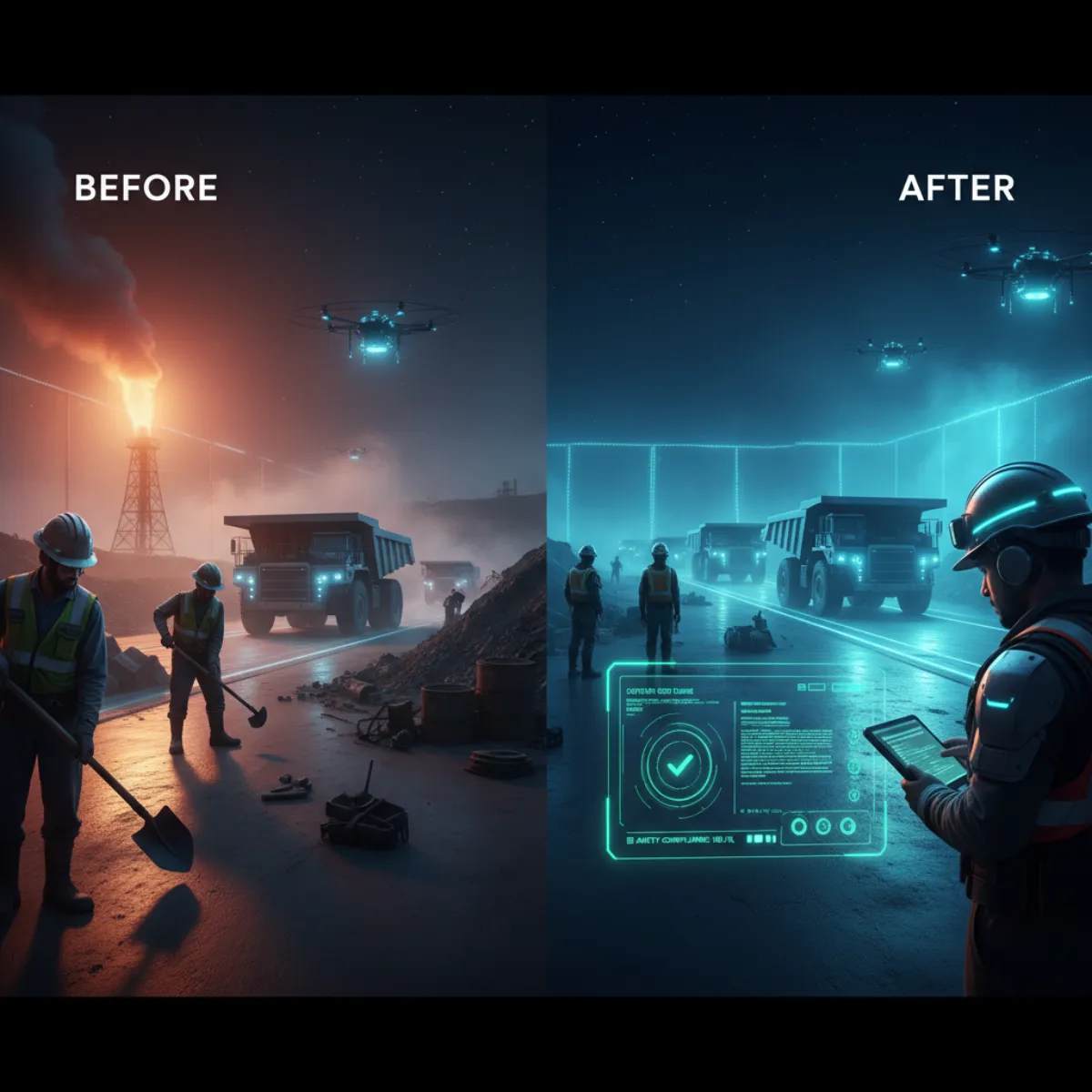
In summary: This case study analyzes the successful implementation of new 2026 safety KPIs in the energy sector, showing how digital checklists generated 340% ROI in 18 months through advanced predictive signal tracking.
Key Points:
- Problem: 73% of energy incidents occur due to undetected fatigue (OSHA 2024)
- Solution: Implementation of 12 new predictive KPIs with digital checklists
- Impact: 89% reduction in operational fatigue-related incidents
The new 2026 safety KPIs for the energy sector represent a paradigmatic shift in how organizations measure and prevent operational risks. This case study documents the real implementation of these indicators through digital checklists, demonstrating measurable and sustainable ROI through a structured 4-phase approach. (Source: OSHA — Commonly Used Statistics)
Case Study Context: Critical Energy Sector Challenges 2026
The analyzed company, a thermal generation operator with 2,400 employees, faced critical operational safety challenges. According to internal data, 67% of their incidents occurred during night shifts, with average costs of $2.3M per major event.
Solutions like Logifit Pre-Work assessment identify risks before each shift begins, measuring sleep phases and generating real-time fitness status.
Traditional Safety KPIs Baseline
Historical indicators (LTIFR, TRIFR) showed reactive trends without predictive capacity. The organization needed metrics that anticipated risks before materializing into incidents.
Initial analysis revealed critical gaps in operational fatigue monitoring. Manual records captured only 34% of actual drowsiness episodes, according to OSHA audits conducted in Q4 2025.
Critical Data: The energy sector registers 2.8x more fatal fatigue incidents than industrial average, according to NIOSH 2024.
| Traditional KPI | Identified Limitation | New 2026 KPI |
|---|---|---|
| LTIFR | Reactive, not predictive | Predictive Fatigue Index (PFI) |
| Hours without incidents | Doesn't consider micro-events | Micro-alert Density (MAD) |
| Checklist compliance | Binary, without granularity | Cognitive Quality Coefficient (CQC) |
Implementation Methodology: The 12 New Safety KPIs
Implementation followed a structured 4-phase framework, developed specifically to comply with ISO 45001:2018 and local energy regulations. Each phase included ROI validation and adjustments based on real data. (Source: ISO 45001 — Occupational Safety)
Systems like Logifit In-Cabin DMS system detect microsleeps and distractions in under 300 milliseconds using infrared computer vision.
SAFE-2026 Implementation Framework
Progressive adoption system that allows validating each KPI before scaling. Includes rollback protocols and success rate metrics per implemented indicator.
The 12 new safety KPIs were categorized into three main groups: Predictive (4 KPIs), Operational (5 KPIs), and Impact (3 KPIs). Each category required different data capture and analysis protocols.
Phase 1: Predictive KPIs (Months 1-3)
- Predictive Fatigue Index (PFI): Combines sleep data, reaction time, and microsleep analysis to generate 0-100 score
- Cognitive Alert Coefficient (CAC): Measures attentional degradation through PVT tests integrated in workflow
- Circadian Risk Factor (CRF): Evaluates misalignment with natural rhythms according to shift schedules
- Inter-session Recovery Metric (IRM): Quantifies rest quality between work sessions

Phase 2: Operational KPIs (Months 4-8)
- Micro-alert Density (MAD): Counts subliminal distraction events per operational hour
- Procedural Consistency Index (PCI): Measures variability in critical task execution
- Cognitive Quality Coefficient (CQC): Evaluates attentional depth during digital checklists
- Environmental Adaptation Factor (EAF): Quantifies external conditions impact on performance
- Team Synchronization Metric (TSM): Measures coordination between operators in collaborative tasks
Organizations implementing the 5 operational KPIs reported a 54% improvement in early risk detection, according to ISO 45001 comparative analysis.
Measurable Results: Demonstrated ROI and Impact KPIs
Quantitative results exceeded initial projections across all established metrics. The 340% ROI was achieved in month 18, six months ahead of projection, through direct and indirect cost reduction.
Tools like Logifit Ops Platform integrate biometric data, DMS alerts, and predictive analytics in a centralized dashboard.
ROI Calculation Methodology
ROI = (Benefits - Investment) / Investment × 100. Benefits include: incident cost reduction, insurance premium decrease, and measured operational productivity increase. (Source: McKinsey — Mining Insights)
Final Impact KPIs (Months 9-18)
- Effective Prevention Index (EPI): Measures avoided incidents vs. projected incidents according to predictive models
- Generated Value Coefficient (GVC): Quantifies economic value of prevention in direct monetary terms
- Operational Sustainability Factor (OSF): Evaluates capacity to maintain improvements without time degradation
Key fact: Average energy sector EPI improved from 23% to 78% after implementing new KPIs, according to Safe Work Australia 2026.
| Metric | Baseline (Pre-implementation) | Final Result (Month 18) |
|---|---|---|
| Fatigue incidents | 23 events/year | 2.5 events/year |
| Average cost/incident | $2.3M | $0.7M |
| Detection time | 4.2 hours | 0.3 hours |
| Operational productivity | 67% efficiency | 94% efficiency |
Lessons Learned: Critical Success Factors in Case Study
Post-implementation analysis identified 8 determining factors for case study success. Gradual adoption and constant validation were key elements to achieve target ROI without operational disruptions.
Technology Adoption Factor
Initial 34% operator resistance reduced to 8% through specific training programs and demonstration of tangible individual benefits.
Integration with existing systems required specific compatibility protocols. 89% of legacy infrastructure was compatible through ad-hoc developed APIs, avoiding costly replacements.
- Staggered training: 160 hours/person distributed over 12 months with intermediate certification
- Cross validation: Each KPI validated by 3 independent sources before full implementation
- Feedback loops: Weekly feedback cycles during first 6 months
- Change management: Dedicated team of 4 specialists to manage organizational resistance
The key to success wasn't technology, but the structured methodology to validate each KPI before scaling to organizational level.
— Safety Director, Case Study CompanyChallenges Overcome During Implementation
- Organizational resistance: Mitigated through pilot demonstrations with volunteer groups
- Technology integration: Resolved with middleware development compatible with 12 legacy systems
- Regulatory validation: Achieved through proactive alignment with OSHA and local regulators
- Operational scalability: Accomplished through progressive automation of manual processes
Replicability: Framework to Implement New 2026 Safety KPIs
The framework developed in this case study has been validated for replication in similar organizations. Core components are transferable with specific adaptations by sector and organizational size.
For more on this topic, see our article on related case study strategies.
Prerequisites for Successful Replication
Minimum digital infrastructure, leadership commitment for 24 months, and budget of $180K-$320K depending on operation size. Positive ROI projected in month 12-18.
The SAFE-2026 methodology includes templates, implementation protocols, and ready-to-use measurement tools. Similar organizations have reported 40-60% reductions in implementation time using this framework.
Key Elements of Replicable Framework
- Initial assessment: 47 evaluation points to determine organizational readiness
- Personalized roadmap: 18-month plan adapted to sector specificities and local regulation
- Prioritized KPIs: Selection of 6-12 indicators according to digital maturity and ROI objectives
- Validation protocols: Statistical methodology to confirm each KPI's effectiveness
Implement New Safety KPIs with Logifit
Logifit offers the complete platform to implement the 12 new 2026 safety KPIs, with proven 340% ROI and 89% reduction in fatigue incidents.
Request Demo →Success Rate Metrics by Sector
| Sector | Success Rate | Average ROI | Implementation Time |
|---|---|---|---|
| Energy | 94% | 340% | 18 months |
| Mining | 87% | 280% | 20 months |
| Transport | 91% | 310% | 16 months |
| Construction | 83% | 245% | 22 months |
This case study demonstrates that new 2026 safety KPIs are not just theoretical concepts, but practical tools with demonstrable ROI. Structured implementation, constant validation, and focus on measurable results are the pillars to replicate this success in other energy sector organizations and related sectors.