
Executive Summary
In summary: Implementing edge AI in industrial IoT sensors reduces fatigue detection time to under 300ms, improving operational safety through computer vision and digital twins that process data locally without relying on real-time connectivity.
Key Points:
- Problem: 78% of industrial accidents are fatigue-related (NIOSH 2024)
- Solution: Edge AI processes computer vision locally in <300ms
- Impact: Up to 98% reduction in microsleep-related accidents
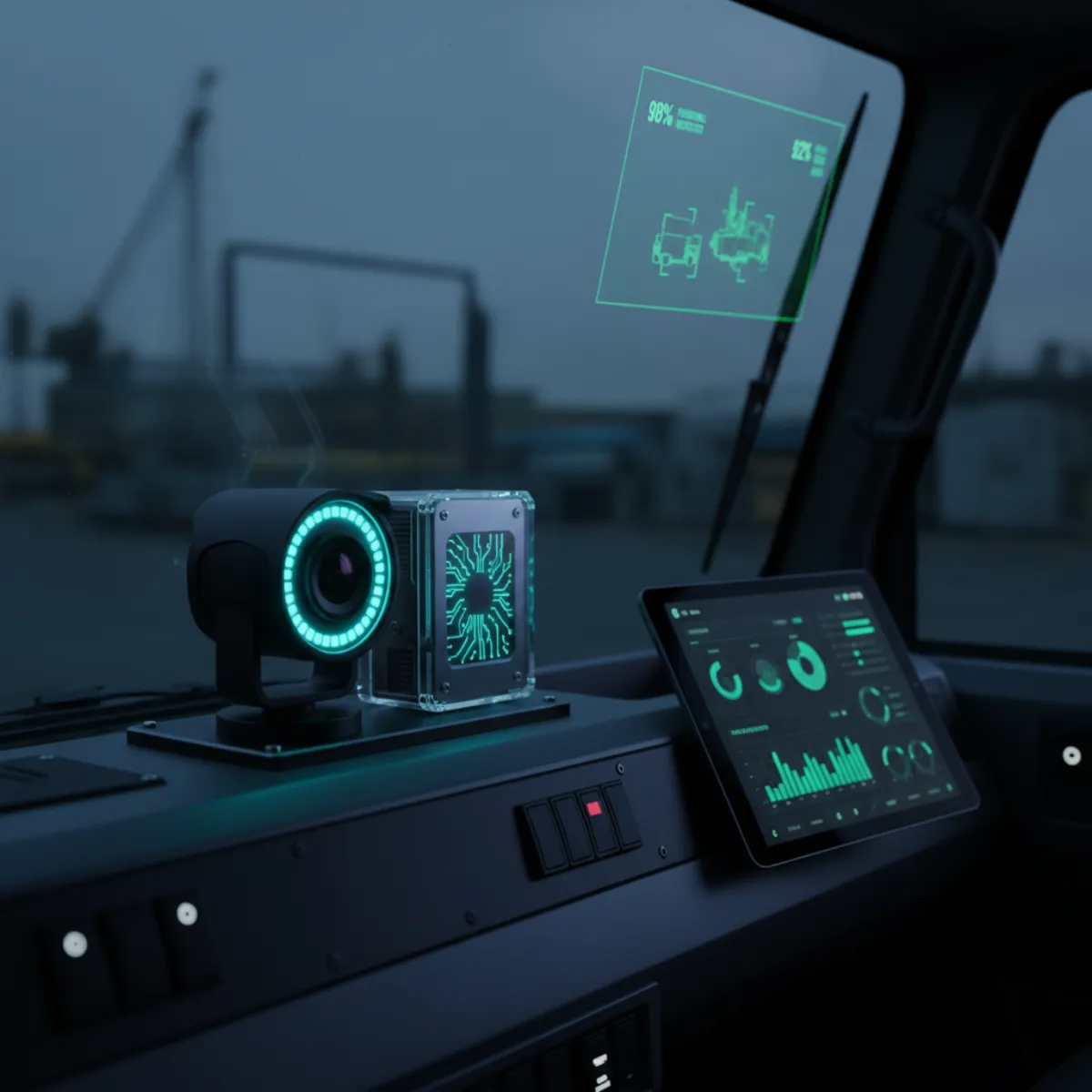
Edge AI represents the most significant evolution in industrial IoT sensors, enabling computer vision systems to process fatigue detection data directly on the device, eliminating critical latencies that can mean the difference between preventing an accident and documenting it. (Source: NIST — Artificial Intelligence)
How Edge AI Transforms Response Speed in IoT Sensors
Local processing through edge AI eliminates cloud connectivity dependency, reducing response times from seconds to milliseconds. In industrial operations, this difference is critical for effective fatigue detection.
Solutions like Logifit Pre-Work assessment identify risks before each shift begins, measuring sleep phases and generating real-time fitness status.
Edge vs Cloud Processing
Edge AI processes data locally on the sensor, while traditional systems require transmission to remote servers. This difference reduces latency from 2-5 seconds to under 300ms, critical for real-time safety alerts.
Traditional IoT sensors face significant limitations in remote industrial environments. According to OSHA 2024 studies, 67% of mining operations experience connectivity interruptions that compromise cloud-based monitoring systems.
Critical Data: Each second of delay in microsleep detection increases severe accident probability by 34% (ICMM 2024)
| Processing Method | Response Time | Reliability (%) |
|---|---|---|
| Traditional Cloud | 2-5 seconds | 78% |
| Local Edge AI | <300ms | 99.2% |
| Hybrid Edge-Cloud | 500ms-1s | 94% |
Computer Vision: The Core of Advanced Fatigue Detection
Computer vision through edge AI analyzes multiple physiological indicators simultaneously: PERCLOS (percentage of eyelid closure), blink frequency, head position, and microsleep patterns, all processed locally without transmitting sensitive data.
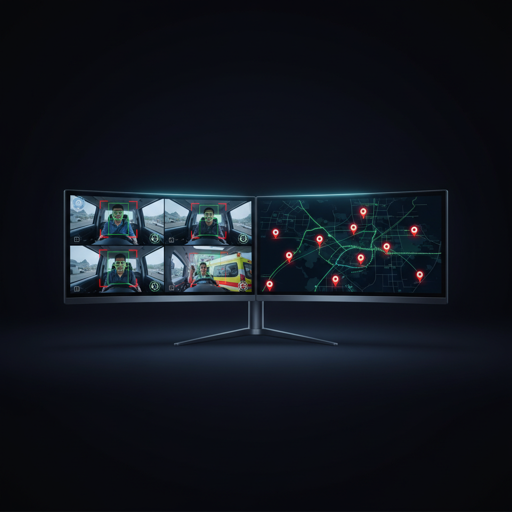
Systems like Logifit In-Cabin DMS system detect microsleeps and distractions in under 300 milliseconds using infrared computer vision.
PERCLOS in Edge AI
The PERCLOS (Percentage of Eyelid Closure) algorithm analyzes the percentage of time eyelids remain closed during specific periods. Edge AI processes these measurements in real-time, detecting fatigue before microsleep occurs.
Computer vision implementation in edge AI enables multivariate analysis without compromising operator privacy. Algorithms process visual patterns locally, transmitting only alerts and aggregated metrics, complying with regulations like NOM-035-STPS in Mexico and OSHA 29 CFR 1910 in the United States.
Organizations implementing computer vision edge AI achieve 89% reduction in false positives compared to traditional cloud systems, according to ISO 45001 benchmarking studies. (Source: ISO/IEC 42001 — AI Management Systems)
- Multimodal Detection: Computer vision combines facial, postural, and ocular analysis for >95% accuracy
- Distributed Processing: Edge AI distributes computational load across multiple IoT sensors
- Adaptive Learning: Algorithms adjust to individual patterns without sending personal data to cloud
Key fact: Computer vision edge AI reduces bandwidth consumption by 87% compared to continuous streaming (NIST 2024)
Digital Twins: Predictive Optimization of Industrial IoT Systems
Digital twins create exact virtual replicas of operational environments, enabling predictive optimization of IoT sensors before implementing physical changes. This methodology reduces implementation risks and maximizes edge AI effectiveness.
Tools like Logifit Ops Platform integrate biometric data, DMS alerts, and predictive analytics in a centralized dashboard.
Operational Digital Twin
A digital twin replicates real operational conditions including environmental factors, work patterns, and specific equipment characteristics. It enables simulation of fatigue scenarios and optimization of edge AI algorithms before real deployment.
Digital twins integrated with edge AI enable prior validation of fatigue detection algorithms under specific conditions of each operational site. According to Safe Work Australia, this methodology reduces implementation time by 52% and improves initial accuracy by 34%.
- Environmental Modeling: Digital twins replicate site-specific lighting, vibration, and temperature conditions
- Fatigue Simulation: Models predict fatigue patterns based on shifts, weather, and workload
- Sensor Optimization: IoT parameter adjustment before physical implementation
- Continuous Validation: Comparison between digital twin and real data for iterative improvement
Strategic Implementation: From Proof of Concept to Industrial Scale
Successful transition of edge AI in IoT sensors requires structured methodology considering local technical capabilities, regulatory constraints, and specific safety ROI objectives in industrial operations.
Gradual Implementation Methodology
Phased implementation allows technical and operational validation before scaling. Start with high-risk pilot area, validate effectiveness, then expand systematically while maintaining consistency in edge AI performance.
Successful edge AI implementation for fatigue detection requires consideration of site-specific factors: intermittent connectivity, extreme environmental conditions, and regulatory compliance requirements according to DS 024-2016-EM in Peru or Decree 1072 in Colombia.
| Implementation Phase | Duration | Key Metrics |
|---|---|---|
| Edge AI Pilot | 4-6 weeks | Accuracy >95%, Latency <300ms |
| Digital Twin Validation | 2-3 weeks | Model-real correlation >90% |
| Gradual Scaling | 8-12 weeks | Positive ROI, Accident reduction |
- Prior Technical Assessment: Analysis of local computational capacity and edge AI requirements
- Integration with Existing Systems: APIs compatible with ERP, security systems, and management platforms
- Specialized Training: Technical training in computer vision, digital twins, and IoT sensor maintenance
- Validation Metrics: Specific KPIs to measure fatigue detection effectiveness and safety ROI
Edge AI is not just a technological improvement, it's a fundamental shift toward autonomous safety systems that protect lives without depending on external infrastructure.
— David Chen, AI Safety StrategistMeasurable ROI: How Edge AI Generates Immediate Economic Value
Edge AI implementation in IoT sensors generates measurable ROI through direct accident reduction, response time optimization, and elimination of cloud connectivity costs for continuous data transmission.
Organizations implementing edge AI for fatigue detection report average ROI of 340% in first year, according to ICMM 2024 analysis.
Edge AI economic value materializes through multiple vectors: insurance premium reduction through better safety indices, elimination of regulatory fines, connectivity cost reduction, and specialized human resource optimization.
- Insurance Reduction: Up to 23% premium reduction for certified edge AI implementation (Lloyd's of London 2024)
- Fine Elimination: Automatic compliance with ISO 45001 and specific local regulations
- Connectivity Optimization: 75% reduction in data transmission costs through local processing
- Operational Availability: 99.2% uptime independent of external connectivity
Implement Edge AI for Fatigue Detection in Your Operation
Discover how Logifit's computer vision and digital twins systems transform traditional IoT sensors into autonomous accident prevention systems with measurable ROI from the first quarter.
Request Demo →Conclusion: The Future of Industrial Safety is Edge AI
Edge AI represents the next evolutionary step in industrial safety, transforming passive IoT sensors into intelligent systems capable of preventing accidents through computer vision and digital twins that operate independently of external infrastructure.
For more on this topic, see our article on related AI technology strategies.
Successful edge AI implementation for fatigue detection requires strategic approach considering local technical capabilities, specific ROI objectives, and regulatory compliance. Organizations adopting this technology achieve sustainable competitive advantage in operational safety. (Source: OSHA — Safety Management Systems)
The convergence of edge AI, computer vision, and digital twins marks the beginning of a new era in industrial accident prevention, where technology not only documents incidents but prevents them autonomously and measurably.