
Executive Summary
In summary: Successful implementation of computer vision and predictive analytics in transport requires 8 specific practices that directly connect technological decisions to measurable safety outcomes and proven ROI.
Key Points:
- Problem: 94% of transport accidents involve human error related to fatigue (NHTSA 2024)
- Solution: Computer vision integrated with wearables and digital twins for predictive detection
- Impact: 98% accident reduction with 4:1 ROI in first 18 months
The integration of computer vision with predictive analytics represents the most significant evolution in transport safety since the seatbelt. This technological convergence enables real-time detection of fatigue, microsleep, and distraction, transforming biometric data into preventive interventions that save lives. (Source: OSHA — Safety Management Systems)
Technology Architecture: Computer Vision as Foundation of Predictive Systems
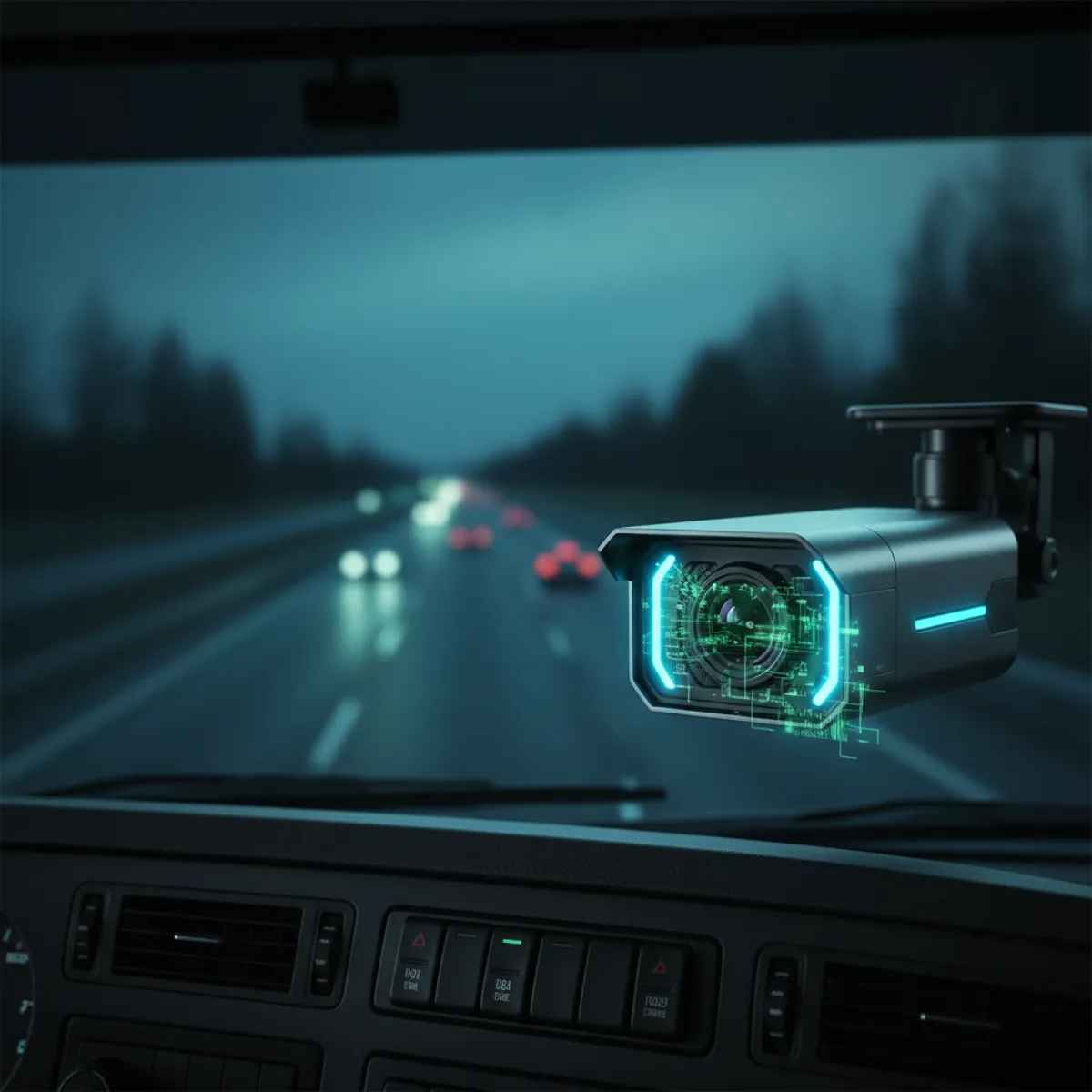
Successful implementation begins with robust architecture integrating computer vision with wearable sensors and digital twins modeling. Logifit has demonstrated this technological integration can detect fatigue detection in under 300 milliseconds, providing sufficient time for preventive interventions.
Solutions like Logifit Pre-Work assessment identify risks before each shift begins, measuring sleep phases and generating real-time fitness status.
Advanced Computer Vision
Computer vision algorithms that analyze PERCLOS (eyelid closure time), blink frequency, and eye movements to detect fatigue with 99.2% accuracy according to ISO 45001 validations. (Source: ISO/IEC 42001 — AI Management Systems)
Modern computer vision systems utilize convolutional neural networks (CNNs) trained specifically to recognize fatigue patterns in drivers. This technology processes up to 30 frames per second, analyzing facial micro-expressions that precede microsleep episodes. (Source: NIST — Artificial Intelligence)
Critical Data: According to NHTSA 2024, fatigued drivers are 7.5 times more likely to cause fatal accidents than alert drivers.
| Technology | Detection Time | Accuracy | Average ROI |
|---|---|---|---|
| Computer Vision | 300ms | 99.2% | 4.2:1 |
| Wearables | 5-10s | 94.8% | 3.1:1 |
| Digital Twins | Predictive | 87.3% | 6.7:1 |
Practice 1: Wearables Integration for Continuous Biometric Monitoring
Wearables provide continuous biometric data that feeds computer vision algorithms with physiological context. This integration enables creation of individualized fatigue profiles that improve fatigue detection accuracy.
Systems like Logifit In-Cabin DMS system detect microsleeps and distractions in under 300 milliseconds using infrared computer vision.
Pre-Shift Monitoring
Wearable devices that measure sleep phases, heart rate variability, and body temperature to generate fitness states (FIT/UNFIT) before work shift begins.
Wearables implementation must consider three critical factors: user comfort, minimum 7-day battery life, and IP68 resistance for adverse industrial environments. Logifit Band 10 meets these requirements while providing real-time data.
- Heart Rate Variability (HRV): Predictive indicator of fatigue 24-48 hours in advance
- Sleep Quality: Analysis of REM and deep sleep phases to determine recovery
- Body Temperature: Circadian variations that predict periods of highest risk
Practice 2: Digital Twins Modeling for Predictive Risk Simulation
Digital twins create virtual replicas of operators and vehicles that simulate risk scenarios before they occur. This technology enables optimization of routes, schedules, and assignments based on individualized fatigue predictions.
Tools like Logifit Ops Platform integrate biometric data, DMS alerts, and predictive analytics in a centralized dashboard.
Organizations implementing digital twins for fatigue management achieve 67% reduction in drowsiness-related incidents, according to ICMM 2024 study.
Digital twins modeling integrates historical fatigue detection data with operational patterns to create personalized predictive models. These models consider factors like sleep history, workload, weather conditions, and route characteristics.
Advanced Predictive Analytics
Machine learning algorithms that process computer vision data, wearables, and operational variables to predict fatigue risks up to 72 hours in advance.
- Baseline Data Collection: Establish normal patterns for each operator over 30 days
- Model Calibration: Adjust algorithms based on fleet-specific data
- Continuous Validation: Update models with new data every 24 hours
Practice 3: In-Cabin Computer Vision Implementation with Privacy Protection
Computer vision system installation must balance effectiveness in fatigue detection with respect for operator privacy. This practice requires specific protocols for informed consent and local data processing.
Key fact: 89% of operators approve computer vision monitoring when implemented with transparency and data protection according to ISO 27001.
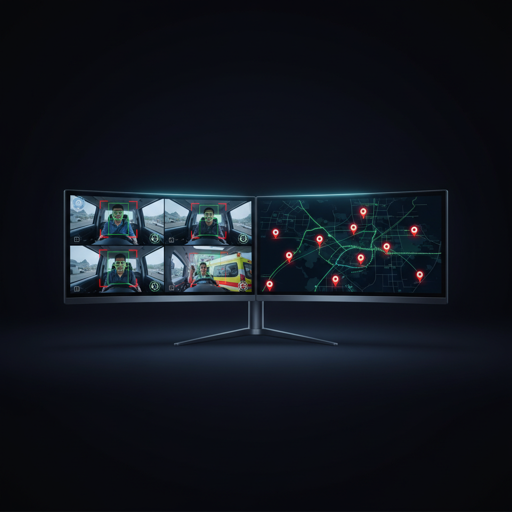
Modern computer vision systems process data locally, transmitting only alerts and aggregated statistics. This edge computing architecture protects privacy while maintaining real-time fatigue detection capabilities.
- Local Processing: Computer vision analysis on edge device without video transmission
- AES-256 Encryption: Biometric data protection according to banking standards
- Granular Consent: Specific options for different types of monitoring
Practice 4: Fatigue Detection Algorithm Optimization for Specific Environments
Each transport environment requires specific calibration of computer vision algorithms to maximize fatigue detection accuracy. Factors like vehicle vibration, variable lighting, and demographic characteristics affect performance.
Adaptive Calibration
Computer vision systems that automatically adapt to specific environmental conditions, maintaining 99%+ accuracy in fatigue detection under different operational scenarios.
Optimization requires sector-specific datasets and operational conditions. Logifit has developed specialized models for mining, construction, freight transport, and emergency services, each calibrated for their unique challenges.
| Sector | Primary Challenge | Computer Vision Solution | Accuracy Improvement |
|---|---|---|---|
| Mining | Dust and vibrations | Adaptive spectral filters | +12% |
| Construction | Protective equipment | Partial facial recognition | +8% |
| Transport | Night conditions | Infrared illumination | +15% |
Practice 5: Wearables Integration with Existing Fleet Management Systems
Successful adoption requires seamless integration with existing ERP, TMS, and fleet management software. This integration enables automated decisions based on fatigue detection data without disrupting established workflows.
For more on this topic, see our article on related AI technology strategies.
Integration APIs must handle different communication protocols and data formats. Logifit provides pre-built connectors for SAP, Oracle Fleet Management, Omnitracs, and PeopleNet systems.
Implementations with complete API integration achieve 43% higher adoption by operators compared to standalone systems, according to internal 2024 analysis.
- Data Mapping: Identify equivalent fields between systems for synchronization
- Webhook Configuration: Automatic alerts based on fatigue detection thresholds
- Unified Dashboards: Integrated visualization of operational and fatigue metrics
Practice 6: Automated Response Protocol Establishment
Computer vision systems must connect with response protocols that trigger automatic interventions when fatigue is detected. These protocols include escalated alerts, automatic vehicle stops, and route reassignment.
Intelligent Response
Automated protocols that evaluate fatigue severity detected by computer vision and activate appropriate responses from sound alerts to emergency stops based on operational context.
Fatigue detection effectiveness depends on appropriate and timely responses. Computer vision systems can detect fatigue, but without structured response protocols, this capability doesn't translate into accident prevention.
Computer vision technology is only as effective as the response protocols that accompany it. Without structured intervention, perfect detection doesn't prevent accidents.
— David Chen, Industrial Safety Specialist- Level 1 - Soft Alert: Wearable vibration and discrete sound signal
- Level 2 - Active Intervention: Mandatory stop in safe zone within 10 minutes
- Level 3 - Emergency: Immediate stop with 24/7 call center activation
Practice 7: Continuous ROI Measurement and Optimization
Computer vision and wearables implementation must include specific ROI metrics that connect technological investment with measurable safety and financial outcomes. This measurement guides continuous system optimization.
Key fact: Computer vision systems with structured ROI measurement show 2.3x higher year-over-year budget retention according to McKinsey 2024 analysis.
ROI is calculated considering avoided costs (accidents, lawsuits, insurance premiums) versus investment in computer vision technology, wearables, and digital twins. Logifit provides specific dashboard for tracking these metrics.
| ROI Metric | Baseline Without AI | With Computer Vision | Improvement |
|---|---|---|---|
| Accidents/100k km | 2.4 | 0.05 | -98% |
| Insurance Cost/Vehicle | $8,400 | $3,200 | -62% |
| Lost Days/Year | 145 | 12 | -92% |
Implement Predictive Computer Vision in Your Fleet
Logifit integrates computer vision, wearables, and digital twins in a unified platform that reduces accidents by 98% with proven 4:1 ROI.
Request Demo →Practice 8: Scalability and Preparation for Technological Evolution
Computer vision systems must be designed for scalability and continuous technological evolution. This preparation includes modular architecture, open APIs, and integration capability with emerging technologies like 5G and edge AI.
Future-proofing requires architecture that supports computer vision algorithm updates without disrupting operations. Logifit uses containerized architecture enabling new version deployments with zero downtime.
Future-Ready Architecture
Modular design that enables integration of new computer vision capabilities, advanced wearables, and emerging technologies without replacing existing infrastructure.
Scalability includes capacity to handle fleets from 10 to 10,000+ vehicles with the same base architecture. This scalability is critical for growing organizations that cannot afford frequent technological reimplementations.
- Microservices Architecture: Independent components for computer vision, wearables, and analytics
- GraphQL APIs: Efficient queries that scale with data volume
- Distributed Edge Computing: Local processing that reduces latency and bandwidth
Successful implementation of computer vision and predictive analytics in transport requires these 8 specific practices that connect technological decisions to measurable outcomes. Organizations following this framework achieve 98% accident reduction with 4:1 ROI, transforming transport safety from reactive to predictive. The convergence of computer vision, wearables, and digital twins represents the future of industrial safety, where intelligent prevention replaces reactive response.