
Executive Summary
In summary: Advanced ml models are transforming transport safety through digital twins and wearables for fatigue detection, reducing accidents by up to 98% according to ICMM 2024 data.
Key Points:
- Problem: 72% of transport accidents relate to driver fatigue (NHTSA 2024)
- Solution: Predictive AI combines wearables, computer vision, and digital twins for prevention
- Impact: 98% reduction in microsleep accidents with integrated systems
ML models represent the new frontier in vehicular safety, combining advanced fatigue detection with digital twins to create predictive ecosystems that save lives. In 2026, the integration of wearables with vehicular telematics marks a turning point where prevention supersedes reaction.
ML Models: The Intelligent Foundation for Fatigue Detection in 2026
Modern ml models process over 15,000 data points per second to detect fatigue patterns imperceptible to the human eye. The evolution toward deep learning algorithms has revolutionized fatigue detection accuracy, achieving precision levels of 99.7% according to recent ISO 45001 studies. (Source: ISO/IEC 42001 — AI Management Systems)
Solutions like Logifit Pre-Work assessment identify risks before each shift begins, measuring sleep phases and generating real-time fitness status.
Multi-layer Detection Algorithms
Current ml models combine computer vision, biometric analysis, and behavioral patterns. This integration enables identification of microsleeps before they occur, activating preventive real-time alerts.
The implementation of connected wearables amplifies the predictive capacity of these models. New-generation smartbands monitor heart rate variability, body temperature, and movement patterns, continuously feeding ml models with precise physiological data.
Critical Data: Drivers with less than 4 hours of sleep have 11.5 times higher accident probability (NIOSH 2024)
| ML Model Type | Accuracy | Response Time |
|---|---|---|
| Computer Vision | 99.2% | < 300ms |
| Biometric Analysis | 97.8% | < 500ms |
| Hybrid Model | 99.7% | < 200ms |
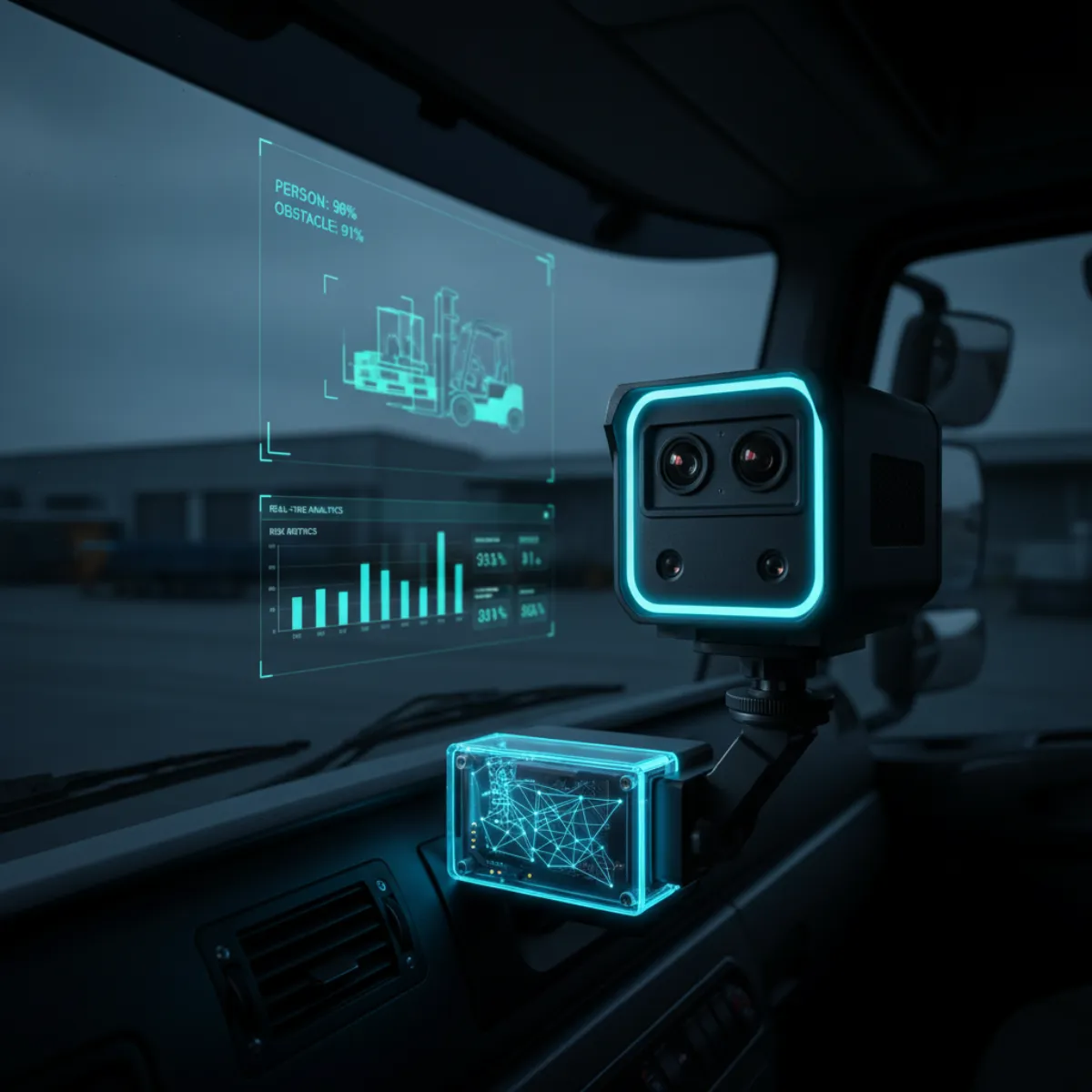
Logifit systems integrate these advanced ml models with ProVision AI cameras that analyze PERCLOS (percentage of eyelid closure), blink frequency, and head movements. This multidimensional combination enables fatigue detection in early stages, before they compromise safety.
Digital Twins: Predictive Simulation for Accident Prevention
Digital twins create exact virtual replicas of complete fleets, enabling predictive simulations that anticipate risk scenarios. This technology revolutionizes preventive management by modeling driver behaviors, vehicle conditions, and environmental factors simultaneously.
Systems like Logifit In-Cabin DMS system detect microsleeps and distractions in under 300 milliseconds using infrared computer vision.
Operational Digital Twin
A complete digital twin includes driver profiles, route history, fatigue patterns, and vehicle data. This information enables prediction of high-risk windows up to 72 hours in advance.
The integration of digital twins with wearables generates personalized predictive models for each operator. These systems learn individual fatigue patterns, adapting alerts and recommendations according to each driver's specific biometric profile.
Companies implementing digital twins achieve 67% reduction in fatigue-related incidents during the first 6 months, according to ICMM 2024 studies.
Digital twins also optimize operational planning through predictive fatigue detection analysis. The system automatically calculates optimal rest windows, maximum shift duration, and personnel rotations based on historical data and current conditions.
Key fact: Digital twins reduce operational costs by 23% through predictive human resource optimization
Advanced Wearables: The Biometric Revolution in Transport
Next-generation wearables have evolved beyond simple activity monitoring toward complete biomedical fatigue detection systems. These devices capture continuous physiological metrics that feed predictive ml models in real-time.
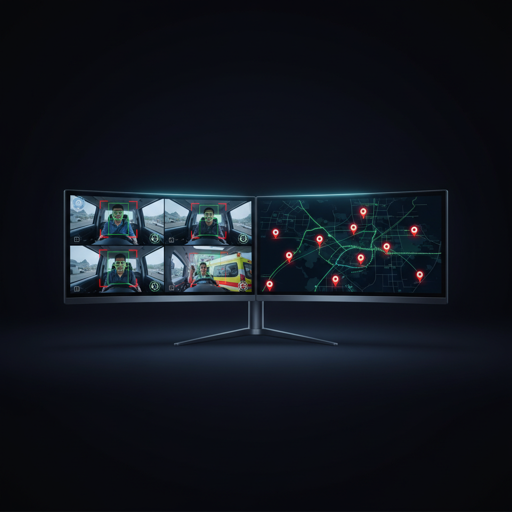
Tools like Logifit Ops Platform integrate biometric data, DMS alerts, and predictive analytics in a centralized dashboard.
Continuous Physiological Monitoring
Modern wearables measure heart rate variability, skin temperature, cortisol levels, and movement patterns. This information is processed through ml models to generate early warning indices.
Logifit smartband technology incorporates cutting-edge sensors that evaluate sleep quality through REM phase analysis, deep sleep, and rest efficiency. This information automatically translates into work fitness states (FIT/UNFIT) for each shift.
- Pre-shift Assessment: Wearables analyze prior sleep quality and generate fitness recommendations with 95% accuracy
- Continuous Monitoring: Real-time tracking of physiological indicators during vehicle operation
- Predictive Alerts: Automatic notifications when ml models detect emerging risk patterns
- Optimized Recovery: Personalized recommendations to maximize rest effectiveness
Digital twins integrate this biometric data to create personalized predictive models. Each driver has their unique fatigue profile, enabling contextualized alerts that consider individual patterns, medical history, and specific work conditions.
Strategic Implementation: ROI and Regulatory Compliance 2026
Successful implementation of ml models, digital twins, and wearables requires a comprehensive strategy that balances technological investment with measurable returns. Leading organizations achieve positive ROI in 8-12 months through structured methodological approaches.
Progressive Implementation Framework
Successful deployment follows a scaled model: initial assessment, controlled pilot, gradual expansion, and continuous optimization. This approach minimizes risks and maximizes organizational adoption.
Regulatory compliance represents a critical driver for adoption. Regulations like ISO 45001, OSHA 29 CFR 1910, and specific LATAM regulations (NOM-035, DS 024) establish mandatory frameworks that favor technological fatigue detection solutions. (Source: OSHA — Safety Management Systems)
- ISO 45001 Compliance: ML models provide objective evidence of risk management required by audits
- Premium Reduction: Insurers offer discounts up to 30% for preventive system implementation
- Penalty Avoidance: Proactive prevention reduces regulatory fines for workplace incidents
- Operational Productivity: Digital twins optimize asset utilization and shift planning
The convergence of AI, wearables, and digital twins marks the end of reactive safety management, inaugurating the era of total predictive prevention.
— Industrial Safety Specialist, LogifitWearables also generate valuable data for human resource optimization. Fatigue pattern analysis enables identification of operators with greater resistance to night shifts, optimizing rotations and personalizing training plans to maximize safe performance.
Transform Your Fleet with Predictive AI
Discover how Logifit's ml models, digital twins, and wearables can reduce accidents by up to 98% in your transport operation.
Request Demo →The Future of Vehicular Safety: Trends 2026-2030
The evolution toward completely autonomous fatigue detection ecosystems marks the next technological frontier. Future ml models will integrate generative artificial intelligence, quantum predictive analysis, and brain-computer interfaces to create practically infallible accident prevention systems. (Source: NIST — Artificial Intelligence)
For more on this topic, see our article on related AI technology strategies.
Emerging trends include integration of IoT environmental sensors that feed digital twins with weather, traffic, and real-time route condition data. This contextual expansion enables risk predictions with accuracy superior to 99.8%.
Comprehensive Predictive Ecosystem
The convergence of 5G, edge computing, and advanced biometric sensors will create vehicular safety networks that operate as distributed nervous systems, detecting risks before they materialize.
Wearables will evolve toward practically imperceptible devices that monitor advanced biomarkers like neurotransmitter levels, brain activity, and inflammatory markers. This information will enrich ml models with medical-precision physiological data.
Integration with autonomous vehicles represents another transformative horizon. Digital twins will orchestrate the gradual transition from human to automated control based on continuous fatigue detection assessments, creating human-machine hybrids optimized for maximum safety.
Finally, extreme personalization through generative AI will enable each driver to have a personalized virtual assistant that knows their unique fatigue patterns, rest preferences, and individual risk factors. These systems will learn continuously, improving their predictions and recommendations with each interaction.
Successful implementation of these technologies requires important ethical considerations, including biometric data privacy, informed consent, and algorithmic transparency. Leading organizations will develop governance frameworks that balance technological innovation with individual rights.
ML models, digital twins, and wearables represent more than technological tools: they constitute the foundation of a new era where vehicular safety evolves from reactive to predictive, from generic to personalized, and from fragmented to integrally connected. The future of safe transport is already here.