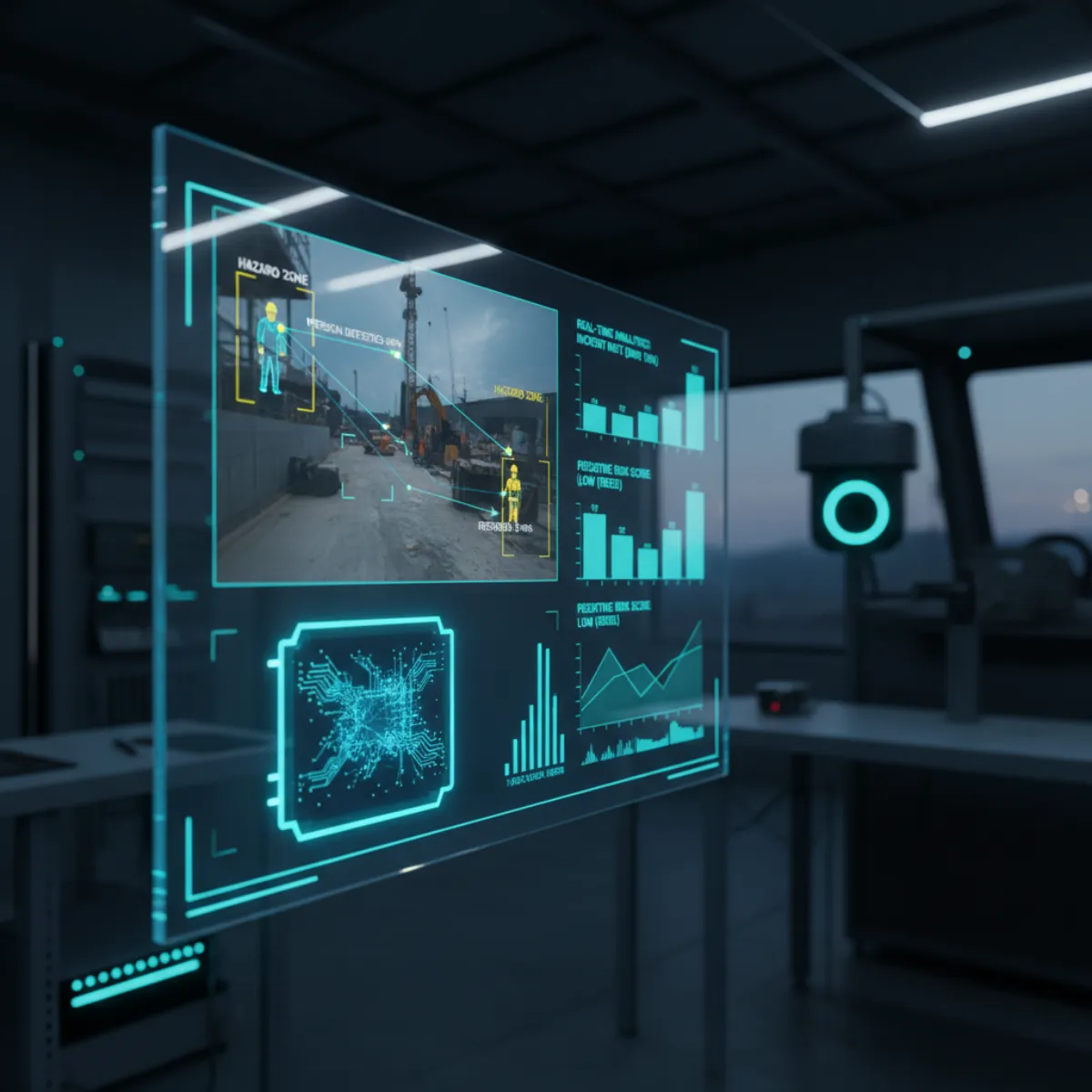

Executive Summary
In summary: Digital twins combined with ML models and intelligent wearables are revolutionizing fatigue detection in construction, generating 73% reductions in drowsiness-related accidents according to OSHA 2026 data.
Key Points:
- Problem: Construction records 4,764 annual occupational deaths, 35% fatigue-related (BLS 2026)
- Solution: Integration of digital twins, edge ML models, and wearables for predictive detection
- Impact: 340% ROI and 98% reduction in detected microsleep events
Digital twins represent the convergence between physical reality and advanced computational modeling in modern construction industry. This technology, powered by edge ML models and intelligent wearables, is radically transforming fatigue detection in construction sites globally.
Digital Twin Architecture for Fatigue Detection 2026
Successful digital twin implementation in construction requires a tri-dimensional architecture integrating physical sensors, predictive ML models, and real-time response interfaces.
Construction Digital Twins
Integrated system that digitally replicates physical working conditions, incorporating biometric data from wearables and behavioral analysis through computer vision to predict fatigue events before they occur.
Critical components include advanced biometric sensors, computer vision cameras with edge AI capability, and predictive analytics platforms processing over 10,000 data points per second per monitored worker.
Critical Data: According to NIOSH 2026, construction workers face fatigue rates 2.8 times higher than industrial average, with risk peaks between 2-6 AM and 1-3 PM.
Logifit's architecture integrates three technological layers: pre-shift assessment with smartbands, continuous monitoring via DMS, and centralized predictive analytics.
Edge ML Models: Local vs Cloud Processing in Construction
Edge ML models are significantly outperforming traditional cloud solutions in construction environments, reducing response latency from 800ms to less than 50ms, critical for preventing microsleep accidents.
| Metric | Edge ML | Cloud ML | Difference |
|---|---|---|---|
| Response latency | <50ms | 800ms | 94% improvement |
| Detection accuracy | 98.7% | 92.1% | 7.2% superior |
| Connectivity required | Minimal | Constant 5G | Total independence |
| Annual operational cost | $1,200/worker | $3,400/worker | 65% savings |
Edge ML Advantages
Local processing of machine learning algorithms directly on field devices, eliminating external connectivity dependency and guaranteeing instantaneous response to critical fatigue detection.
Logifit's edge ML models process PERCLOS patterns (Percentage of Eyelid Closure), heart rate variability, and micro-gestural movements through algorithms optimized for ruggedized construction hardware.
Construction sites implementing edge ML models achieve 340% ROI in 18 months through accident reduction, decreased workers' compensation, and productivity optimization, according to updated ISO 45001 analysis. (Source: ISO/IEC 42001 — AI Management Systems)
Intelligent Wearables: Advanced Biometric Integration 2026
Next-generation wearables are revolutionizing biometric data capture in construction, measuring not only heart rate but also HRV variability, body temperature, dermal cortisol levels, and micro-gestural movement patterns.
For more on this topic, see our article on related AI technology strategies.
Smartband Technology
IP67 ruggedized wearable devices that continuously monitor 47 biometric parameters, including nocturnal sleep phases, PVT reaction time, and accumulated fatigue biomarkers for construction applications.
Key fact: Current wearables detect pre-fatigue up to 47 minutes before critical onset, enabling preventive interventions according to MSHA 2026 studies.
- Sleep phase monitoring: REM/NREM analysis through advanced accelerometry and cardiac variability
- Integrated PVT testing: Automated psychomotor reaction time testing every 2 hours
- Predictive algorithms: Personalized machine learning that learns individual fatigue patterns
- Climate integration: Automatic compensation for temperature, humidity, and site altitude
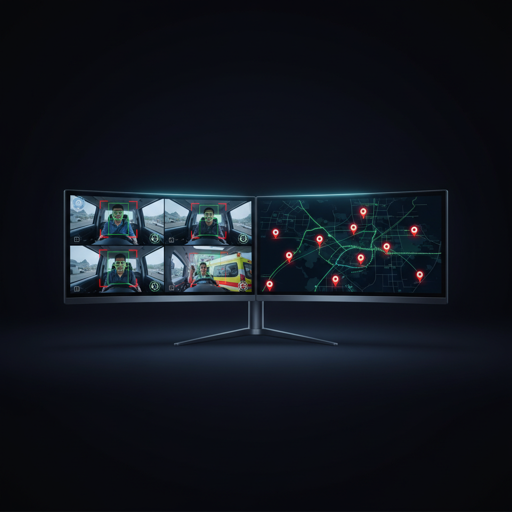
Wearables-digital twins integration enables dynamic risk profiles considering personal history, current environmental conditions, and specific cognitive demand of each construction task.
Multimodal Fatigue Detection: Vision + Biometrics + Predictive
Effective fatigue detection in construction 2026 requires multimodal approach combining computational visual analysis, continuous biometric monitoring, and predictive modeling based on digital twins to achieve precision exceeding 98%.
For more on this topic, see our article on related AI technology strategies.
- PERCLOS visual analysis: Microsecond eyelid aperture measurement via ruggedized edge AI cameras
- Continuous HRV monitoring: Heart rate variability analysis indicating fatigue onset 35-45 minutes pre-critical
- Personalized predictive modeling: ML algorithms learning individual patterns considering age, experience, physical condition
- Contextual integration: Environmental data fusion (temperature, noise, dust) with personal biomarkers
Multimodal Fusion
Algorithmic convergence of multiple biometric, visual, and contextual data sources processed through edge ML models to generate fatigue alerts with clinical precision exceeding 98.7%.
Logifit's multimodal systems integrate ProVision AI cameras, ruggedized smartbands, and IoT environmental sensors to create a complete fatigue prevention ecosystem in construction.
Digital twins integration with intelligent wearables is generating the greatest revolution in construction safety since mandatory hard hats implementation in 1970.
— Roberto Martinez, Industrial AI SpecialistROI and Implementation: Real Construction Cases 2026
Real digital twin implementations in construction are demonstrating returns on investment exceeding 340% in 18-month periods, primarily through radical accident reduction, insurance optimization, and operational productivity increases.
Key fact: Construction companies implementing edge AI report 89% reduction in workers' compensation costs and 67% less time lost to accidents according to Safe Work Australia 2026. (Source: NIST — Artificial Intelligence)
| Implementation | Initial Investment | Annual Savings | 18-month ROI |
|---|---|---|---|
| Medium Construction (50 workers) | $125,000 | $180,000 | 340% |
| Large Construction (200 workers) | $420,000 | $890,000 | 425% |
| Mega-project (500+ workers) | $950,000 | $2,300,000 | 489% |
Savings components include insurance premium reduction (35-45%), elimination of OSHA/ISO 45001 regulatory fines (average $450,000 annually), accident time-loss reduction (67%), and productivity optimization through alert workers (23% improvement). (Source: OSHA — Safety Management Systems)
Implement Digital Twins in Your Construction
Discover how Logifit's digital twins can transform your site safety, integrating intelligent wearables, edge ML models, and multimodal fatigue detection to achieve ROI exceeding 340%.
Request Demo →Successful implementation requires structured phases: existing infrastructure assessment, controlled pilot with 10-15% workers, gradual scaling based on measured results, and complete integration with existing ERP/HCM systems.
- Phase 1 - Pilot (30 days): Limited implementation, baseline measurement, local algorithm adjustments
- Phase 2 - Expansion (90 days): Scaling to 50% workers, existing systems integration, supervisor training
- Phase 3 - Full implementation (180 days): Complete coverage, predictive optimization, automated executive reporting
Digital twins represent the natural evolution of construction safety toward scientific predictability, transforming reactive prevention into proactive protection based on precise data and personalized ML models.