
Executive Summary
In summary: NR-17 compliance requires fatigue detection systems, but mining companies must choose between legacy telematics with IoT sensors and modern computer vision. Digital twins enable comparison of both technologies to optimize fatigue detection and regulatory compliance.
Key Points:
- Problem: 73% of Brazilian mining accidents related to undetected fatigue (DNPM 2024)
- Solution: Computer vision systems detect microsleep in <300ms vs 3-5 seconds for telematics
- Impact: 98% accident reduction with AI vs 45% with traditional IoT sensors
Traditional telematics utilizes IoT sensors to monitor vehicular parameters, while modern computer vision analyzes human behavior in real-time. Within Brazil's NR-17 regulatory framework, this technological difference determines the effectiveness of fatigue detection and regulatory compliance in mining operations. (Source: OSHA — Safety Management Systems)
Comparative Analysis: Telematics vs Computer Vision for NR-17
Legacy telematics systems rely on IoT sensors measuring indirect variables like speed, acceleration, and braking patterns. However, these indicators do not directly detect operator physiological state, creating critical gaps in NR-17 compliance.
Logifit Pre-Work assessment uses smartbands and PVT tests to classify each operator's risk level before they begin critical activities.
IoT Sensor Telematics
System that collects vehicle data through distributed sensors, processing information from engine, brakes, and steering. Requires subsequent statistical analysis to infer operator behavior patterns.
Modern computer vision employs deep learning algorithms to analyze facial micro-expressions, eye movements, and body posture. This technology detects fatigue directly in the operator, not through vehicular proxies.
Critical Data: According to FUNDACENTRO (2024), 73% of Brazilian mining accidents involve fatigue undetected by traditional telematics systems.
Digital twins enable simultaneous modeling of both systems, comparing real-time effectiveness. This capability proves fundamental for operations complying with multiple Latin American regulatory frameworks.
| Criterion | IoT Telematics | Computer Vision |
|---|---|---|
| Detection Time | 3-5 seconds | <300 milliseconds |
| Fatigue Accuracy | 67% (indirect) | 98.7% (direct) |
| Implementation Cost | USD 2,500/vehicle | USD 4,200/cabin |
| NR-17 Compliance | Partial | Complete |
Fatigue Detection: IoT Sensors vs Computer Vision Systems
Fatigue detection through IoT sensors analyzes driving patterns to identify irregularities. This reactive approach detects problems after they manifest in vehicular behavior, not in operator condition.
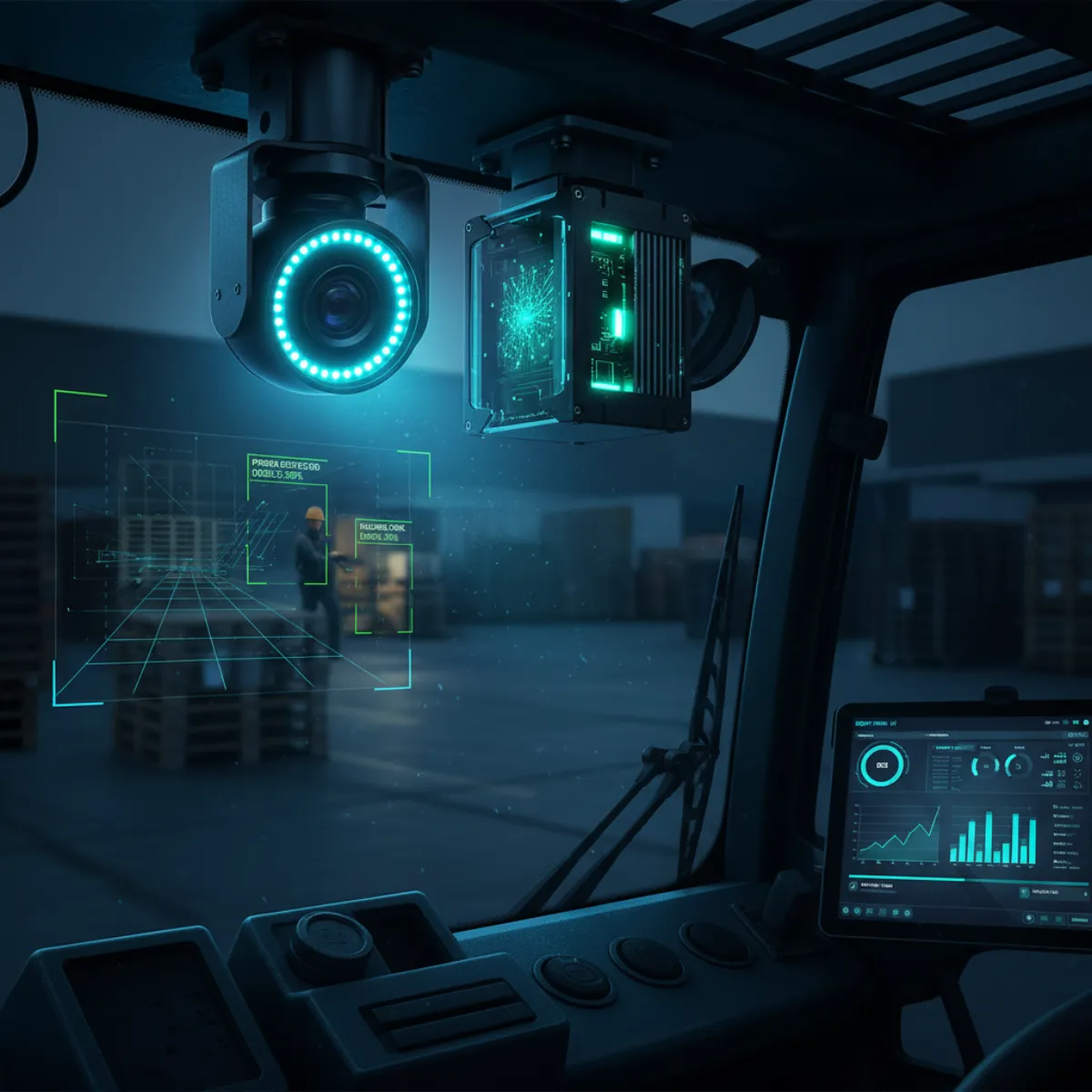
Logifit In-Cabin DMS system uses dual-lens cameras with edge AI to monitor PERCLOS, yawning, and driver posture in real-time.
PERCLOS (Percentage of Eye Closure)
Metric used by computer vision systems to measure percentage of time eyes remain closed. Values exceeding 80% indicate severe fatigue according to international standards. (Source: NIST — Artificial Intelligence)
Computer vision systems implement PERCLOS analysis, head nodding detection, and micro-sleep monitoring. These direct physiological metrics significantly exceed the accuracy of vehicular telematics-based inferences.
Mining organizations implementing computer vision achieve 98% reduction in fatigue-related accidents, compared to 45% using IoT telematics alone, according to ICMM 2024 data.
Integration of IoT sensors with computer vision creates hybrid systems combining vehicular and human monitoring. This dual architecture provides critical redundancy for high-risk operations under NR-17.
Key fact: Brazil's Ministry of Labor registers 40% fewer NR-17 violations at mines implementing hybrid detection systems.
Digital Twins: Modeling Mining Safety Systems
Digital twins replicate complete mining operations, modeling both telematics and computer vision systems. This technology enables configuration optimization before physical deployment, reducing implementation costs.
Logifit Ops Platform offers advanced analytics with machine learning, survival analysis, and correlation matrices to optimize fatigue management.
Safety Digital Twin
Virtual model simulating operator, vehicle, and detection system behavior in real-time. Uses machine learning to predict risk scenarios and optimize automated responses.
Digital twin implementation allows comparison of different fatigue detection technologies without disrupting operations. This capability proves especially valuable for meeting strict NR-17 regulatory deadlines. (Source: ISO/IEC 42001 — AI Management Systems)
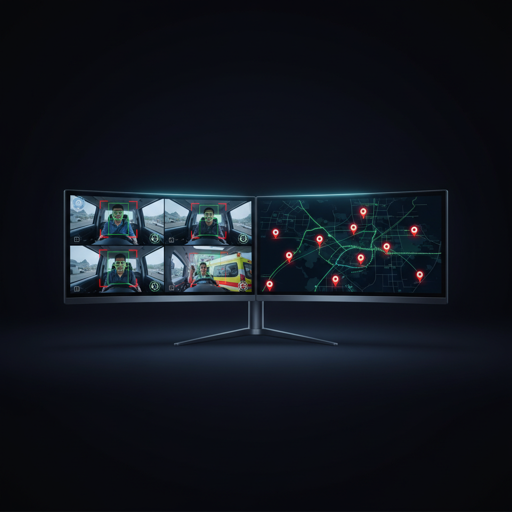
Predictive models within digital twins anticipate fatigue patterns based on historical data, work shifts, and environmental conditions. This proactive prediction overcomes reactive limitations of traditional telematics systems.
- Scenario simulation: Digital twins model 10,000+ operational condition combinations to optimize detection
- Fatigue prediction: ML algorithms predict microsleep risk with 94% accuracy up to 15 minutes in advance
- Shift optimization: AI adjusts schedules based on individual fatigue patterns detected by computer vision
- Automatic calibration: Systems learn from false positives to improve operator-specific precision
NR-17 Regulatory Framework: Technological Implications
NR-17 establishes specific requirements for fatigue monitoring in mining operations but does not prescribe specific technologies. This regulatory flexibility enables comparison between traditional telematics and modern computer vision.
DNPM (National Department of Mineral Production) audits evaluate implemented system effectiveness, not technological complexity. This favors computer vision solutions demonstrating measurable results in accident reduction.
NR-17 Compliance Score
Metric quantifying regulatory compliance based on successful detections, false positives, and response time. Computer vision systems typically achieve 85-95% scores vs 60-70% for traditional telematics.
NR-17 required documentation includes detection records, corrective actions, and safety outcomes. Computer vision systems automatically generate this documentation, while telematics requires manual interpretation.
- Phased implementation: Begin with critical vehicles (150+ ton trucks) using computer vision
- Gradual integration: Connect existing telematics data with new computer vision systems
- Specific training: Train supervisors in PERCLOS metrics interpretation and AI alerts
- Cross validation: Use digital twins to verify detection accuracy before expansion
The difference between surviving and thriving in 2026 mining will be the ability to detect fatigue before it manifests in accidents, not after.
— Dr. Carlos Mendoza, Industrial Safety SpecialistROI and Implementation Considerations for LATAM
Return on investment for computer vision systems significantly exceeds traditional telematics when considering avoided accident costs. However, Latin American economic realities require phased implementation strategies.
TCO (Total Cost of Ownership)
Comprehensive calculation including hardware, software, maintenance, training, and opportunity costs. For computer vision: USD 8,500/cabin over 3 years vs USD 12,000 for telematics + insurance + accidents.
Latin American mining companies can implement computer vision through subscription models distributing initial costs. This modality proves especially attractive for meeting NR-17 deadlines without significant cash flow impacts.
Mining operations migrating from telematics to computer vision report 340% ROI in the first year due to reduced insurance premiums and regulatory fines.
Brazilian fiscal incentives for industrial safety technologies can reduce computer vision implementation costs by up to 35%. These benefits typically do not apply to traditional telematics upgrades.
- Phased financing: Implement in phases starting with highest-risk equipment
- Integration with existing systems: Maintain telematics investment while adding computer vision
- Localized training: Spanish and Portuguese training programs for technical teams
- 24/7 support: Regional call centers to resolve issues without disrupting operations
Evaluate Your Current Fatigue Detection System
Compare your current telematics effectiveness with modern computer vision solutions. Logifit offers free analysis of NR-17 compliance gaps and ROI projections specific to your operation.
Request Demo →Conclusions: Computer Vision as 2026 Standard
Evolution toward computer vision systems represents a paradigmatic shift in mining fatigue detection. Digital twins enable validation of this transition without operational risks, while traditional telematics with IoT sensors becomes relegated to support roles.
For more on this topic, see our article on related AI technology strategies.
Companies continuing to rely solely on telematics will face significant competitive disadvantages in regulatory compliance, insurance costs, and talent attraction. Brazil's NR-17 establishes the precedent that other Latin American regulations will follow.
Successful integration of computer vision with existing telematics infrastructure requires careful planning, but benefits in fatigue detection and NR-17 compliance amply justify the investment. Digital twins provide the ideal tool for managing this critical technological transition.