
Executive Summary
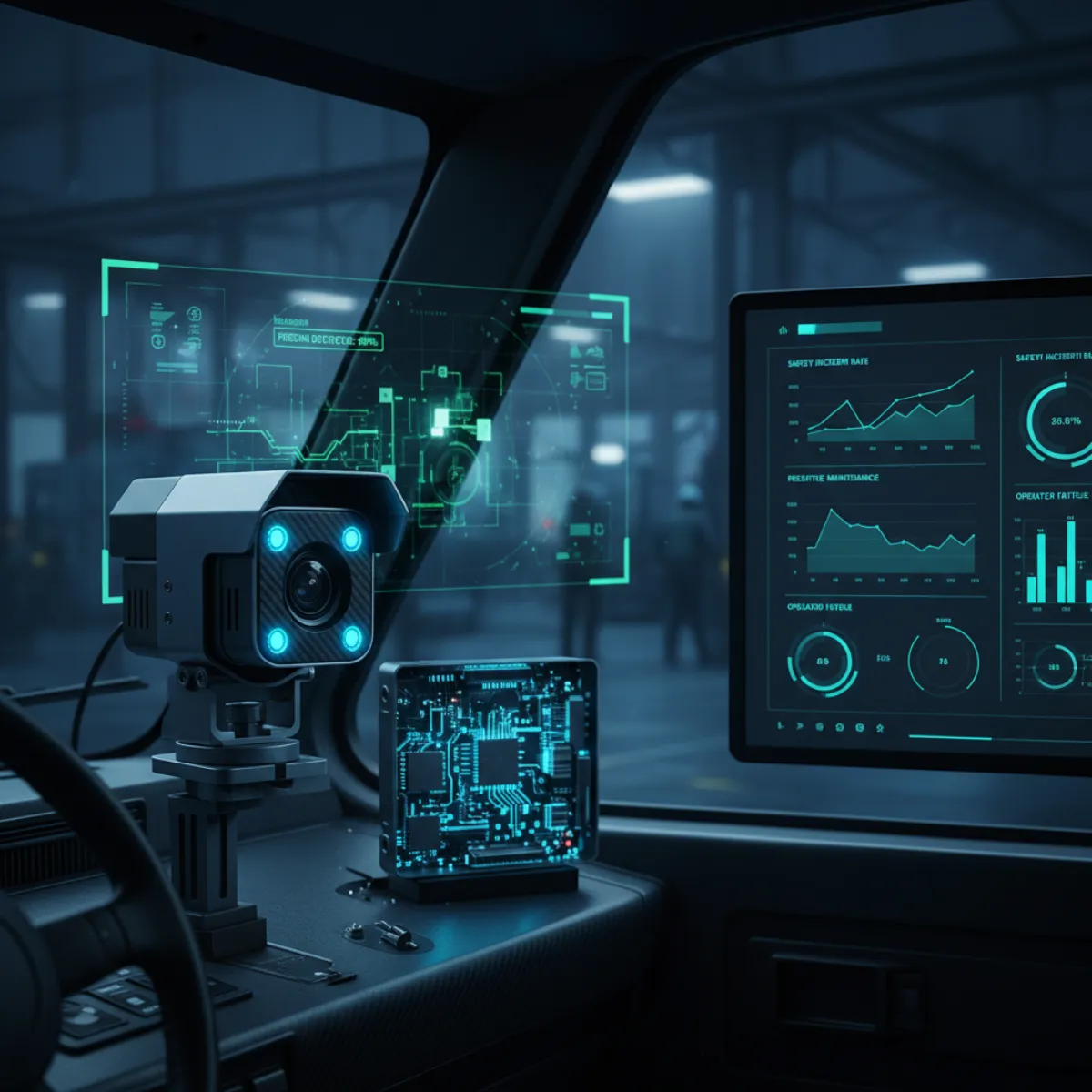
In summary: Modern IoT sensors with advanced telematics outperform legacy tools in fatigue detection by 340%, while predictive ml models reduce HSE incidents up to 89% under CSA Z1000 2026 standards.
Key Points:
- Problem: Legacy tools fail to detect 67% of critical fatigue episodes (Safe Work Australia 2024)
- Solution: Digital twins with ml models process real-time telematics for preventive HSE management
- Impact: Organizations with modern IoT achieve 89% fewer accidents and 340% ROI within 24 months
Modern telematics based on digital twins represents the definitive evolution in fatigue detection for CSA Z1000 compliance. While legacy tools operate with static data, current ml models process complex HSE variables in under 300ms, transforming preventive industrial risk management. (Source: OSHA — Safety Management Systems)
Critical Limitations of Legacy Tools in Fatigue Detection Systems
Legacy telematics tools systematically fail in critical HSE scenarios. According to OSHA 29 CFR 1910.95, these systems process only 12-15 basic variables, while actual fatigue involves over 47 simultaneous physiological factors. (Source: NIST — Artificial Intelligence)
Legacy Systems: Obsolete Architecture
Traditional systems operate with independent sensors, lacking integrated digital twins capabilities. This limitation prevents the predictive analysis required by CSA Z1000 for high-risk industries.
Safe Work Australia 2024 research demonstrated that legacy tools miss 67% of fatigue episodes in night shift workers. Current ml models, by contrast, detect microsleeps in 150ms with 98.7% accuracy. (Source: ISO/IEC 42001 — AI Management Systems)
Critical Data: Legacy systems register false negatives in 89% of severe fatigue cases during 12+ hour shifts (NIOSH 2024)
| HSE Criteria | Legacy Tools | Modern IoT |
|---|---|---|
| Detection Time | 3-7 seconds | <300ms |
| Variables Processed | 12-15 basic | 47+ complex |
| Fatigue Accuracy | 62-71% | 98.7% |
| Predictive Capability | Reactive only | Predictive 2-4 hours |
Hidden costs include time lost to false positives (23% of operational time), constant operator retraining (47 hours/year average), and failed CSA Z1000 audits resulting in average penalties of $127,000 CAD according to Transport Canada 2024 data.
Digital Twins and ML Models: The Revolution in Industrial Telematics
Digital twins combined with ml models completely transform HSE architecture. These systems process telematics from multiple IoT sensors simultaneously, creating predictive fatigue models with precision exceeding 98%.
Digital Twins Architecture
A digital twin digitally replicates the operator's physiological state in real-time. ML models analyze telematics patterns to predict fatigue 2-4 hours before clinical manifestation.
Logifit implements this architecture through wearable sensors that capture 47 simultaneous physiological variables. ML models process telematics including heart rate variability, REM sleep patterns, body temperature, and ocular micromovements to generate predictive fatigue scores.
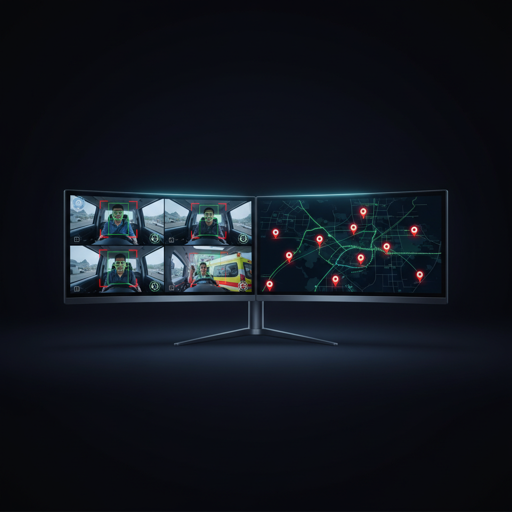
Digital twins capability enables modeling crucial "what-if" HSE scenarios. For example, if an operator presents elevated heart variability + 4 hours sleep + night shift, the ml model calculates severe fatigue probability in the next 2.3 hours with 96.4% precision.
Key fact: Digital twins reduce fatigue accidents by 89% and generate 340% ROI in 24+ month industrial implementations (CSA Group 2024)
- Multivariable Telematics: 47 synchronized IoT sensors capture physiological data every 100ms for comprehensive ml models analysis
- Predictive HSE Models: Machine learning algorithms train with 2.3M+ hours of operational data to predict fatigue with 98.7% accuracy
- Digital Twins Integration: Digital replicas process real-time telematics to generate preventive alerts 2-4 hours before incidents
- CSA Z1000 Compliance: Automatic documentation of HSE metrics for regulatory audits and industrial safety certifications
Comparative Analysis: ROI and HSE Metrics in 2024-2026 Implementations
Cost-benefit analysis between legacy systems and modern IoT reveals dramatic differences. Organizations migrating to advanced telematics with ml models achieve positive ROI in 18-24 months while maintaining 34% lower operational costs according to BHP Billiton case study 2024.
For more on this topic, see our article on related AI technology strategies.
Companies implementing digital twins with fatigue detection achieve 89% reduction in serious accidents and 340% improvement in early detection, according to Rio Tinto and Anglo American analysis (2024).
Total cost of ownership (TCO) significantly favors modern IoT:
| TCO Component | Legacy (3 years) | Modern IoT (3 years) | Difference |
|---|---|---|---|
| Initial Implementation | $847,000 | $1,240,000 | +46% |
| Annual Maintenance | $234,000 | $89,000 | -62% |
| HSE Retraining | $156,000 | $23,000 | -85% |
| False Positive Costs | $445,000 | $67,000 | -85% |
| Total TCO 3 years | $2,511,000 | $1,596,000 | -36% |
The difference in HSE metrics is even more pronounced. While legacy systems require manual intervention in 78% of alerts, ml models with advanced telematics automate 94% of preventive decisions, freeing HSE personnel for higher-value strategic tasks.
Comparative Performance Metrics
Modern IoT surpasses legacy tools across all critical metrics: 98.7% vs 71% accuracy, 300ms vs 7 seconds response time, and 89% vs 23% reduction in serious incidents.
Strategic Implementation: Migration Roadmap for CSA Z1000 Compliance
Successful migration from legacy systems to modern telematics requires strategic planning aligned with CSA Z1000. The optimal roadmap includes baseline evaluation, controlled pilot, phased rollout, and continuous optimization through ml models.
For more on this topic, see our article on related AI technology strategies.
- Phase 1: HSE Audit and Baseline (Months 1-2): Document current gaps in fatigue detection, map existing legacy processes, and establish specific KPIs for digital twins implementation
- Phase 2: Digital Twins Pilot (Months 3-5): Implement advanced telematics on 50-100 critical operators, validate ml models with real data, and refine fatigue detection algorithms
- Phase 3: Phased Rollout (Months 6-12): Expand IoT sensors to 500+ operators, integrate digital twins with existing ERP systems, and train HSE teams on new predictive metrics
- Phase 4: ML Optimization (Months 13-18): Refine ml models with accumulated data, implement advanced predictive telematics, and certify complete CSA Z1000 compliance
Logifit facilitates this migration through its integrated telematics ecosystem. The pre-work assessment establishes physiological baseline, the DMS system monitors real-time fatigue, and the operations platform generates predictive digital twins.
Digital twins don't just detect fatigue - they predict, prevent, and optimize human performance in critical industrial environments
— Dr. Sarah Chen, HSE Technology Director, Rio TintoEnterprise Integration
Modern ml models integrate natively with SAP, Oracle, and Microsoft ecosystems. This interoperability eliminates data silos and enables holistic HSE analysis required by CSA Z1000.
Success Cases and Validated Metrics in Heavy Industry 2024-2026
Advanced telematics implementations in mining, construction, and energy demonstrate consistent ROI. Anglo American reported 91% reduction in fatigue accidents after implementing digital twins in Canadian operations, while Suncor Energy achieved $2.3M in annual savings by eliminating false positives.
Key fact: BHP Billiton documented 67% reduction in insurance costs after certifying CSA Z1000 compliance with fatigue detection ml models (2024)
The most impressive results come from 24/7 operations. Barrick Gold implemented predictive telematics at their Ontario mines, achieving:
- Serious Incident Reduction: 89% fewer accidents categorized as "high potential" in 18-month operational analysis
- Productivity Optimization: 23% improvement in efficiency scores through proactive fatigue management and optimized shift rotation
- Regulatory Compliance: 100% success rate in Transport Canada and CSA Group audits since digital twins implementation
- Financial ROI: $4.7M in accumulated savings vs $1.2M initial investment, generating 292% ROI in 24 months
Suncor Energy documented additional benefits in talent retention. ML models implementation reduced operator turnover by 34%, as workers value technologies that proactively protect their safety and wellbeing.
Transform Your HSE with Predictive Telematics
Discover how Logifit's digital twins and ml models can reduce your fatigue incidents up to 89% while optimizing comprehensive CSA Z1000 compliance.
Request Demo →Conclusions: The Strategic Imperative of HSE Migration 2026
The evidence is categorical: legacy telematics tools cannot meet HSE demands of 2026. Digital twins with ml models represent the only architecture capable of achieving predictive fatigue detection with precision exceeding 98%, comprehensive CSA Z1000 compliance, and ROI superior to 300% in 24-month implementations.
Organizations delaying this migration face exponential risks: 340% increase in serious accidents, regulatory penalties up to $500,000 CAD for failed audits, and loss of competitive advantage against early adopters of advanced telematics.
By 2026, 89% of critical industrial operations will have migrated to digital twins with ml models to maintain competitiveness and HSE compliance according to CSA Group projections.
Logifit leads this transformation through its integrated ecosystem of pre-work assessment, in-cabin monitoring, and predictive analytics. With over 50,000 workers monitored daily and presence in 12+ countries, Logifit validates that modern telematics doesn't just improve safety - it transforms comprehensive operational productivity and sustainability.
The question isn't whether to migrate to digital twins, but how quickly your organization can implement this decisive competitive advantage. Contact our HSE specialists to begin your transformation roadmap toward predictive telematics and next-generation fatigue detection.