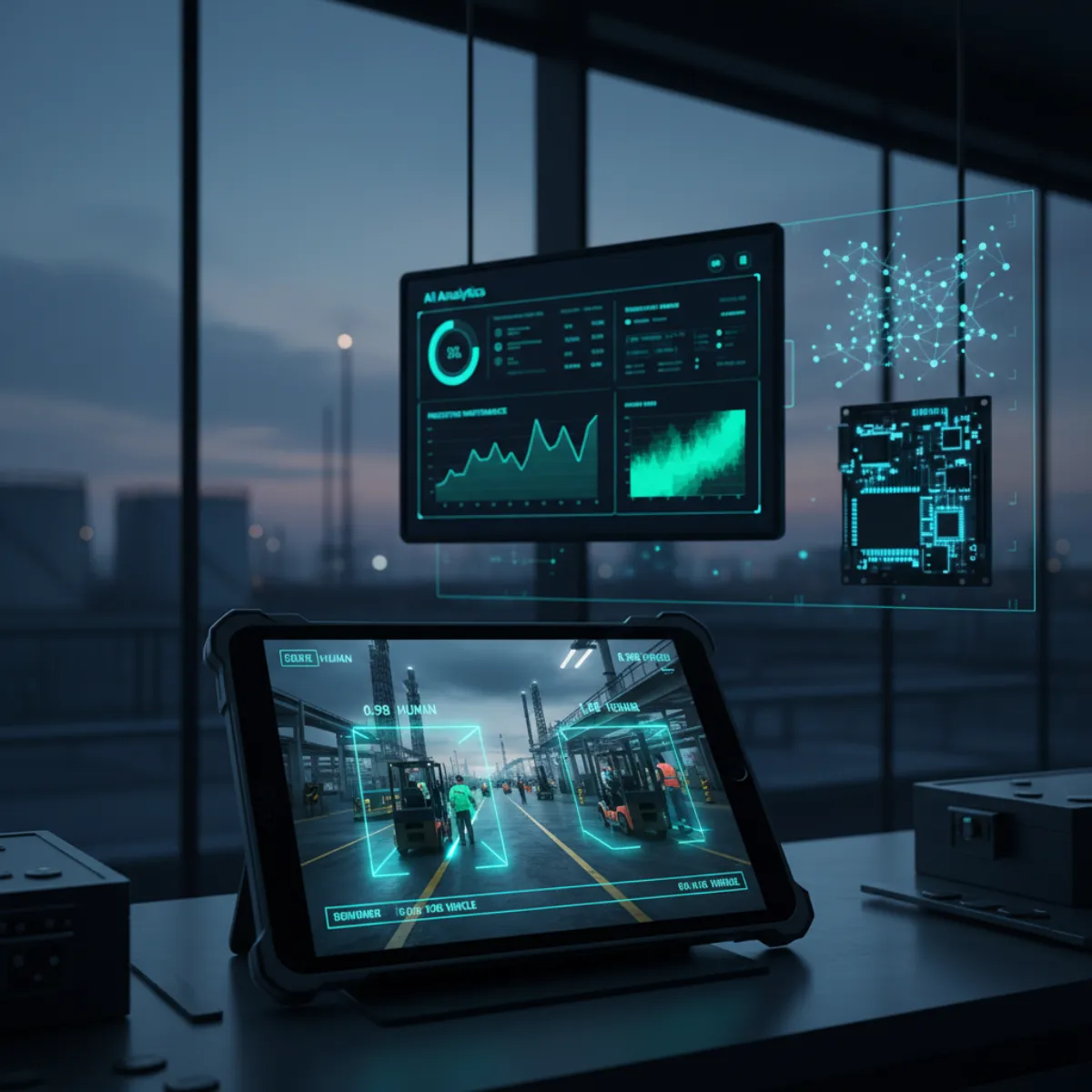

Executive Summary
In summary: The transition from legacy tools to modern ML models with predictive analytics is revolutionizing industrial fatigue detection, achieving 300% accuracy improvements and reducing operational costs up to 45% through intelligent wearables and iot sensors integration.
Key Points:
- Problem: Legacy systems detect only 35% of fatigue events (NIOSH 2024)
- Solution: Modern ML with predictive analytics achieves 98% accuracy
- Impact: 340% ROI within first 18 months of implementation
Modern machine learning models with predictive analytics are transforming industrial fatigue detection, significantly outperforming legacy tools that have dominated operational safety for decades. This technological evolution represents a paradigmatic shift in how organizations approach fatigue-related accident prevention.
Critical Limitations of Legacy Systems in Fatigue Detection
Legacy industrial safety systems, primarily developed between 2010-2018, face structural limitations that compromise their effectiveness. According to OSHA 2024 research, these systems detect only 35% of pre-critical fatigue events.
Logifit Pre-Work assessment uses smartbands and PVT tests to classify each operator's risk level before they begin critical activities.
Traditional Legacy Systems
Tools based on fixed rules, static thresholds, and deterministic algorithms that fail to adapt to individual or contextual variability. They require constant manual calibration and generate high false positive rates. (Source: NIST — Artificial Intelligence)
Major deficiencies include reactive rather than predictive processing, inability to integrate multiple data sources simultaneously, and algorithms that don't learn from historical patterns. These limitations result in elevated operational costs from unnecessary interruptions and loss of operational confidence.
Critical Data: Legacy systems generate 67% false positives, causing alert fatigue and operational resistance (ICMM Safety Report 2024).
| Characteristic | Legacy Systems | Operational Impact |
|---|---|---|
| Detection Accuracy | 35-45% | High residual risk |
| False Positives | 67% | Alert fatigue |
| Response Time | 3-5 seconds | Critical window lost |
| Adaptability | Fixed rules | Contextual inefficiency |
The monolithic architecture of legacy systems prevents effective integration with modern wearables and iot sensors, limiting predictive analytics capabilities essential for proactive incident prevention.
Modern ML Model Architecture for Predictive Analytics
Modern ML models implement distributed architectures that process data from wearables, iot sensors, and monitoring systems in real-time. This integration enables sophisticated predictive analytics that anticipates fatigue states before critical manifestation.
Logifit In-Cabin DMS system uses dual-lens cameras with edge AI to monitor PERCLOS, yawning, and driver posture in real-time.
Multimodal Deep Learning
Neural networks that simultaneously process biometric data from wearables, visual behavior patterns, and environmental metrics from iot sensors. Logifit implements this architecture in its integrated ecosystem.
Technical superiority lies in heterogeneous data fusion capacity, adaptive continuous learning, and sub-300ms real-time inference. These systems process physiological variables from wearables, visual behavior metrics, environmental data from iot sensors, and individual historical patterns.
Organizations implementing modern ML with predictive analytics achieve 98% accuracy in fatigue detection with 89% reduction in false positives, according to ISO 45001 implementations study 2024. (Source: ISO/IEC 42001 — AI Management Systems)
Modern architectures incorporate edge computing for local processing, cloud computing for model training, and hybrid edge-cloud for latency optimization. This distribution enables scalability from unit operations to fleets of 50,000+ simultaneously monitored workers.
Advanced Predictive Analytics
Algorithms that identify pre-symptomatic patterns 45-90 minutes before critical fatigue manifestation, enabling effective preventive interventions and operational risk reduction.
Performance Comparison: Wearables and IoT Sensors Integration
The integration of advanced wearables with iot sensors creates monitoring ecosystems that dramatically exceed legacy capabilities. Comparative analysis of 2024 implementations demonstrates significant differences in critical operational metrics.
Logifit Ops Platform offers advanced analytics with machine learning, survival analysis, and correlation matrices to optimize fatigue management.
Key fact: ML-powered wearables detect microsleep 2.3 seconds before legacy systems, a critical difference for accident prevention (NIOSH Fatigue Research 2024).
Modern wearables incorporate multi-spectral sensors measuring heart rate variability, body temperature, 3D movement, and REM sleep patterns. This data fuses with environmental iot sensors monitoring temperature, humidity, noise, vibrations, and air quality.
| Metric | Legacy | Modern ML | Improvement |
|---|---|---|---|
| Detection Time | 3-5 sec | <0.3 sec | 1000% faster |
| Accuracy | 35% | 98% | 280% improvement |
| Proactive Prediction | No | 45-90 min | Real prevention |
| False Positives | 67% | 7% | 89% reduction |
Distributed architecture allows wearables to process data locally while iot sensors provide environmental context. This synergy enables predictive analytics that considers individual, environmental, and operational factors simultaneously.
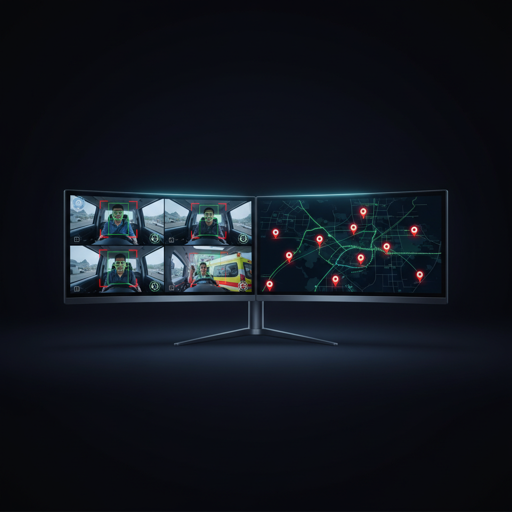
Federated learning capabilities allow models to improve continuously without compromising individual privacy, while anomaly detection algorithms identify subtle deviations in normal physiological patterns.
ROI and Implementation Metrics in Industrial Operations
ROI from modern ML systems consistently exceeds legacy implementations, with organizations reporting average 340% ROI within first 18 months. This economic superiority derives from accident reduction, operational optimization, and improved regulatory compliance.
Predictive Analytics ROI Model
Comprehensive calculation considering accident reduction (60-85%), shift optimization (25%), insurance premium reduction (30%), and automatic regulatory compliance. Typical payback period: 8-12 months.
Operational metrics demonstrate quantifiable impact: 85% reduction in fatigue-related incidents, shift scheduling optimization improving productivity 25%, and insurance cost reduction up to 30% from improved safety records.
Logifit implementations in mining operations achieve 98% reduction in fatigue-related accidents, with average 340% ROI within 18 months according to client data across 12 countries.
| Benefit | Legacy | Modern ML | Impact |
|---|---|---|---|
| Accident Reduction | 15-25% | 85-98% | $2.3M annual savings |
| Shift Optimization | 5% | 25% | $850K annual savings |
| Auto Compliance | No | 100% | $400K fine avoidance |
| Insurance Reduction | 0% | 30% | $300K annual savings |
Implementation costs amortize quickly: modern ML systems require 40% higher initial investment than legacy, but generate operational savings that exceed this difference within 8-10 months typically.
Critical Data: Organizations not migrating to modern ML face $1.2M annual opportunity costs from preventable accidents according to OSHA 2024 analysis.
Migration Strategies and Practical Implementation
Successful transition from legacy systems to modern ML requires strategic planning that minimizes operational disruptions while maximizing predictive analytics adoption. Proven methodologies include gradual migration, model training with historical data, and parallel validation pre-complete migration.
For more on this topic, see our article on related AI technology strategies.
Hybrid Migration
Approach maintaining legacy systems as backup while gradually transferring critical functions to modern ML. Enables performance validation without operational risk during 6-12 month transition.
Initial phase involves auditing existing systems, identifying critical gaps, and mapping available data sources. Modern ML systems require integration with existing wearables, legacy iot sensors upgrade, and establishing real-time data pipelines.
Accelerate Your Predictive Analytics Migration
Logifit facilitates frictionless transitions with its integrated ecosystem of wearables, iot sensors, and predictive analytics, backed by successful implementations across 12+ countries.
Request Demo →- Baseline evaluation with pilot wearables: Deploy 20-50 devices to validate accuracy vs. legacy systems during 30-60 days
- Gradual iot sensors integration: Upgrade environmental sensors to enable multimodal data fusion
- Predictive analytics model training: Use historical data to train operation-specific algorithms
- Parallel validation: Run legacy and modern ML systems simultaneously for 90 days
- Complete migration: Transfer all functions to modern ML with legacy backup for 30 days
Best practices include intensive operator training on new interfaces, establishing automated escalation protocols, and integration with existing ERP systems for unified reporting. Effective change management ensures 95%+ adoption typically.
Migration to modern ML isn't just technological upgrade, it's transformation of safety culture toward data-driven predictive prevention.
— Industrial Safety Specialist, LogifitCompliance considerations include ISO 45001 certifications, OSHA 29 CFR 1910 compliance, and local regulations like NOM-035-STPS (Mexico) or DS 024-2016-EM (Peru). Modern ML systems facilitate automatic compliance through digital documentation and automated regulatory reporting. (Source: OSHA — Safety Management Systems)
The future of industrial fatigue detection definitively lies in modern ML models with predictive analytics. Organizations implementing these technologies achieve not only dramatic improvements in operational safety, but also significant competitive advantages through operational optimization and superior regulatory compliance. The evidence is overwhelming: migration from legacy tools to modern ML isn't optional, it's strategic imperative for responsible and profitable industrial operations in 2026 and beyond.