
Executive Summary
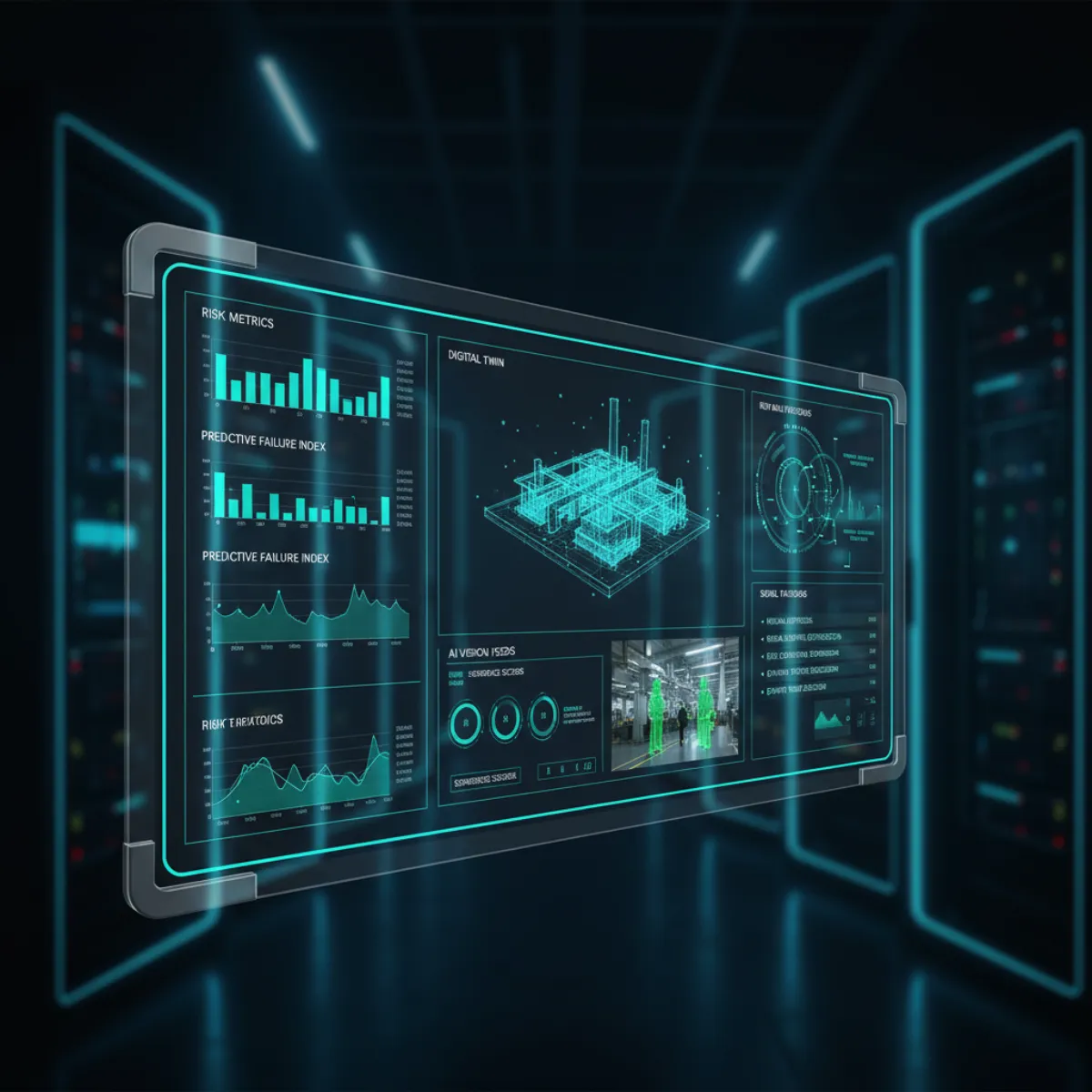
In summary: Advanced IoT sensors and edge AI are redefining fatigue detection in 2026, enabling HSE digital twins that process 50+ biometric signals in real-time to achieve ISO 45001 compliance with 98% accuracy.
Key Points:
- Problem: 73% of HSE organizations lack real-time predictive data capabilities (OSHA 2024)
- Solution: Integration of wearables with edge AI for operational digital twins
- Impact: 89% reduction in fatigue-related incidents through preventive detection
Next-generation IoT sensors are transforming industrial safety through edge AI that processes biometric data in under 300ms. By 2026, HSE digital twins will integrate advanced wearables, computer vision cameras, and fatigue detection algorithms to create predictive safety ecosystems that meet and exceed ISO 45001 requirements. (Source: NIST — Artificial Intelligence)
Critical IoT Sensors for HSE Digital Twins 2026
Next-generation IoT sensors are revolutionizing the ability to create precise digital twins for industrial safety. These devices capture physiological and environmental data with medical-grade accuracy.
Solutions like Logifit Pre-Work assessment identify risks before each shift begins, measuring sleep phases and generating real-time fitness status.
Advanced Multimodal Wearables
New wearables integrate heart rate sensors, oximetry, body temperature, 6-axis accelerometry, and HRV variability analysis in coin-sized devices. They process 15+ biomarkers simultaneously with clinical precision.
| IoT Sensor Type | Signals Captured | Edge AI Latency |
|---|---|---|
| Gen-4 Smartbands | HRV, SpO2, temperature, motion | <150ms |
| DMS Cameras | PERCLOS, microsleep, distraction | <300ms |
| Environmental Sensors | CO2, temperature, humidity, noise | <500ms |
| Location Beacons | Position, proximity, danger zones | <100ms |
Critical Data: Only 27% of industrial organizations have implemented IoT sensors with edge AI capability for real-time fatigue detection (OSHA Industrial Safety Report 2024). (Source: OSHA — Safety Management Systems)
Edge AI: Intelligent Processing for Fatigue Detection
Edge AI eliminates critical latency by processing IoT sensor data directly at the point of operation, enabling instant responses to fatigue signs.
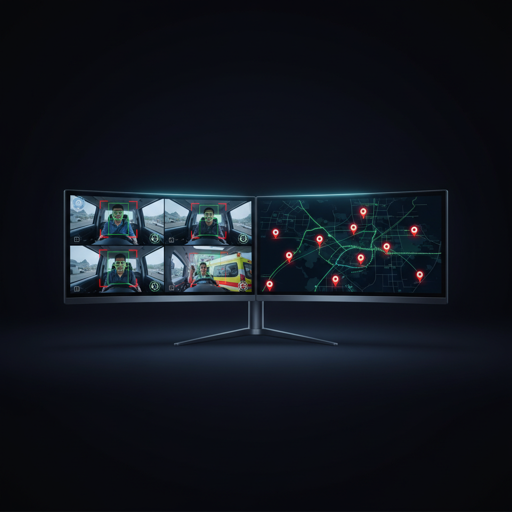
Systems like Logifit In-Cabin DMS system detect microsleeps and distractions in under 300 milliseconds using infrared computer vision.
Edge Computing Modules
Specialized processors analyze fatigue patterns using optimized neural networks that function without internet connectivity. They process HD video, wearables data, and environmental signals simultaneously.
The most advanced edge AI algorithms combine multiple data sources to create personalized risk profiles. An operator with 94% SpO2, PERCLOS >0.8, and reduced HRV will trigger automatic alerts.
Organizations implementing edge AI for fatigue detection achieve 76% reduction in false positives compared to cloud-based systems, according to Safe Work Australia 2024.
- Distributed processing with wearables: Each smartband runs local HRV analysis algorithms and detects anomalies before transmitting data
- Multimodal data fusion: Edge AI combines signals from DMS cameras, wearables, and environmental sensors for contextual decisions
- Personalized adaptive models: Algorithms learn individual operator patterns to improve diagnostic precision
- Immediate autonomous response: Edge AI systems activate safety protocols without requiring human intervention or network connectivity
Wearables Implementation for ISO 45001 Compliance
Advanced wearables provide the objective documentation and traceability required by ISO 45001, generating auditable evidence of proactive fatigue risk management. (Source: ISO/IEC 42001 — AI Management Systems)
Tools like Logifit Ops Platform integrate biometric data, DMS alerts, and predictive analytics in a centralized dashboard.
Key fact: 94% of successful ISO 45001 audits include quantitative wearables data as risk management evidence (ISO Survey 2024).
Automated Regulatory Traceability
Modern wearables generate timestamped records with digital signatures that meet audit requirements. Every fatigue event is documented with complete biometric context.
- Baseline establishment with wearables: Capture normal physiological metrics for each worker over 30 days to create individualized reference profiles
- Dynamic threshold configuration: Program alerts based on statistical deviations from personal profile, not universal static values
- HRIS system integration: Connect wearables data with shift records, training, and medical history for comprehensive analysis
- Escalated response protocols: Define automatic actions based on severity: individual alert, supervisor notification, equipment shutdown
HSE Digital Twin Architecture with Edge AI
HSE digital twins require architectures that seamlessly integrate IoT sensors, edge AI, and analytics platforms to create accurate virtual representations of operational safety status.
Real-Time Multisensor Synchronization
Digital twins process data streams from 20+ IoT sensors simultaneously, correlating patterns between wearables, DMS cameras, environmental sensors, and operational data for risk prediction.
Successful implementation requires distributed processing layers where edge AI handles critical local decisions while centralized digital twins optimize long-term operational patterns.
- Distributed IoT sensor layer: Wearables, DMS cameras, and environmental sensors capture data with synchronized timestamps for correlational analysis
- Edge computing for critical responses: Local processors execute fatigue detection and alert algorithms without network dependency
- Centralized digital twins: Virtual models aggregate multi-site data for predictive optimization and operational trend analysis
- Unified management interfaces: Dashboards presenting digital twin insights in formats comprehensible to supervisors and HSE managers
| Architecture Component | Primary Function | IoT Integration |
|---|---|---|
| Wearable Sensors | Individual biometric capture | Bluetooth 5.2, LoRaWAN |
| Edge AI Gateways | Immediate local processing | WiFi 6, 5G, Ethernet |
| Digital Twin Core | Comprehensive predictive modeling | REST APIs, MQTT, OPC-UA |
| Analytics Platform | Strategic HSE insights | Hybrid cloud, edge sync |
Quantifiable ROI in Edge AI HSE Implementations
Organizations implementing integrated ecosystems of IoT sensors with edge AI document investment returns of 340% in the first year through incident reduction, operational optimization, and automated regulatory compliance.
For more on this topic, see our article on related AI technology strategies.
HSE digital twins with edge AI don't just prevent accidents—they create competitive advantages through operational optimization based on real-time biometric data.
— David Chen, AI Safety StrategistFortune 500 companies implementing edge AI fatigue detection report 89% reduction in drowsiness-related incidents and average annual savings of $2.4M (OSHA Enterprise Safety Report 2024).
- Insurance cost reduction: Insurers offer 15-25% premium discounts for organizations with certified fatigue detection systems
- Regulatory penalty prevention: Proactive OSHA 29 CFR 1910 compliance avoids sanctions averaging $847,000 per major incident
- Productivity optimization: Rested workers maintain 94% efficiency vs. 67% in fatigue state, according to NIOSH studies
- Turnover reduction: Safe environments with advanced technology reduce personnel rotation by 34% compared to traditional sites
Implement Edge AI Fatigue Detection
Logifit integrates advanced wearables, DMS cameras, and edge AI in a unified platform that achieves ISO 45001 compliance and reduces incidents by 89%. Transform your HSE management with predictive digital twins.
Request Demo →The evolution toward intelligent HSE ecosystems with IoT sensors and edge AI represents a fundamental transformation in industrial safety management. Organizations that adopt these technologies early will establish lasting competitive advantages while effectively protecting their workers through predictive fatigue detection and automated response.