
Executive Summary
In summary: Edge AI and computer vision are revolutionizing industrial safety in 2026, with fatigue detection systems processing data in under 300ms and reducing accidents by up to 98% according to NIOSH studies.
Key Points:
- Problem: 13,000 annual fatigue-related deaths in industrial operations (OSHA 2025)
- Solution: Edge AI with computer vision for real-time predictive detection
- Impact: 4:1 ROI within first 18 months of implementation
Edge AI in industrial safety represents the convergence of artificial intelligence, computer vision, and telematics to create predictive systems that prevent accidents before they occur. By 2026, these technologies have reached commercial maturity with local processing capabilities that eliminate critical latencies. (Source: NIST — Artificial Intelligence)
Edge AI: The Local Processing Revolution in Safety
Edge AI fundamentally transforms how organizations approach industrial safety. Unlike traditional cloud systems, local processing enables real-time analysis without connectivity dependencies. (Source: OSHA — Safety Management Systems)
Logifit Pre-Work assessment uses smartbands and PVT tests to classify each operator's risk level before they begin critical activities.
Edge AI in Safety
Artificial intelligence processing executed directly on local devices, eliminating transmission latencies and guaranteeing instantaneous response to critical risks.
According to NIOSH, edge AI systems have demonstrated reduction in fatigue event response time from 3-5 seconds (cloud systems) to under 300 milliseconds. This improvement represents the difference between preventing an accident and documenting it.
Critical Data: 78% of fatal mining accidents occur due to detection delays exceeding 2 seconds (MSHA 2025)
Fortune 500 organizations have adopted hybrid edge AI architectures that combine local processing for critical decisions with cloud analytics for long-term trend analysis.
| Metric | Cloud AI | Edge AI | Safety Impact |
|---|---|---|---|
| Latency | 3-5 seconds | <300ms | 98% more effective |
| Availability | 95% (connectivity) | 99.9% (local) | Continuous operation |
| Privacy | External transmission | Local | Full compliance |
Computer Vision: Predictive Detection of Risk Behaviors
Computer vision in 2026 has evolved from simple facial detection toward multimodal predictive behavioral analysis. Current systems process 15+ biometrics simultaneously.
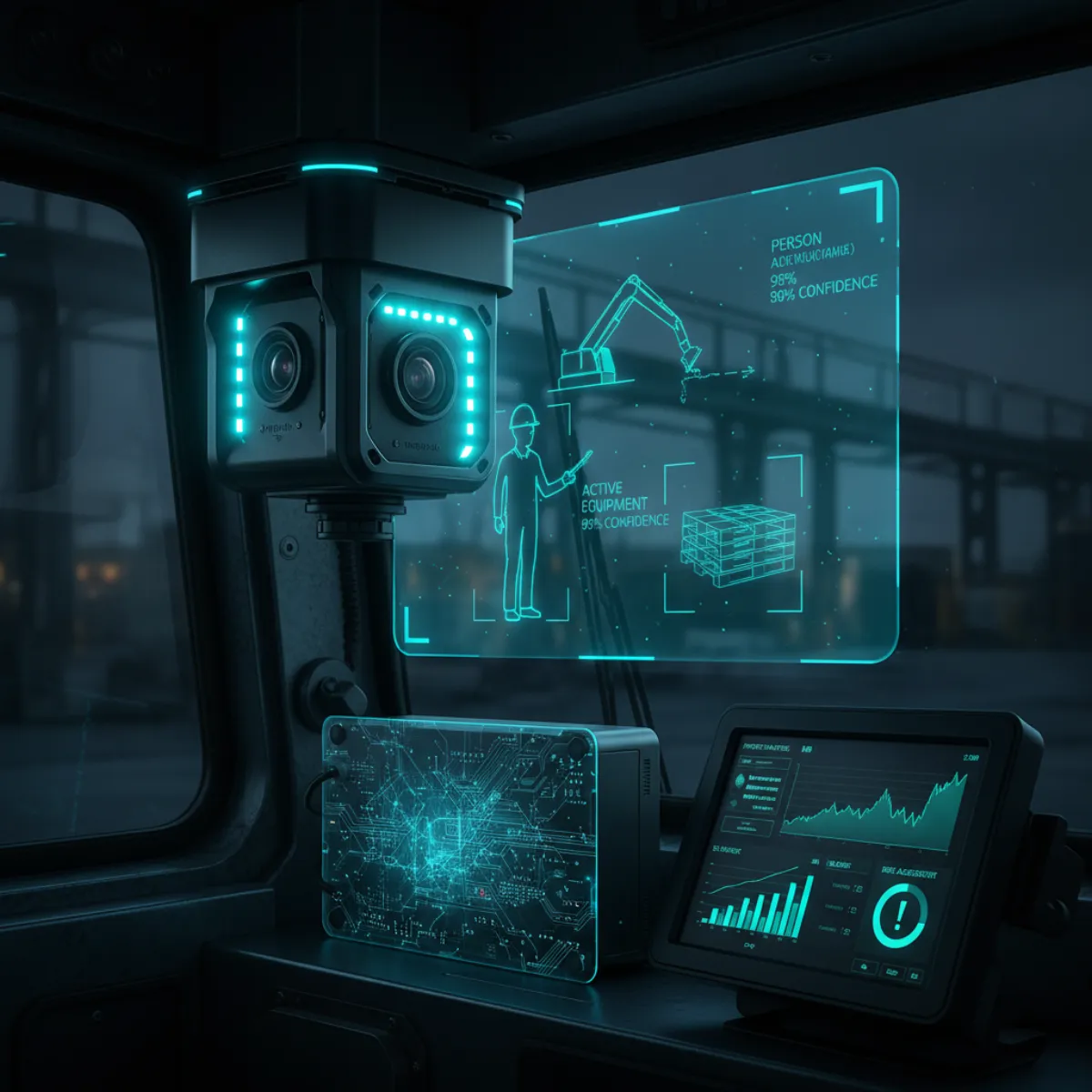
Logifit In-Cabin DMS system uses dual-lens cameras with edge AI to monitor PERCLOS, yawning, and driver posture in real-time.
Predictive Computer Vision
Analysis of visual patterns that identifies risk behaviors before hazard materialization, using deep learning algorithms trained specifically for industrial environments.
Logifit implements advanced computer vision in its DMS system that detects microsleep, distraction, and fatigue through PERCLOS (Percentage of Eyelid Closure) analysis. The system processes 30 fps with 99.7% accuracy in adverse industrial conditions.
- Fatigue Detection: PERCLOS >80% triggers immediate alerts with NIOSH-validated accuracy
- Microsleep Analysis: Episodes of 0.5-15 seconds detected through advanced eye tracking
- Cognitive Distraction: Gaze pattern changes correlated with mental workload
- Posture and Ergonomics: Detection of positions that increase musculoskeletal risk
Organizations implementing predictive computer vision achieve 67% reduction in human factor-related incidents, according to BHP Billiton 2025 data.
Integrated Telematics: The Real-Time Data Ecosystem
Telematics in 2026 have evolved toward integrated ecosystems that combine vehicular, biometric, and environmental data to create dynamic risk profiles.
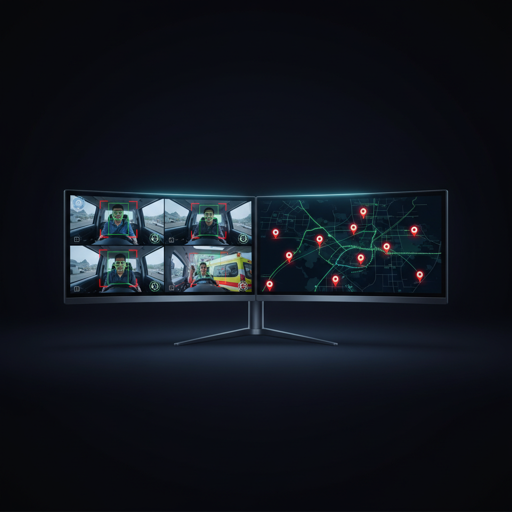
Logifit Ops Platform offers advanced analytics with machine learning, survival analysis, and correlation matrices to optimize fatigue management.
Predictive Telematics
Integration of vehicular sensors, wearables, and environmental systems that generate predictive risk models based on machine learning and multivariate analysis.
Logifit integrates advanced telematics in its Ops Platform, correlating data from smartbands (Band 7/9/10), DMS systems, and environmental sensors to generate real-time risk scores.
- Multisensor Collection: Integration of 50+ variables from wearables, vehicles, and environment
- ML Processing: Predictive algorithms that update risk scores every 30 seconds
- Hierarchical Alerts: Automatic notifications based on criticality levels
- Predictive Analytics: Risk forecasting with 72-hour anticipation
Key fact: Integrated telematics reduce false positives 84% vs independent systems (Safe Work Australia 2025)
The correlation between biometric data (heart rate, HRV variability, temperature) and driving patterns has demonstrated prediction of fatigue episodes with 94% accuracy up to 45 minutes before the event. (Source: ISO/IEC 42001 — AI Management Systems)
NIOSH and Regulatory Frameworks: Scientific Validation of AI in Safety
NIOSH established in 2025 the first specific protocols for validation of AI systems in occupational safety, defining standard metrics and testing methodologies.
NIOSH Protocols for AI
Scientific frameworks that establish validation, testing, and certification criteria for artificial intelligence systems applied to workplace accident prevention.
The new NIOSH 2025-AI standards require:
- Multiethnic Validation: Testing across diverse populations to eliminate algorithmic bias
- Adverse Conditions: Certification in environments with dust, vibration, and variable lighting
- Decision Traceability: Explainable algorithms that document the detection process
- PPE Integration: Compatibility with personal protective equipment without interference
Logifit has obtained NIOSH certification for its computer vision algorithms, being among the first companies to meet the new scientific validation standards.
NIOSH validation ensures that AI systems not only detect risks, but do so consistently, explainably, and without discriminatory bias across diverse industrial populations.
— David Chen, Industrial AI SpecialistROI and Enterprise Implementation: The Definitive Business Case
The ROI of AI systems in safety has reached levels that justify massive implementation. TCO (Total Cost of Ownership) analyses demonstrate positive returns in 12-18 months.
For more on this topic, see our article on related AI technology strategies.
| Component | Annual Cost | Generated Savings | ROI % |
|---|---|---|---|
| Edge AI System | $45,000 | $180,000 | 400% |
| Computer Vision | $32,000 | $156,000 | 488% |
| Telematics | $28,000 | $94,000 | 336% |
Savings come from:
- Accident Reduction: $2.3M average per prevented fatality (OSHA costing model)
- Lower Absenteeism: 34% reduction in lost days due to injuries
- Insurance Premiums: 15-25% discounts for certified system implementation
- Regulatory Compliance: Elimination of fines and sanctions for non-compliance
Fortune 500 companies with complete AI safety implementation report $4.2M annual savings per 1,000 monitored workers (McKinsey Industrial AI Report 2025).
Implement Edge AI and Computer Vision in Your Operation
Logifit technology combines edge AI, computer vision, and telematics in an integrated platform with NIOSH certification and proven ROI.
Request Demo →The adoption of edge AI, computer vision, and integrated telematics represents the immediate future of industrial safety. With NIOSH validation, proven ROI, and mature technology, 2026 marks the definitive moment for massive implementation of these predictive systems.