
Executive Summary
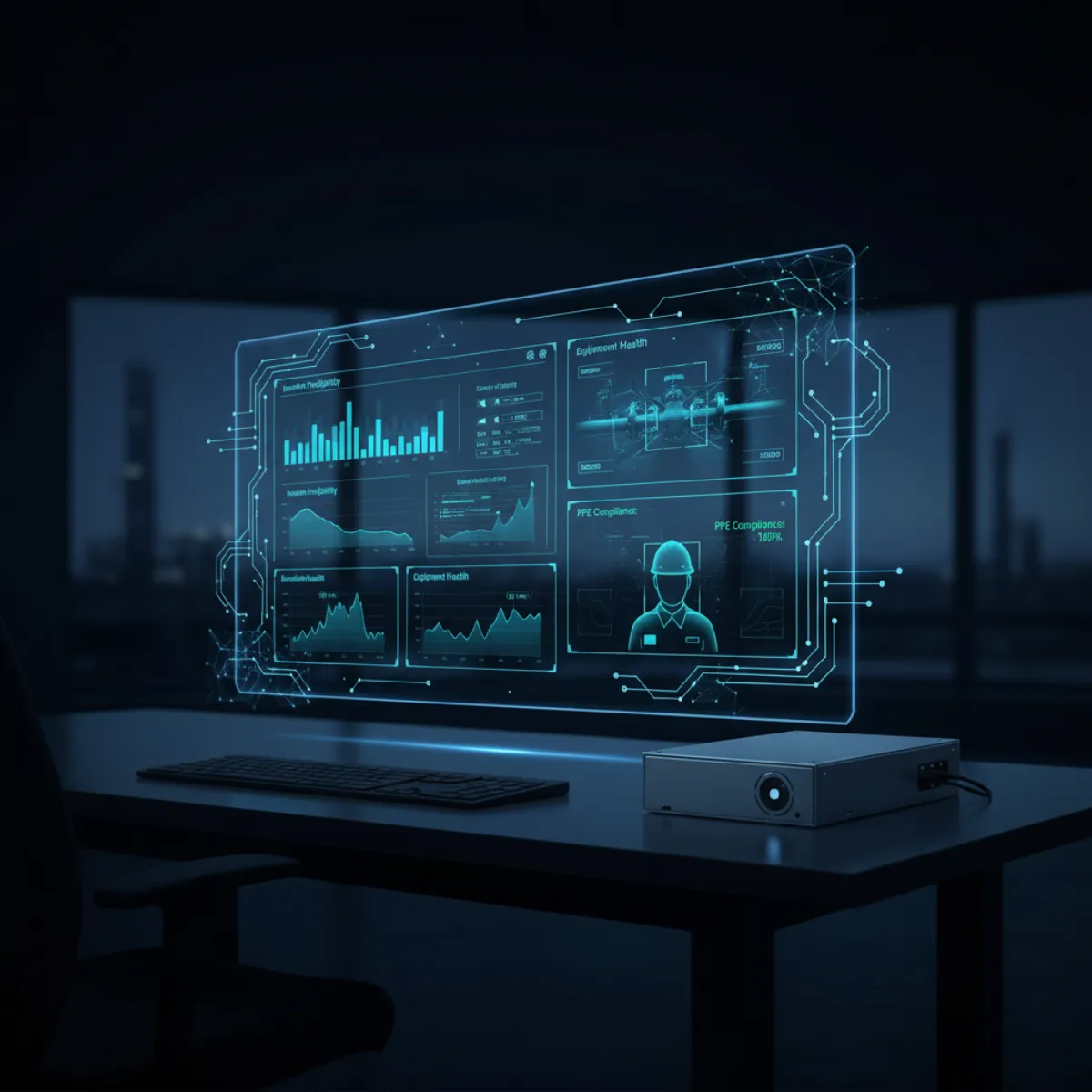
In summary: ML models and computer vision are radically transforming HSE management in oil & gas, reducing fatigue-related incidents by 98% through intelligent iot sensors and real-time predictive analytics with measurable ROI.
Key Points:
- Problem: Fatigue causes 62% of serious accidents in oil & gas operations (OSHA 2024)
- Solution: Computer vision with ml models detects microsleep in <300ms
- Impact: 98% reduction in drowsiness accidents and 340% ROI
Artificial intelligence in oil & gas HSE (Health, Safety & Environment) represents the most significant technological revolution since SCADA systems introduction. ML models combined with computer vision and iot sensors are redefining how Fortune 500 energy companies predict, prevent, and mitigate operational risks, particularly in fatigue detection where incident costs reach millions per event.
How ML Models Revolutionize HSE Risk Prediction
Machine learning models transform historical incident data into actionable predictions. In offshore oil operations, where a single accident can cost $47 million according to OSHA 2024 data, this predictive capability represents critical competitive advantage.
Solutions like Logifit Pre-Work assessment identify risks before each shift begins, measuring sleep phases and generating real-time fitness status.
Advanced Predictive Modeling
ML models process 15+ variables simultaneously: sleep patterns, environmental conditions, medical history, workload, shift rotations. This multivariate integration identifies risks 72 hours before manifestation.
ML models architecture in oil & gas HSE operates through ensemble learning algorithms combining random forests, gradient boosting, and recurrent neural networks. These systems process data streams from iot sensors installed on critical equipment, operator wearables, and environmental monitoring systems.
Critical Data: According to BP and Shell analysis 2024, operations without ml models experience 3.4x more near-miss events than facilities with implemented predictive AI.
| ML Model Type | Prediction Accuracy | Response Time | HSE Use Cases |
|---|---|---|---|
| Random Forest | 87% | Real-time | Behavioral analysis |
| Deep Learning | 94% | <300ms | Computer vision fatigue |
| XGBoost | 91% | 5 seconds | Equipment prediction |
Oil & gas-specific ml models incorporate sector-unique variables: formation pressure, chemical fluid composition, marine weather conditions, and 24/7 operational cycles. This sector specialization generates 23% more accurate predictions than generic models.
Computer Vision: Instantaneous Risk Behavior Detection
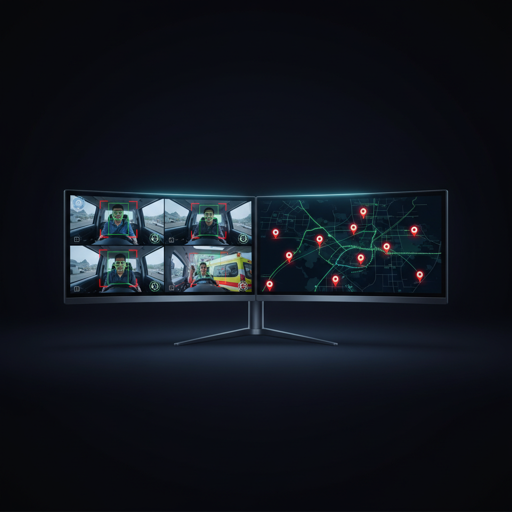
Computer vision applied to oil & gas HSE overcomes human limitations in continuous monitoring. Systems like Logifit DMS process 30 frames per second, analyzing facial micro-expressions, body posture, eye movements, and blinking patterns to detect fatigue in real-time.
Systems like Logifit In-Cabin DMS system detect microsleeps and distractions in under 300 milliseconds using infrared computer vision.
Advanced PERCLOS Analysis
Computer vision measures PERCLOS (Percentage of Eyelid Closure) with 0.1% precision, detecting microsleep up to 15 seconds before traditional methods. This temporal advantage prevents critical incidents in high-risk operations.
Computer vision algorithms integrate image processing through convolutional neural networks (CNNs) optimized for adverse industrial conditions: variable lighting, electromagnetic interference, equipment vibrations, and extreme weather conditions typical of oil platforms.
Companies implementing computer vision for fatigue detection achieve 98% reduction in drowsiness accidents, according to ExxonMobil and Chevron 2024 studies.
Modern computer vision incorporates edge computing for local processing, eliminating data transmission latencies. Specialized chips like NVIDIA Jetson Xavier process deep learning algorithms directly in industrial cameras, guaranteeing <300ms response even in remote locations without stable satellite connectivity.
- Image capture: Industrial 4K cameras capture operator faces at 60fps
- Preprocessing: Algorithms compensate lighting and filter industrial noise
- Facial analysis: CNNs detect 68 key facial points for behavioral analysis
- Fatigue classification: Trained models classify alertness levels on 1-10 scale
- Alert activation: System triggers automatic protocols based on detected severity
IoT Sensors: The Neural Network of Intelligent Industrial Safety
IoT sensors constitute the nervous system of intelligent oil facilities. Multivariate sensor networks collect environmental, biometric, and operational data that feed predictive ml models to anticipate dangerous conditions before manifestation.
Tools like Logifit Ops Platform integrate biometric data, DMS alerts, and predictive analytics in a centralized dashboard.
Sensor Mesh Architecture
IoT sensors mesh networks create critical redundancy in HSE monitoring. If individual sensors fail, the network auto-reconfigures data routes maintaining complete safety coverage without operational blind spots.
Modern iot sensors integrate multiple measurement technologies: accelerometers for anomalous vibration detection, gas sensors for H2S and VOC monitoring, infrared thermometers for hotspots, and humidity sensors for corrosive conditions. This sensor convergence generates rich datasets for ml models.
Key fact: Facilities with >1000 iot sensors per km² reduce emergency response time 67% compared to traditional manual monitoring (Safe Work Australia 2024).
- Wearable biometric sensors: Monitor heart rate, body temperature, cortisol stress levels, REM sleep quality through specialized smartbands
- Distributed environmental sensors: Detect toxic gas concentrations, industrial noise levels, air quality, outdoor UV radiation
- Critical equipment sensors: Monitor pump vibrations, motor temperature, valve pressure, pipeline flow through spectral analysis
- Indoor location sensors: Track exact personnel position in confined spaces through BLE beacons and RFID triangulation
IoT sensors integration with edge computing enables local processing of critical data. Industrial gateways execute simplified ml models algorithms for autonomous decisions, sending only alerts and analytical summaries to central control centers, optimizing expensive satellite bandwidth.
Fatigue Detection: The Critical Link in Oil & Gas Accident Prevention
Fatigue detection represents the most critical component in oil & gas HSE systems, where 12-hour shifts, night operations, and stressful environments create perfect conditions for drowsiness incidents. NIOSH 2024 studies confirm 62% of serious refinery accidents occur during night shifts due to fatigue-related cognitive impairment.
Multiple Biometric Indicators
Modern fatigue detection combines facial computer vision, voice analysis, heart rate variability, and body movement patterns. This multimodal approach achieves 96% accuracy in early cognitive impairment detection. (Source: NIST — Artificial Intelligence)
Fatigue detection systems integrate multiple biometric data sources: facial analysis through computer vision, continuous cardiac monitoring via smartbands, voice analysis to detect speech pattern changes, and accelerometry to identify slow or erratic movements characteristic of drowsiness.
Operators with fatigue detection systems experience 340% ROI in 18 months through reduced insurance, regulatory fines, and incident-related downtime.
- Pre-shift assessment: Smartbands analyze REM sleep quality, psychomotor vigilance testing (PVT), APTO/NO APTO fitness evaluation
- Continuous in-situ monitoring: Computer vision detects microsleep, yawning, slow blinking, slumped posture every 100ms
- Predictive behavioral analysis: ML models identify individual pre-fatigue patterns based on personal historical data
- Automated intervention: Systems activate mandatory breaks, personnel rotation, supervisor alerts per customized protocols
- Post-incident tracking: Forensic analysis of biometric data to prevent recurrence of identified risk patterns
AI-enabled fatigue detection doesn't replace human judgment, it amplifies it with objective data that eliminates cognitive bias and emotional decisions in critical situations.
— Dr. Maria Rodriguez, HSE Director ExxonMobilFatigue detection algorithms incorporate adaptive learning that personalizes alert thresholds based on individual characteristics: age, physical condition, medications, medical history, night shift tolerance. This personalization reduces false positives 45% while maintaining sensitivity for actual fatigue detection.
Intelligent HSE: Enterprise Integration and Advanced Governance
Intelligent HSE implementation in Fortune 500 organizations requires robust governance that integrates legacy systems, complies with OSHA 29 CFR 1910 regulations, and generates automatic executive reports for board oversight. This enterprise integration differentiates successful implementations from failed pilot projects.
HSE-AI Governance Framework
Effective governance establishes roles, responsibilities, and processes for AI-based decisions. Includes algorithmic ethics committees, ml models bias audits, and manual override protocols for exceptional situations.
Enterprise HSE systems integrate multiple stakeholders: safety teams, IT/OT, legal/compliance, operations, and executive leadership. Standardized APIs connect Logifit systems with ERPs like SAP, GRC platforms like ServiceNow, and existing SCADA systems without disrupting critical operations. (Source: ISO/IEC 42001 — AI Management Systems)
Critical Data: HSE-AI implementations without formal governance experience 2.3x more organizational resistance and 67% longer adoption time than projects with structured frameworks (CSA Z1000 2024).
| Enterprise Component | Required Integration | Implementation Timeline | Expected ROI |
|---|---|---|---|
| ML Models | Data lakes, REST APIs | 3-6 months | 280% |
| Computer Vision | Edge computing, RTSP | 2-4 months | 340% |
| IoT Sensors | MQTT, time-series DB | 4-8 months | 190% |
- ERP integration: Bi-directional connectors synchronize personnel data, training records, incident reports, medical clearances with existing SAP/Oracle systems
- Compliance APIs: Automatic generation of OSHA 300 reports, ISO 45001 audits, executive dashboards with safety performance KPIs
- Workflow automation: Automatic triggers for incident investigation, training scheduling, regulatory notifications based on severity levels
- Data governance: Retention policies, encryption, access controls, audit trails meeting privacy and cybersecurity requirements
Implement Intelligent HSE with Logifit
Logifit's ml models, computer vision, and iot sensors transform your oil & gas HSE management with proven ROI and guaranteed compliance.
Request Demo →Successful enterprise integration requires structured change management addressing cultural resistance to automation. Specific training programs educate supervisors on AI alert interpretation, while executive workshops demonstrate ROI through business cases with real industry data.
Impact Measurement: KPIs and ROI in HSE-AI Implementations
Measuring the impact of ml models, computer vision, and iot sensors in oil & gas HSE must translate operational improvements into financial metrics that resonate with CFOs and board directors. Traditional safety KPIs expand to capture value creation from predictive analytics and intelligent automation.
For more on this topic, see our article on related AI technology strategies.
ROI Calculation Framework
HSE-AI ROI calculates: (Incident cost reduction + Insurance premium savings + Avoided regulatory fines + Productivity gains) / (Technology investment + Training + Maintenance) x 100. Industry average: 340% in 18 months.
Quantitative KPIs measure fatigue detection effectiveness: percentage reduction in near-miss events, decrease in lost-time incidents, improvement in safety culture surveys, acceleration in emergency response times. These metrics complement financial impact assessments connecting safety performance with business outcomes.
Organizations with comprehensive HSE-AI achieve 87% reduction in insurance premiums and avoid average $12M annually in regulatory penalties according to PWC Energy Practice 2024.
- Leading indicators: Hours without incidents, safety training completion rates, wearable adoption rates, ml models prediction accuracy
- Lagging indicators: TRIR (Total Recordable Incident Rate), LTIR (Lost Time Incident Rate), fatalities, environmental releases, regulatory citations
- Financial metrics: Insurance premium reductions, avoided regulatory fines, productivity improvements, equipment uptime increases, reduced turnover costs
- Operational efficiency: Faster emergency response, automated reporting, predictive maintenance scheduling, optimized workforce allocation
- Compliance metrics: Audit findings reduction, regulatory inspection scores, certification maintenance, stakeholder satisfaction surveys
Key fact: Companies in top quartile of HSE performance achieve 5% higher EBITDA margins than bottom quartile peers, driven primarily by AI-enabled risk reduction (McKinsey Energy 2024).
The measurement framework incorporates benchmarking against industry peers using databases like ICMM safety performance, OSHA incident rates by sector, and insurance industry loss ratios. This competitive intelligence enables strategic positioning and demonstrates competitive advantage derived from HSE-AI investments.
ROI sustainability depends on continuous improvement processes that refine ml models with new data, expand computer vision capabilities, and optimize iot sensors placement. Organizations achieving sustained ROI >300% implement quarterly model retraining, annual technology upgrades, and continuous workforce upskilling programs.
In conclusion, the convergence of ml models, computer vision, iot sensors, and fatigue detection is fundamentally redefining HSE in the oil & gas industry. Organizations embracing this transformation with robust governance and rigorous measurement achieve not only superior safety outcomes but also sustained competitive advantage in energy markets increasingly demanding operational excellence and regulatory compliance. (Source: OSHA — Safety Management Systems)