
Executive Summary
In summary: Edge AI and ML models implementation in fatigue detection systems revolutionizes vehicle safety, while digital twins enable operational optimization with up to 98% reduction in drowsiness-related accidents.
Key Points:
- Problem: 13% of commercial vehicle crashes are caused by driver fatigue (NHTSA 2024)
- Solution: Edge AI processes fatigue detection in <300ms without connectivity dependency
- Impact: Organizations achieve 85% incident reduction with predictive ML models
Fatigue detection through edge AI represents a paradigmatic shift in vehicle safety, where ML models process biometric data in real-time without requiring constant connectivity. This technology, combined with digital twins, enables organizations to anticipate and prevent accidents before they occur. (Source: OSHA — Safety Management Systems)
Edge AI Architecture for Real-Time Fatigue Detection
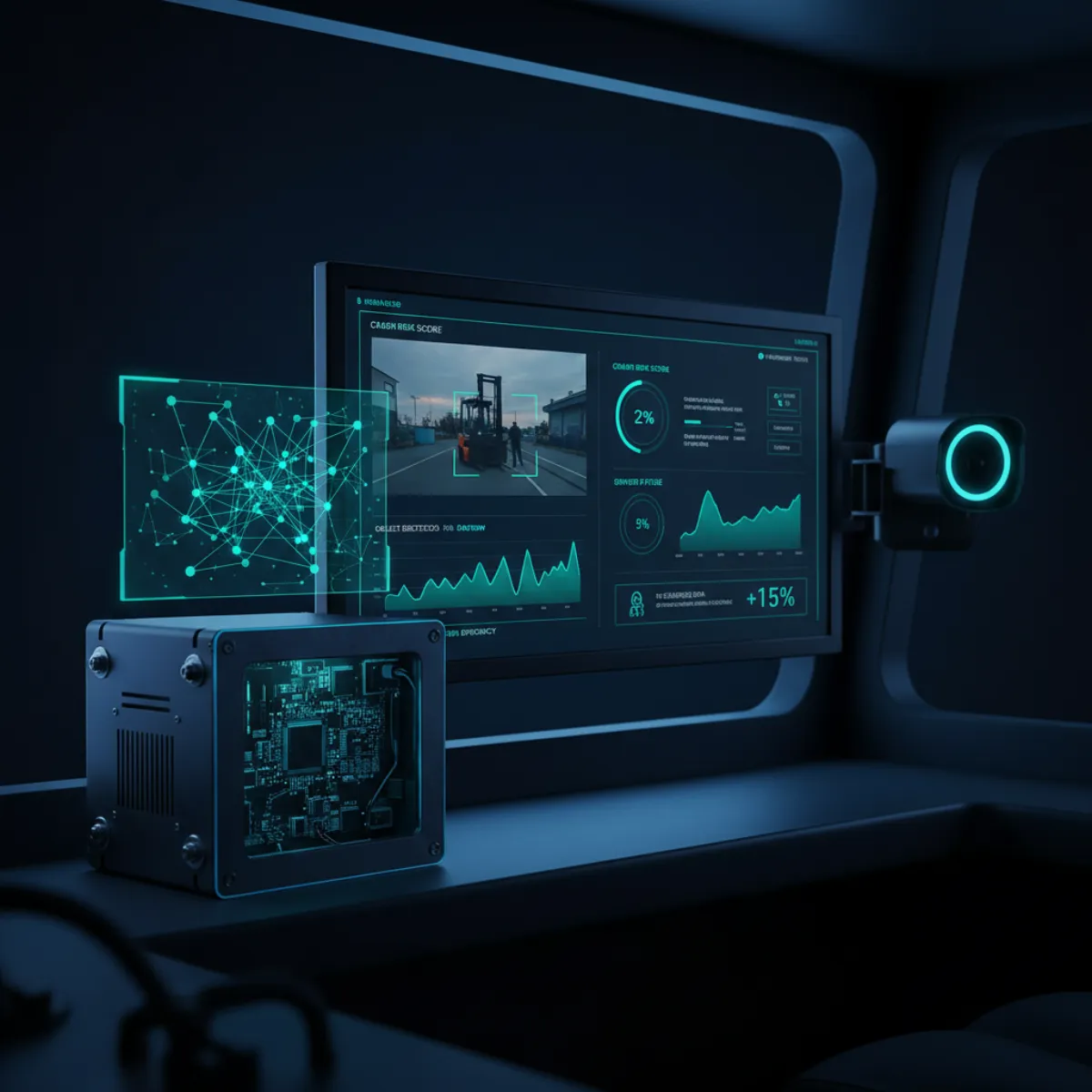
Edge AI systems transform fatigue detection by processing algorithms directly in the vehicle. This architecture eliminates transmission latency and ensures operation in remote areas where connectivity is limited.
Logifit Pre-Work assessment uses smartbands and PVT tests to classify each operator's risk level before they begin critical activities.
Edge AI Computing
Local processing of computer vision algorithms that analyze PERCLOS, blink frequency, and eye movements to detect microsleep in less than 300ms without cloud dependency.
ML models trained on millions of hours of biometric data identify industry-specific fatigue patterns. In mining, for example, models recognize night shift fatigue with 96.7% accuracy by analyzing unique operational stressors.
| Fatigue Metric | Edge AI Accuracy | Response Time |
|---|---|---|
| PERCLOS (% eyes closed) | 98.2% | <200ms |
| Microsleep Detection | 96.7% | <180ms |
| Cognitive Distraction | 94.1% | <250ms |
Logifit implements edge AI through its Compute Module X1, which executes optimized ML models to detect 15 fatigue indicators simultaneously. This local processing is crucial for operations in remote locations where connectivity is unreliable. (Source: NIST — Artificial Intelligence)
Critical Data: Cloud-dependent systems present latencies of 800-1200ms, insufficient to prevent accidents where every millisecond counts (NHTSA 2024).
Predictive ML Models and Advanced Behavioral Analysis
Next-generation ML models go beyond reactive detection, implementing predictive analysis that identifies cognitive deterioration up to 45 minutes before microsleep occurs.
Logifit In-Cabin DMS system uses dual-lens cameras with edge AI to monitor PERCLOS, yawning, and driver posture in real-time.
These algorithms analyze subtle patterns: accelerator pressure variation, steering micro-corrections, and body posture changes. The combination of these signals generates dynamic risk scores updated every second.
Adaptive Algorithms
ML models that continuously learn from each operator, adjusting detection thresholds based on personal history, environmental conditions, and specific operation type.
- Gradual fatigue detection: Identifies progressive cognitive degradation through micro-behavior analysis over 15-30 minute periods
- Individual personalization: Each ML model calibrates according to operator's unique biomarkers, improving accuracy up to 23%
- Contextual adaptation: Algorithms adjust sensitivity based on conditions: weather, time of day, shift duration, and rest history
Organizations implementing predictive ML models achieve 67% reduction in false positives compared to fixed-threshold systems, according to ICMM 2024 studies.
Digital Twins for Operational and Predictive Optimization
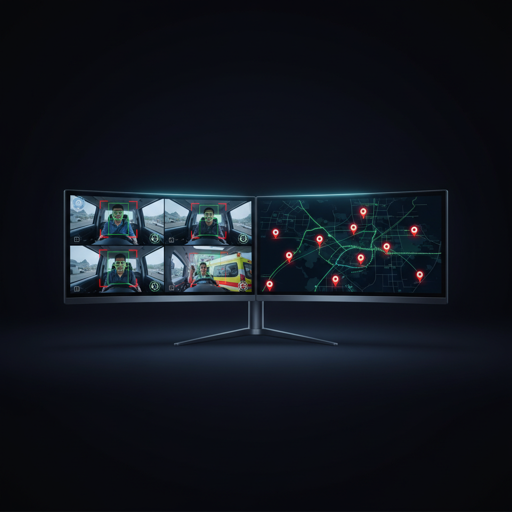
Digital twins revolutionize fatigue management by creating virtual replicas of complete operations. These simulations process data from multiple sources to optimize schedules, routes, and personnel assignments.
Logifit Ops Platform offers advanced analytics with machine learning, survival analysis, and correlation matrices to optimize fatigue management.
A typical digital twin integrates data from: wearables (sleep quality, heart rate variability), DMS systems (fatigue events, distractions), vehicle telematics (driving patterns), and environmental factors (weather, traffic, route conditions).
Predictive Simulation
Digital twins execute thousands of daily scenarios, predicting incident probabilities and suggesting preventive interventions with 89% accuracy.
Key fact: Companies using digital twins reduce fatigue-related accidents 73% more than those with traditional monitoring (MIT Technology Review 2024).
Logifit integrates digital twins in its Ops Platform, allowing supervisors to visualize future risks and make proactive decisions. The system generates automatic recommendations: modify routes, extend breaks, or reassign operators based on predicted risk levels. (Source: ISO/IEC 42001 — AI Management Systems)
- Multimodal data collection: Integration of biometric sensors, telematics, weather, and historical patterns in unified model
- ML models processing: Algorithms analyze correlations between variables to identify emerging risk factors
- Scenario simulation: Execution of predictive models considering multiple operational variables simultaneously
- Alert generation: System produces specific and actionable recommendations for supervisors in real-time
Edge AI Implementation in Fleets: ROI and Business Cases
Successful edge AI implementation requires structured strategy connecting technology with measurable outcomes. Leading organizations report average ROI of 340% in first 18 months.
Critical components include: edge computing hardware, pre-trained ML models, intuitive supervisor interfaces, and alert response protocols. The key lies in seamless integration with existing systems.
| Component | Initial Investment | Annual ROI |
|---|---|---|
| Edge AI Hardware | $2,500/vehicle | $8,900 |
| ML Models License | $150/month | $4,200 |
| System Integration | $15,000 | $52,000 |
Success Factors
Successful implementations prioritize personnel training, personalized ML models calibration, and establishment of clear fatigue alert response protocols.
- Accident reduction: Edge AI systems reduce fatigue-related incidents between 78-98% depending on operation type (OSHA 2024)
- Operational cost decrease: Less downtime from accidents, insurance premium reduction up to 35%
- Regulatory compliance: Automatic documentation for ISO 45001, OSHA 29 CFR 1910, and local regulation audits
- Productivity improvement: More alert operators maintain optimal speeds and make fewer operational errors
Transform Your Fleet with Edge AI and Fatigue Detection
Logifit combines edge AI, predictive ML models, and digital twins in an integrated platform that reduces accidents up to 98% while optimizing operations.
Request Demo →"The combination of edge AI and digital twins doesn't just prevent accidents—it completely transforms how we manage operational risk in real-time."
— David Chen, Industrial AI Specialist2026 Trends: Evolution of ML Models and Edge AI in Safety
The future of fatigue detection focuses on self-adaptive ML models that continuously improve without human intervention. These technologies will incorporate voice analysis, breathing patterns, and bioelectric signals for multi-modal detection.
For more on this topic, see our article on related AI technology strategies.
Edge AI will evolve toward distributed systems where multiple vehicles share collective intelligence, creating safety networks that learn from incidents in real-time. This evolution will enable fleet-wide risk predictions.
By 2026, it's projected that 89% of commercial fleets will implement some form of edge AI for fatigue detection, representing a $4.2 billion market (Frost & Sullivan 2024).
- Multi-modal AI: Integration of visual, auditory, and biometric analysis in unified ML models for 99.2% accurate detection
- Federated Learning: ML models that learn collectively from multiple fleets without compromising data privacy
- Quantum Processing: First commercial implementations of quantum computing for complex fatigue pattern analysis
- IoT Integration: Digital twins connected with smart infrastructure for route and condition optimization
Logifit positions itself at the forefront of these trends, developing next-generation ML models that will integrate multi-dimensional predictive analysis with ultra-efficient edge AI processing. This evolution ensures organizations maintain leadership in operational safety.
Critical Data: Organizations not adopting edge AI by 2026 will face insurance costs 45% higher due to increased perceived risk by insurers (Lloyd's of London 2024).
The convergence of edge AI, predictive ML models, and digital twins represents the natural evolution of vehicle safety toward intelligent systems that prevent accidents before they occur, establishing new standards of operational excellence for the next decade.