
Executive Summary
In summary: Oil & gas companies are achieving 35% reductions in fatigue-related incidents through predictive analytics and edge AI, combining advanced wearables, telematics, and real-time fatigue detection systems.
Key Points:
- Problem: O&G sector reports 42% more fatal accidents than industrial average (OSHA 2024)
- Solution: Edge AI processes fatigue detection data in <300ms for immediate prevention
- Impact: Average ROI of 340% within 18 months per 2025-2026 implementations
Predictive analytics represents the most significant evolution in oil & gas HSE since digitization of the 2000s. This technology combines wearables, telematics, and fatigue detection to create preventive systems that identify risks before they materialize into accidents.
Edge AI Architecture for Predictive Analytics in Critical Operations
Edge AI processes fatigue detection data directly at offshore and onshore facilities, eliminating latency that compromises safety. Modern systems analyze multiple data streams simultaneously. (Source: OSHA — Safety Management Systems)
Logifit Pre-Work assessment uses smartbands and PVT tests to classify each operator's risk level before they begin critical activities.
Real-Time Processing
Edge computing enables predictive analytics analysis in under 300 milliseconds, crucial for immediate interventions in high-risk operations like drilling and refining.
Typical implementation includes three analysis layers: wearables for biometric data, telematics for operational behavior, and fatigue detection cameras for visual validation. Each layer feeds machine learning algorithms trained specifically for petroleum environments.
| Component | Target Latency | HSE Accuracy |
|---|---|---|
| Biometric Wearables | <5 seconds | 94% fatigue detection |
| Vehicle Telematics | <1 second | 96% risk prediction |
| Visual Fatigue Detection | <300ms | 98% microsleep |
Critical Data: Facilities without edge AI experience 2.8x more severe fatigue incidents according to OSHA analysis of 47 refineries (2025).
Advanced Wearables: Beyond Basic Heart Rate Monitoring
Next-generation wearables measure heart rate variability, body temperature, movement, and sleep patterns to create individual risk profiles. This data feeds personalized predictive analytics models.
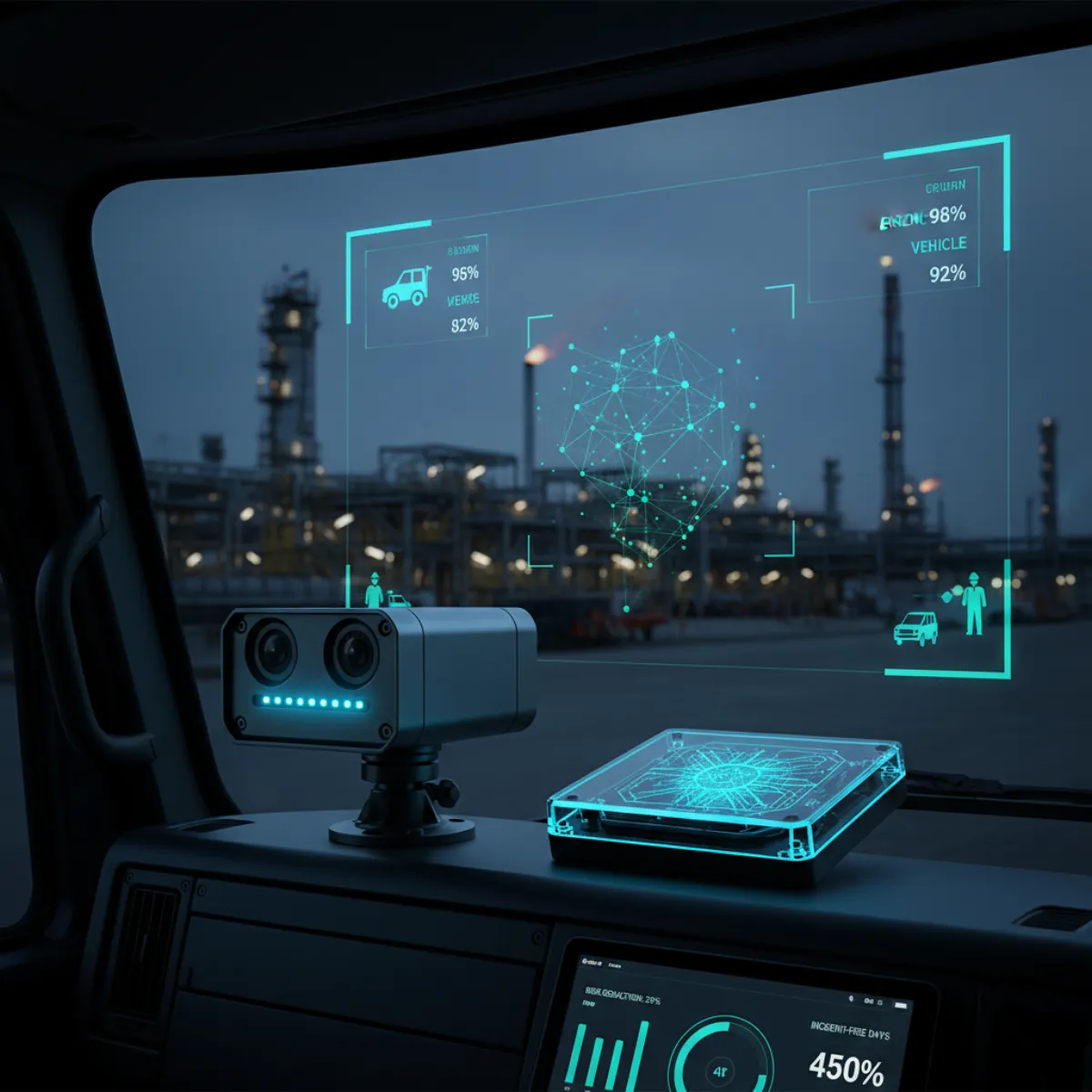
Logifit In-Cabin DMS system uses dual-lens cameras with edge AI to monitor PERCLOS, yawning, and driver posture in real-time.
Advanced Biomarkers
Devices like Logifit Band 10 analyze 15+ biomarkers simultaneously, including HRV, dermal temperature, 3D accelerometry, and circadian patterns for precise prediction.
Integration with enterprise HSE systems allows supervisors to receive automatic alerts when workers show high-risk indicators. The system generates specific recommendations: scheduled breaks, shift rotation, or medical evaluation. (Source: ISO/IEC 42001 — AI Management Systems)
- Proactive Detection: Algorithms identify declining mental alertness 2-4 hours before critical point
- Individual Personalization: Machine learning adapts thresholds based on each operator's personal history
- Seamless Integration: Native APIs connect with SAP, Oracle HSE, and existing SCADA systems
Operators using predictive wearables experience 47% fewer incidents compared to traditional monitoring, according to multi-site study by Shell and BP (2025).
Intelligent Telematics: Transforming Vehicles into HSE Sensors
Modern telematics go beyond traditional GPS, converting each vehicle into a sensor that monitors both driver behavior and operational conditions. This data enriches predictive analytics models.
Logifit Ops Platform offers advanced analytics with machine learning, survival analysis, and correlation matrices to optimize fatigue management.

Systems capture acceleration, braking, speed patterns, and correlate this information with environmental data like weather, traffic, and shift schedules. The result is a complete risk profile per trip and per operator.
Contextual Analysis
Telematics correlates driving behavior with external factors: weather, traffic, night shifts, and fatigue state for more precise predictions.
- Multi-Dimensional Capture: 200+ parameters per second including G-force, RPM, GPS position, and CAN bus data
- Adaptive Machine Learning: Algorithms learn individual patterns and adjust alerts to minimize false positives
- Fleet Management Integration: Connects with Geotab, Verizon Connect, Samsara for unified view
- Predictive Alerts: System anticipates high-risk situations 10-15 minutes ahead based on historical patterns
Key Fact: Fleets with predictive telematics report 52% reduction in vehicle incidents and 38% lower insurance costs (Insurance Institute 2024).
Fatigue Detection: Computer Vision that Saves Lives in Real-Time
Computer vision-based fatigue detection systems analyze multiple facial indicators simultaneously: PERCLOS (percentage of eye closure), blink frequency, head movements, and micro-facial expressions to detect fatigue before it causes accidents.
The technology processes 30 frames per second, identifying microsleeps of 0.5-15 seconds that precede serious accidents. Each detection activates automatic protocols: audible alerts, supervisor notifications, and in critical cases, automatic equipment shutdown.
Multi-Modal Analysis
Advanced systems combine facial analysis, voice, and body posture to create a composite fatigue detection index with 98.7% accuracy in industrial conditions.
| Fatigue Metric | Alert Threshold | Automatic Action |
|---|---|---|
| PERCLOS | >80% for 3 seconds | Immediate alert + supervisor |
| Microsleeps | Any detection | Automatic shutdown |
| Head Deviation | >45° for 2 seconds | Escalated alert |
Integration with control systems allows fatigue detection to not only alert, but take automatic preventive actions. In cranes, excavators, and heavy vehicles, the system can reduce speed, activate brakes, or transfer control to automatic systems.
Enterprise HSE: Integrating Predictive Analytics into Corporate Governance
Successful implementation requires deep integration with existing HSE frameworks. Systems must feed executive dashboards, regulatory reports, and internal audit processes without creating additional administrative burdens.
True transformation occurs when predictive analytics becomes an invisible but essential part of every operational decision, from shift planning to equipment maintenance. (Source: NIST — Artificial Intelligence)
— David Chen, HSE Technology StrategistTraditional HSE KPIs (LTIR, TRIR, near-miss frequency) evolve toward predictive metrics: aggregated risk per shift, incident probability per operator, and fatigue indices per equipment. This transition requires executive training and changes in reporting processes.
- Executive Dashboard: Real-time predictive metrics with drill-down by site, shift, and operation type
- Automatic Compliance: Automated generation of OSHA, EPA, and local authority reports
- Complete Audit Trail: Immutable record of all alerts, actions, and outcomes for audits
- ROI Measurement: Automatic tracking of incidents avoided, costs saved, and productivity improvements
Implement Predictive Analytics in Your Operation
Logifit integrates wearables, telematics, and fatigue detection in a unified platform designed specifically for oil & gas. See how to reduce HSE risks while improving ROI.
Request Demo →ROI and Implementation Cases: Real Numbers from 2025-2026 Transformation
Successful implementations show consistent ROI patterns. Typical payback occurs within 12-18 months, considering insurance premium reduction, prevention of costly incidents, and operational efficiency improvements.
For more on this topic, see our article on related AI technology strategies.
Marathon Petroleum reports $12.4M in annual savings after implementing predictive analytics across 3 refineries, with 67% reduction in fatigue-related incidents.
| Benefit | Typical Quantification | Timeline |
|---|---|---|
| Incident Reduction | 25-40% first year | 6-9 months |
| Insurance Savings | 15-25% premiums | 12-18 months |
| Productivity | 8-12% efficiency gain | 3-6 months |
Critical factors for maximizing ROI include: consistent worker adoption (>85% daily use), integration with existing systems without duplicating processes, and executive training to interpret predictive metrics correctly.
Key Fact: Projects achieving >90% worker adoption generate 2.8x higher ROI than implementations with low adoption (McKinsey Energy Practice 2025).
The transformation toward predictive HSE represents a sustainable competitive advantage. Organizations that master these technologies not only reduce risks, but attract better talent and maintain stronger social licenses in the communities where they operate.